
• In the US, solo business filings have more than doubled since 2019, yet filings that plan to pay wages are below their 2019 level.
• Even among a surge in new business formation, full-time business owners are steady at about 6.1% of working Americans.
• Despite its surveyed popularity, entrepreneurship has enemies: Corporate consolidation and traditional economic development structured toward recruiting established firms.
Imagine three entrepreneurs.
The first is a home health aide. She has a steady job with an agency earning $20 an hour, and last spring she filed for a business tax ID so she could take private-pay clients on weekends. In federal data, she counts as a new business. But her main job hasn’t changed, and she has no plans to hire anyone.
The second owns an HVAC company. He incorporated a decade ago, pays himself through payroll like any other employee and has four people on his crew. Running the business is his full-time job.
The third is a software founder. A few years ago she filed paperwork planning a payroll and set out to hire a dozen engineers. Today, with AI tools doing more of that work, she has retained her first three employees but is hesitating to hire for a junior developer role she has listed.
All three are entrepreneurs, but the economy is making very different numbers of each. They complicate the headline story of surging rates of entrepreneurship in the US.
- Solo business filings, the kind the home health aide made, have more than doubled since 2019, according to Census figures.
- Full-time business owners, including the HVAC operator or any other entrepreneur with W-2 earnings (that’s me too), are steady at about 6% of working Americans, just below where they were in 2019, according to a new Technical.ly analysis.
- Filings that plan to pay wages, the clearest early sign of the next job-creating company, are 14% below their 2019 level, per Census data.
So we’re getting many more of the first kind of entrepreneur, the same number of the second and fewer of the third. It’s the K-shape developing within the very start of the American economy. That’s important because everyone says they’re cheering for entrepreneurs.
To mark the close of Global Entrepreneurship Week, who exactly is the opposition?
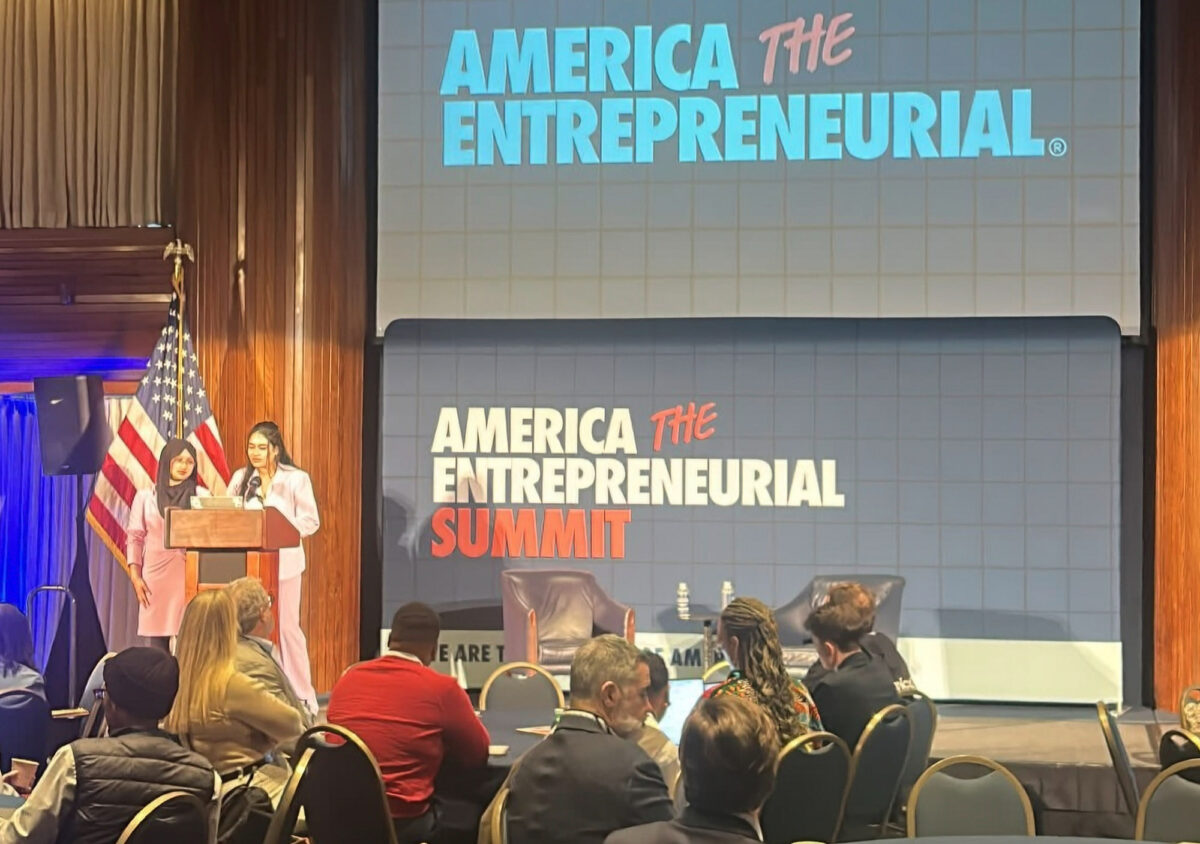
“We take entrepreneurship for granted,” said Victor Hwang today at a DC-hosted summit for America the Entrepreneurial, a campaign of his Right to Start pro-entrepreneurship advocacy nonprofit. “And let our entrepreneurs die by a thousand cuts.”
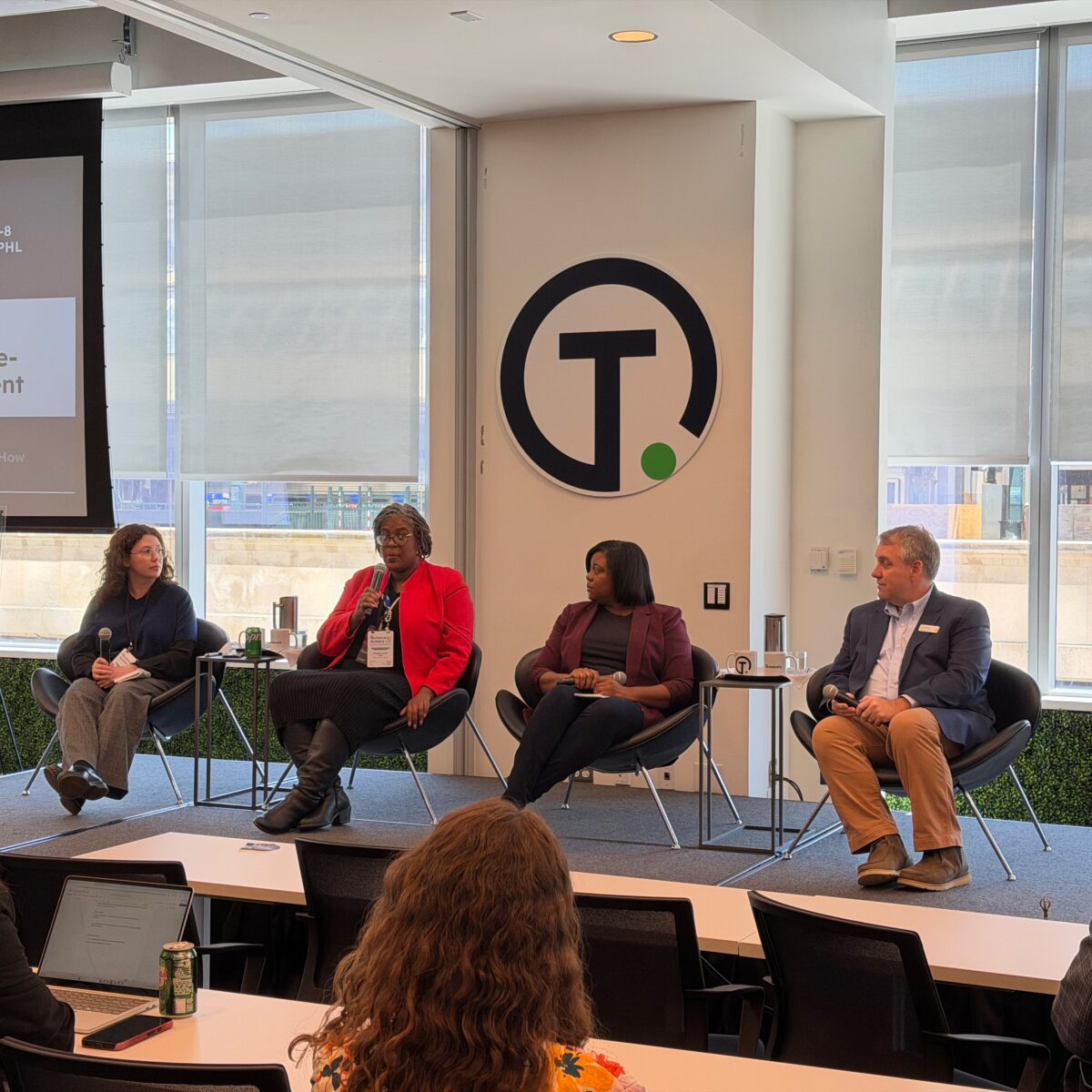
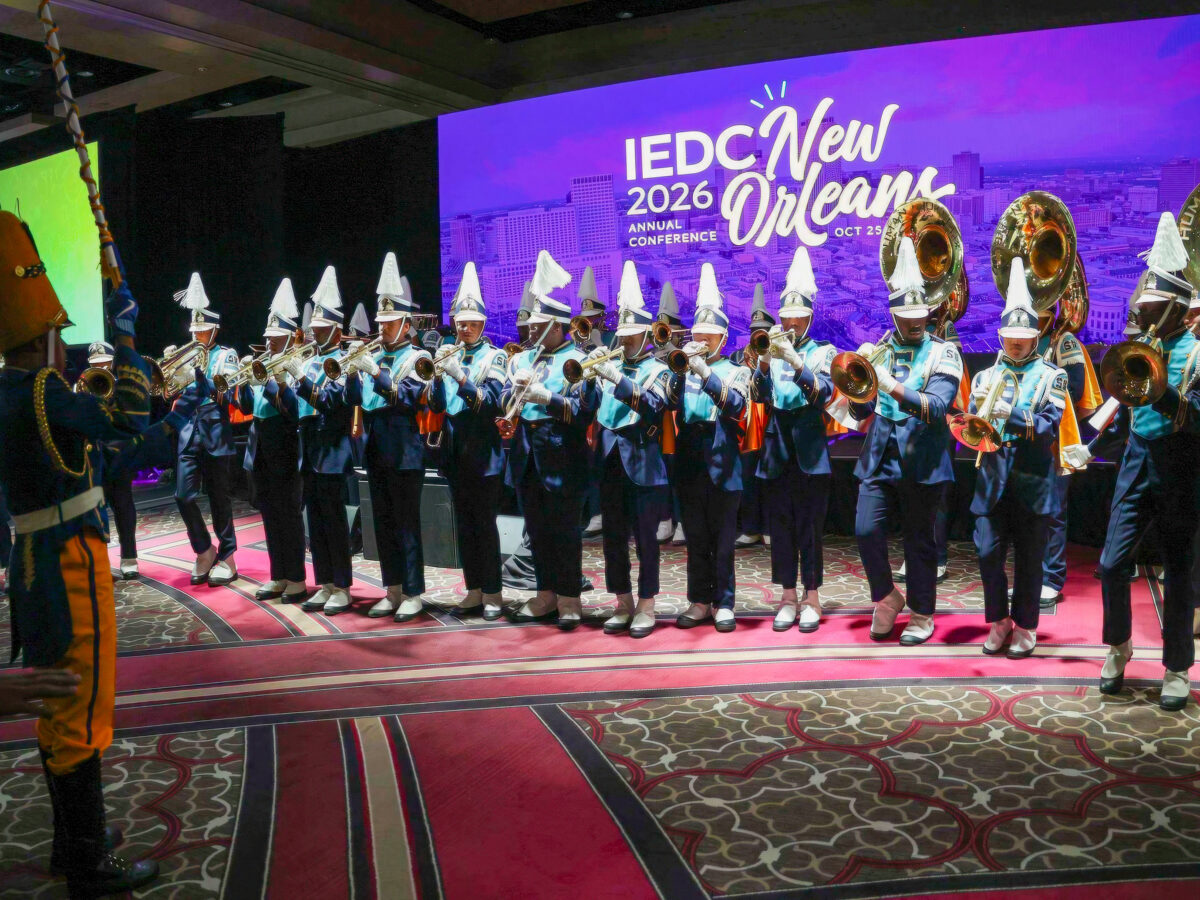
Before his own gathering of a national coalition of local organizers and policymakers, Hwang joined me and our Builders Live co-hosts last month in New Orleans at the annual conference of IEDC, the primary membership group of economic developers.
Americans hold a deep assumption that America is naturally entrepreneurial — small business polls as high as dictators who win sham elections — so we expect entrepreneurship will take care of itself.
“That’s the problem right there,” Hwang said in our live podcast recording. “People just assume it away.”
Back in May at our last Builders Conference, I argued that as popular (and important) as entrepreneurship is, powerful forces are quietly opposed. To move forward we ask: Who are entrepreneurship’s enemies?
Enemy one: Incumbents
In 2014, while promoting a new book, and before so much talk about “the antichrist,” entrepreneur-investor Peter Thiel wrote an essay called “Competition Is for Losers”. In it, he argued that a company’s purpose should be to build a monopoly.
As advice to a founder, fine. Chase dominance. But Thiel was writing to a society, not to a startup, and a system organized around competition cannot take its instructions from the people trying to escape it.
Every successful company eventually becomes an incumbent, and every incumbent learns that rigging the game is cheaper than competing. Usually that looks less like a conspiracy than like paperwork.
In the early 1950s, fewer than one in 20 American workers needed a state license to do their job. By 2008 it was one in four. Roughly two-thirds of that increase came not from licensed professions growing, but from more professions becoming licensed.
A license that reduces new entrants is cheaper than competing. By one widely used estimate, the average American firm charged 21% above its marginal cost in 1980. That average markup had tripled to 61% by 2016 — but the median barely moved. American business did not get more profitable. A relative few companies at the top did.
Tony Zanders, a founder who now leads Nexus Louisiana and joined our IEDC recording last month, sees the local version in his state’s R&D tax credit. It was designed for companies that won’t turn a profit for a decade, yet its biggest local beneficiary is a Fortune 500 company. A startup has to put down $7,000 and wait 12 months for the credit. Meanwhile, what Zanders calls “tax credit mills” keep full-time staff whose only job is working the program.
“We call it a democracy, but it’s actually more of a special-interest-based democracy,” Hwang said. Big companies pay lobbyists to watch legislative bills. Founders can’t, and because the people starting companies turn over every year, they never cohere into a constituency.
Incumbents have a permanent lobby. Entrepreneurship has a rotating cast.
Enemy two: The scorecard
Governments spend roughly eight times as much on attracting and retaining established firms as on supporting new ones. That was the focus of my three-part series ahead of IEDC. States that put more into incentives for established firms tend to produce fewer homegrown high-growth firms per capita, according to my analysis.
It’s rational: Elected officials serve short terms. The ribbon-cutting on an office relocation or established-firm expansion is immediate, while advocates say a startup ecosystem takes 20 years. Choosing short-term job-buying appears to strangle long-term economic dynamism.
Nexus’ Zanders has turned that logic around with Meta’s Hyperion data center in northeast Louisiana. That deal traces back to college students who built “the Facebook” 22 years ago.
“If you want the $50 billion deal and you want it to be homegrown,” Zanders said, “you do have to start to invest in the seed.”
Enemy three: Ourselves
Turning economic development toward entrepreneurship is well-founded. It’s no longer a truth gap but one of understanding, which makes this a communications challenge.
Builders Live co-host Rae’Mah Henderson, a venture investor who organizes in Alabama, recently gathered her local ecosystem under the label of a birthday party. Elsewhere, she hosts networking during a Tuesday karaoke night. To a budget office, that sounds like a party. But it’s how founders who can’t afford market-rate salaries find their first engineers and partners.
Entrepreneurship organizers know stitching together a more distributed coalition looks different than how one large corporation operates. That’s given rise to an emerging field of “ecosystem building,” powered by ESHIP Alliance, a nonprofit spinout of Kauffman Foundation research.
That’s proven effective at rallying like-minded organizers nationwide. But more familiar framing is necessary for more traditional places, argues Taylor Eubanks, cofounder and CEO of BlendHQ and former director of the Kansas Small Business Office. She recently retired “ecosystem builder” from how she describes her work.
“Separate language can make it easier to treat essential work as an optional extra,” she wrote in a Technical.ly op-ed. In his guest post, former Federal Reserve Bank adviser and IEDC CIO Dell Gines put it bluntly: The outsider era is over.
Even our wins create new challenges. The Bush Institute’s new review of 42 innovation districts calls them “an outstanding success story,” but nearby home prices now run more than 30% above surrounding areas. Pro-entrepreneurship gains must be mindful of local effects.
Enemy four: The missing middle
Go back to those three entrepreneurs. The much-heralded surge in new firm creation has mostly come from solo filings like our home health aide, and most of it doesn’t show up as anyone’s job.
The filing boom is real. Former Kauffman researcher Dane Stangler wrote for the Center for American Entrepreneurship (CAE) that the post-pandemic filing surge is “the literal dictionary definition of a step change.” But he finds that the likeliest-to-hire filings have lagged far behind. For the Economic Innovation Group, economist Nathan Goldschlag argues that as the AI era takes hold, “employer entrepreneurship” is at best rising modestly, and at worst has been falling for several years.
Whatever the side hustle economy is, it is almost never an employer.
The Census Bureau publishes both halves of that in the same release. In October, Americans filed 500k business applications. About a quarter of them were what Census calls high-propensity — filings with the characteristics of a business that will eventually have payroll. Seven in 10 applications are not expected to hire anyone, ever.
Side work doesn’t close the gap. The measures disagree about whether it’s even growing: the household survey everyone cites says multiple jobholding sits below its 1990s level, while payroll records say the opposite. But they agree on the part that matters here. Fewer than a million Americans tell federal surveyors that their second job is a business they own. Whatever the side hustle economy is, it is almost never an employer.
Right to Start’s Hwang reached for Ronald Coase, the Nobel-winning economist who asked why firms exist at all. Coase’s answer was that organizing people is expensive, so we bundle work into companies rather than negotiate every transaction in the open market.
“With AI giving one person the power of 50 people, the transaction costs are going down,” Hwang said. Which makes the solo firm not a failure but a forecast. It also means entrepreneurial skill has to become, in his words, “super democratized.”
Louisiana’s Zanders was darker. He expects AI agents to replace much of today’s gig work, and he warned of a technocratic turn. What we need, he said, is “a more existential conversation on the role of work.”
Coase explains why solo firms are multiplying. He doesn’t explain who hires the rest of us.
The verdict
There is tangible movement. At IEDC’s big economic development conference, the only topic that grew faster than entrepreneurship in programming between 2018 and 2026 was AI. Hwang says 32 governors and 150 mayors have signed Right to Start’s compact.
The federal government has made progress too. At Hwang’s summit in DC, a former SBA head and longtime Senate staffer traded insights on how quiet but meaningful policy changes got done. Bolder efforts are underway too.
Last year, the bipartisan INVEST Act, which combined nearly two dozen market reform bills, passed the House to expand access to venture capital by encouraging smaller checks — building a coalition by stitching together geographic, racial and gender diversity goals. After close to a decade of effort to get there, said CAE’s founding chief John Dearie, the bill stalled in the Senate so it starts again in January with a new Congress. Dearie is optimistic it will happen, “and it will be a big deal.”
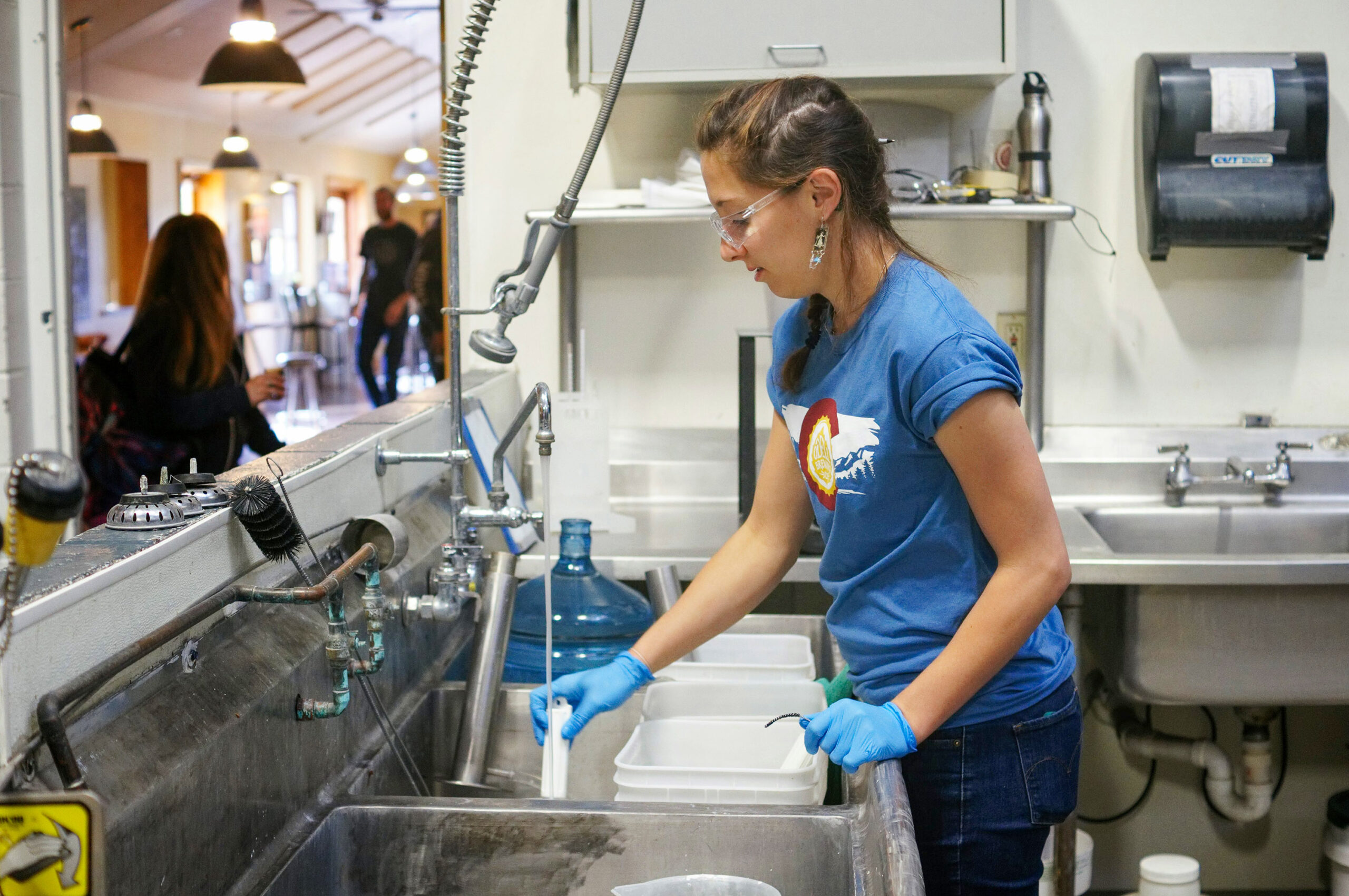

So it’s worth remembering what all this is for. We track income and wealth because they’re the best proxies we have for choice, health and happiness, though nobody thinks they’re perfect ones. Business owners seem to know that. In a Rocket Lawyer survey this year of small business owners, freedom and flexibility topped the list of what ties their work to the American Dream, ahead of financial independence.
But entrepreneurship matters most for what it does for everyone else. New firms bring new ideas to market, create net new jobs and raise living standards for people who will never file a business application. That’s why the difference between the aide, the contractor and the founder matters. Each is a real entrepreneur, but they do very different things for the rest of us.
After years of tailwinds, entrepreneurship has new enemies — and some very old ones. It needs new heroes and champions to counter them.