
• Nonemployer businesses grew 76% from 1997-2020, but employer establishments grew just 16%, and the share of new businesses that ever hire someone has collapsed.
• The “K-shaped economy” framing fits for entrepreneurship too: the lower branch (solo work) is clearly growing, but the upper branch (high-growth firms) is concentrated (fewer, bigger breakouts).
• The real squeeze is in the middle. The pathway from gig work or solo business into payroll-building firms looks weaker than the entrepreneurship narrative suggests.
On my way to address a science-communication symposium, I snagged a taxi outside Baltimore’s Penn Station. My driver was a Nigerian immigrant who’s lived in Maryland most of his adult life. He doesn’t own a medallion, and has tried driving for the ride-hailing services before.
For differentiation, he’s working on developing direct relationships with passengers. As I got out of his car on this dreary, cloudy day, he turned around to hand me his business card with a smile. “Give me a call if you need a ride,” he said with a flourish.
A great big question of the American economy is if (and when) his bespoke customer service counts as entrepreneurship.
The boom has come in two forms: an evolution of low-paid gig work, and a raft of high-growth startups.
The United States remains in a historic entrepreneurship surge. Since 2020, business applications have averaged 430,000 per month, 50% higher than pre-pandemic levels. Nearly 5.5 million Americans filed to start new businesses in 2023 alone.
And it matters. I’ve argued before that this is what keeps markets contestable as industries consolidate. When business dynamism declines — when fewer new firms challenge incumbents — we get less competition, less innovation and less economic mobility. The post-pandemic surge is a reversal of that decades-long trend.
But there’s a problem buried in the data. The boom has come in two forms: an evolution of llow-paid gig work, and a raft of high-growth startups. That’s an important distinction.
The complication is that the surge is splitting into a K. The high-growth end (venture-backed startups, AI firms, the companies that command attention and capital) remains economically important. But Census data show the share of high-growth firms has actually declined over four decades, especially among young and small firms.
Meanwhile, the solo end (nonemployer businesses, platform gig work, side hustles incorporated as LLCs) has exploded. Between 1997 and 2020, nonemployer businesses grew five times as fast as those with employees.
The middle is where the squeeze is even worse. Nonemployer startup counts rose from 3.9 million for the 1996 cohort to 5.7 million for the 2014 cohort. But the number of those nonemployers that later became employers fell from 33,000 to 21,000. Seventh-year employment generated by nonemployer startups dropped by more than half.
The ladder from solo hustle to payroll-building firm is getting thinner, even as more people crowd onto the first rung.
Could the gig economy be a ‘front door’? Probably not, evidence suggests
The optimistic case deserves a fair hearing. Victor Hwang of pro-entrepreneurship advocacy group Right to Start argues that what looks like precarity can also be optionality. If states lower the cost of LLC formation — Colorado dropped it to $1 — then gig workers get liability protection that used to be reserved for formal businesses. Platforms like Upwork and Outschool let people sell skills globally from their living rooms, earning more than they could tutoring locally or freelancing by word of mouth.
“Is it a dead end or is it just a front door path into a whole bunch of other stuff?” Hwang asked during a recent Builders Live episode. “That’s the question.”
There’s causal evidence supporting his case. One NBER study found that ride-hailing’s arrival was associated with a 5% increase in local business registrations and similar jumps in SBA lending. Platforms can reduce downside risk enough to spur entrepreneurial entry, especially in lower-income and higher-risk communities.
But the weight of evidence leans the other way.
The best administrative data suggest platform gig work functions more like income smoothing or labor-market fallback than a launchpad into employer firms. Platform gig work reached 3.15% of the workforce by 2021, per IRS research, heavily concentrated in transportation and delivery. Only a small share of platform workers earned more than $20,000 in annual gross earnings. California tax data show median earnings for W-2-only workers at $38,400, versus $12,500 for independent contractor–only workers.
Location-based gig work looks less like an escalator to business ownership and more like a shock absorber for unstable income. The strongest studies point toward flexibility and insurance, not skill accumulation or firm-building.
Look beyond business start numbers if you’re seeking job growth
What should ecosystem builders take from this?
First, headline business-formation numbers overstate actual entrepreneurship. When state or regional leaders celebrate growth in business applications, the relevant question is: What share are high propensity? The national answer is about one-third, meaning roughly 2 of every 3 new “businesses” are unlikely to ever hire an employee.



Second, the quantity of entrepreneurial activity and the quality of entrepreneurial activity have diverged. More Americans than ever are filing the paperwork to start businesses. Far fewer of those businesses will ever create a job. The average establishment now employs about half as many people as it did 30 years ago.
Third, the K-shape isn’t really about high-growth versus low-growth. It’s about whether the ladder exists at all.
The question for ecosystem builders isn’t whether to celebrate entrepreneurship. It’s whether the entrepreneurship we’re celebrating actually converts into durable businesses, payrolls, and wealth.
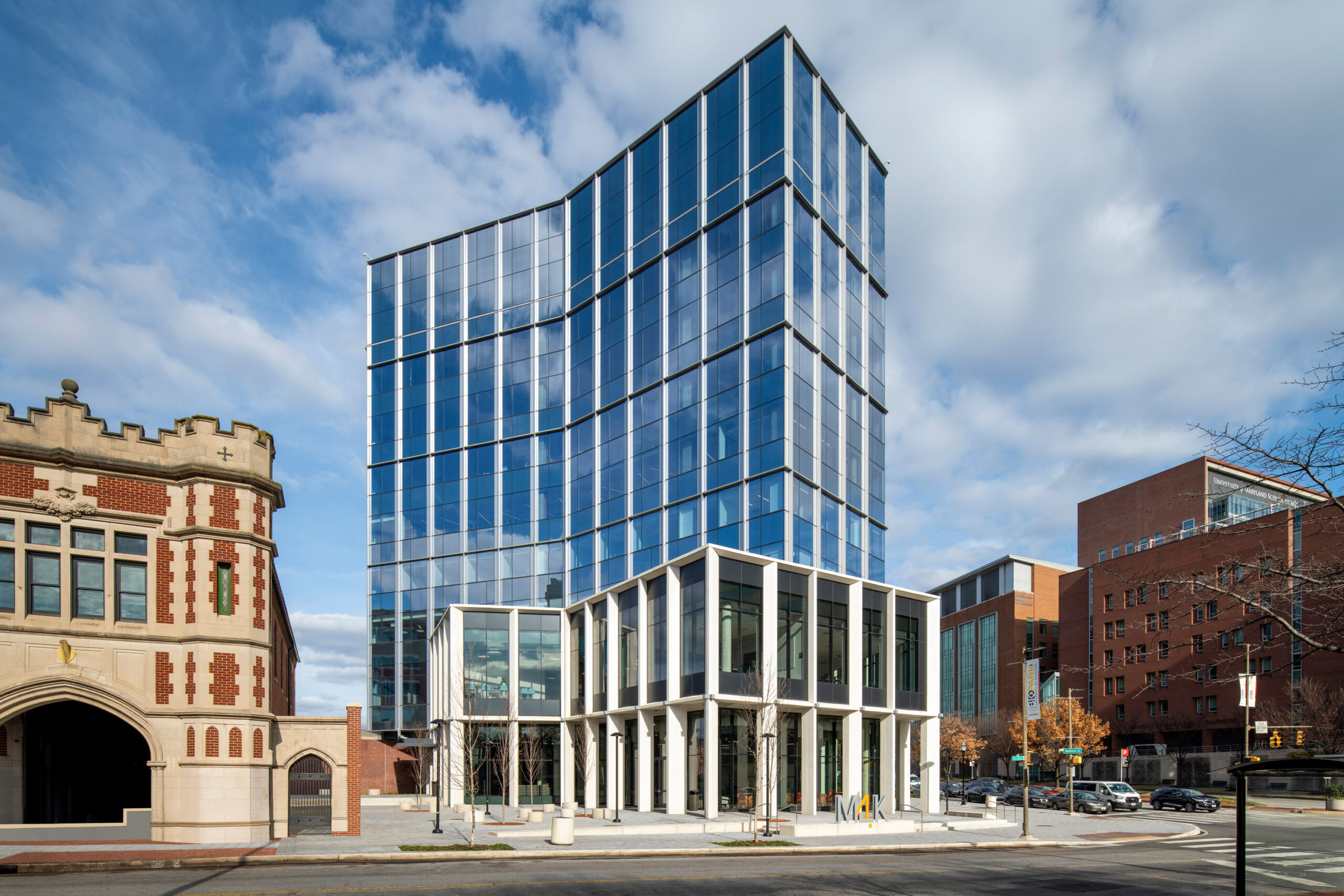
Back in that Baltimore taxi cab, my driver was an avatar for a threatened kind of small business, driving me toward a gleaming example of the breakthrough innovation that so many regions covet.
Pulling up to the glassy hub of science and invention, this longtime resident with an entrepreneurial instinct said to me: “I’ve never been here before.”