A West Virginia startup is betting Pittsburgh-area bars and restaurants are ready to trade paper promotions for digital table tents — and it’s making a push to get its devices in front of more customers.
Plug-In Promotions has been looking to expand its local market presence after participating in Anvil, a Pittsburgh-based training program for startups. The screens it sells are similar to ones found at chains such as Chili’s and Olive Garden, but the company is able to stand out from its large competitor Ziosk by focusing on independent bars and restaurants, according to cofounder and CEO Seth McLain.
“They only go for these big enterprise accounts,” McLain told Technical.ly about the market competition.
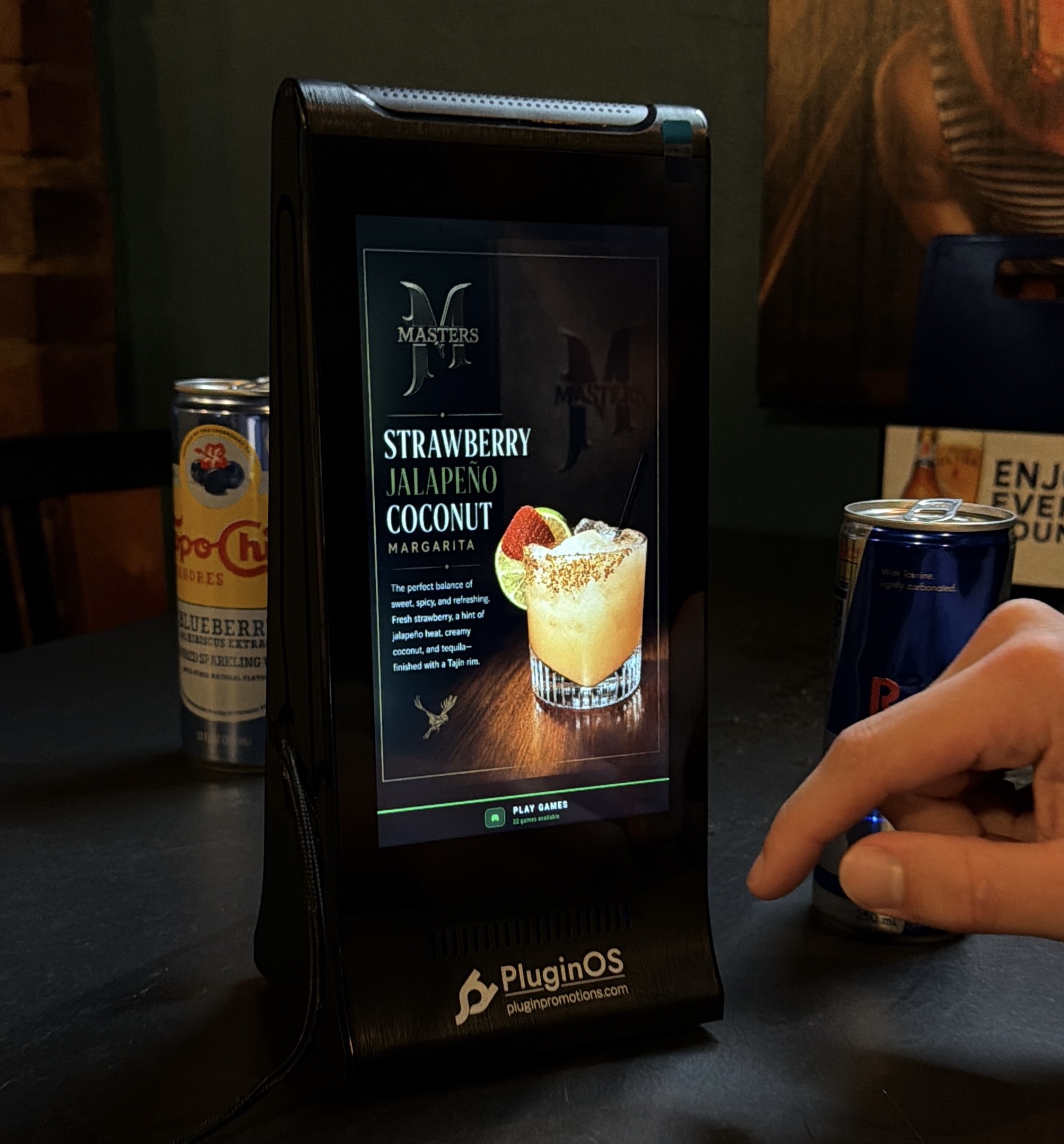
“Some of these small, medium-sized bar or restaurant owners, they want this technology, but they actually can’t buy it from anywhere, and that’s where we started building our system out to be comparable to [Ziosk’s], but actually serve that demographic,” McLain added.
Plug-In says it’s deployed more than 1,000 devices across more than 150 venues around the world.
Over the last year, Plug-In gave away its tech for free to five local establishments, in hopes of converting them to paying customers someday. Since, two local businesses started paying and six more joined the list. But three establishments didn’t opt-in.
Plug-In charges $120 to lease each device, plus $10 per month for the accompanying software service. Multiple restaurants that didn’t continue with Plug-In told Technical.ly the devices were a nice add-on and customers used them, but the businesses’ limited funds could go elsewhere.
“As a local business, we do a lot of the work ourselves,” Kaila Jackson, who manages The Yard in downtown’s Market Square, said. “Especially with the Square being closed, too, [during] the last year, we’re still bouncing back. If it was a paid service, I’m not sure we would have done it.”
Testing the tech on Pittsburgh bar tops
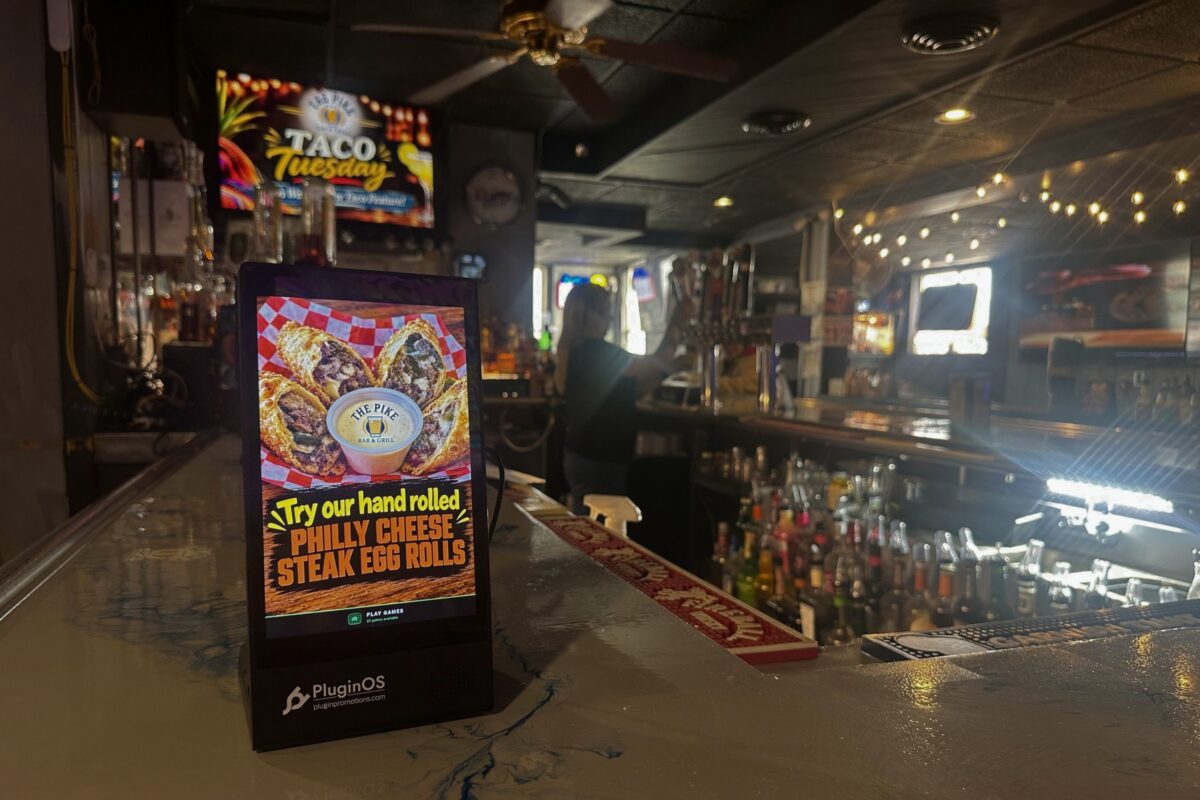
Jennifer Arthrell, an owner of the Pike Bar & Grill in East Pittsburgh, has been using the tablet-like devices to promote specials and events for about a month and she’s already seeing results in her sales numbers.
“A gentleman on Sunday stopped in, he was just going to have a couple of cocktails, and he ended up taking a quart of soup to go because this popped up in front of him,” Arthrell told Technical.ly, while pointing at a photo of her food on the Plug-In device.
Besides an uptick in sales, it’s also saving her time and money, Arthrell added.
Restaurants and bars often print out specials on paper handouts, so running promotions digitally saves on printing costs. Plus, the device has games to keep customers entertained and a charging port for phones.
“This is one of the best things — the plug-in,” Arthrell said. “It saves the customer from asking the bartender to charge their phone.”
More than 3 in 4 restaurant operators say technology gives them a competitive edge, per a 2024 report, and a majority of customers say they’d likely use a computer tablet to place an order or pay a bill.
Not every local restaurateur is sold on the usefulness of the product, though.
It’s not worth the price, according to Rob Weaver, an owner of Capri, a bar and pizza joint in East Liberty. There, one of the devices he got for free sits at the bar top unused.
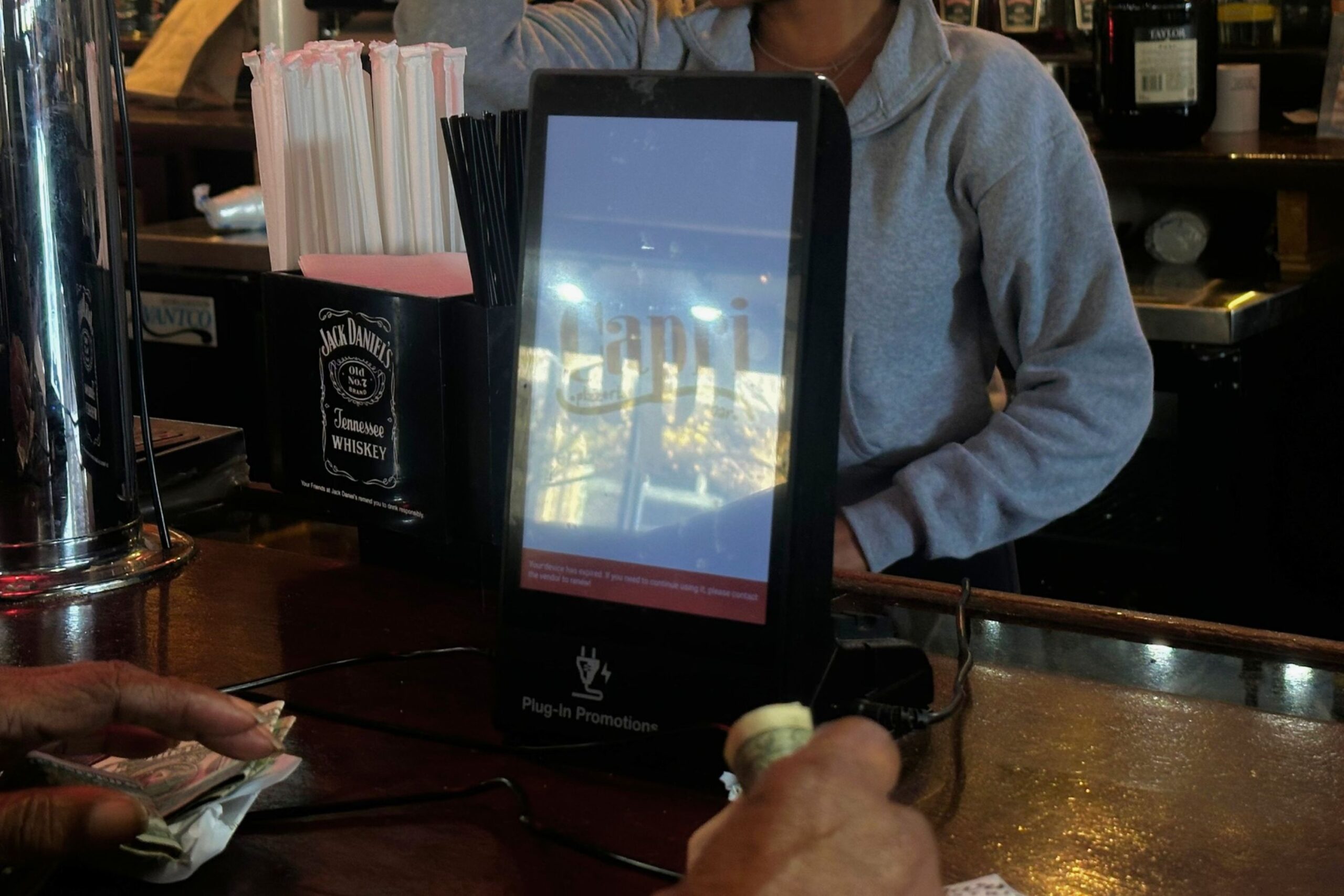
At The Yard, the LED screens did catch customers’ attention more than a standard menu, and the charging feature was nice to have, according to Jackson, although not necessary for a bar with outlets. Ultimately, “user error” was the biggest issue.
“They’ve fallen, things spilled, stuff like that,” Jackson said. “Some got replaced quickly. Then eventually it was just kind of hard to maintain on top of regular restaurant maintenance.”
Building a company with $3k and a dream
Plug-In started as a door-to-door sales operation in West Virginia back in 2023.
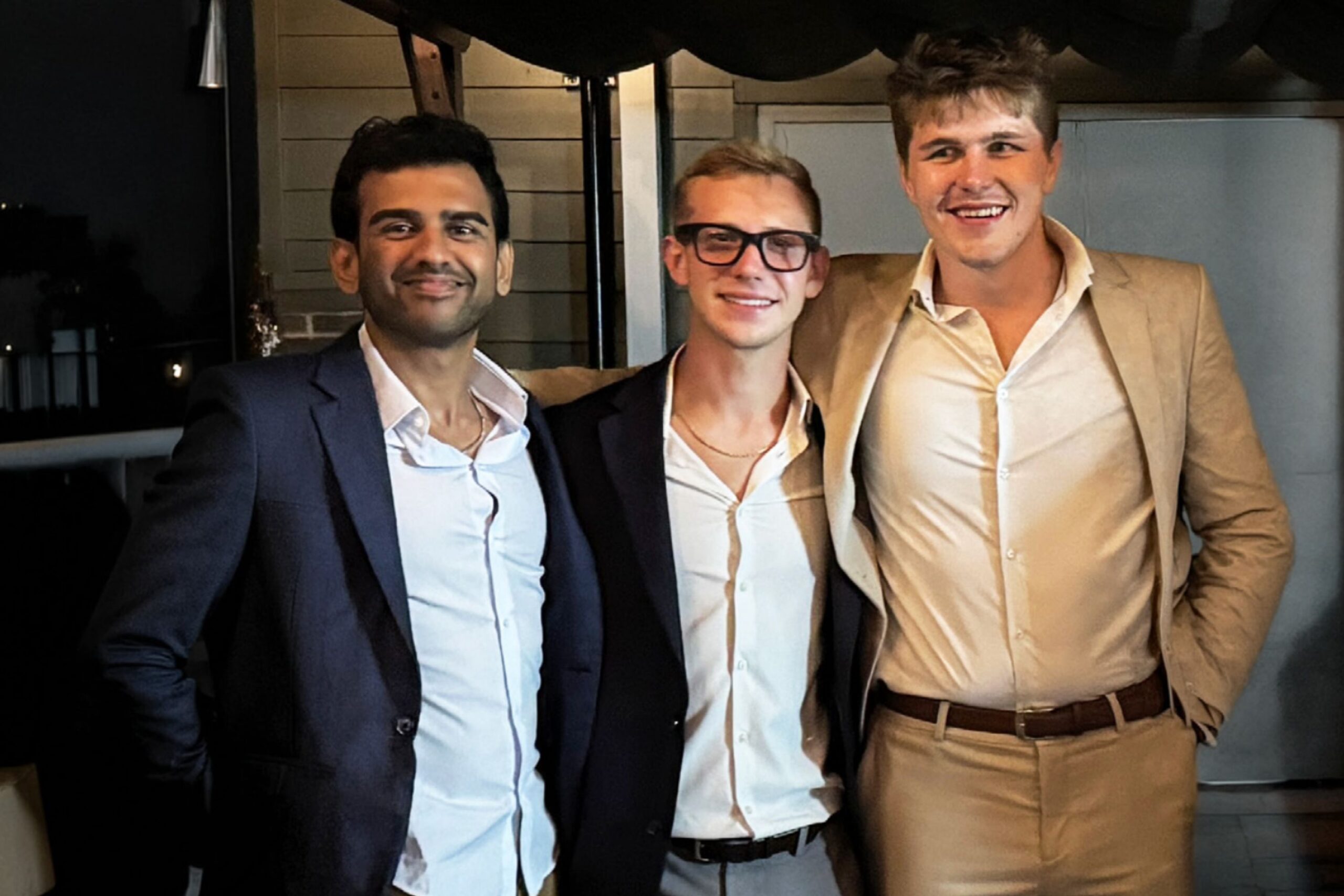
McLain — an entrepreneurship grad from West Virginia University (WVU) — said he was inspired by a friend who sold billboard ads. He thought businesses might pay to advertise on screens customers could see for much longer. Plus, the devices could charge phones, a useful feature when you’re stranded at the bar.
McLain’s cofounder Connor Briggs put the last $3,000 of his savings toward buying their first units from a manufacturer on Alibaba, the popular Chinese marketplace.
“We were just dumb enough to do it,” McLain said about why they took the bet.
They had some early success, making more than $1,000 on their first day of sales and going on to participate in WVU’s accelerator program and win big at pitch competitions, McLain added.
Now the startup employs a six-person team and has raised a total of $455,000 from a handful of angel investors, VC firms and startup support programs.
The global table tent market is valued at an estimated $1.3 billion and that’s expected to grow to $2.4 billion by 2034 thanks in part to digital options.
In recent years, Plug-In pivoted its business model, moving away from its original ads idea to building out features to be more similar to its competitors in the point-of-sale (POS) space. The global restaurant POS market is much larger, with an estimated value of more than $22 billion.
Plug-In plans to partner with Shift4, a large payment processing company, to provide pay-at-table services in 2027.
In the meantime, Plug-In is building out its sales team through a commission-based program for POS vendors, and it’s generating organic traction through social media videos made by cofounder Briggs.
“In the Northern West Virginia and Pittsburgh region, there’s so many helpful resources available to young entrepreneurs,” McLain said. “You just have to look.”