

This story was produced with support from the Howard County Economic Development Authority, which operates the Maryland Innovation Center and helps entrepreneurs and businesses of all sizes access the funding, guidance, and connections they need to grow in Howard County, Maryland. All stories are independently reported, with no partner review.
• Howard County, Maryland’s concentration of scientific R&D jobs and tech jobs are 10x and almost 5x the national average.
• But most of that is one large employer, and the software side shrank 4.2% last year as federal contracting contracted.
• The county’s economic development authority is investing in entrepreneurship and innovation.
Nine years ago this month, Maryland policymakers and economic development leaders boarded a boat in Baltimore’s Inner Harbor to unveil new plans for Howard County.
They were building an innovation district in a suburban office park, state and county officials said.
It sounded like a stretch. Innovation districts were thought of as urban downtown things — like Kendall Square in Cambridge, or the University of Maryland’s nearby BioPark campus. Howard County, meanwhile, is 300,000-odd people arranged around Columbia, a planned community created in 1967 as the “next America.” It was designed so people wouldn’t have to commute to somebody else’s city.
Wedged between Washington DC and Baltimore, Howard County was already one of the most technically rich places in the country. What was needed was collaboration.
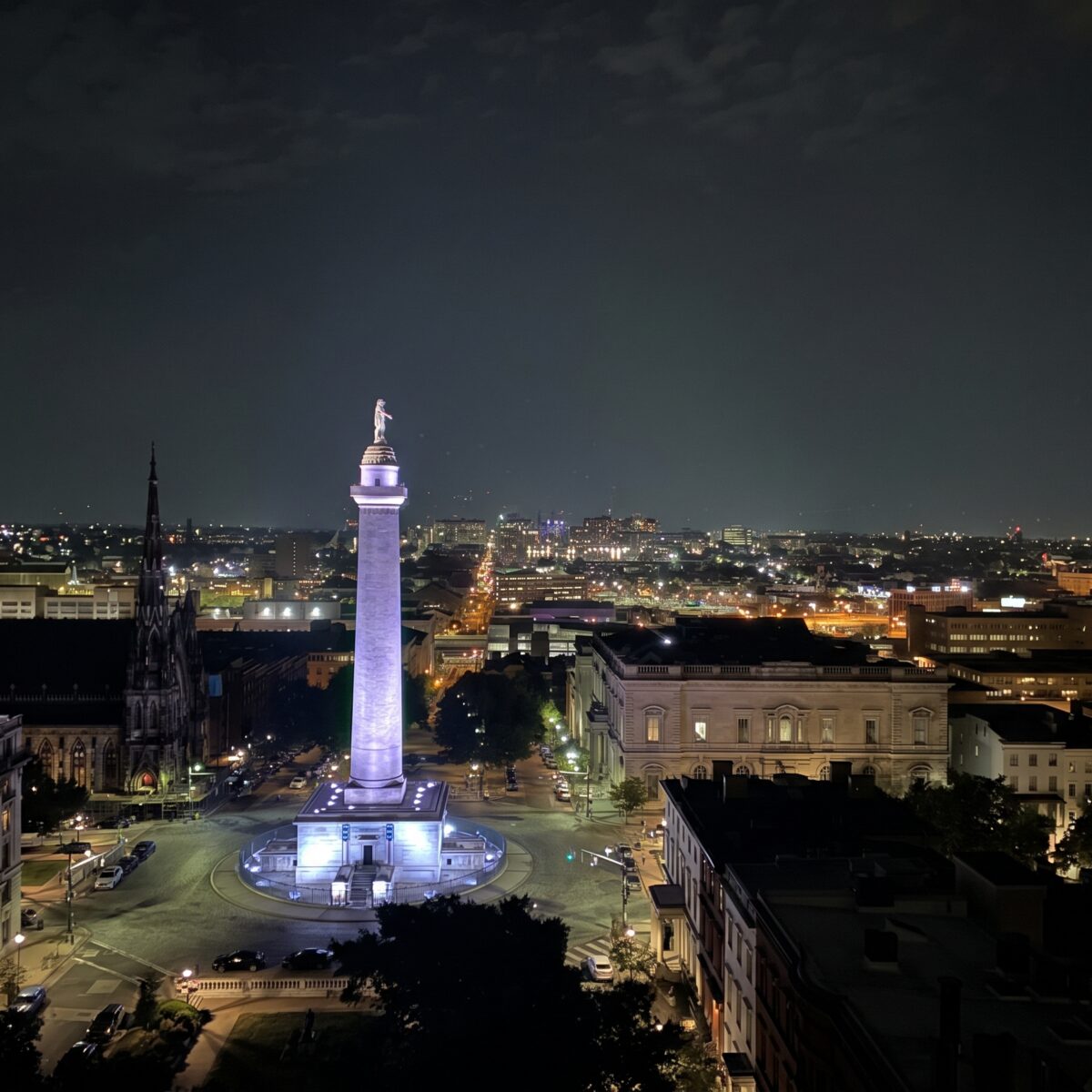
Held during that year’s Baltimore Innovation Week, the water-borne announcement by state and county officials, plus then-Baltimore Mayor Cathreine Pugh, was to signal Howard County as a bridge in the middle of one of the world’s densest innovation corridors.
Now Maryland’s wealthiest county, HoCo has around 170,000 jobs — and close to 10,000 are in scientific research; more than 12,000 are in computer systems. Put together, Howard County had close to 10x the national average concentration of research jobs last year, and 4.5x that in software.
Plenty of counties are dense in one of those fields. Almost none are dense in both.
Boston’s Middlesex County is a research colossus — 12.9x the national rate — with a relatively thinner commercial software base. So too for Durham County, NC, home to Research Triangle Park. Northern Virginia’s Fairfax and Arlington counties are the mirror image: enormous software-services economies sitting on ordinary research bases.
Among the 410 US counties with at least 50,000 jobs, according to a Technical.ly analysis, Howard County has the highest density of both science and technology jobs in the country.
The risk of density and distribution
That strength comes also with Howard County’s greatest weaknesses. Its research density is overwhelmingly due to just one institution.
The Johns Hopkins Applied Physics Laboratory, in Laurel, employs more than 8,800 people and is the county’s largest private employer. The rest of the research jobs are spread across 112 establishments. Take APL out, including its splashy campus, and the research density mostly goes with it.
The software side looks completely different: Those 12,000 jobs across 1,070 establishments, an average of 11 people each. That’s a long tail of small firms — consistent with what Jennifer Jones found in 2023 when she took over the Howard County Economic Development Authority (HCEDA). She reported then that 80% of county businesses were small, with solopreneurs and 2- to 9-person shops surging.
Jones said something else in that first interview that reads differently now: “I think regionally, we’re [thought of] as more federal government contract folks and not innovative — but we are.”
This has become Howard County’s race against time: One of the nation’s best-educated and most in-demand workforces is heavily reliant on a few big research institutions and a slew of tiny government contractors and software services firms. Economic development needs to invest in entrepreneurial dynamism and a more diverse economy. To do so, tiny entrepreneurial sparks need to grow bigger and faster — supporting the lifecycle with programming at the Maryland Innovation Center and events like HoCo Hive.

Those risks have become less theoretical. Between January 2025 and March 2026, Maryland lost close to 30,000 federal jobs, more than any state but California. Estimated corporate income tax payments from Maryland federal contractors fell roughly 60% in one fiscal year. Howard County ran career fairs for laid-off federal workers and contractors.
The county’s employment data shows the hit landing precisely where you’d expect. Computer systems design — the contracting-exposed piece — dropped 4.2% in a single year. Helpfully, research jobs grew, so the county absorbed the federal hits better than the rest of Maryland.
What the HCEDA has been doing for the past three years looks, in that light, less like standard economic development programming and more like an urgent investment in its economic future.
Recent raises show evidence of commercialization success
The Cyber Howard Accelerator runs 12-week cohorts and deliberately accepts applicants from anywhere in the country. Its most recent winner, Andrew DeFeo of Cipher, commuted weekly from Philadelphia to build a post-quantum cryptography platform, and took the top prize at July’s demo day.
The program is “an attraction tool as well, for the region,” organizer Bob Zhang said. A six-month growth program for Maryland-based cyber companies is slated for this fall.
The HCEDA is active here. Its HoCo RISE pandemic relief program pushed $21 million out across 2,200 grants, 60% to minority-owned companies, and deliberately refused a first-come-first-served model so bigger firms with finance staff couldn’t hoover up the money. It won a national county government award for it.
And the commercial evidence is arriving. Columbia-based Vheda Health raised a $47 million Series A last month, its first institutional round after 13 years of growing on health-plan contracts; more than half its 110 employees are in Maryland.
Columbia’s Balance Theory raised $19 million in August, led by Syn Ventures with TEDCO and DataTribe following, and said it intends to hire out of Maryland’s intelligence-community workforce. Said CEO Greg Baker to Technical.ly: “We think Maryland has some of the best cybersecurity and AI development talent in the world.”
Both are product companies in a county long read as a contracting county. Tenable, the publicly traded vulnerability-management firm with roughly 2,000 employees, has been headquartered in downtown Columbia for years. The firm was a frequent sponsor of early Maryland tech startup events.
Back in the 1960s, Howard County’s creation of Columbia was built on the theory that a place could be planned into existence rather than waiting to be discovered.
Fifty-nine years later the county’s economic development pitch is a version of the same bet: The ingredients are already here at a concentration nearly nowhere else has. The job is assembling them into something that compounds.