Early-stage agtech startups addressing real agricultural challenges can receive up to $50,000 in non-dilutive funding through a new seed grant opportunity in North Dakota.
The NSF AgTech Engine in North Dakota launched its Startup Seed Fund to support early-stage ventures looking to validate, de-risk and commercialize technologies built for producers. The milestone-based funding is designed to help founders meet technical, validation, market or commercialization objectives.
“Some of the most promising agricultural technologies reach a point where relatively targeted funding, producer access or validation can make the difference between an idea remaining on the shelf and moving toward the market,” said Hollie Mackey, CEO of the AgTech Engine.
Funded by the National Science Foundation, the AgTech Engine aims to bring together communities, producers, researchers, entrepreneurs and industry partners to connect rural expertise with innovation. The org works to scale technologies addressing food security while driving regional workforce and economic opportunities across North Dakota.
Priority areas and eligible activities
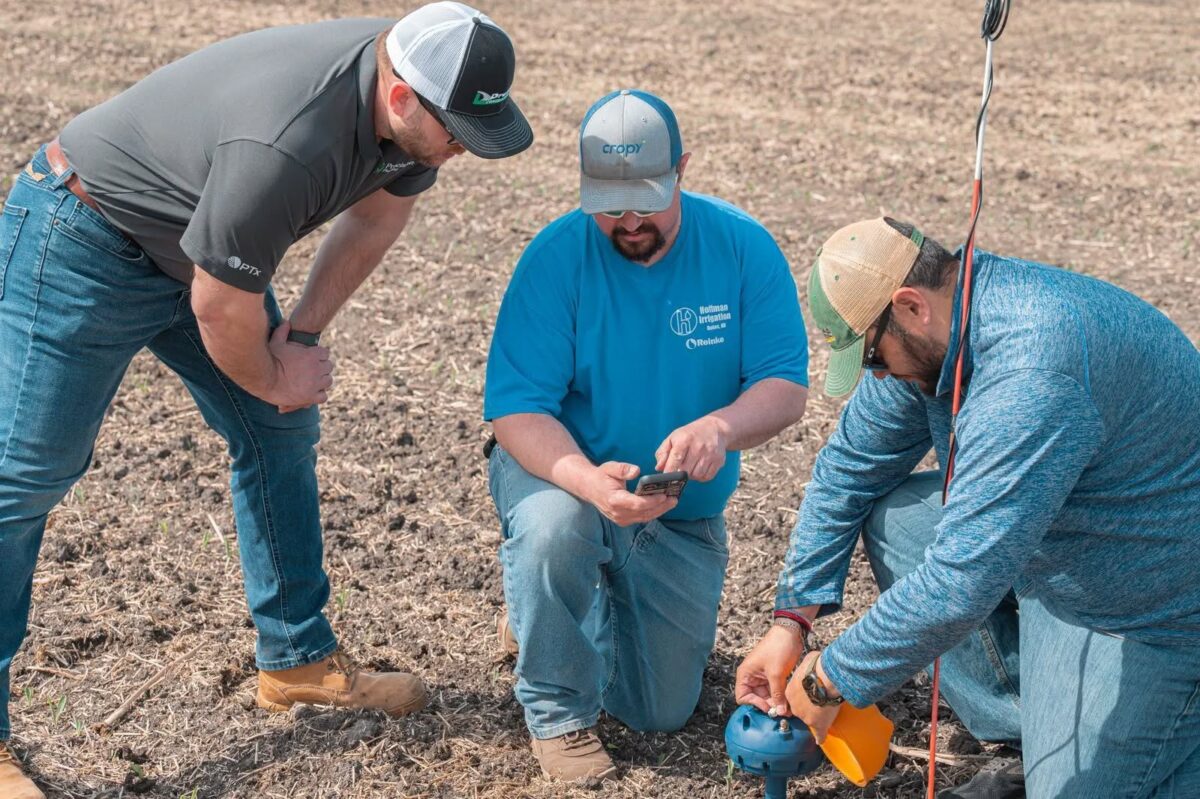
To qualify, startups must identify an agricultural problem or market need that creates value for producers, demonstrate engagement with an end user or producer, describe their technology’s current stage and present a credible approach to solving the problem.
Selected projects can use the award funding to support prototype development or refinement, technical testing, data collection and model development. Funding can also cover field, lab or user validation, customer discovery, intellectual property and commercialization strategy, regulatory or manufacturing planning, product or pilot readiness and preparation for follow-on funding.
The fund focuses on five priority areas:
- Water and resource resilience: Technologies that improve how water, weather, soil and other constrained resources are measured, managed and optimized.
- Intelligent operations and logistics: Automation, autonomy, sensing and operational coordination from field operations through post-harvest movement and storage.
- Breeding, genetics and predictive biology: Technologies that use breeding, genetics, predictive biology and bioinformatics to improve crop performance, resilience, quality, nutrition and market value.
- Regenerative systems and crop protection: Innovations focused on soil health, biological inputs, nutrient efficiency and crop protection, with an emphasis on resilience and reducing avoidable loss.
- Quality, nutrition and value-added markets: Technologies supporting quality differentiation, identity preservation, nutrition-linked traits and new opportunities for value capture.
Deadlines and application details
Projects will be structured around clearly defined milestones, with selected teams responsible for tracking progress and demonstrating completion. Award funding must be spent by Feb. 28, 2027, though project deliverables may be accepted for up to one year following the award.
Applications opened on Sep. 14 and will be accepted through Oct. 16, 2026. Award notifications will go out on Nov. 6, 2026.
Founders can learn more and apply on the program website or send questions directly to [email protected].
“The Startup Seed Fund is about helping companies take that next meaningful step,” Mackey said, “while keeping real producer needs at the center of technology development.”