Defense giant Lockheed Martin is partnering with Montgomery County Public Schools through coding challenges in local classrooms, betting that early exposure to tech will help cultivate the region’s future workforce.
The company employs nearly 1,000 workers in Montgomery County, making access to skilled employees a primary reason for maintaining its presence in the area.
“Talent is in the top one or two reasons why we are in the county,” said Todd Cohen, senior lead of strategic workforce development at Lockheed Martin.
“Talent is in the top one or two reasons why we are in [Montgomery County].”
Todd Cohen, lockheed Martin
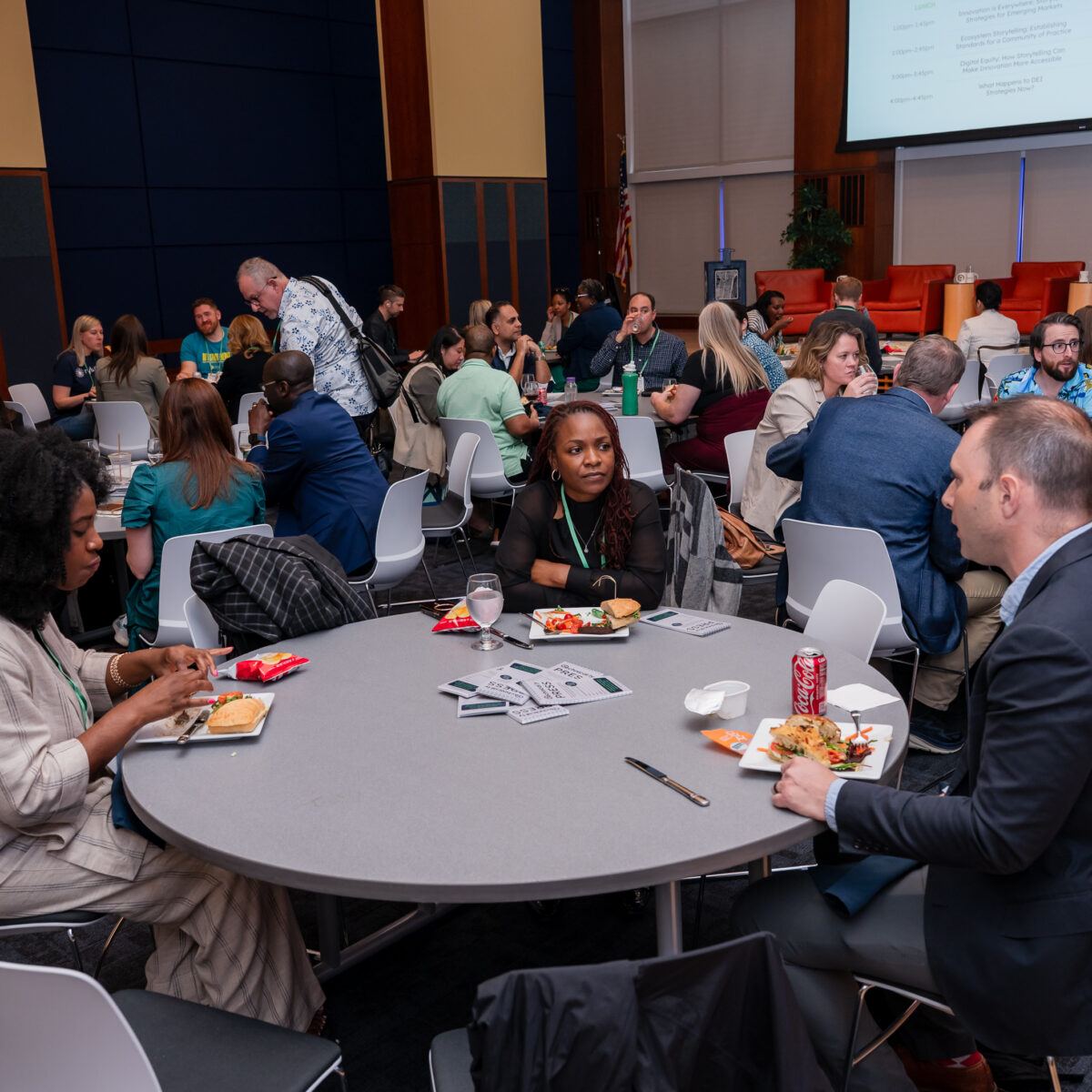
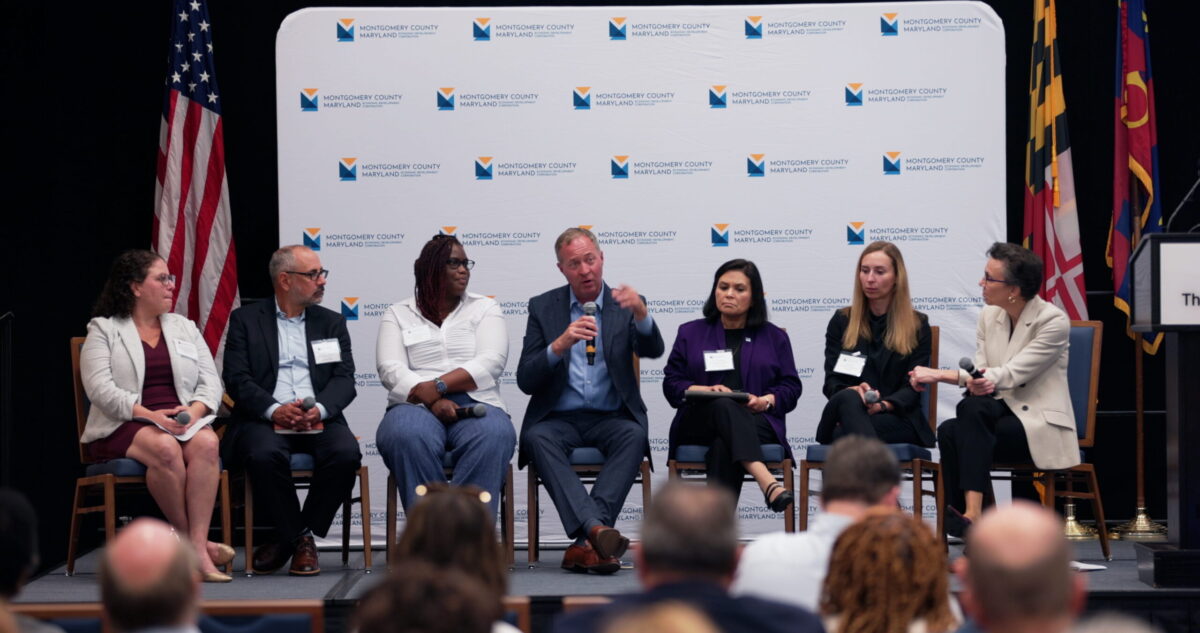
Cohen made that comment at a Sep. 8 panel titled “The Talent Advantage: A Growth Strategy for Companies in Montgomery County, Maryland,” hosted by the Montgomery County Economic Development Corporation. Nearly 120 business leaders, elected officials and community members gathered to discuss how local firms leverage regional academic and economic resources to hire, train and keep workers.
Moderated by Anne Khademian, executive director at The Universities at Shady Grove, the event featured executives from Lockheed Martin, TrilliumBIO, Thales Defense & Security, Johns Hopkins, Montgomery College and AstraZeneca.
For biopharmaceutical firm AstraZeneca, which employs more than 5,000 workers and contractors in the county, local school networks are essential to filling technical positions. The company regularly hires graduates from Montgomery College and the Universities at Shady Grove, according to Tiffany Lukis, director of STEM and community engagement at AstraZeneca.
Training existing staff to fill key skills
For these local companies, investing in existing staff is just as vital as searching for outside candidates. At Suburban Hospital, employee training connects directly with keeping staff around long-term through programs like a certified nursing assistant course with Montgomery College and classes in English as a second language.
“A huge part of our talent strategy is to prioritize holding on to our top tier talent,” said Corey Lewson, program manager for workforce development at Johns Hopkins Medicine.
Smaller companies face different challenges as they grow. Lane Edwards, vice president of operations at Rockville-based TrilliumBIO, noted that his firm of fewer than 20 employees must constantly weigh whether to pay for experienced veterans or train junior employees from scratch.
Collaborative efforts help smaller teams bridge that gap. Through BioHub Maryland, companies can design customized training programs so new hires learn the exact skills required before starting work, according to Edwards.
Aligning local education with business needs
Keeping a strong pipeline of job candidates requires educational institutions to tailor their courses directly to employer demands. For Thales Defense & Security, a supplier of tactical radio and SATCOM communications which employs roughly 675 people in Montgomery County, local universities help deliver cross-functional training to existing workers.
That alignment yields concrete opportunities for students and workers alike, such as a six-week internship cohort created by Montgomery College to address a skill gap in 5G technology.
Beyond recruitment and training, keeping staff long-term relies on supportive workplace policies. Thales encourages employees to use available mental health resources, while Suburban Hospital maps out clear career advancement paths from day one. Suburban also conducts annual employee support surveys, scoring nine points above the national average this year, according to Lewson.
“The most important thing to understand about how Montgomery College approaches our partnerships is that we start with our employers’ needs,” Nawal Benmouna, vice president for STEM and health sciences at Montgomery College, said of the county’s collaborative model.
“We ask ‘What workforce problem are you trying to solve?’ and we determine what we can build together.”