
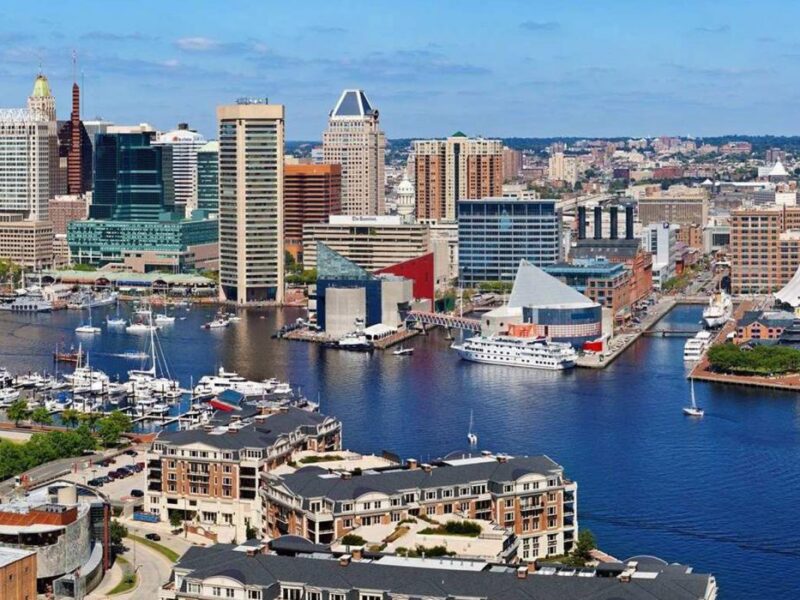
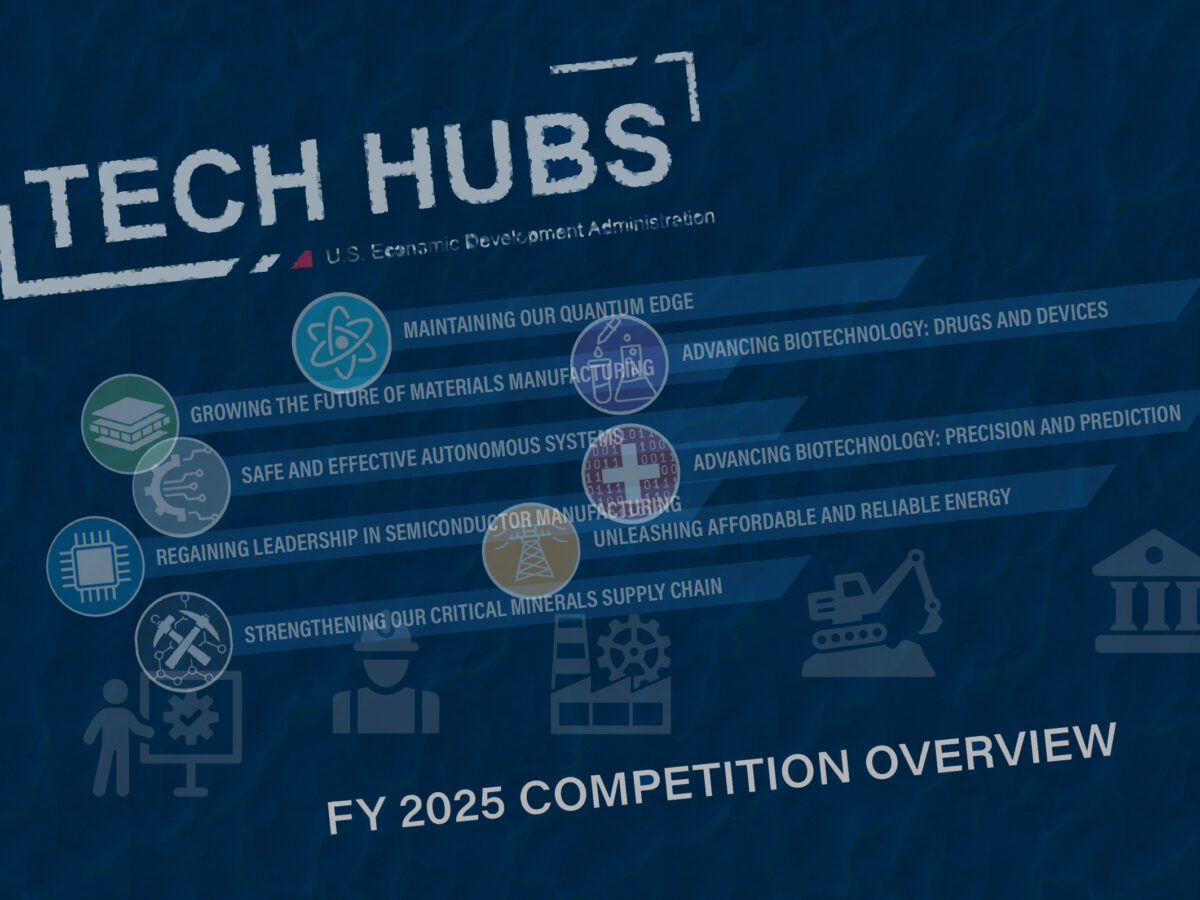
Baltimore beat out nearly 400 regions to become one of 31 federal Tech Hubs.
Our first funding proposal requested more than $70 million and included more than $800 million in commitments in our bid. Had it been successful, it would have represented the largest innovation investment in Baltimore’s history, helping generate roughly $8 billion in economic activity, create more than 30,000 jobs, and train or upskill over 11,000 Baltimore residents and young people for industries of the future.
And someone wants to argue that losing that may have been good for Baltimore?
Come again?
Federal place-based investments are good policy. Baltimore is in no position to sit out major federal opportunities. And this was never just about a grant or a lack of economic imagination, as Matt Hasan argues in his recent Technical.ly guest post.
This was never just about a grant or a lack of economic imagination.
Mark Anthony Thomas, Greater Baltimore Committee
The Tech Hubs program was years in the making. In 2019, Brookings Institution researchers documented something many communities already knew from lived experience: innovation was increasingly happening in fewer places. Five regions captured more than 90% of America’s innovation sector growth between 2005 and 2017. One-third of innovation jobs were concentrated in just 16 counties. More than half were concentrated in only 41 counties.
That is not good national policy.
The Brookings report even made the point directly. Its methodology recommended against Baltimore as a growth center because we sit within 100 miles of larger innovation hubs. The report called Baltimore one of several “formidable and deserving” metros that fell off the list because of proximity.
In other words, we were not dismissed because we lacked assets. We were boxed out because we were too close to places already winning.
That research helped shape a bipartisan awareness that America needed more regions competing in the industries of the future. The original Endless Frontier Act was far more ambitious, proposing $110 billion over five years, including $10 billion for Tech Hubs. While the legislation ultimately evolved into the CHIPS and Science Act, the mission never changed: Create more innovation centers, strengthen national competitiveness and ensure the next generation of industries was not concentrated in dominant coastal markets.
I saw that imbalance up close.
Revitalization requires the vision to tell a new story
I spent much of my career helping shape one of the world’s leading technology markets: New York City. I worked on strategies and partnerships that fueled major public investments to accelerate innovation growth. The world studied, copied and tried to rival what became one of the most successful intentional efforts to transform the nation’s largest city into a place where international startups, technology firms, investors, incubators, accelerators and diverse tech talent could thrive.
Leaving New York crystallized something for me: Not all markets are created equal.
My time in Pittsburgh, including serving as chair of the Power of 32 Fund, drove that lesson home. We worked to redevelop blighted industrial sites and distressed communities across Western Pennsylvania, Ohio, West Virginia and Maryland’s rural counties. It was impossible not to see how much economic strength those communities once had, and how profoundly they felt the consequences when industry left.
On a personal level, that work also gave me an economic lens for what I had seen in my own family across the Rust Belt. Depression, drugs, death and despair are real and painful consequences for communities where jobs have vanished and new economic opportunity has not arrived at the same scale.
That is why Baltimore deserved to be part of the Tech Hubs conversation.
Too often, Baltimore is viewed solely through the lens of its challenges. We all know that story. But what I saw when I arrived was something different: a region with extraordinary assets and a lesser-known post-industrial reality we had to confront directly.
How powerful would it have been to have major federal investment help us do that, especially as the sole storyteller tapped to stand with President Biden and tell the nation why this kind of investment matters for American communities that spent decades waiting for game-changing economic opportunities?

We had been telling the same tired story about Baltimore for too long. The region lacked a unified business attraction strategy. It did not have a coordinated way to tell its story to Washington DC. decision-makers. Many of our proposals were new, unproven and still being built in real time. The time crunch to course correct made the bid even harder against well-organized markets.
The loss still stings. Not because we failed to win a grant, but because of what was at stake.
Public-private funding alignment, with a shared strategy
Overall, the implementation of the Tech Hubs program has been a disappointment. The country recognized the problem but never fully committed to solving it. Congress authorized $10 billion, yet less than $1 billion has been deployed. Only 11 of the designated hubs have received implementation funding.
Meanwhile, the same imbalance continues. Roughly 70% of venture capital remains concentrated in a handful of markets. The AI boom has only intensified that pattern, with most of the capital, and much of the talent, flowing to the same established tech centers. Meanwhile, too many communities experience the tech economy as something done to them, not with them: tech bros, data centers, gentrification fears and industrial change that can feel invasive and inaccessible.
The funding was never the entire point. The designation forced the region to come together around a shared strategy, aligned public and private commitments and helped build the muscle for the work now moving through the Regional Innovation Office and UpSurge. Federal funding would have accelerated that work and helped scale it. But the mission remains the same: strengthen industries where Baltimore has real competitive advantages and build a stronger pathway between innovation and opportunity.
Progress, yes. But progress should not be confused with what might have been possible.