
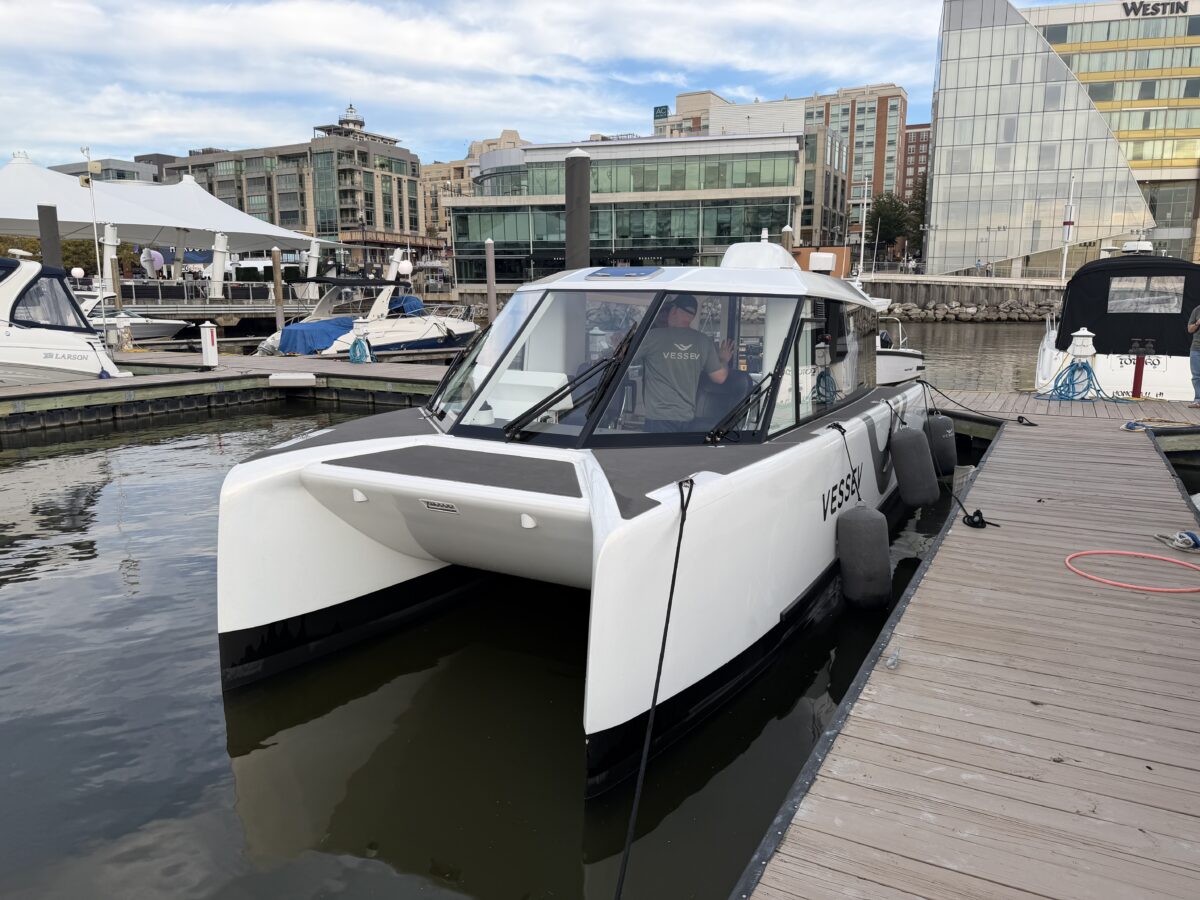
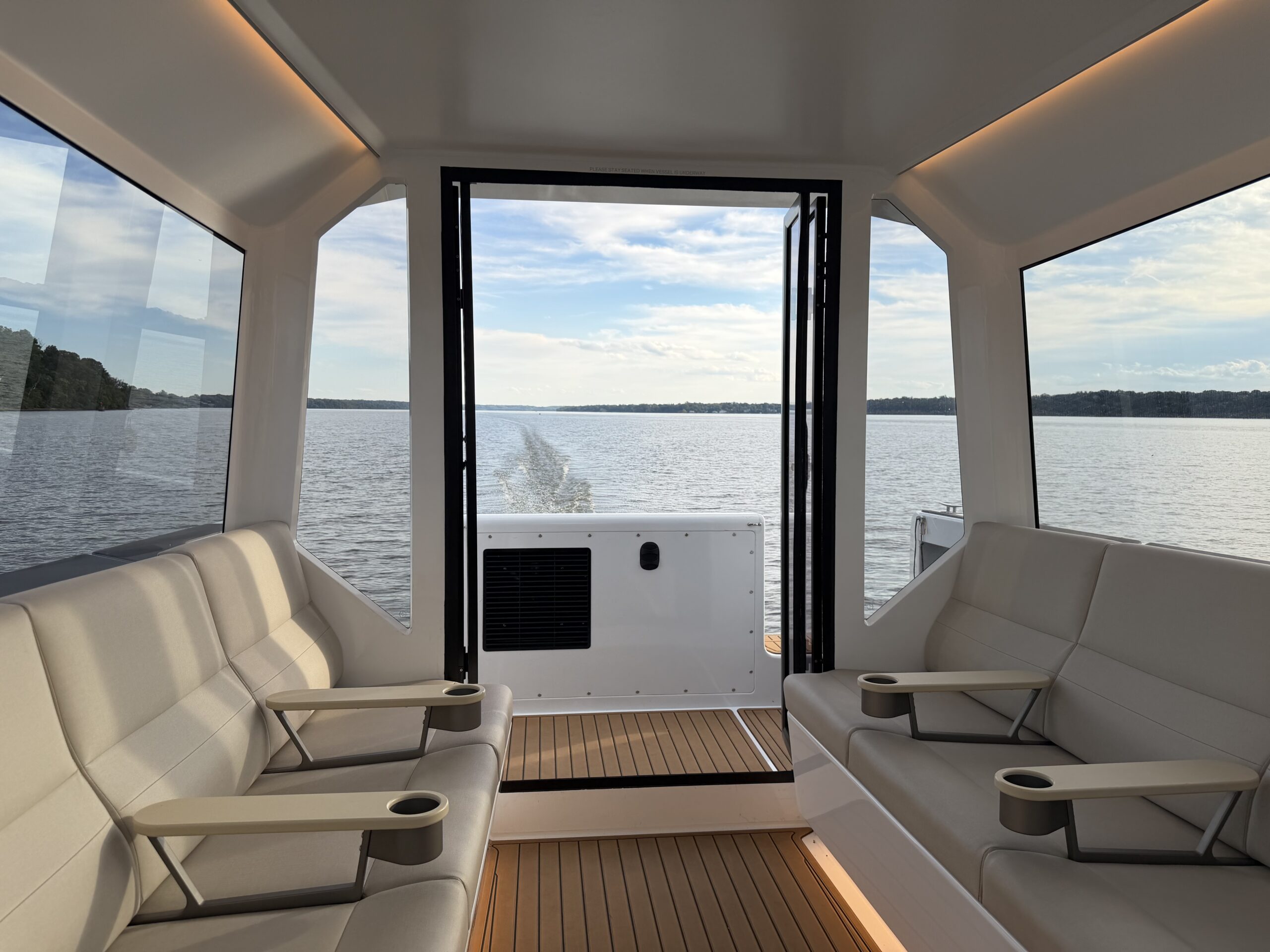
Flying above the water sounds like a perfect way to tour the Potomac River — especially for someone who’s been known to get motion sickness from the DC Metro.
Whether it was the preventative meds or the smooth technology behind Vessev‘s new electric vessel, I felt fine aboard the 10-passenger boat the New Zealand startup brought to Washington last week as part of its US tour.
The VS-9 uses hydrofoils, which are similar to airplane wings, to lift the boat about a foot and a half above the surface at cruising speed. Traditional boats guzzle diesel because pushing through thick water demands massive amounts of energy. This drag is also why electric boats are rare. Standard batteries typically don’t deliver.
“When you think about a boat moving through water, it’s basically a snowplow.”
Eric Laakmann, Vessev
That’s where the hydrofoils come in. Lifting the boat out of the water into the air saves energy, cofounder and CEO Eric Laakmann said.
“Water is heavy,” Laakmann said to me. “When you think about a boat moving through water, it’s basically a snowplow. It has to move all that heavy water out of the way, and as a result of that, boats are incredibly inefficient with their fuel consumption.”
Originally from Seattle, Laakmann didn’t expect to live or build a business in New Zealand. He spent seven years at Apple in San Francisco, working on the iPod team before helping bring the Apple Watch to market. Frustrated by housing prices, he eventually moved onto a boat and set sail around the world. His route took him from Alaska to Mexico, French Polynesia and eventually New Zealand — arriving just as the pandemic took hold.
He fell for the local culture, including a burgeoning tech scene he hadn’t known existed. “I realized this was a place I could contribute to,” Laakmann said. “I was stuck there… I had fallen in love with my captor.”
Vessev originally was developing hydrofoils for sport applications, but Laakmann encouraged the company to shift the focus, earning him a cofounder label. Armed with a recent $19 million Series A, the company is traveling North America to pitch the VS-9 to the tourism, hospitality and transportation sectors for use as water taxis or shuttles. The startup opened a US office in 2025, and recently announced an expansion to Lake Tahoe, providing an alternative to driving in the heavily trafficked tourist region.
When pitching to potential buyers, environmental sustainability isn’t the primary selling point. It’s cost savings.
“For most of our customers,” Laakmann said. “It’s not about climate. It’s actually just about what’s better for the bottom line.”
Boat meets drone tech
Hydrofoils have been around for almost 160 years, with Emmanuel Denis Fargot securing in 1869 the first known patent for applying hydrofoil principles to a rowboat. Hydrofoil vessels weren’t mass produced until the ‘60s, when inventors found ways to better control the boats without the cushion of water.
The idea to combine electric motors with hydrofoils was pioneered relatively recently. Sweden startup Candela is a leader in the movement, releasing in 2019 its first commercial offering for the leisure market, which leveraged software to make adjusting the foils easier based on wind and water conditions. Candela’s first electric hydrofoil ferry launched in Stockholm in 2024.
Other young companies are also tapping into this market, including Artemis Technologies in Northern Ireland. Laakmann said Vessev tech is different, specifically the durability of the batteries used in the boat.
“We’ve chosen our battery technology not based on what has the highest energy density,” he said. “But based on what’s going to last the longest and be the cheapest to operate over the long run.”
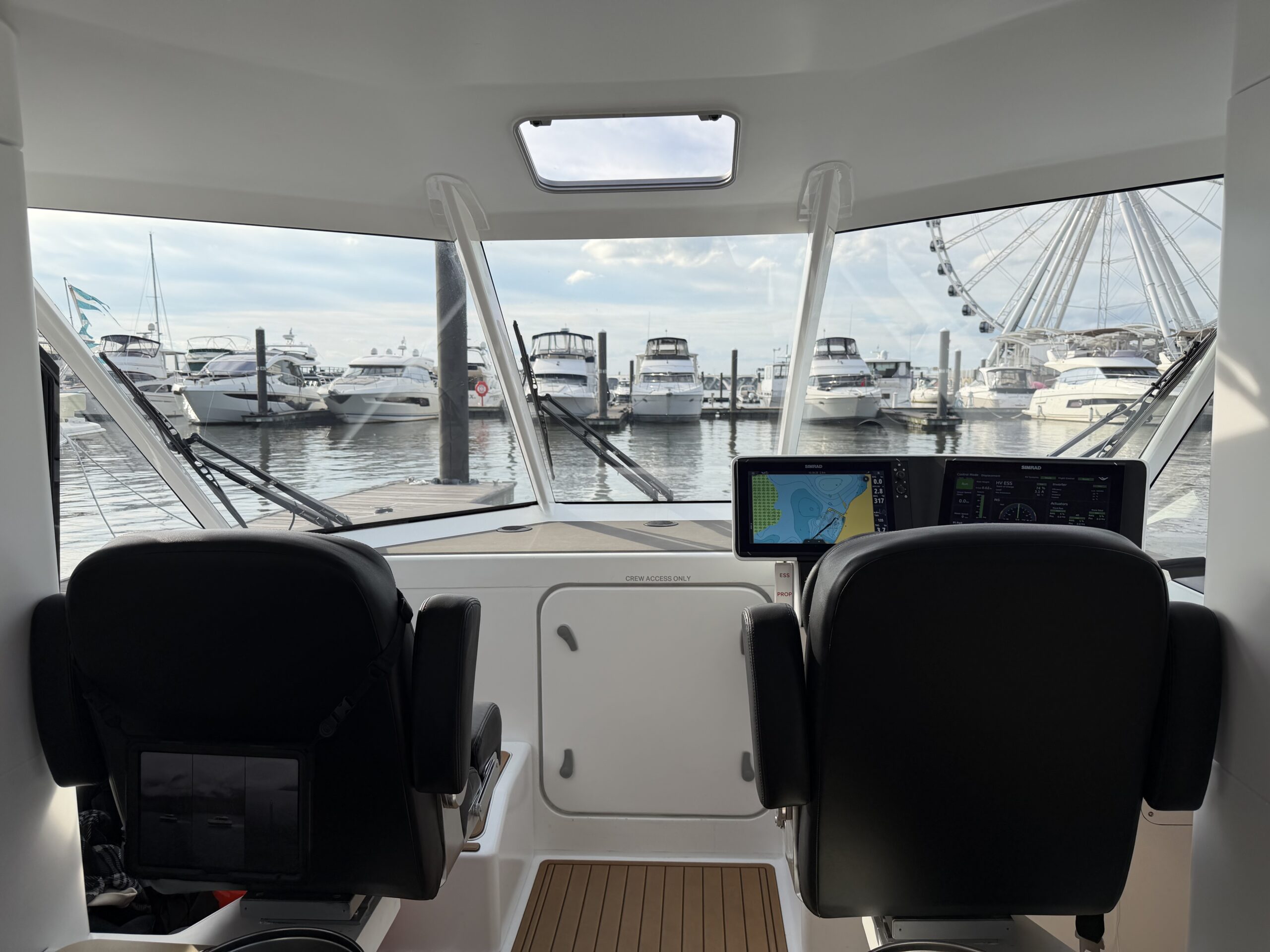
Once the VS-9 is in “flight” — yes, Laakmann and team refer to its travel as “flying” — the hydrofoils automatically shift based on wind, waves and the weight on board based on sensors. The pilot merely steers while the VS-9 largely flies itself, much like a drone.
Our cruise on the Potomac was pretty quiet once we were above the water. When docked, the VS-9 retracts its foils to sit slightly higher on the surface while charging. This shallow draft aims to protect marine life and allows the boat to navigate tight or shallow marinas.
Charging doesn’t require proprietary hardware. Customers can plug the 98 kWh battery — the same capacity as many medium-to-large EVs — into existing infrastructure.
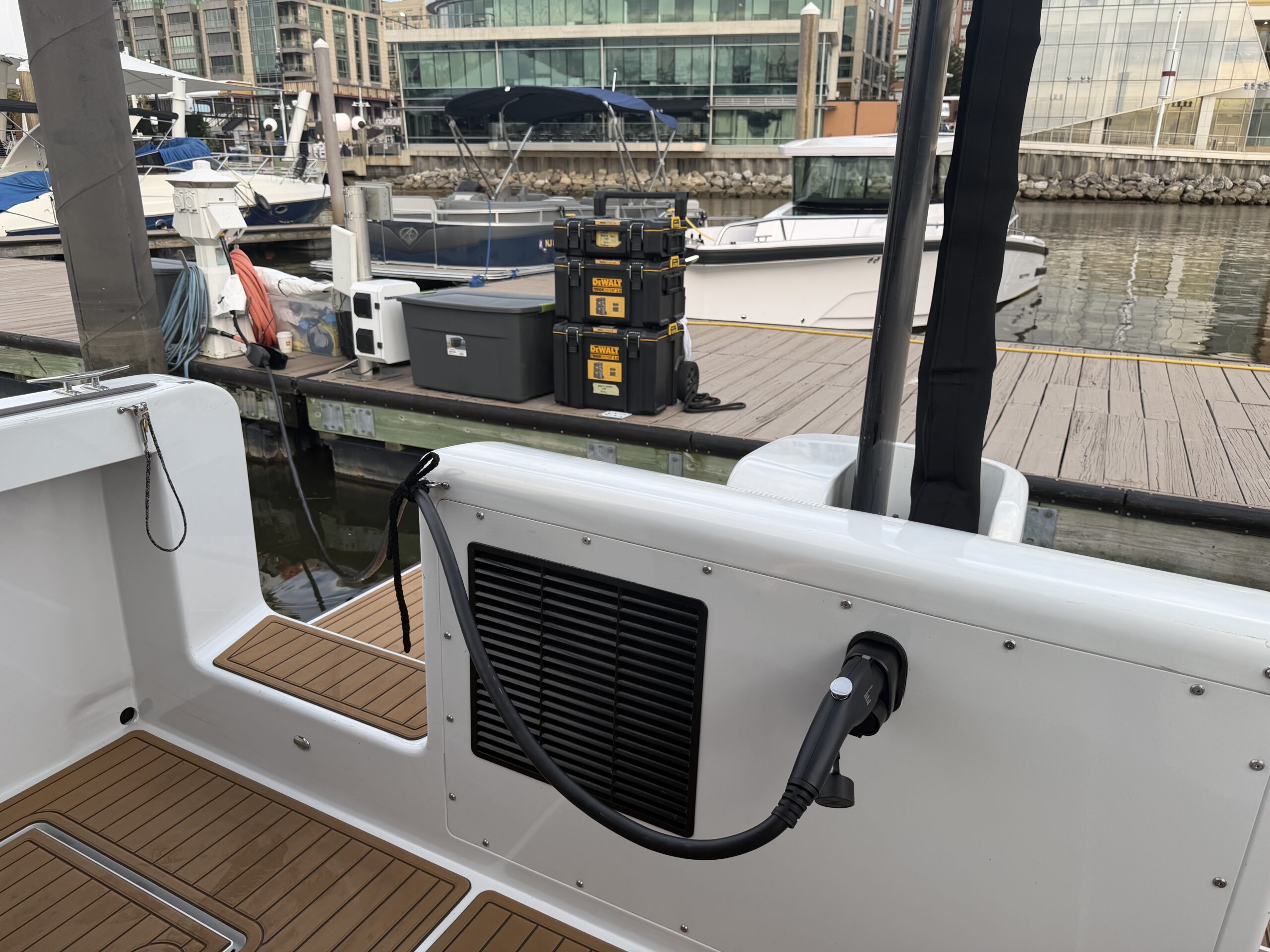
There aren’t that many of them yet: Vessev is in serial production, with two vessels in operation and a third slated for delivery by year-end. The boats rely on standard materials like carbon fiber and copper wire, with the motor magnets sourced from China, which dominates the rare-earth and critical mineral market.
Currently, Vessev manufactures everything, from the hydrofoils to the electric motors to the hulls, under one roof in Auckland, New Zealand. While Laakmann notes this setup will change as the company scales, he highly recommends early-stage founders keep production in-house to mitigate the risks of outsourcing.
“The communication will go so much faster,” Laakmann said. “You’ll be the master of your own destiny as well as where the company goes.”