When the federal government passed over Baltimore for that initial $504 million funding round, a lot of people in the local business community panicked.
The public narrative immediately turned into an exercise in corporate damage control, with institutional leaders reassuring everyone that missing the first big check was just a minor setback on the way to winning a future $70 million grant.
As an entrepreneur who has invested capital, years of work and my company’s future into this city, I don’t share that panic. In fact, I think losing that initial federal handout is exactly what Baltimore needed.
“For too long, our regional economic strategy has been top-heavy.”
Matt Hasan, AIRESULTS
For too long, our regional economic strategy has been top-heavy. When you build a business strategy around winning massive federal grants, you inevitably stop building for the market and start building for the bureaucrats. To qualify for those federal dollars, you have to create a massive, unwieldy coalition. You have to include the giant university labs, the legacy hospital systems and layers of city and state committees.
The result is always the same: a compromised strategy designed to protect and enrich the dominant institutional players who already have the infrastructure to absorb public money. Independent startups and early-stage founders — the people who build most of the businesses, create jobs and drive true innovation — get pushed to the periphery. We become talking points in a grant application rather than partners in an ecosystem.
The federal rejection broke that cycle. It stripped away the illusion that Washington was going to come in and solve our problems for us, and it forced a healthy, overdue confrontation with reality.
The long-term success of Baltimore tech depends entirely on market discipline, not government subsidies. We already have the raw ingredients to dominate clinical medtech and digital health technology. We have world-class research minds, an incredible concentration of clinical assets and state-backed groups like TEDCO that understand early-stage funding. What we have lacked is a lean, agile commercialization pipeline that allows independent entrepreneurs to build, scale and launch products without getting choked out by the slow-moving bureaucracy of our elite healthcare institutions.
By forcing us to restructure the application, this pause gives us the chance to build a real, functional ecosystem instead of a “paper hub” designed for a beltway review panel.
A market-driven tech sector is naturally more accountable to the city. When companies are built on private venture capital and local pre-seed investments, they have to execute in the real world. They don’t have the luxury of sitting inside hyper-polished, insulated campus enclaves. They build offices, hire local managers and create operational and technical jobs that legacy Baltimore residents can actually transition into.


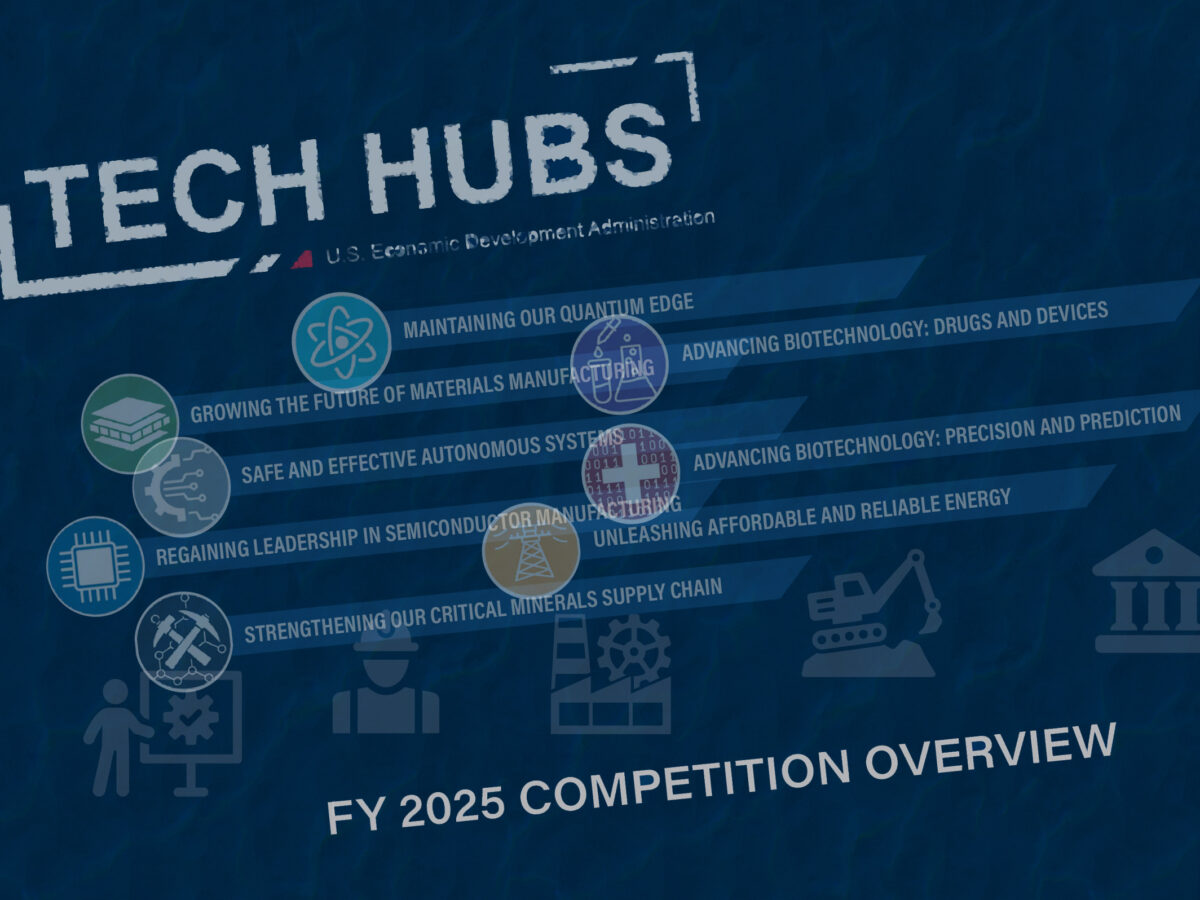
Our leadership should absolutely go back and pitch for the next round of federal funding.
But we need to do it from a position of independent strength. Federal capital should be treated as a secondary accelerant to speed up what we are already doing, not a primary life-support system keeping an artificial ecosystem alive.
The true momentum of Baltimore’s tech economy will never be measured by the size of a check from the US Department of Commerce. It will be measured by the number of independent, self-sustaining businesses we launch and keep here in the city.
By forcing us to stop waiting for a federal permission slip, this setback gave us the exact wake-up call we needed to build an innovation economy on our own terms.