
Startup profile: Aethero Advanced Analytics
- Founded by: Matt Dunlevy
- Year founded: 2021
- Headquarters: Grand Forks, ND
- Sector: Proptech and drone analytics
- Funding and valuation: $1.6 million raised, including a $1M seed from the North Dakota Development Fund, and a $3.5 million valuation
A North Dakota startup created a tool that provides a detailed report of a building’s health, offering property owners a non-invasive way to see potential problems and fix them before they get extreme.
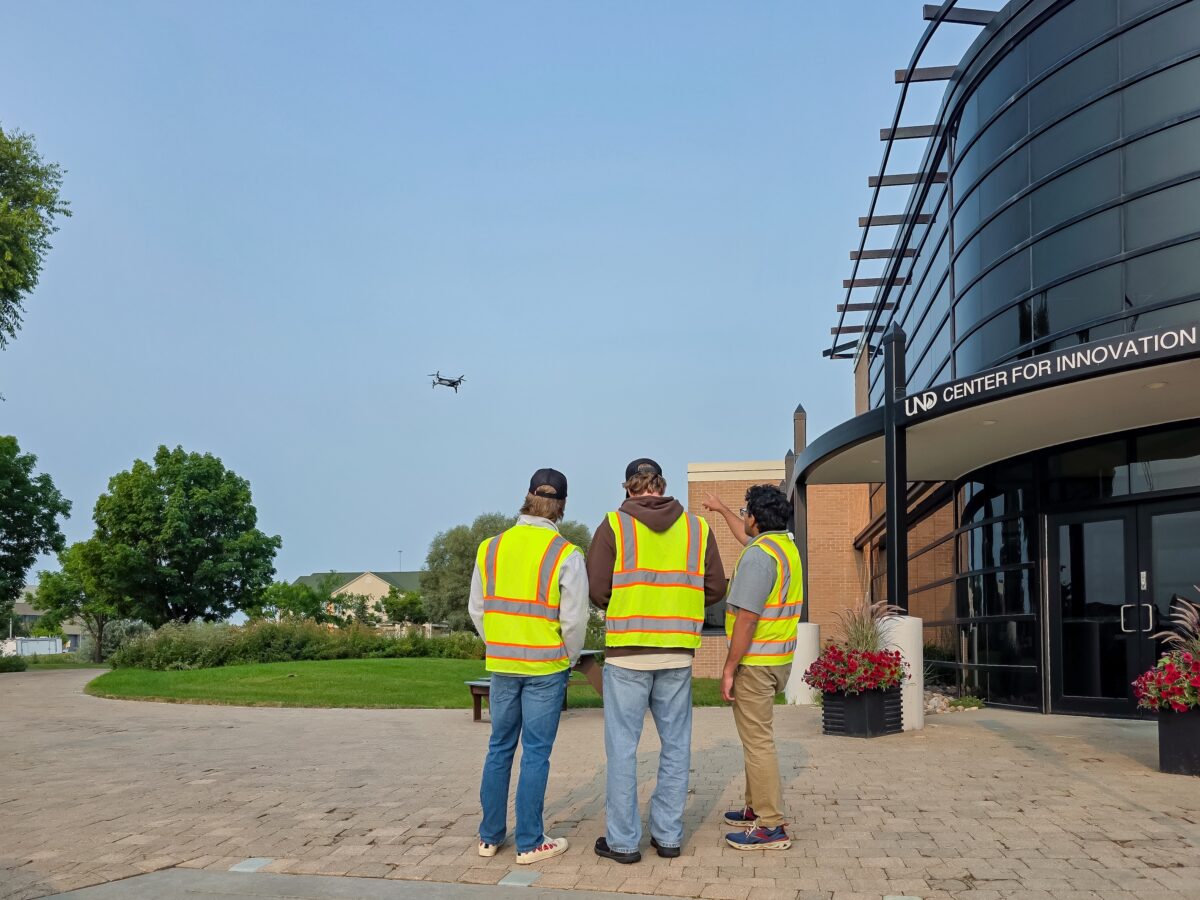
Aethero Advanced Analytics, based in Grand Forks, uses drones to scan buildings for energy patterns released from a building’s envelope, and then analyzes the collected data to spot issues such as air leaks, moisture intrusion and water damage. Ideally, the scan happens before there’s a major problem, as a preventative. Think of it like the annual visit to your primary care provider.
“The data we get out of it is not just thermal images where you’re like ‘Oh, this looks like a hotspot, so this looks bright and this looks blue, so something is wrong.’ No, we go way deeper,” said Karthik Balaji, Aethero’s senior director of technology and product development.
“Right now, we are in that stage where we are getting ready to hyperscale.”
Karthik Balaji, Aethero Advanced Analytics
“We can extract information on each pixel on the wall, window, door, or roof, and be able to extract and tell you exactly how deteriorated it is,” he said. “Levels of deterioration, what is wrong with the building, and how much energy is being lost.”
Aethero’s technology was initially developed with a state grant awarded in 2016 to SkySkopes, a now-defunct drone service provider, and a team of researchers at the University of North Dakota’s (UND) School of Electrical Engineering & Computer Science.
That same year, SkySkopes founder Matt Dunlevy thought of a new application for the tech. Watching the teardown of UND’s historic Memorial Union building, he wondered how data analysis might play a role in helping to preserve structures from succumbing to the ravages of time.
“I wish we could do something to maintain these old buildings better than tearing them down,” he recalled thinking.
That led him to found a new startup, one that would eventually become Aethero.
Solidifying the market and preparing for hyperscale growth
As the idea for a building-scanning company took shape, go-to-market strategy was the biggest question mark. What kinds of services would the company provide, and to whom?
“OK, you have this technology, but you have to figure out who your customer is and the ecosystem around it,” said Balaji.
In 2022, participation in programs like the National Science Foundation’s Innovation Corps — where company founders got a chance to interview 100 potential customers to gain insight on their businesses — helped the company identify its core customer base: facilities managers for commercial buildings.
The following year, with feedback received from the inaugural Fargo gener8tor accelerator program, the founders realized they had a branding problem and changed their startup’s name from Tau Drones to Aethero.
“When we were starting out, people thought we were selling drones,” Balaji explained.
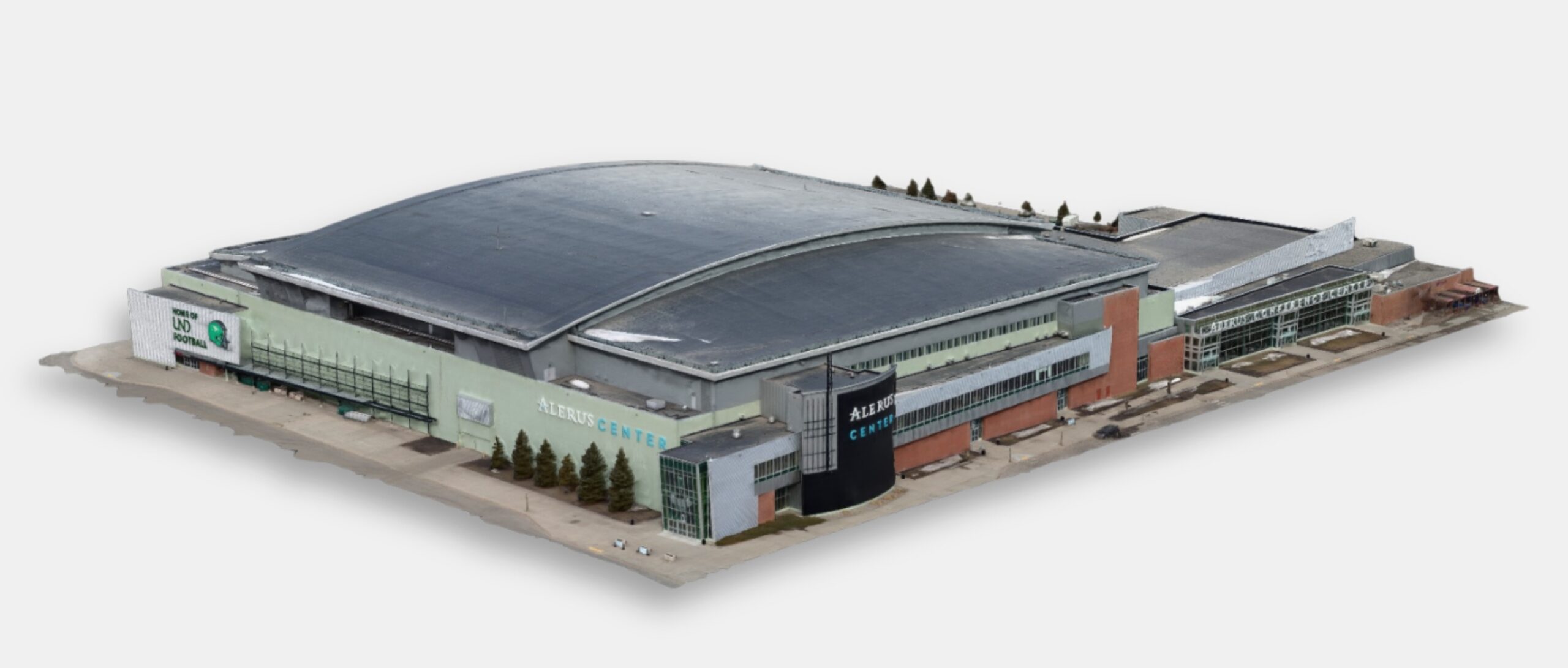
Aethero’s process begins by using a drone to scan a building, which takes, on average, 4 to 5 hours. From that raw data, team members spend around 7 days building a detailed qualitative and quantitative analysis of the facility. On average, this costs a customer $7,000 plus travel expenses, and everything is delivered via a web portal called Telos.
“This includes all the data collected and analysis that is done, where the problem is, how far from standard, and a sample 3D model of the building,” said Balaji.
He said the startup has worked with around 40-50 clients, including Tharaldson Hospitality Management, Moorhead Public Schools, the City of Grand Forks, and Cirrus Aircraft, among others. It has also worked as subcontractors with architectural and engineering firms like AE2S and JLG Architects. Other customers include manufacturing plants, hotels and universities, with work happening across North Dakota, South Dakota, Minnesota, Colorado, Tennessee, California, Washington and Nevada.
Being in close proximity to North Dakota’s robust drone ecosystem has been an essential part of Aethero’s success, Balaji said.
“Because you are in an environment where there are a lot of drone entrepreneurs, it’s no longer daunting,” he said. “The rules related to FAA and pilots are much more accessible and enough of a critical mass to be able to ask questions.”
Additionally, Aethero is now working with companies like Minnkota Power to assess its energy efficiency.
“Right now, we are in that stage where we are getting ready to hyperscale, where we are on the verge of rapidly increasing the number of analysts and the technology sweeps and the reproduction and implementations to a much higher degree than what we are doing now” Balaji said. “[Going] from a running pace to a sitting-in-a-car pace.”