Data centers are not all created equal.
The headlines often focus on giant hyperscale facilities — you’ve probably heard of Meta, Microsoft or Google building them — but the definition of “hyperscale” varies depending on who you ask.
At a much smaller scale, a data center can be a shipping container tucked inside your city to keep residents’ video streaming services running smoothly. Big Tech company Nvidia is even developing a miniature version and offering cash to people who sign up to run one at home.
We looked at the physical size, energy consumption and ownership structure behind the facilities.
Read on for a breakdown of the different types of data centers — and the nuance behind the buzzwords.
➡️ Jump to a section:
• Hyperscale: Data center mega-mansions
• Colocation: An apartment complex of servers
• Enterprise: Private, custom compounds
• Edge: The neighborhood corner store
Hyperscale: Data center mega-mansions
In data center design, “hyperscale” typically refers to a campus’s physical footprint and power capacity.
The exact numbers depend on who you ask, and the thresholds have shifted over time, according to Carrie Goetz, a data center designer with four decades of experience. For Goetz, a facility enters hyperscale territory once its total power demand hits one gigawatt, or enough electricity to support roughly 750,000 homes.
The International Energy Agency sets a lower bar, classifying facilities consuming 100 megawatts — about 10% of Goetz’s threshold — or more as hyperscale.
To other groups, hyperscale is defined by physical footprint. Market research firm International Data Corporation defines it as at least 5,000 servers and 10,000 square feet of space.
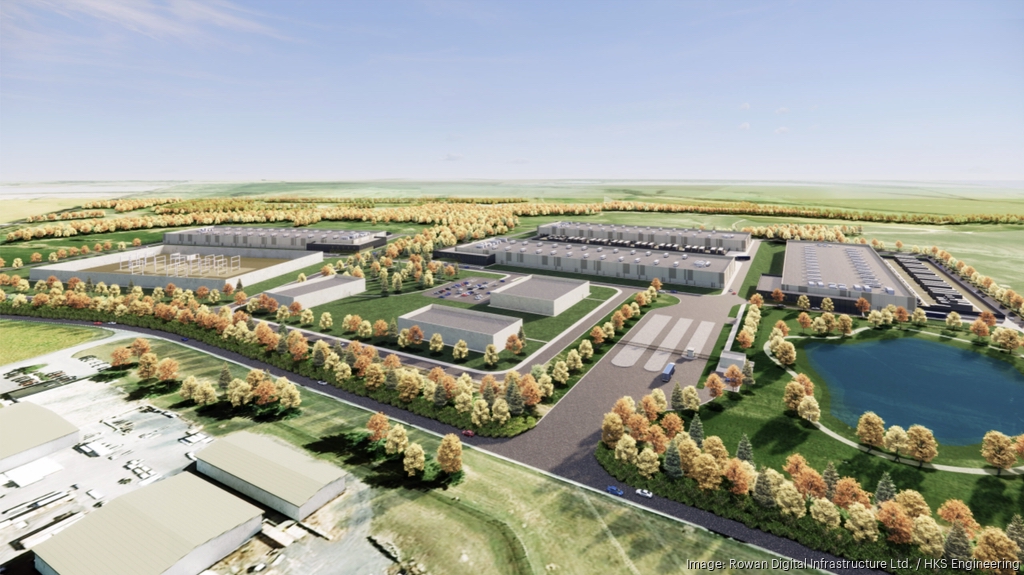
Colloquially, people have also started to use the term “hyperscaler” to refer to the tech giants that typically operate these facilities, big names like Amazon, Microsoft, Google and Oracle. Often, that’s true, since their data centers tend to be some of the biggest.
They’ve also become conflated with supporting AI, but that’s not always true. Many of them handle traditional internet services like cloud storage or video streaming.
Still, as demand grows, existing facilities are being upgraded and new ones built specifically to handle AI’s hefty energy demands.
Hyperscale campuses are often needed for advanced AI computing because training a new model requires massive amounts of power over weeks or months. Running an existing model to answer user requests — called inference — may not need that, as it uses far less energy per query.
Colocation: An apartment complex of servers
Colocation companies act as the “landlords” of the data center industry, Goetz said. They own and manage the underlying physical facilities, power supply, cooling systems and security infrastructure. Among the biggest names in this space are Equinix, QTS and Digital Realty.
The actual hardware inside — think servers and equipment racks — belongs to the tenants who lease space from these companies.
Typically, colocation facilities are built with a major anchor tenant already lined up. In those cases, facilities are often built to meet a company’s specific operational needs under long-term leases.
For example, Digital Realty and Aligned Data Centers will own and operate parts of the Quantum Frederick campus in Maryland, though tenants have yet to sign on publicly.
For hyperscalers, meeting massive demands requires both owned and leased infrastructure. Companies like Meta and Google balance their operations by building their own custom facilities and leasing in third-party facilities.
Nearly 60% of hyperscalers own their buildings, with the remainder leased through colocation providers, according to market research firm Synergy Research Group.

Enterprise: Private, custom compounds
When a single organization owns both the physical building and the hardware inside, it’s called an enterprise facility.
Banks, hospitals and government agencies opt for enterprise data centers to keep sensitive data under their control. Pharmaceutical companies also rely on them to manage massive amounts of proprietary research, as do film production studios looking to protect movies against leaks.
These facilities can fly under the radar, housed inside ordinary office buildings rather than giant warehouses.
But enterprise data centers can also reach hyperscale proportions. This is especially true for major banks, industry expert Goetz said, which own massive facilities to handle trading, process transactions and secure financial data.
Many organizations now take a hybrid approach, storing sensitive data in private facilities while leasing colocation space to handle broader internet needs.
Edge: The neighborhood corner store
Edge data centers are small facilities placed right in or near major cities. Instead of sending requests hundreds of miles away, edge centers process or store data closer to the people and devices using it to prevent lag.
The facilities typically work in conjunction with large, centralized data centers, handling time-sensitive tasks locally while sending other data or more intensive workloads to their bigger siblings.
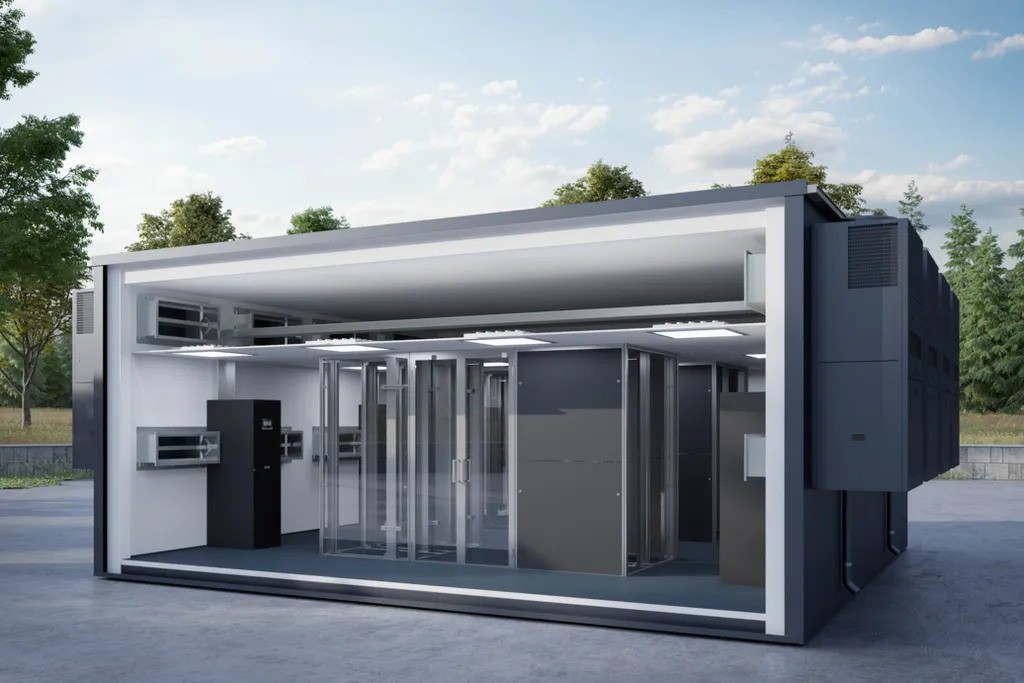
Edge data centers can be as small as a single room or shipping container. They can operate quietly under cell towers, inside offices or municipal buildings.
Streaming services rely on them to keep videos loading smoothly, Goetz said. For example, Netflix might store its top trending movies on a nearby edge server so they play better for viewers.
Edge data centers are also especially important for self-driving cars, which need to process some traffic and sensor data close to the vehicle. A car may need to quickly identify a nearby vehicle, pedestrian or obstacle and respond, for example. Sending that data to a distant data center and waiting for a response could introduce a dangerous amount of delay.