
A blood test that simplifies breast cancer screening. An artificial intelligence-powered app that helps music students find their voice. And a self-described “flight simulator for physical therapy students.”
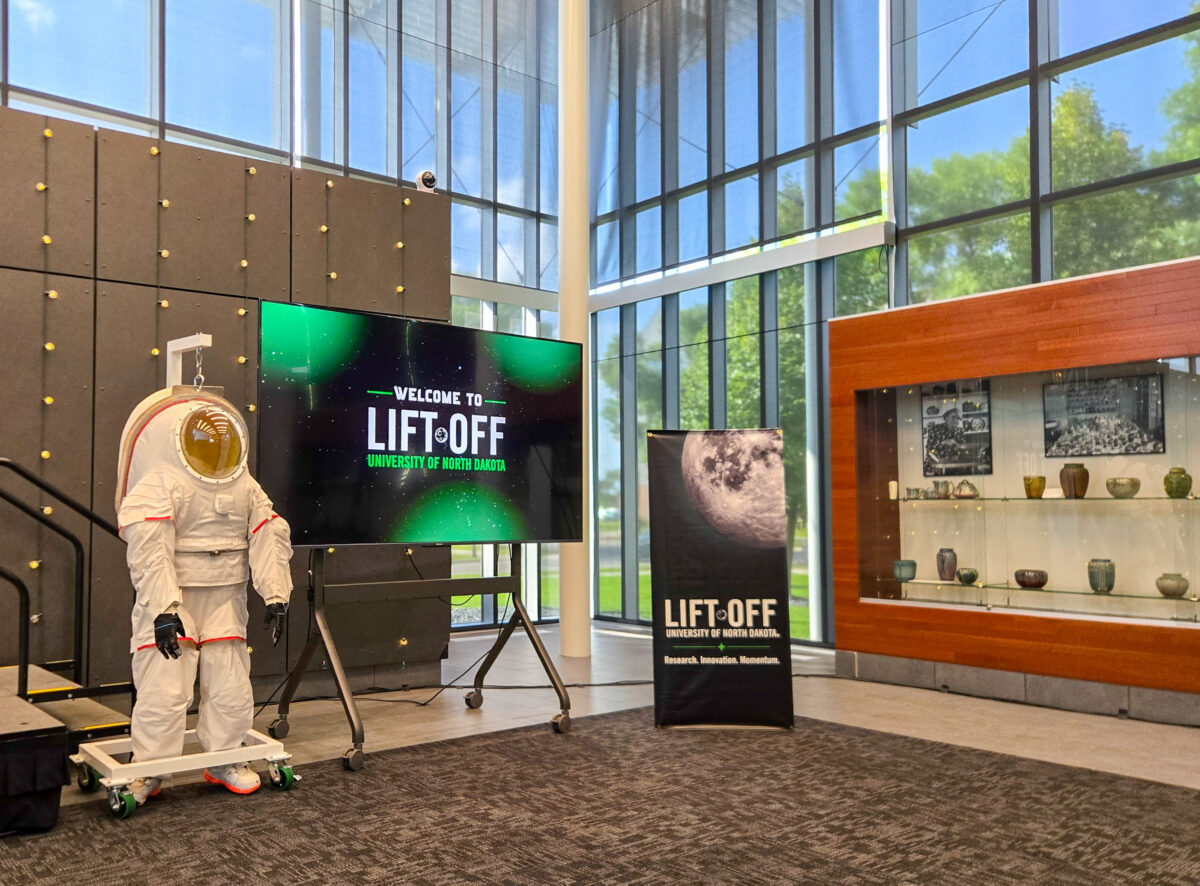
These three projects — each being built by a University of North Dakota faculty member, researcher or student — were selected as winners in the inaugural Lift-Off Showcase, hosted last week in the Gransberg Community Room of the Gorecki Alumni Center at UND.
The event capped off the university’s Innovation Moonshot Summer Accelerator, which included 10 startup teams that competed for a slice of $20,000 in alumni-sponsored early seed funding. (While the accelerator started with 12 teams, two dropped out due to personal circumstances.)
“There was this ambition that was coming, and we knew that we had struck a chord when we saw so much energy arise.”
Andrew Armacost, UND President
The accelerator was part of the Innovation Moonshot Initiative, a yearlong program organized by UND’s Center for Innovation (CFI) aimed at commercializing university intellectual property. The initiative launched earlier this year after President Andrew Armacost challenged the university to produce four new companies in one year.
Introduced at his 2025 State of the University address, the message resonated.
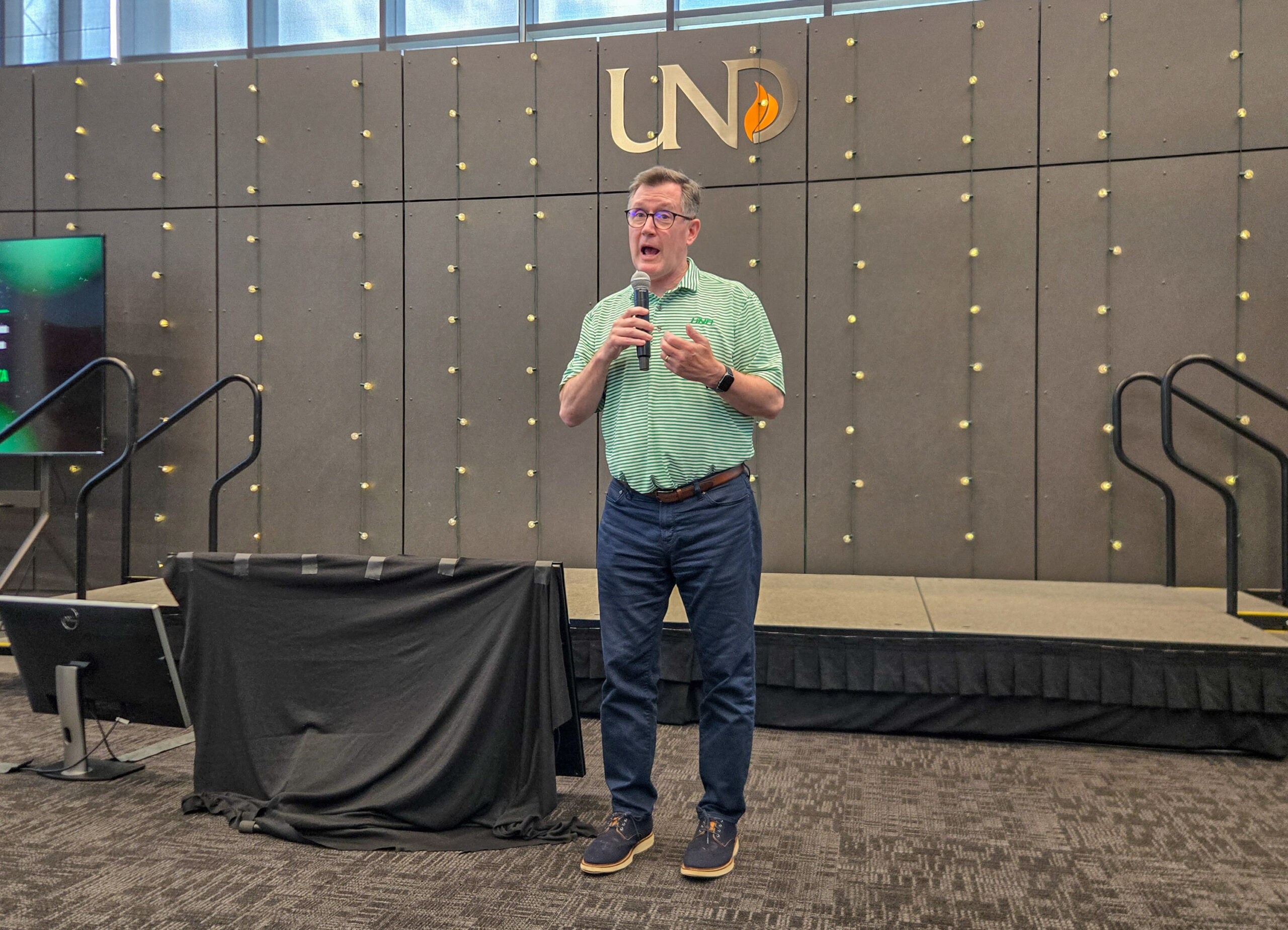
“I had a number of curious-minded people from across the campus, faculty members, and graduate students and undergraduates, who came to me proudly and said, ‘I want to be the moonshot,’” Armacost said. “There was this ambition that was coming, and we knew that we had struck a chord when we saw so much energy arise. This is the culmination of that energy.”
Getting breakthroughs out of the classroom and into the real world
UND last year was named a Carnegie R1 institution, a designation assigned to universities in the top tier of research activity. Tech transfer activity — the process of converting research into commercial businesses — has increased dramatically over the past two decades at these types of universities.
However, academics are not necessarily trained entrepreneurs. CFI director Amy Whitney approached Armacost last year to discuss how the Innovation Center could close that gap and turn laboratory work into real-world economic impact.
“The objectives of the accelerator are to help our faculty think through not just their technologies, but how their technologies solve problems in the marketplace where someone has the ability and willingness to actually adopt that solution and pay for it,” Whitney said.
A trio of funded winners
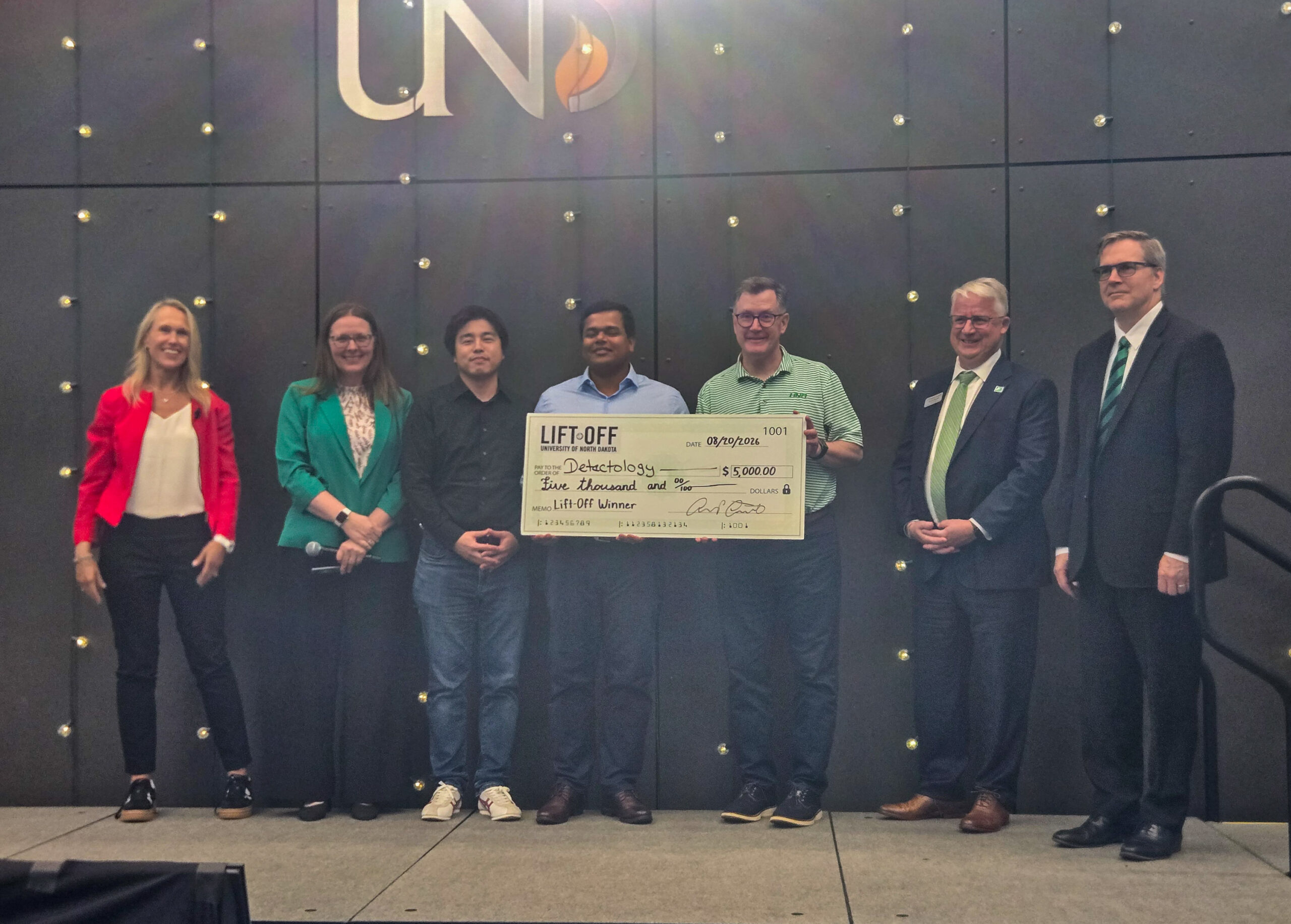
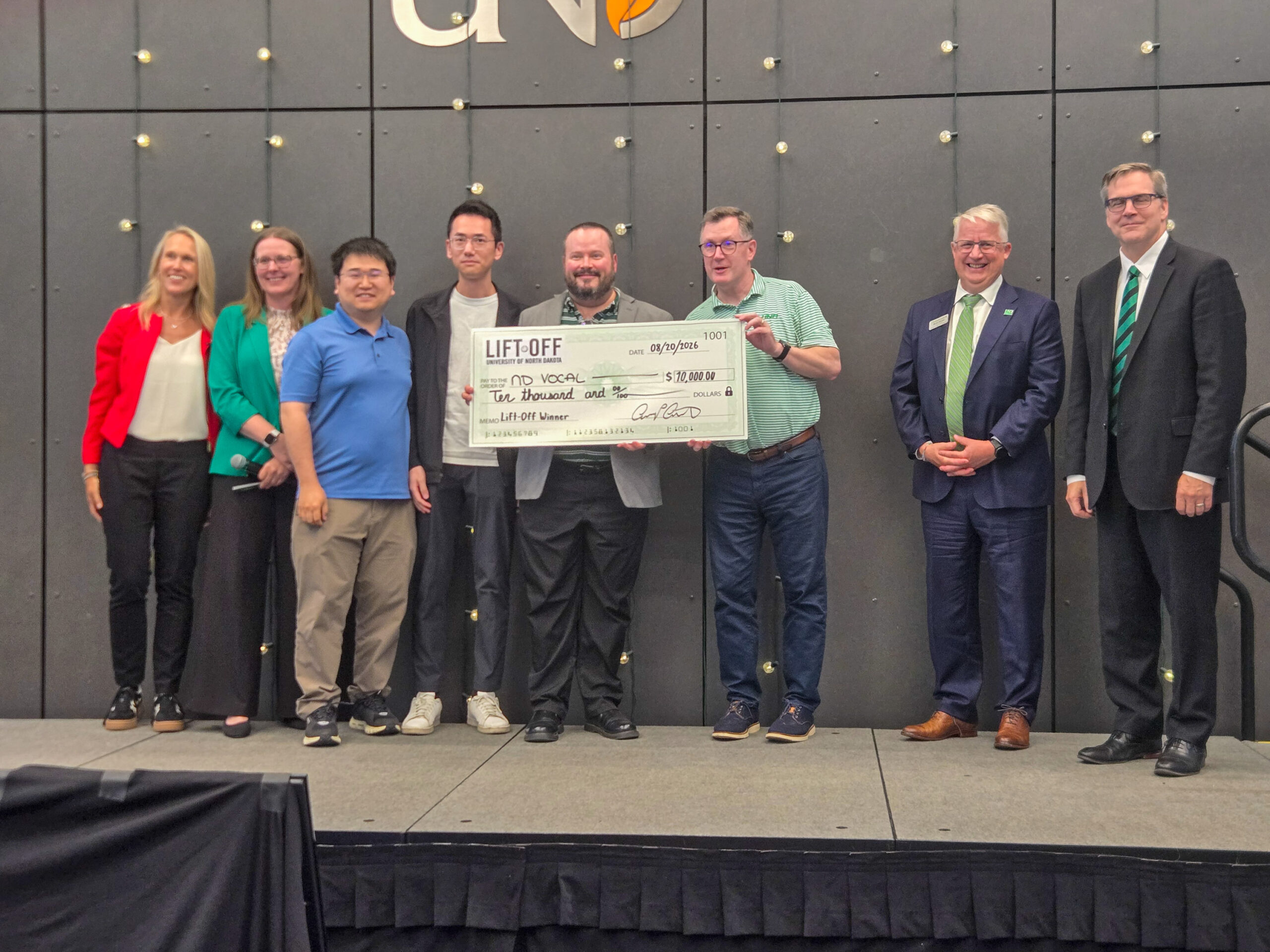
A panel of judges — Sarah Louise, director of gener8tor’s 1889 Fund; Randy Trask, CEO of Q Station; and Michelle Ciesielski, project coordinator of the Great Plains Hub of the National Science Foundation I-Corps — awarded prize checks to three winners who split the $20,000 pool:
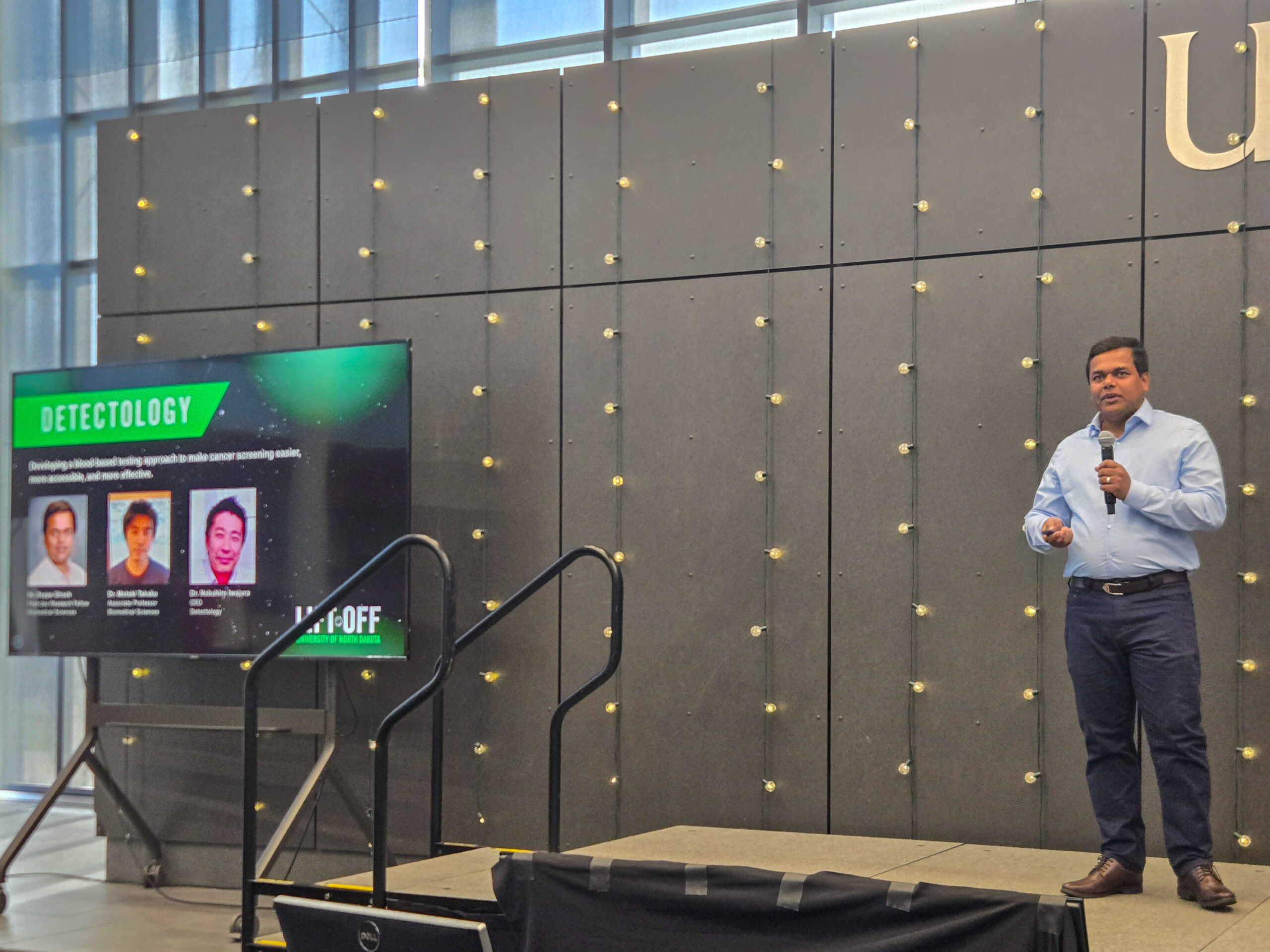
Detectology (awarded $5,000)
Biotech startup Detectology is producing a blood test that makes breast cancer screenings easier and more reliable. Ghosh presented.
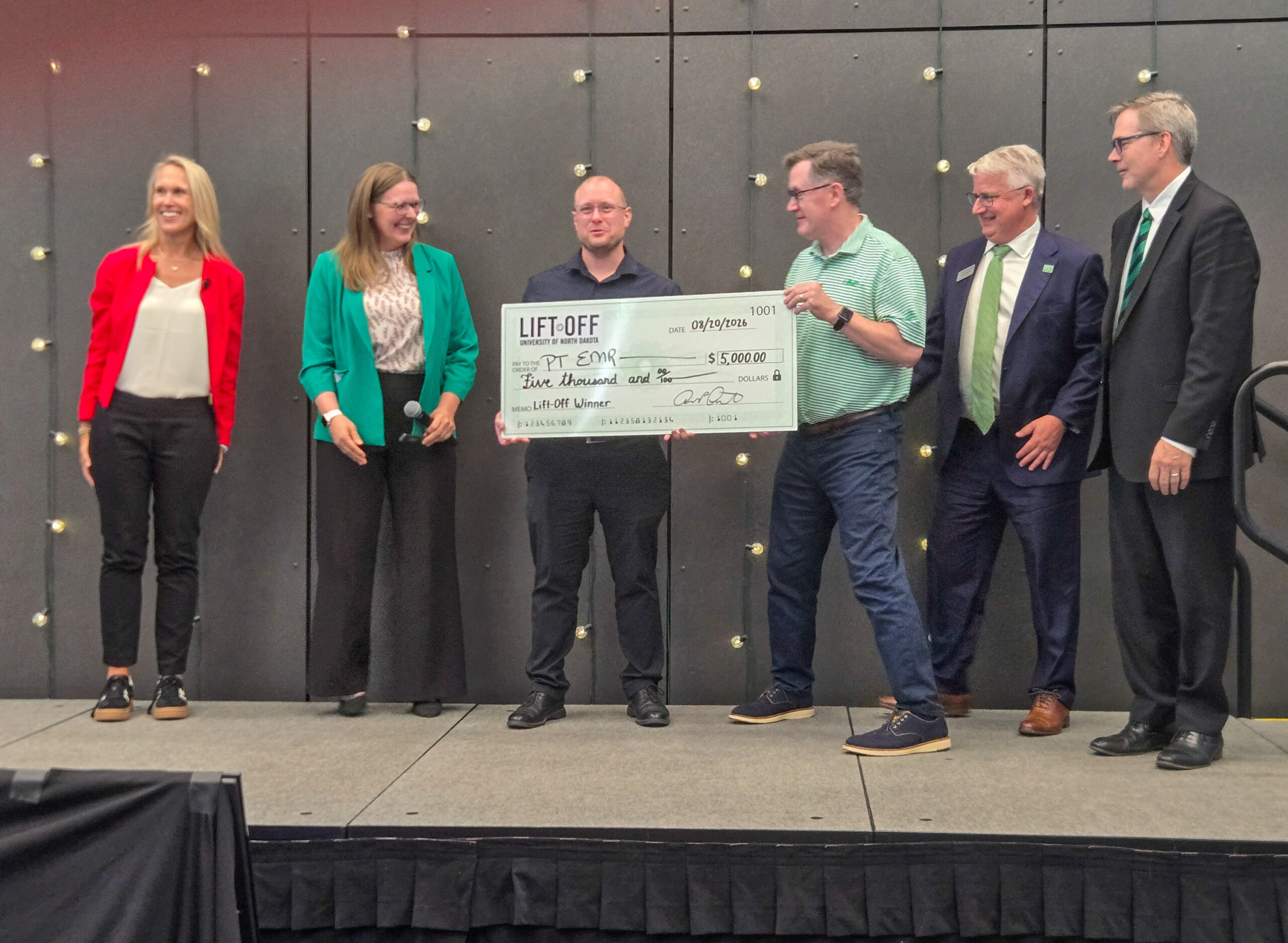
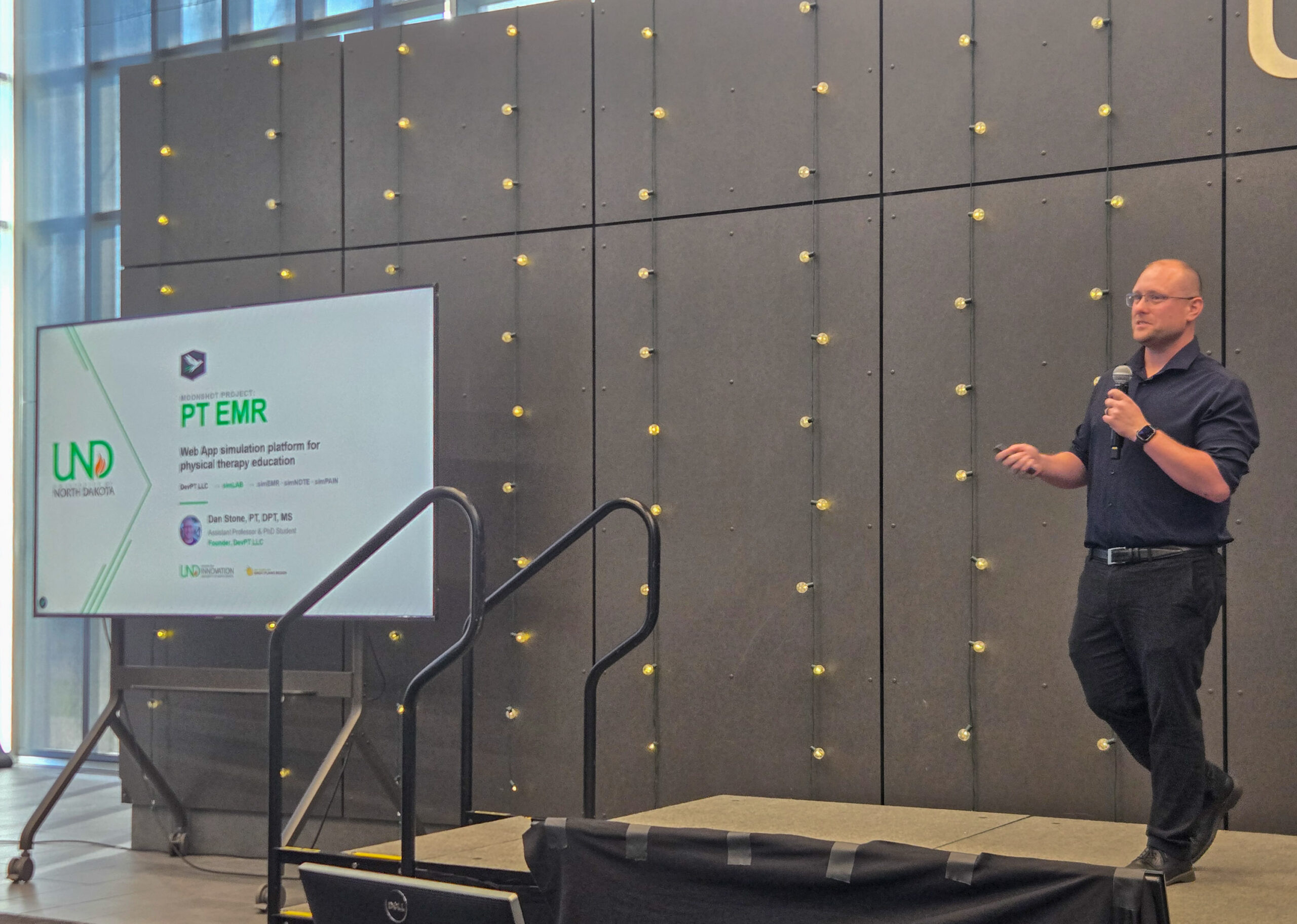
PT EMR (awarded $5,000)
Medtech startup PT EMR is developing a software application that guides physical therapy students through virtual training scenarios. Dan Stone, assistant professor of physical therapy and PhD. student, presented.
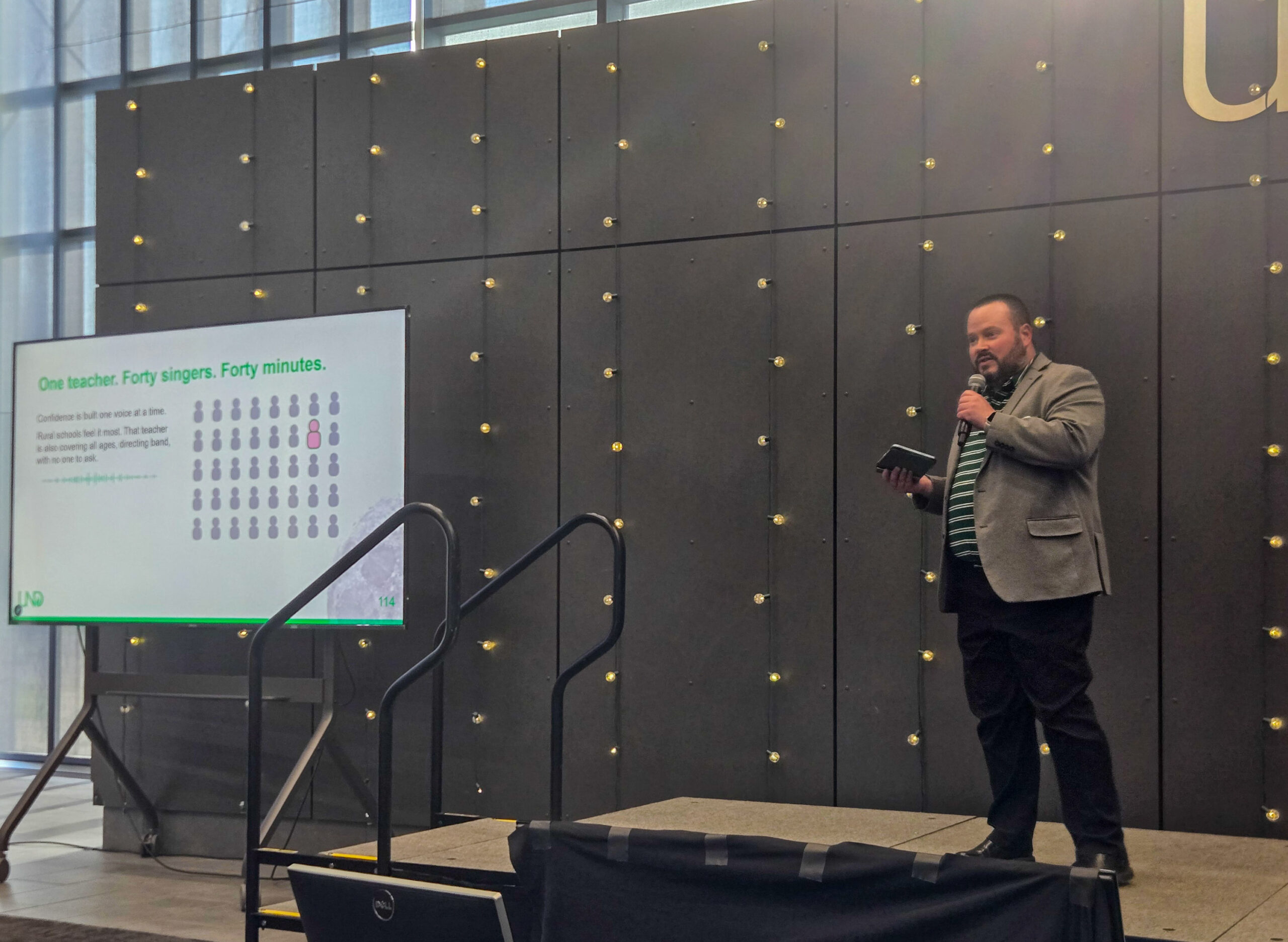
ND Vocal (awarded $10,000)
Musictech startup ND Vocal is building an AI-driven vocal training app for personalized one-on-one voice coaching, targeting music educators in large classrooms. Justin Montigne, assistant professor of voice and former touring member of the Grammy-winning group Chanticleer, presented.
Preparing for launch
All teams will also continue to receive support and mentorship in the next phase of the Innovation Moonshot Initiative, even if they weren’t prize recipients. This is how the program can justify funding three startups while aiming to launch at least four viable businesses.
While bringing four companies to market is an informal goal for the CFI and the Innovation Moonshot Initiative, meeting that goal isn’t a requirement to continue the program.
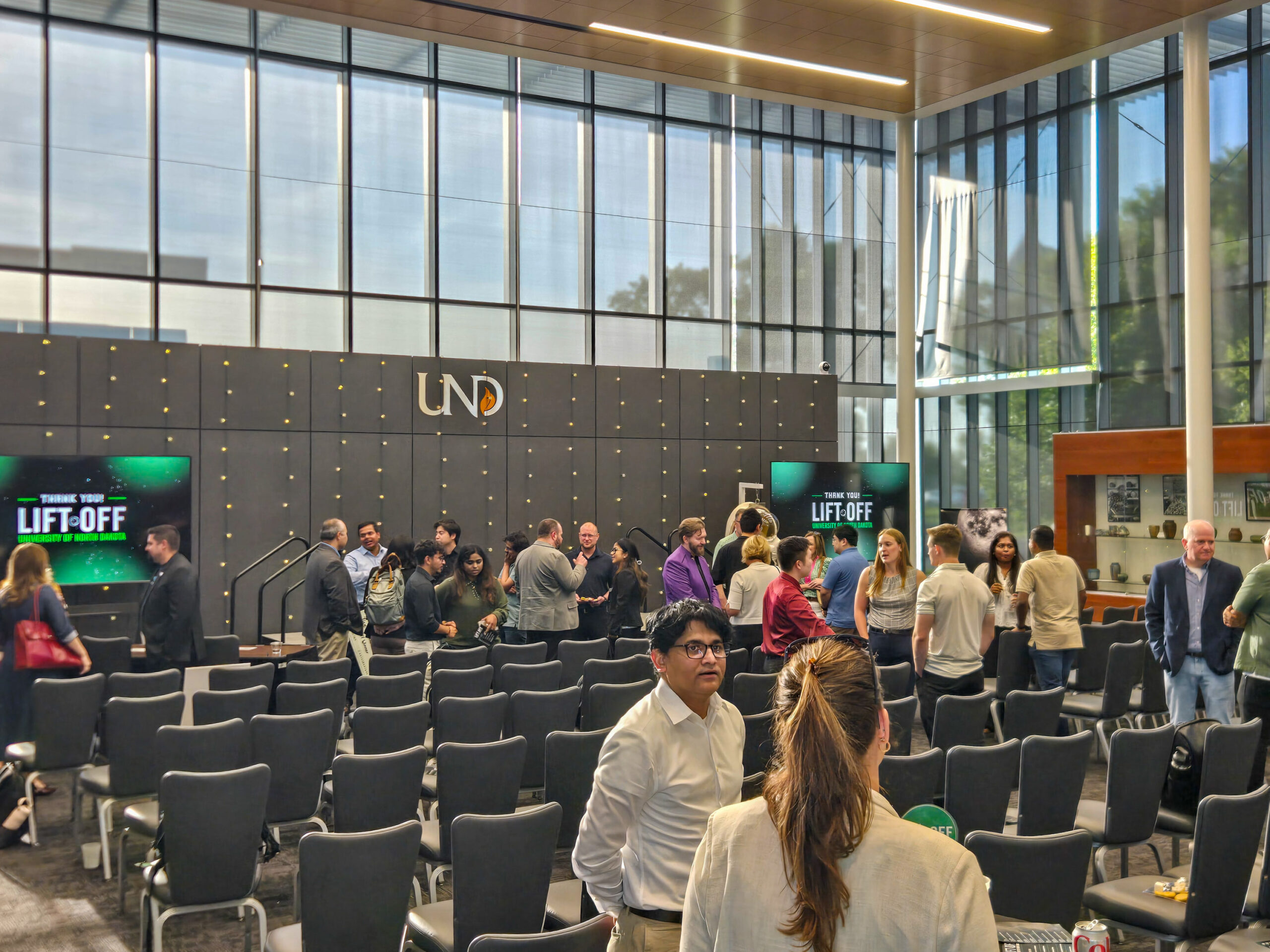
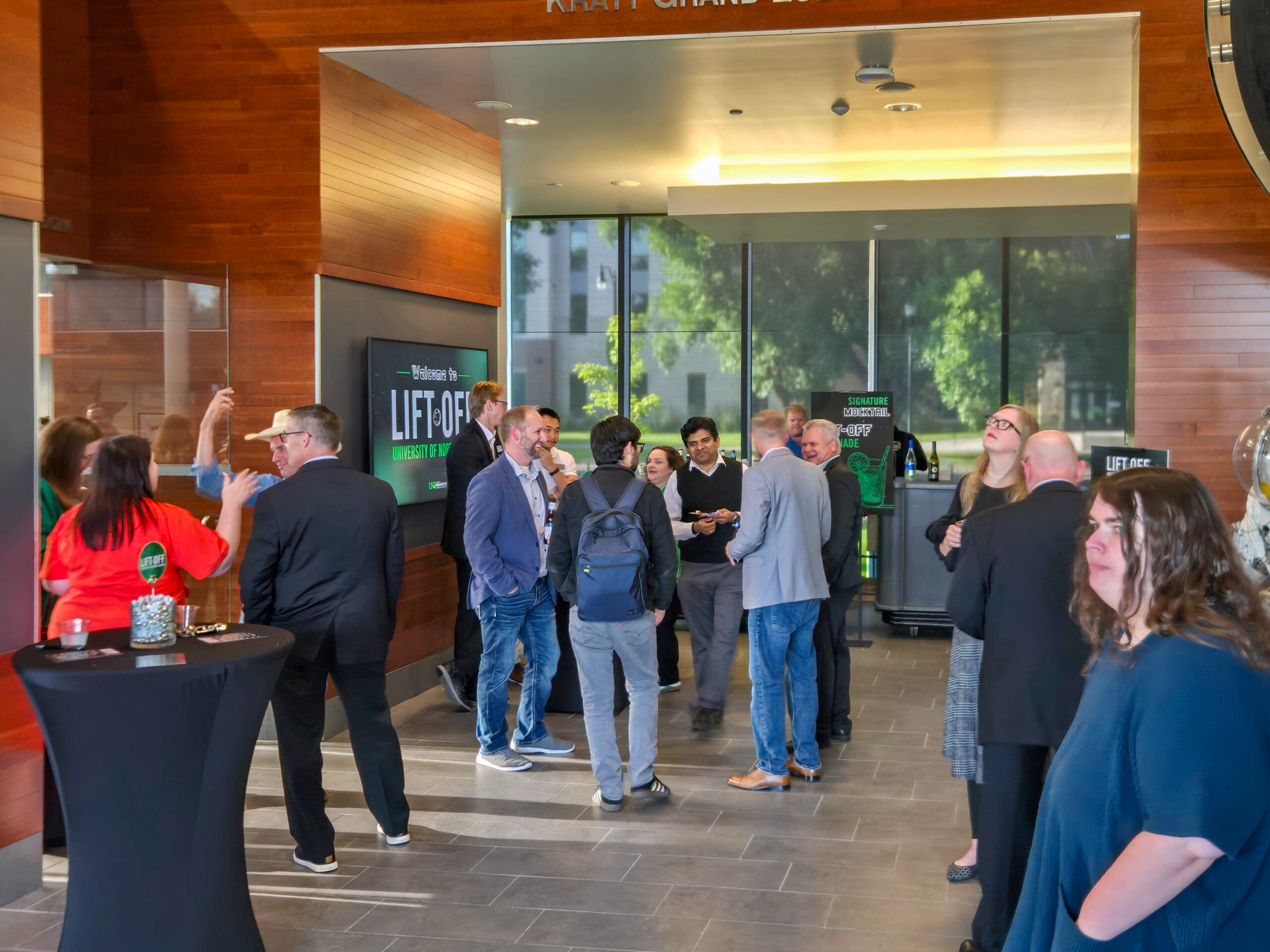
Speaking from the event stage, Whitney emphasized that the Lift-Off Showcase was part of a long entrepreneurial journey for all participants. Later, she reinforced that sentiment when asked about its future during the evening’s networking and discussion session.
“It will run again next year,” Whitney said. “There is no doubt in my mind. We are all in.”
Following team presentations, Julie Collins, lead facilitator of the accelerator, joined gener8tor’s Louise in hosting a fireside chat to share entrepreneurial insight.

During her talk with Collins, Louise encouraged researchers to talk to their customers and apply their feedback to develop better solutions. For researchers more comfortable defending dissertations than winning over investors, the program created space for growth.
“We had to talk to so many people who got to understand a lot of different things, which we did not anticipate being the researcher,” said Motoki Takaku, an associate professor of biomedical sciences and Detectology team member. “Overall, this was a fantastic experience, which changed our viewpoint on how to look at research totally from a startup perspective.”
7 more Moonshot startups to watch
Here’s a look at the remaining seven Lift-Off teams, whose projects spanned industries including aviation, energy, advanced materials and manufacturing, and life sciences.
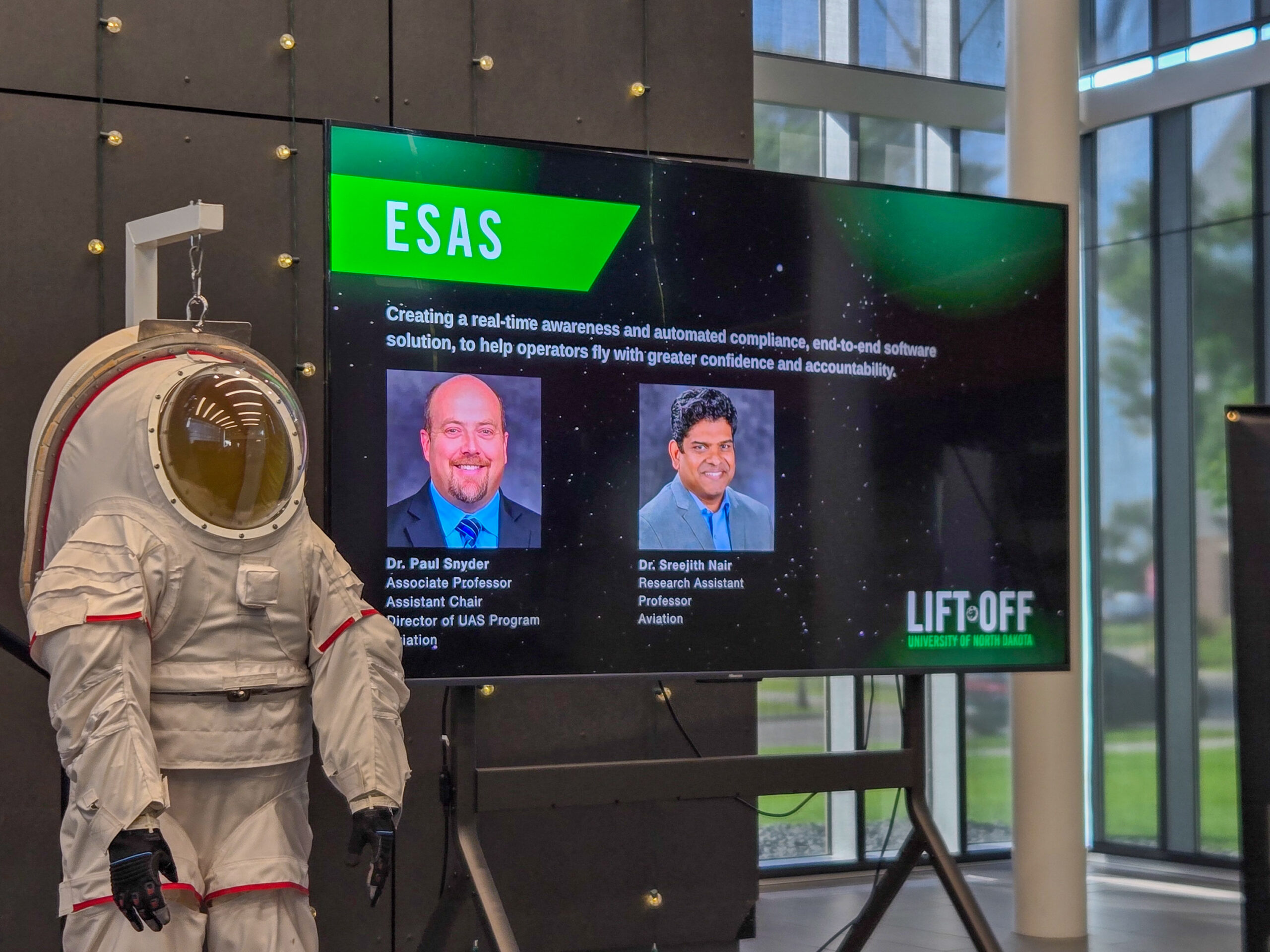
ESAS
Airspace safety software startup ESAS is working to provide real-time conflict detection and compliance record automation. Paul Snyder, unmanned aircraft systems (UAS) program director, presented.
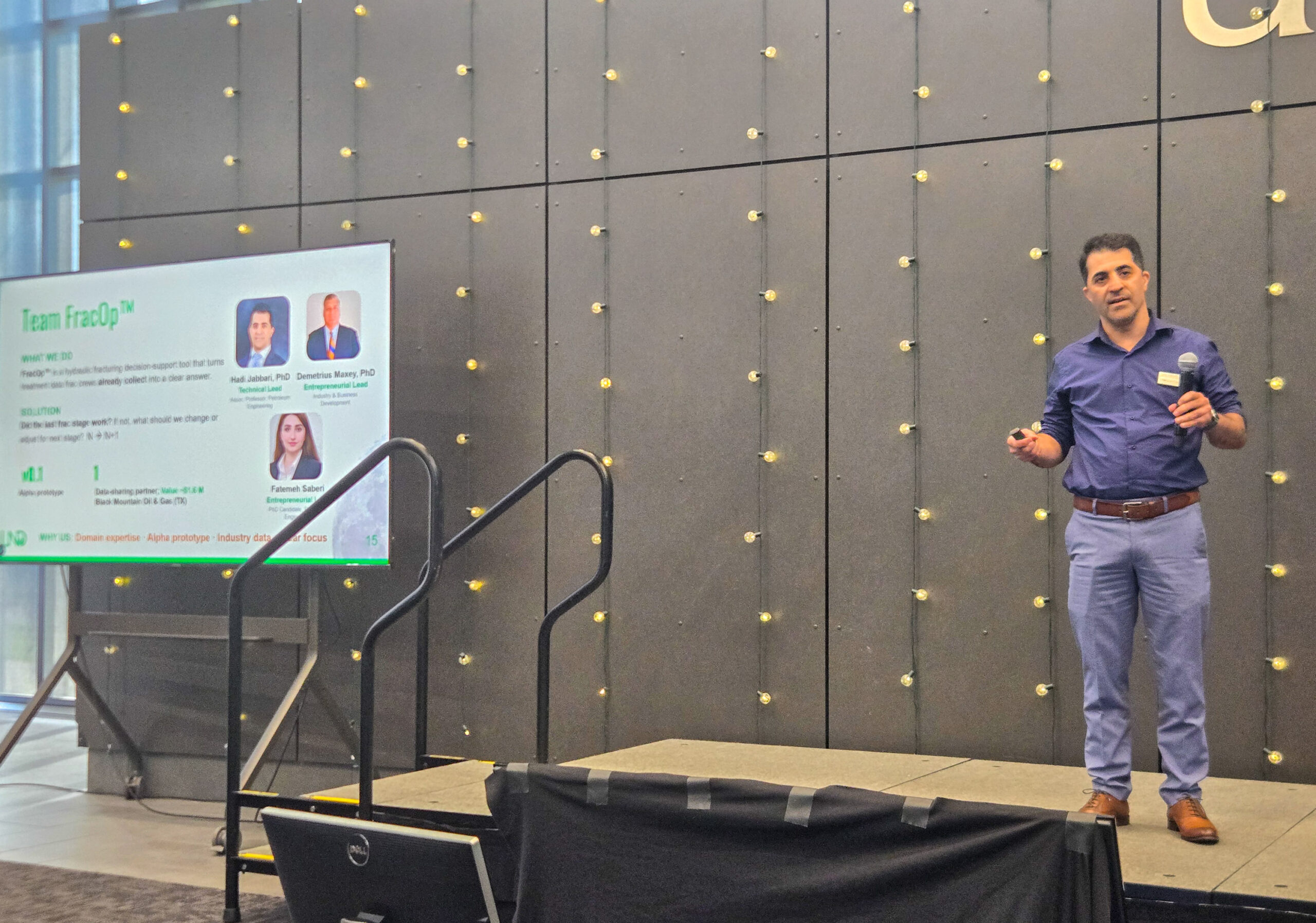
Smart FracOp
Oilfield services technology startup Smart FracOp is designing software that leverages physics-informed AI to make hydraulic fracturing (also known as fracking) more efficient by improving real-time operational decision-making. Hadi Jabbari, associate professor of energy and petroleum engineering, presented.
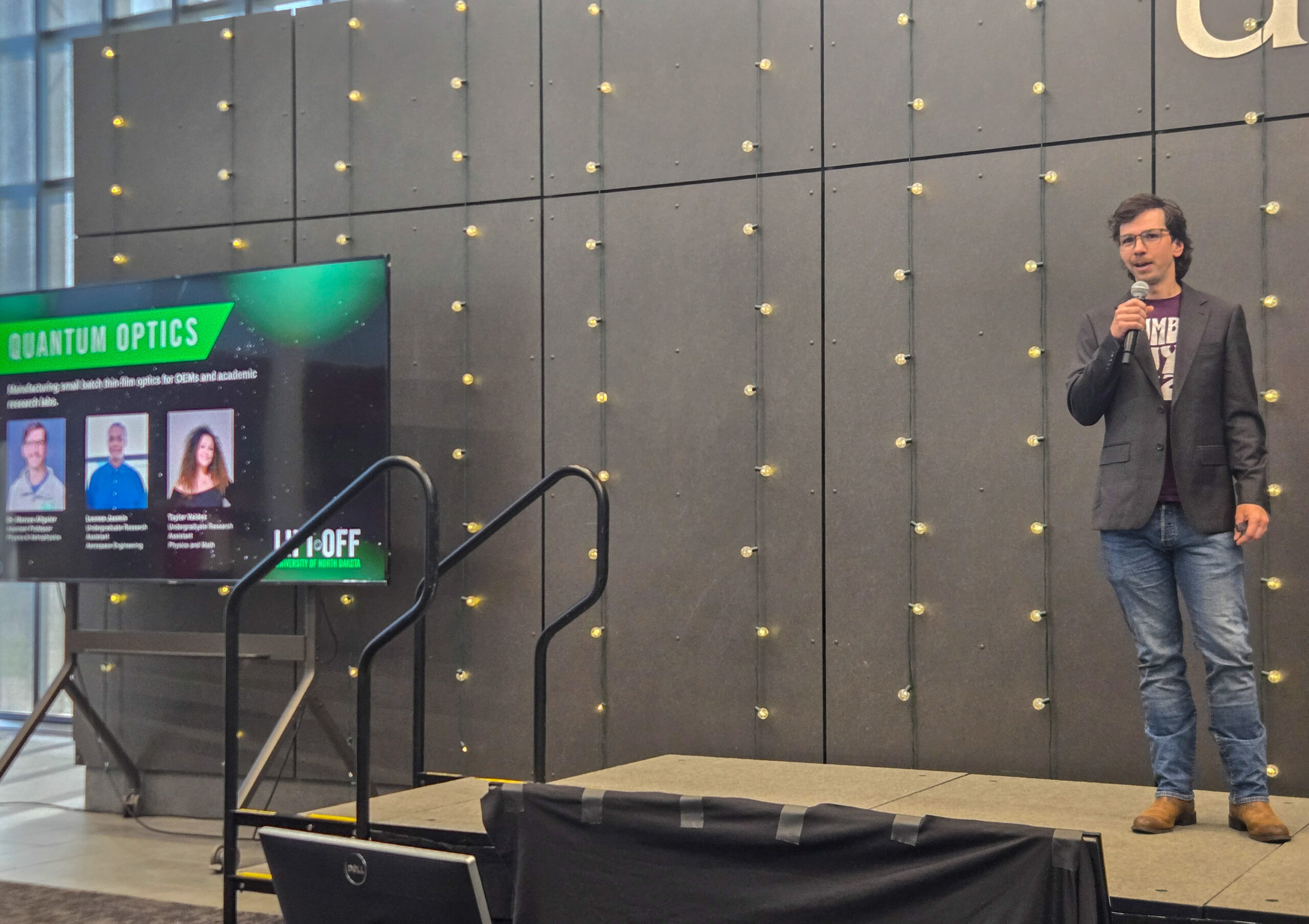
Quantum Optics
Advanced materials manufacturing startup Quantum Optics aims to produce bespoke optical thin-film coatings used in many consumer products and applications. Markus Allgaier, assistant professor of physics and astrophysics, presented.
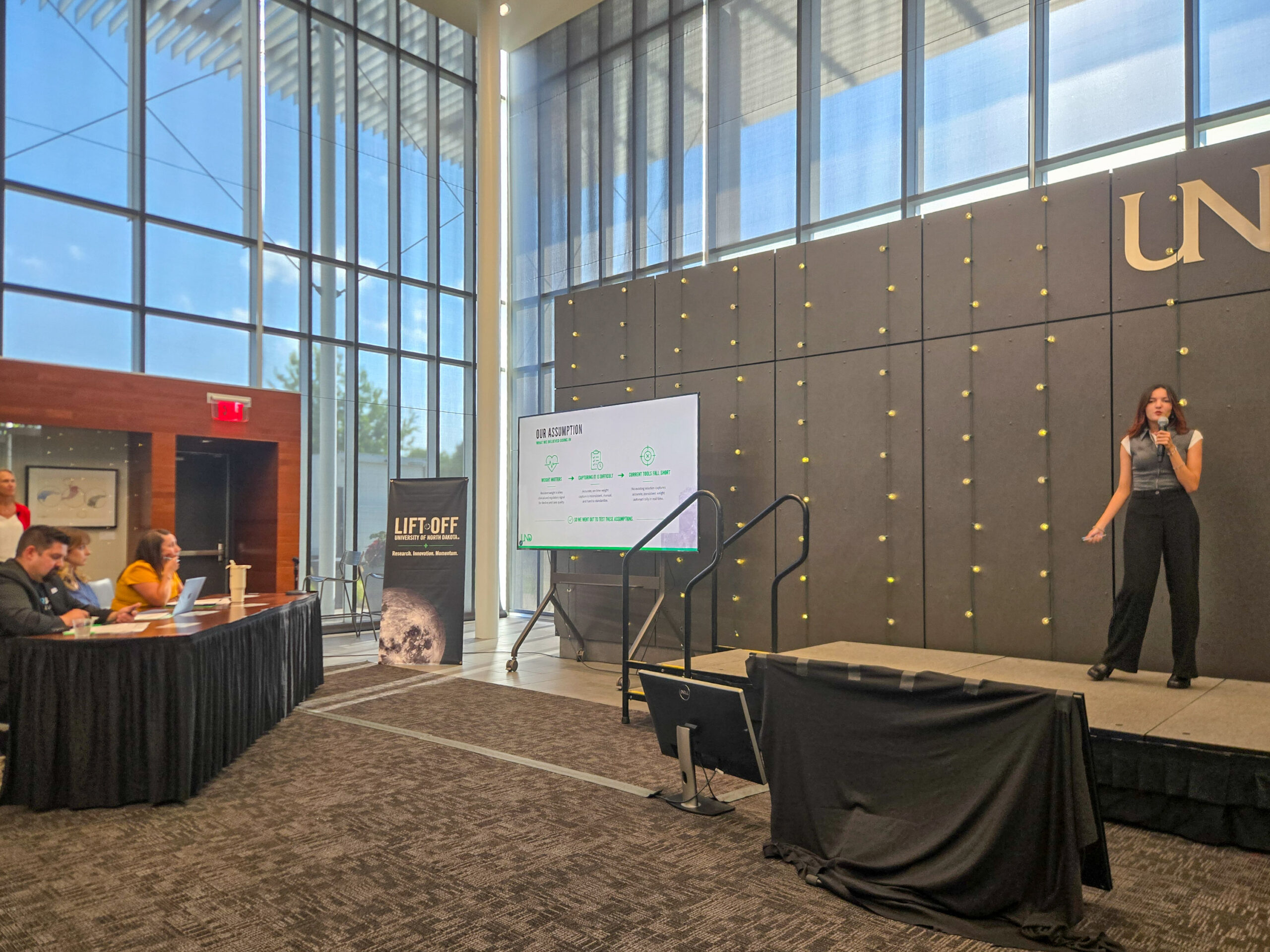
Invisiscale
Healthtech startup Invisiscale intends to leverage smart bed technology (which uses embedded sensors to track biometric data) to offer continuous weight monitoring. Lina Bouakkaz, graduate research assistant, presented.
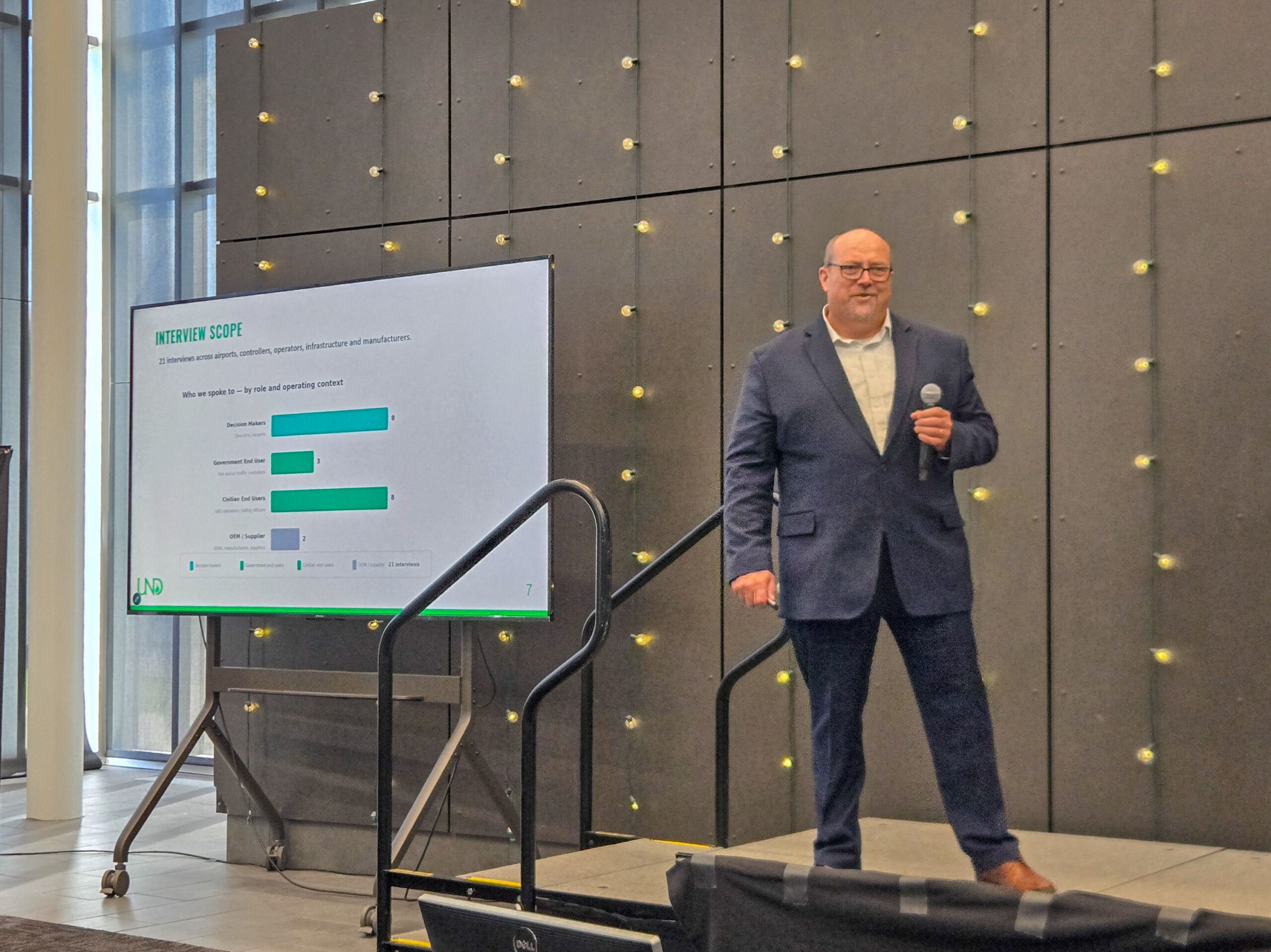
Volare
Business-to-business supply chain startup Volare is creating a centralized platform for UAS manufacturers to source materials that meet federal cybersecurity and compliance requirements. Puja Roy, assistant professor of atmospheric sciences, presented.

Virvac LLC
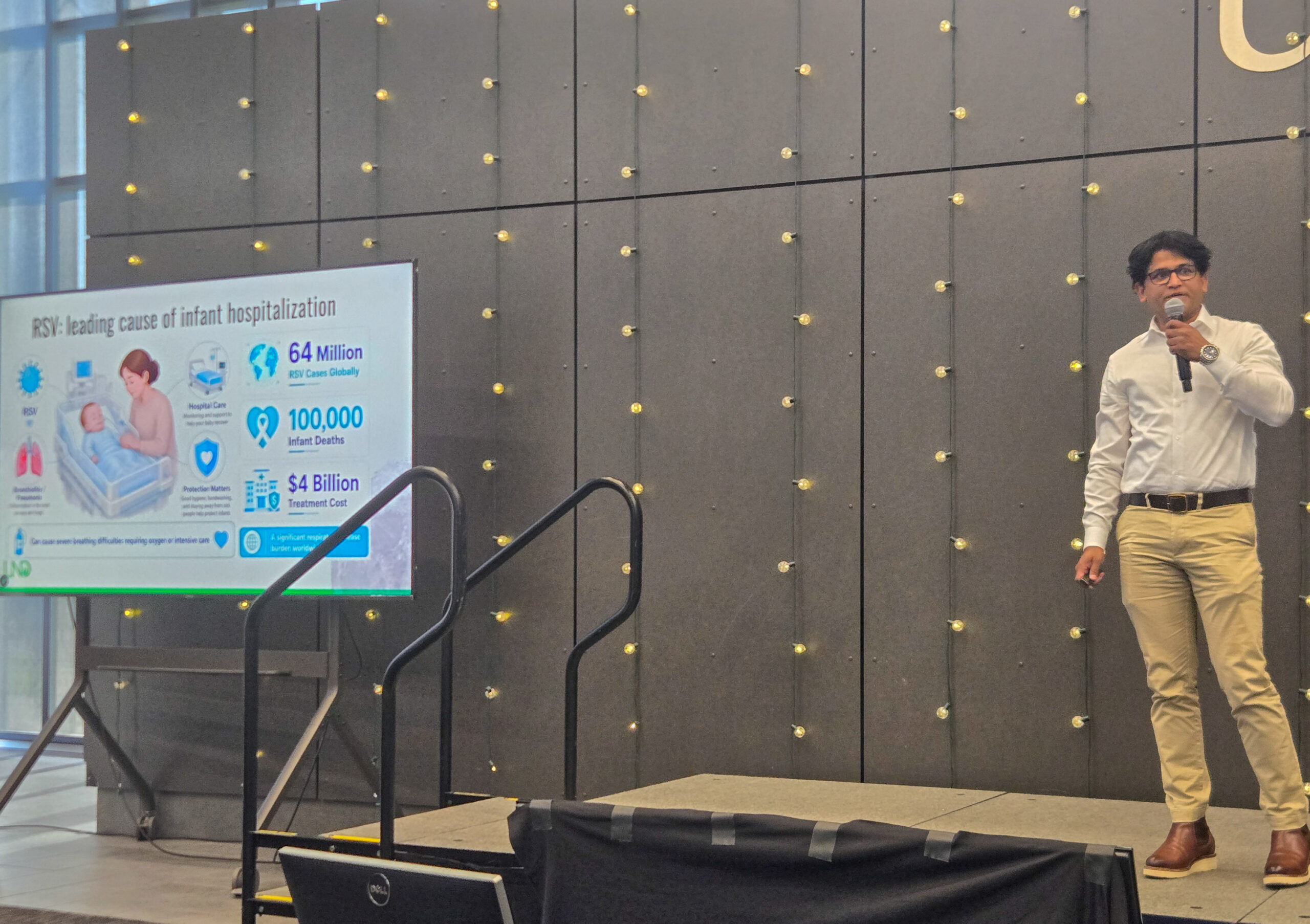
Biopharmaceutical startup Virvac LLC is working on a novel host-cell-targeting method to treat respiratory syncytial virus (RSV) and viral bronchiolitis. Masfique Mehedi, associate professor of biomedical sciences, presented.
Pilot Training
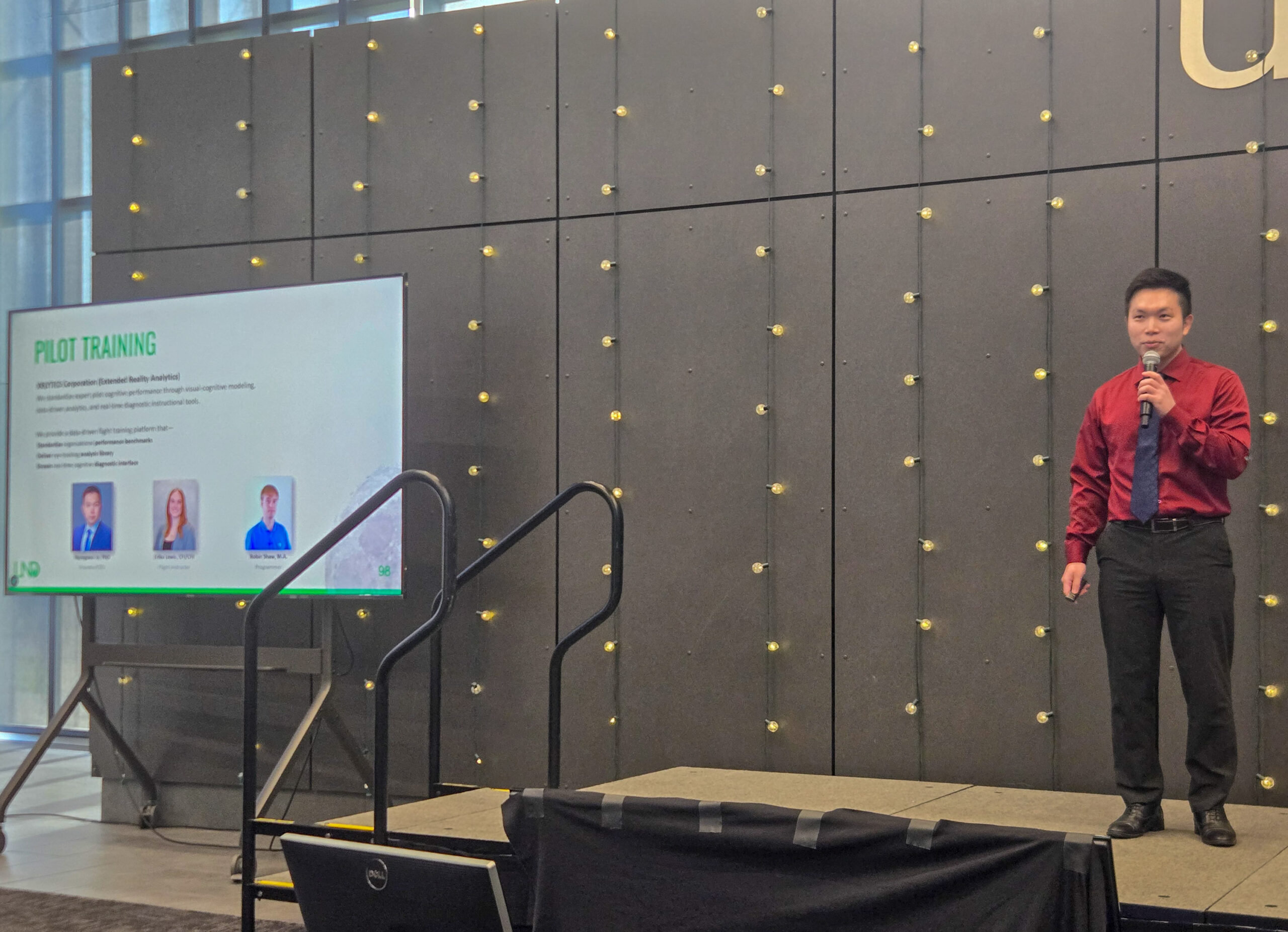
Aviation technology and training startup Pilot Training is developing a standardized and data-driven system for modeling expert flight instruction, intended to reduce training hours for student pilots while improving safety outcomes. Hyungwoo Jo, assistant professor of aviation, presented.
Scroll to see additional photos from the event.