

• Twenty-five years after the 9/11 attacks, Gallup finds 55% of Americans confident the government can protect them from terrorism, tied for the lowest on record.
• Global military spending rose for the 11th straight year to $2.9 trillion, driven by Europe and Asia. That presents opportunity and hard choices, for state and local economic development leaders.
• Next week, Pittsburgh’s Robotics & AI Discovery Day opens a Defense Pavilion, backed by influential regional tech and economic development organizations.
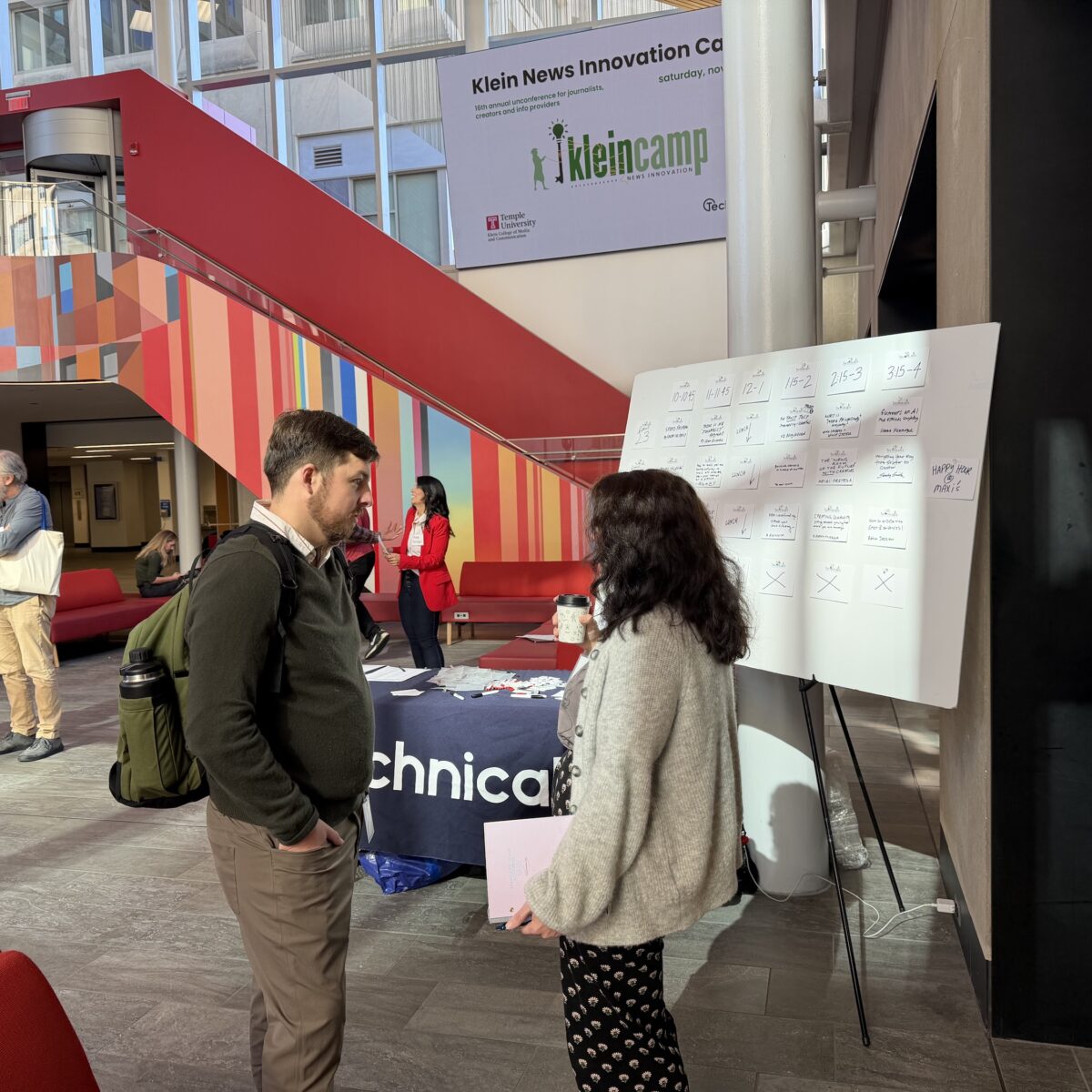
In May 2024, I took a slap to the face from a protester opposed to a robot dog prowling our annual conference.
Just weeks later in Tennessee, I watched a room of civic and business leaders applaud a similar machine’s stage appearance at a different conference. These are unsettled times.
The Philadelphia machine belonged to Ghost Robotics, the Penn spinout whose Vision 60 quadruped was reportedly being used by Israeli forces. A campaign called Shut Down Ghost Robotics followed the company to our conference and a founder’s home; a few months later, a South Korean defense manufacturer bought a majority stake for $240 million. Tennessee’s model was from Boston Dynamics, a Ghost rival.
We should question whether (or how) entrepreneur-support and technology leaders should engage tools of war.
Going back years, Technical.ly had an informal policy for event exhibitors: Our private, ticketed events for tech professionals displayed just about any technology built or deployed in the places we cover. As a news org we are an effective platform for our discerning community to investigate technologies, including those with military uses. Over the years, we hosted drones and facial recognition systems, plus whole portfolios from defense contractors and law enforcement vendors. We organized discussions and reported on the moral, ethical and social implications of these and other technologies. (In contrast, we were more discerning about what we displayed at our public, often outdoor, events where kids were present.)
So I understood protesters following Ghost Robotics to outside our venue. I was less sympathetic to two people sneaking in to push over a device on display. That night, in the conference’s waning minutes, I approached one who greeted me by swinging up, smashing my wine glass and slapping me across the face.
Whether we shared any common ground, that was reason enough to remove him. I slid my arms between his, lifted him and walked him out of the venue while he spit and yelled — much to the confused wonderment of the remaining attendees.
Right or wrong, enduring a slap will prompt reflection. For one, we formalized that informal events policy: no weapons exhibited at our general networking events, and nothing military or surveillance-related at events for kids.
We needed the plan. Technical.ly has reported and organized for more than a decade in Washington DC, the heart of a defense tech boom. The budgets have spread since.
Today, 25 years after Sept. 11, 2001, we know those terrorist attacks accelerated the modern American military industry. As countries militarize in our fracturing, paranoid era, emerging classes of technology, from drones to quantum computing, fuel a new generation of military-led economic development.
One way to honor this anniversary, and the thousands who died, is to question whether (or how) entrepreneur-support and technology leaders should engage tools of war.
How entrepreneurial ecosystems court military contracts
On Wednesday, Pittsburgh’s Robotics & AI Discovery Day opens a Defense Pavilion, organized with the Pittsburgh Robotics Network, the Pittsburgh Technology Council, Innovation Works and the New Economy Collaborative of Southwestern Pennsylvania (which has supported Technical.ly’s work). Last year’s event drew 10,000 people to a sprawling convention center floor. Like autonomous trucks and manufacturing automations, robot dogs were on site.
Pittsburgh Technology Council’s longtime CEO Audrey Russo said in announcing the pavilion: “This partnership demonstrates the important role this region can play in strengthening America’s technology and defense leadership.”
The region’s case is strong. Pittsburgh’s robotics legacy was cemented when Carnegie Mellon researchers entered the hazardous Three Mile Island disaster. The robotics and AI strengths that followed often included military applications. Next week’s Startup PGH also brings AI Horizons, a polished conference at the city’s Bakery Square that lists defense among its focus industries. Four of Pennsylvanis’s 10 largest defense contractors are in Pittsburgh’s home of Allegheny County.
An analysis this summer of Pennsylvania’s defense industrial base boasted about how integral commonwealth businesses are to the bolts, pumps and castings needed to make war. Last year a fire destroyed most of a suburban Philadelphia manufacturer of high-strength fasteners for the Tomahawk missile and the Blackhawk helicopter, with no replacement plant until 2028.
It’s good to be wanted. It’s profitable to be needed.
Call them whatever you want — defense contractors, military suppliers, national security providers or war makers. Big contracts and incumbent preference means local tech and startup organizers have enthusiastically raised the flag on behalf of their homegrown specialists.

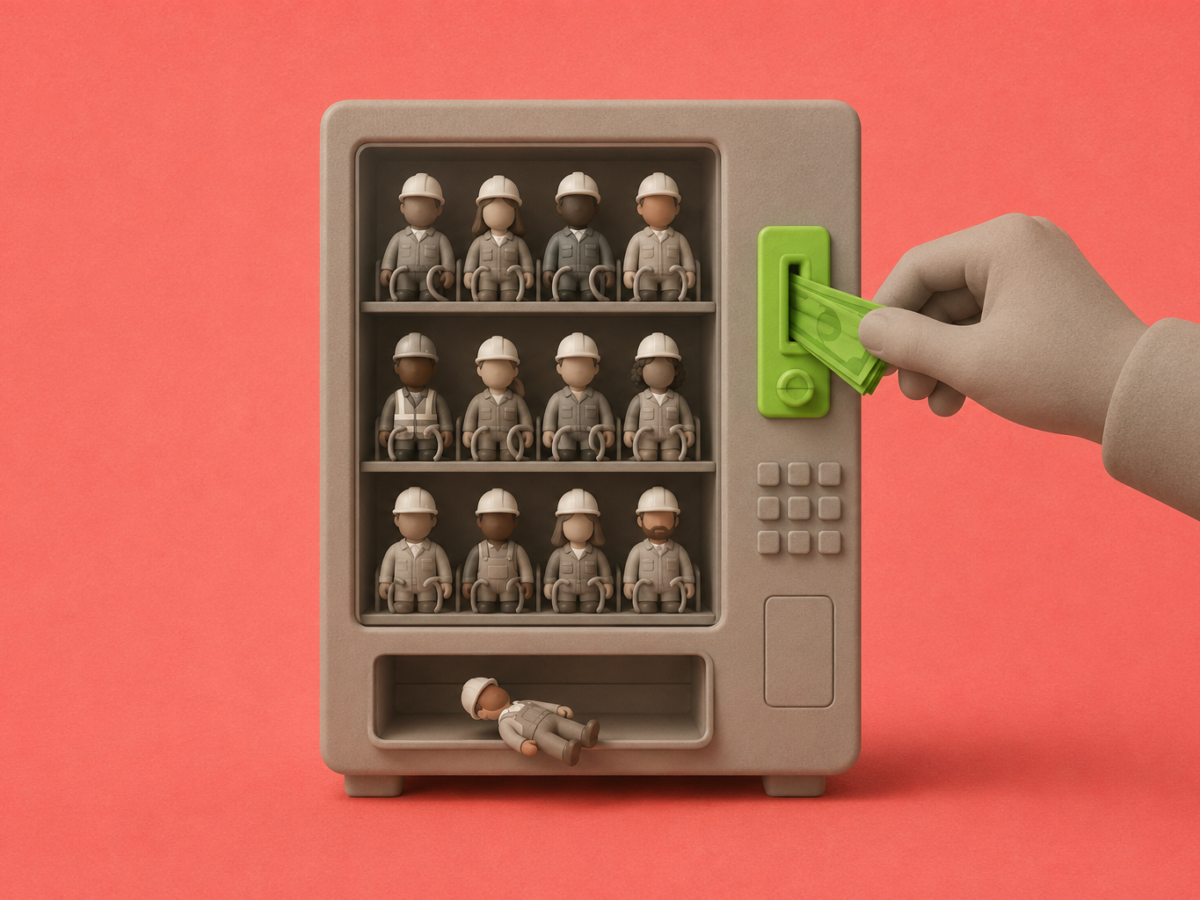

Inspired by Silicon Valley’s origins, aspiring technology clusters routinely court and cheer their defense capabilities. Louisiana’s $100B SpaceX launch base, Chattanooga’s quantum computing sector, Alabama’s missile tech strategy, coalitions in New Mexico, Colorado, Arizona, Florida, Washington state and many more all elevate how their inventors and entrepreneurs can serve the US military, and allies.
For good reason too, customers are spread everywhere. Global military spending rose for the 11th straight year in 2025, to $2.9 trillion, driven by Europe and Asia. Notably, the American government spends as much per resident as the military as just about anyone.
“The best customer in the world is the federal government,” one American industry critic told me years ago. “And the best way to keep the federal government as a customer is to scare the living shit out of it.”
The largest federal bets on science and tech-led regional development in a generation are active now: the sister programs of the EDA Tech Hubs and the NSF Engines. Both survived the transition from the Biden administration to the Trump administration in part because military usefulness was preserved. I spoke to dozens of university researchers and local economic leaders who spent fall 2024 feverishly swapping any “DEI” goals for “national security” ones.
Reminded by the Russian invasion of Ukraine and the oft-cited arms race with the Chinese state, many state and local organizers defend the shift as in the national interest.
A generation of “neoprimes” like Palantir, Anduril and SpaceX sound like consumer tech startups while competing with 20th-century defense-contracting stalwarts like Boeing and Lockheed Martin. Palantir CEO Alex Karp, wild-haired and enthusiastically combative, defended the urgency in a 2025 book he wrote with Nicholas Zamiska, “The Technological Republic.”
Silicon Valley traded an engineering culture built around national purpose for one built around consumer convenience, they argue. Like the domestic surveillance avatar of Atlanta-founded Flock, Karp argues his work is a social and cultural good, defending democracy and the free world.
I’d be more sympathetic to a patriotic view of defense tech if it was wielded by more reluctant warriors. Instead, this month marks a year since President Trump’s executive order authorizing the Pentagon to call itself the Department of War. Congress never changed the statutory name, so this remains a branding tactic. But it’s another worrying example of deepening militarism. Technology should protect our liberties, not be sold to eviscerate others’.
Twenty-five years of buying readiness
In the weeks after the 2001 attacks, close to 90% of Americans told Gallup they trusted their government to protect them from terrorists. By 2011 it was 75%, by 2021 it was 59%. Today it’s closer to half (55%).
Confidence fell even as spending rose, and our response is ever more of it.
Technology’s history is entwined with military force: GPS, radar, mass-produced penicillin, aviator sunglasses and duct tape, too. The much-celebrated Ukrainian military drone force began with off-the-shelf toys and group chats.
That puts all of us who organize entrepreneurial ecosystems and tech communities into an awkward choice: Ignore our history or risk cheering on a crueler world.
There’s a middle way. Three tests for deciding whether to help, host or highlight a technology or startup with military applications:
1) Know your values, and apply them consistently
Since our founding, Technical.ly has committed to technology that makes a better world. Yet our role is to chronicle the technologies developed and deployed in the places we serve, including military ones. Pretending those don’t exist would be naive. Some groups should never engage military technology, others will. Understand what line you wouldn’t cross. How does this technology serve your mission, or cut against it?
2) Match the setting to the audience
Given the right context, a professional audience can take on almost any hard question in its field. A general audience, especially one with kids in it, is a different room. Where does this technology belong, and what’s your responsibility in presenting it?
3) Scrutinize in public
When I face an ethical quandary, I try to talk it through openly with teammates, friends and our community, as I’m doing here. Hiding usually backfires. What troubles you about this technology, and how will you share that with others?
I don’t know if the search, rescue and defense applications of robot dogs outweigh the offensive uses that have been documented. I do know that I want more of us to be familiar with the tools to form our own opinions, and shape the outcome.
On Sept. 11, 2001, I was in class in a small New Jersey town when an announcement came over the loudspeaker. My history teacher wheeled in a TV. A friend’s father was a Port Authority cop, and others were Manhattan commuters. In the years after, friends enlisted — I still have the photograph of me embracing a neighbor as he left for his deployment. When my Selective Service card came in the mail, I debated with friends whether a draft was inevitable (turned out it wasn’t).
That was a messy and formative stretch for me. It taught me that war is not theoretical, and that the technologies we build and sell will be put in somebody’s hands.
Today’s irony 25 years later is that we squandered that loss of life to justify lots of priorities other than what caused those attacks. Planes were hijacked because of an indefinite American military occupation and our perceived arrogance, yes. But it was also an attack on our ideals, our failure to meet them and the abject cruelty that resulted. The political fights of my youth (over waterboarding and torture, over surveillance and indiscriminate shows of force) were never really about whether we could catch a particular bad guy. The debates were about whether those actions would create more enemies than they’d ever ensnare.
Complacency is no defense. Neither is offense. Be a truer defender of a better world.