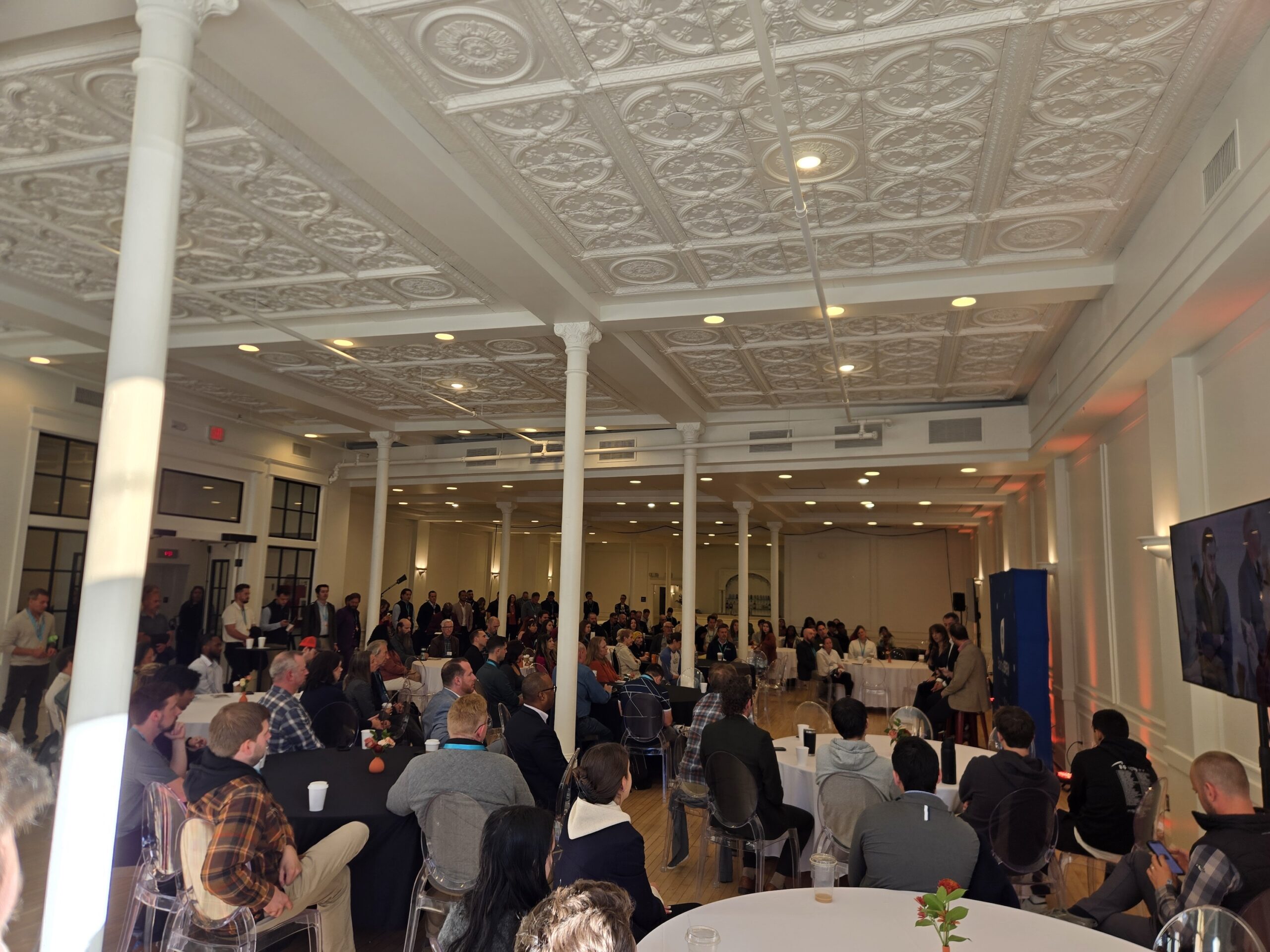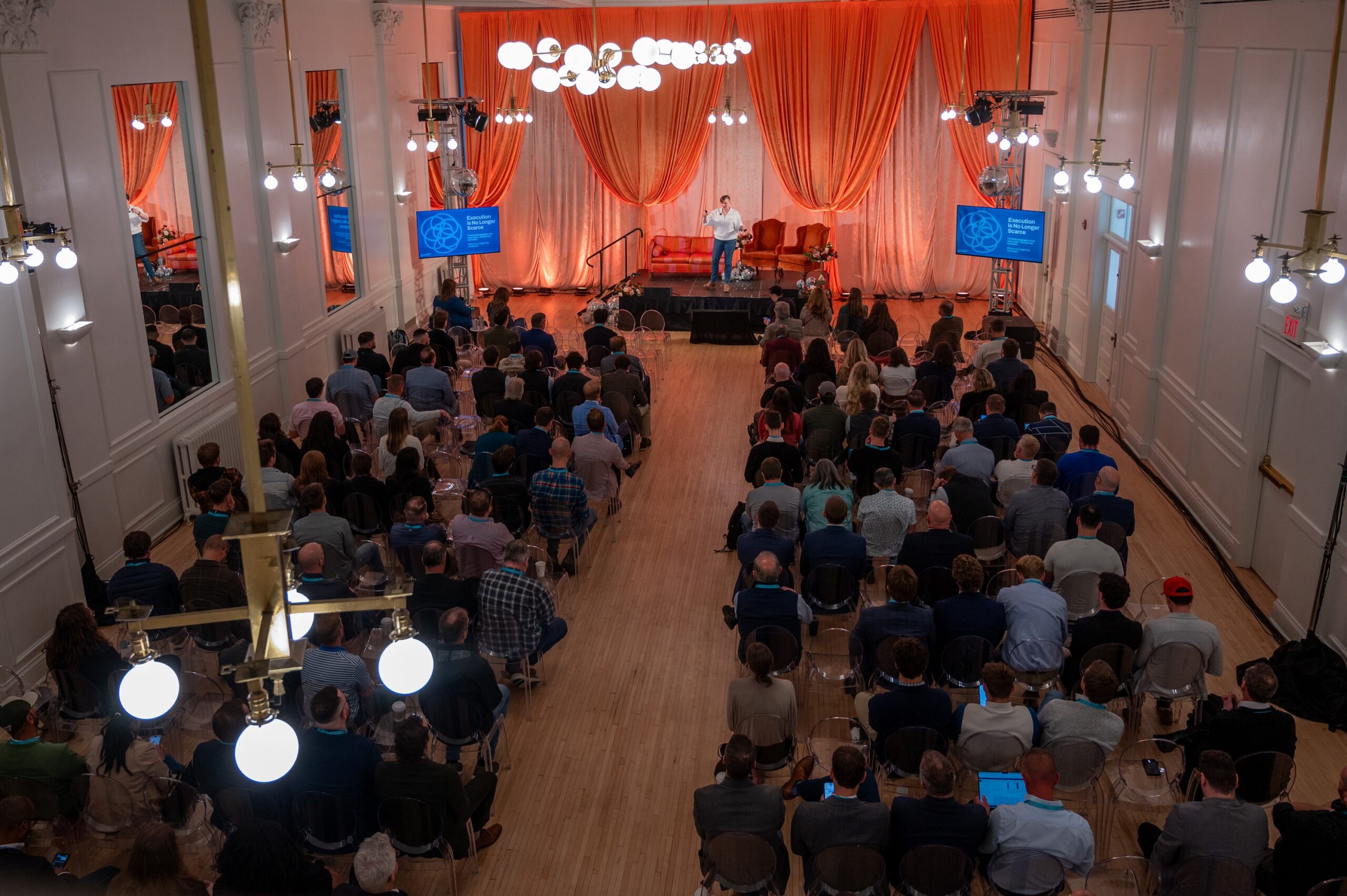

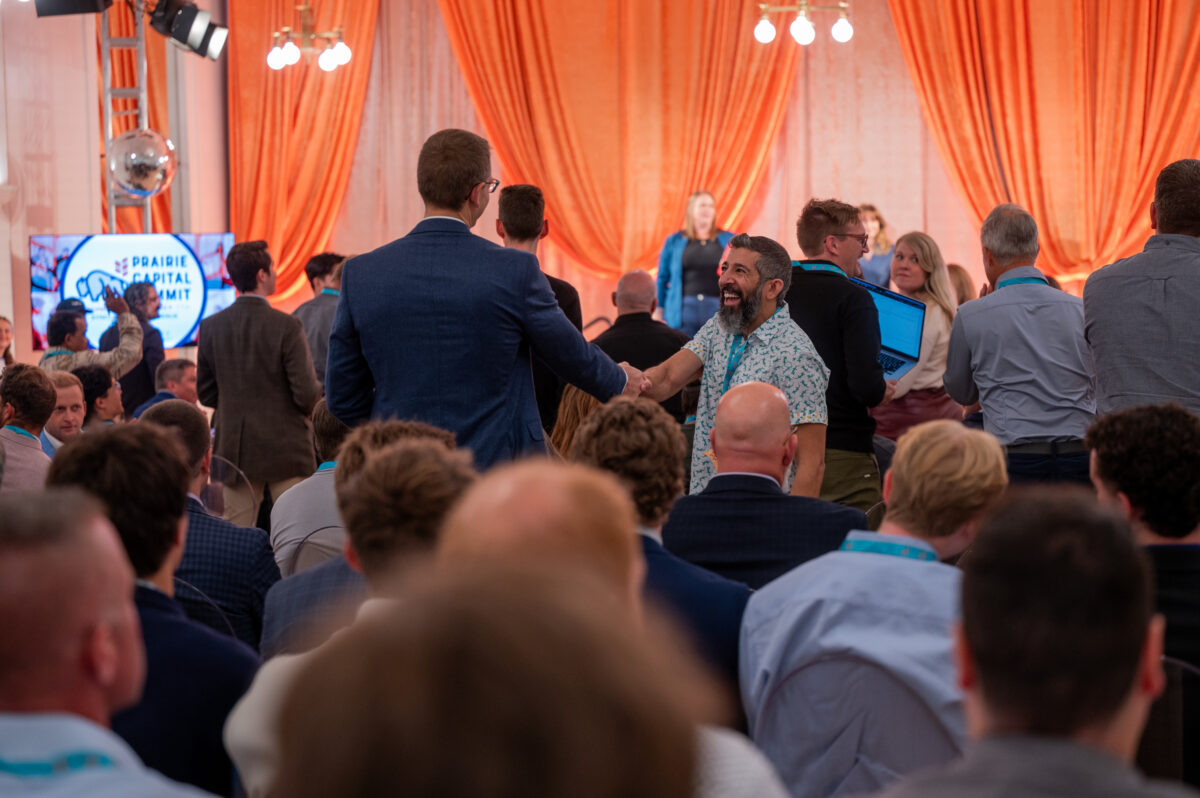
When the Prairie Capital Summit returned to downtown Fargo this month, it saw a notable attendance increase in two key groups.
The annual conference connects founders, investors, resource partners and students across the North Dakota startup ecosystem, featuring presentations by regional and national entrepreneurs and backers.
Among 244 registered attendees heading to the Synclaire Events Venue, 98 identified as entrepreneurs, up 53% from last year’s edition, and 52 identified as investors, up 27%, according to organizer Emerging Prairie.
Entrepreneur attendance was up 53%; investor attendance rose 27%, per organizers.
That could mark a broader shift. Historically, North Dakota hasn’t been known for producing startups; it ranks in the bottom 10 states for new business formation.
One event’s attendance is a small sample, but Prairie Capital Summit’s year-over-year growth comes as business applications in North Dakota hit a record high in August, according to Census Bureau data compiled by the St. Louis Fed that goes back to 2004. Applications over the past 12 months were up 14% from the year before.
Straight from the conference floor, here are five takeaways for raising money in the era of AI disruption.
Relationships still close deals because investors ‘are humans too’
A recurring theme throughout the day was that, despite AI disruption, authentic person-to-person communication is what gets deals done.
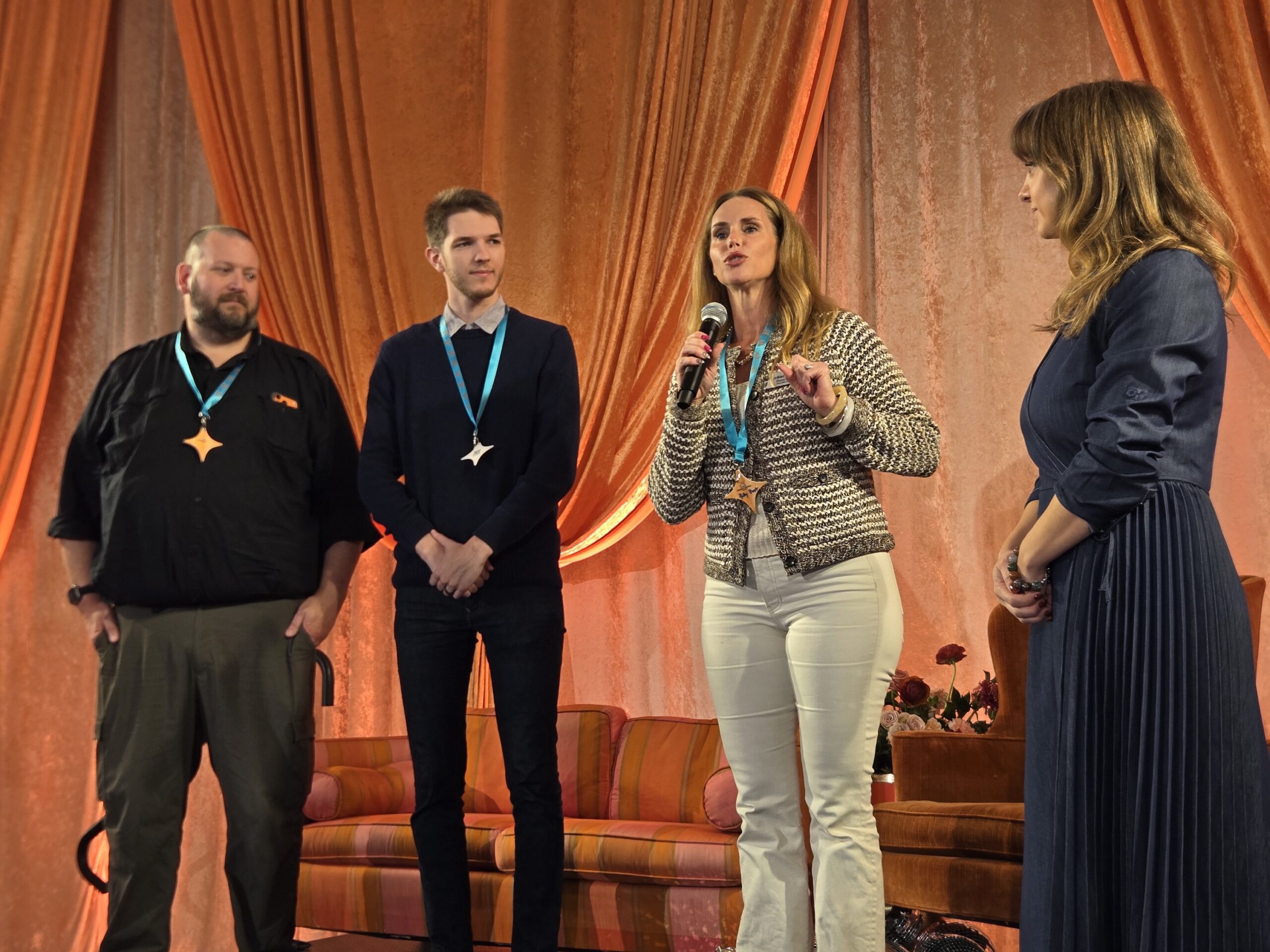
Sarah Louise, director of platform for gener8tor 1889, moderated a fireside chat with Aaron Mooney, chief operating officer and co-founder of Grand Forks-based insurance tech startup Tugboat, and Tahira Dosani, co-founder and managing partner at Resilience VC. They discussed the importance of relationships in finding alignment between founders and investors.
Mooney shared that he contacted over 200 investors before partnering with Resilience. Dosani said she looks for founders who can go beyond their product and articulate a vision of a world she’d want to live in.

Tugboat helps disaster victims maximize payouts from claims; that mission was what attracted Resilience VC, which went on to lead Tugboat’s $3 million seed funding round. Mooney and Dosani said aligning on values and communicating honestly during the diligence phase was essential.
“The way you approach that relationship during diligence sets the foundation for how the relationship will go once the deal is done,” Dosani said. “We were really fortunate that we maintained such a strong relationship through it. So, at least from my perspective, it felt like a really seamless transition once the check was written.”
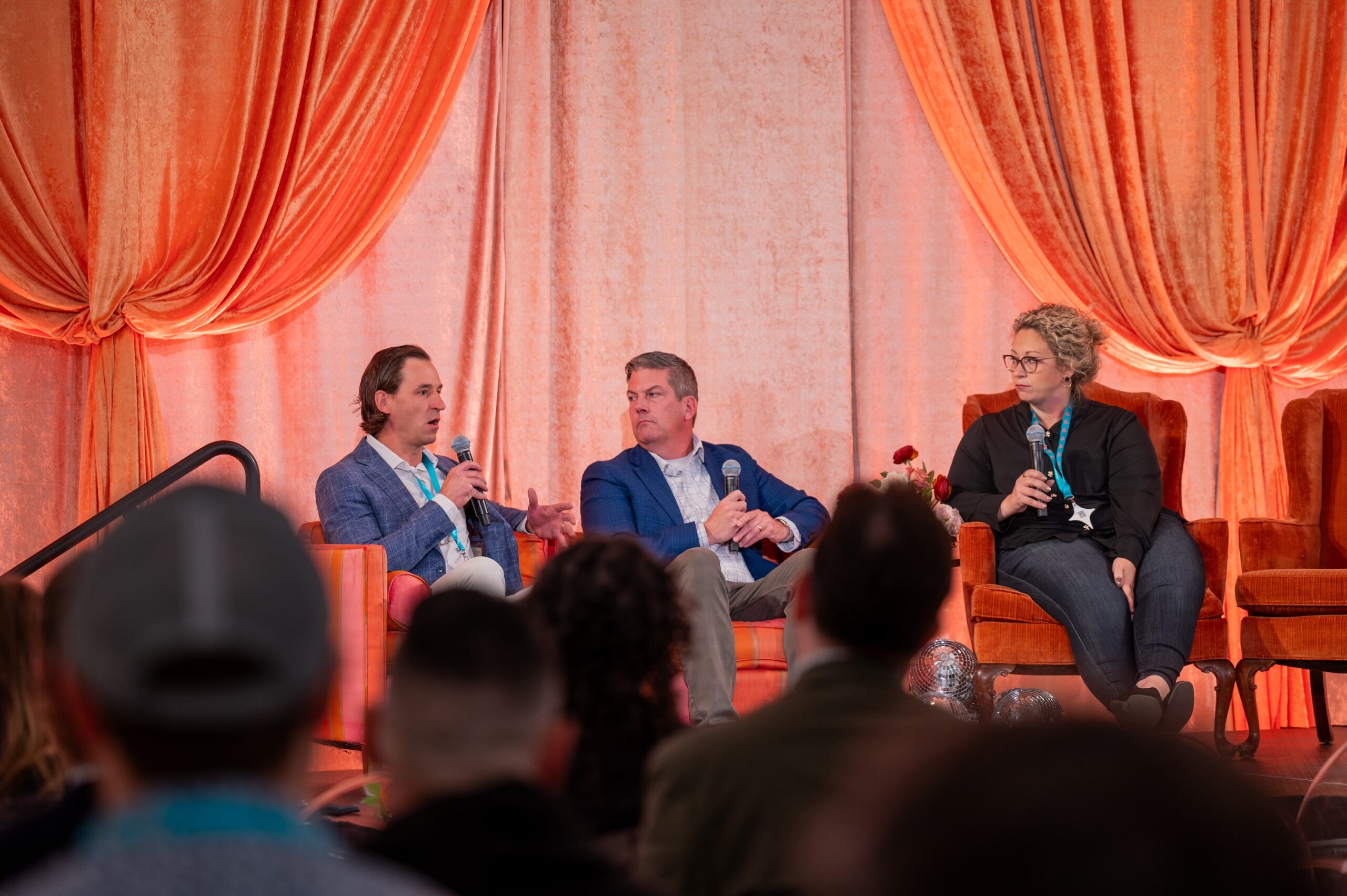
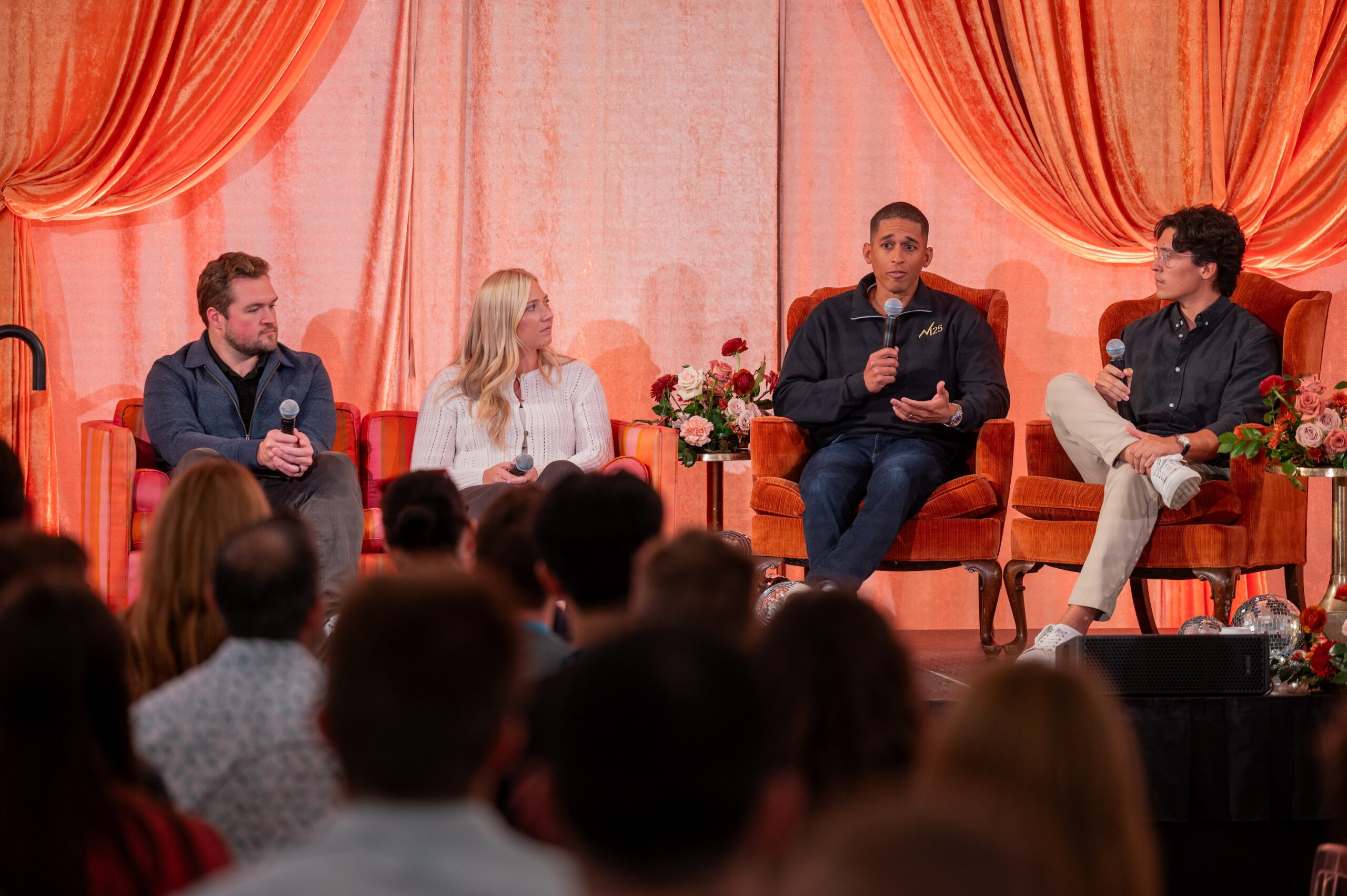
That outcome is a real-world example of advice shared in an afternoon panel session titled “What Gets Funded.” The session, moderated by Patrick Blaschke of Tribe Capital, a former North Dakotan now based in San Francisco, featured Mike Asem, founding partner at Chicago-based M25; Ben Stanley, principal at gener8tor 1889; and Megan Baniecke, an associate at South Dakota’s Homegrown Capital.
“We’re human too, and so as you’re doing your reach-outs, and you’re thinking about who you want to pitch to, think about who you’re talking to and treat them like a human,” Baniecke said.
Capital consolidation raises the value of trust in teams
Capital consolidation — the pattern of investment dollars concentrating in a smaller number of companies — is a national and global economic trend.
North Dakota hasn’t been immune. In the first half of 2026, venture capital funding in the state increased 66% over the same period in 2025. Of that increase, 61% came from one $10 million Series B round raised by Fargo-based cattle technology company 701x. That round was also funded exclusively through individual investors.
That concentration illustrates the value of social capital in the current market; investors want to work with people they trust. For founders, that makes self-awareness and being honest about their blind spots all the more important to give investors confidence.
“Oftentimes I talk to founders and they’re excited, and have a really good story to tell, and the logic as to why their vision is a big one, and a good one, but I also often miss that ability to be self-aware and honest,” said Asem, the founding partner at M25.
Jerome Hamilton, co-founder and general partner of St. Paul-based Brown Venture Group, who attended the summit, said investors often assess the team before the pitch starts.
“A lot of people have great ideas, a lot of people can talk technology,” Hamilton said. “But I know when we’re investing from a Brown Venture Group standpoint, we’re interested in the moat, we’re interested in the technology, we’re interested in all those things, but we’ve already done a lot of research and a lot of due diligence on the team before we even take the call.”
Pursue coastal expansion only if it makes sense
Expanding to the coasts can be attractive for Midwest startups, but it isn’t always necessary for founders in the region to abandon their roots. How can area founders know if establishing a presence outside the region is the right move for them?
“I think companies should always follow their customers,” said Stanley, of gener8tor 1889. “If there’s logic, if there’s momentum behind setting up offices in a specific city because they have a critical density of customers there, or there’s a really solid business case for it, then absolutely pursue it.”
In the same session, Homegrown Capital’s Baniecke noted there’s an alternative to setting up offices out of state.
“In an age post-COVID where you can hop on a Zoom call, it makes it a lot easier to stay here, and hop on a plane when you need that personal connection,” Baniecke said. “You’re halfway to each coast, so you’re in a good spot to be.”
In a separate session, Kim Patel, a JPMorgan Chase vice president focused on startup banking in the Midwest, said that in some industries, such as agriculture and medical devices, “your customers are in your own backyard.” She added that as venture capital expands beyond software, the region’s concentration of physical industries could become an advantage.
“Something that I see from the 360 view that I get the privilege to have every day, is that in the Midwest, founders here building physical assets, physical infrastructure, all the things that are going to be needed regardless of what’s going to happen with AI, that’s going to be supplementary or complementary to AI,” Patel said. “It’s all happening here.”
AI lowers the barrier to entry, but doesn’t replace work ethic
With bigger checks going to fewer companies, AI offers founders another path: building investment-worthy products with less outside capital.
“A trend that seems to be emerging is things that might not have been venture-backable for a fund of our size five, 10 years ago, are now moving more into our target,” said gener8tor’s Stanley.
While AI may make building a minimum viable product (MVP) easier, running a business still isn’t for the faint of heart. A vibe-coded prototype may attract investor attention, but according to Baniecke, demonstrated grit is essential to earn investor dollars.
“Starting a company is not easy, and running a company is not easy,” said Baniecke, of Homegrown Capital. “We’ve seen companies go through the deepest, darkest trenches, and we want to see founders who can get through that.”
True AI transformation is still the exception
When Scott Meyer, CEO and co-founder of Fargo-based AI platform Chipp.ai, asked the audience whether they use AI day to day, nearly everyone raised a hand. About half did when he asked whether they had an autonomous agent working for them at that moment.
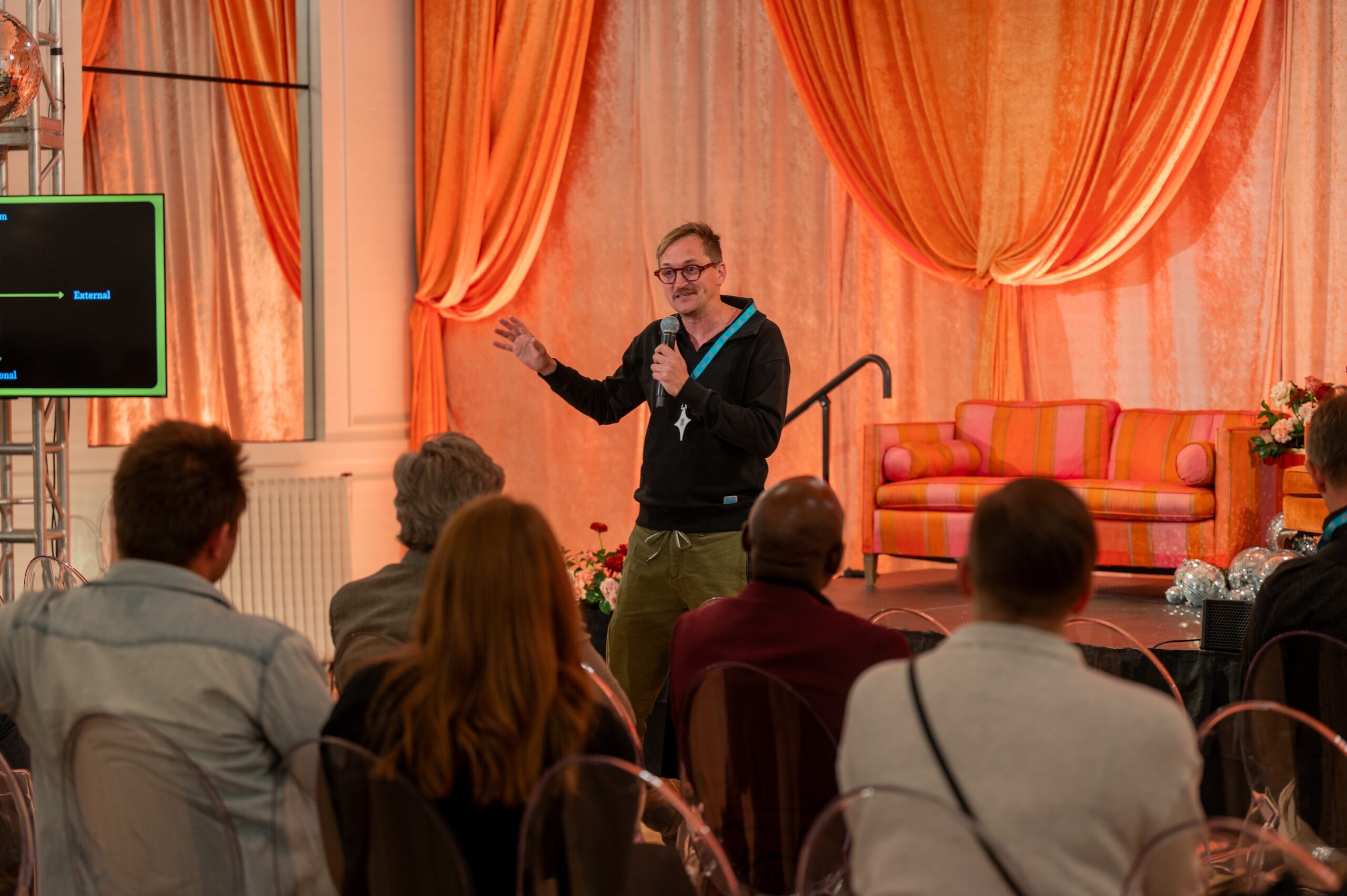
Meyer shared an example from West Fargo-based logistics startup Valor Victoria — a client of Chipp.ai — that replaced outsourced development and support with agentic infrastructure.
According to Meyer, this type of transformation is currently the exception rather than the norm. He predicts that businesses built around true AI-first infrastructure will become commonplace in the next 10 to 15 years, but for now, the early adopters he sees have the most immediate needs.
“People coming to us who want that, or are willing to do it, have an existential need,” Meyer said. “‘We’re running out of money, we can’t hire staff, the software we have literally doesn’t work, or we’re paying $20,000 a month in licenses to six different software companies, this doesn’t seem real.’”
Other sights from the conference floor