
• Amid widespread technology backlash, Atlanta-founded Flock has come to represent surveillance overreach, highlighted by a National Week of Action.
• Observation technology varies in type and use. Surveillance should be targeted, time-bound and for an immediate purpose. These boundaries are being tested with new tools.
• Volunteers have mapped automated license plate readers in every Technical.ly market, from 243 in Pittsburgh to 51 in Fargo, and every one of those markets now has an organized group opposing them.
In spring 2011, Technical.ly profiled HunchLab, “crime forecasting” software developed by a well-regarded civic tech firm in Philadelphia. A year earlier we co-produced a three-part series on that city’s plan to blanket its streets with cameras. Our partner news org for the series closed long ago. The cameras are still there.
Surveillance infrastructure outlives the institutions built to watch it.
Last week was the National Week of Action against automated license plate readers. It’s organized by a volunteer group called DeFlock, which is behind a controversial crowdsourced map of where those devices operate.
I pulled the list of nearly 500 participating local groups, and one or more exist everywhere Technical.ly reports, from Philadelphia to DC, Louisiana to North Dakota.
Flock could be considered another tech unicorn success for Atlanta. Instead, it’s become “the most controversial startup in America.”
Using an LLM and the OpenStreetMap data behind DeFlock’s map, I counted how many plate readers volunteers have documented in each place. It’s close to 250 in Pittsburgh; over 100 in New Orleans. They’re everywhere: at least 100 per 100,000 residents in Oakland, CA; Birmingham, AL; and Norfolk, VA.
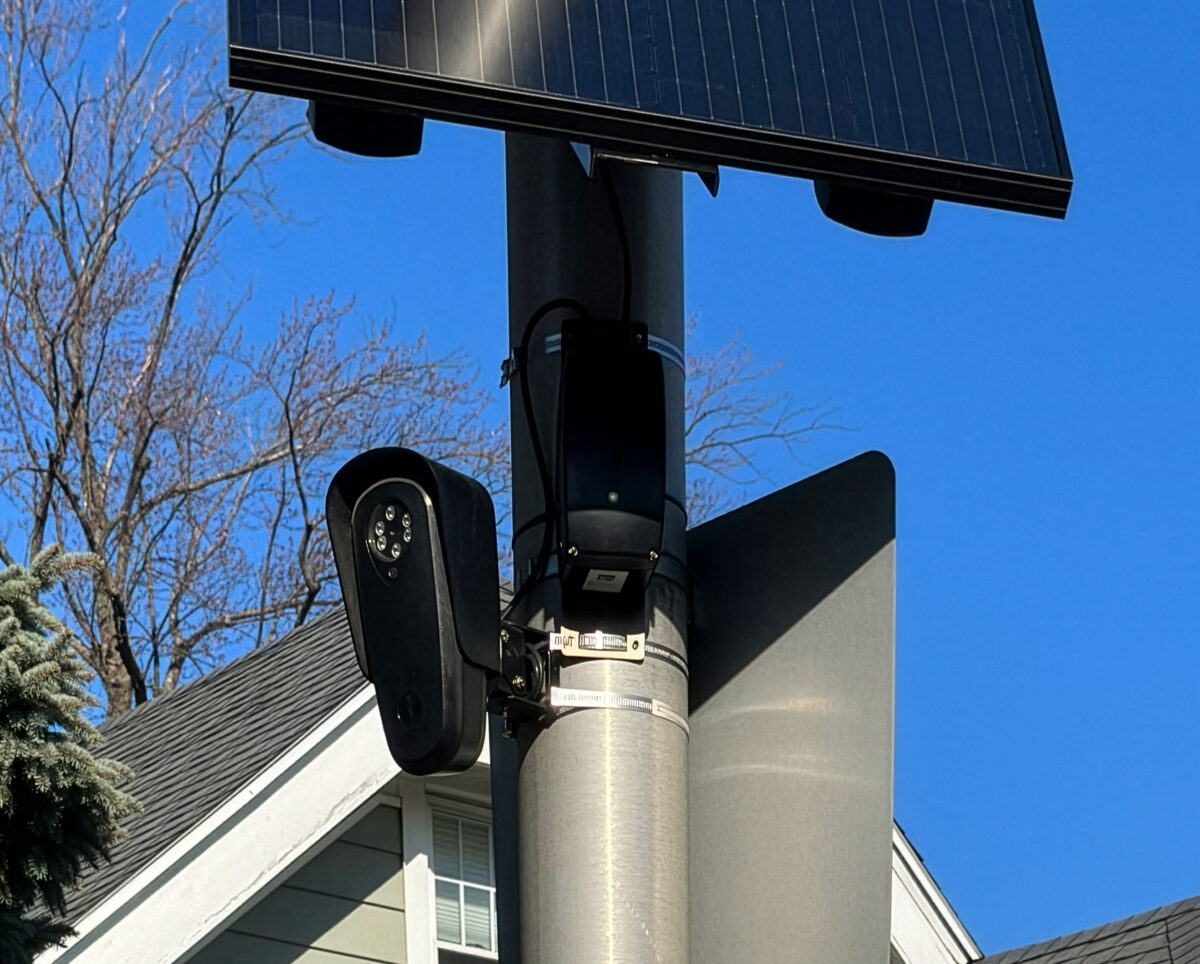
My colleague Katie Malone wrote this month about the business risk facing Flock Safety, the $8.4 billion company whose name has become shorthand for the whole category. Flock is not the only, nor even the largest, police technology provider (Axon and Motorola are far larger). Some uses are banal. But it’s become associated with an unsettling use of technology: persistent footage of innocent Americans that is often accessible by law enforcement.
Founded in 2017 by Georgia Tech alumni, Flock is a Y Combinator graduate and could be considered another tech unicorn success for Atlanta. Instead, it’s become “the most controversial startup in America.”
After close to 20 years of coverage of surveillance tech, police IT and whether tools advance security or erode privacy, here’s what I hope local organizers understand about this category.
Surveillance arrives as a gift
Two years after that profile of HunchLab, the company behind it, Azavea, gave the crime forecasting software to Philadelphia’s police for free, in exchange for access to crime data, making it the first major American city to deploy the technology. That was a common pattern. A gift has no procurement process.
In 2016, a $120,000 community-foundation grant paid for a Cessna to fly surveillance over 32 square miles of Baltimore. Because it was classified as a donation, it skipped the city’s Board of Estimates entirely. The mayor’s office didn’t know. The council didn’t know. Then-councilperson Brandon Scott, who is now that city’s mayor, called the secrecy unacceptable.
This month, Wilmington, Delaware decommissioned its Flock cameras, though those by another vendor remain. Those had been donated too.
Registries of private cameras owned by businesses and property owners proliferated last decade, bolstering a patchwork of surveillance by committee. Back in 2013, one city tech leader told Technical.ly: “If it was up to me, the city wouldn’t own any cameras.” But it’s difficult to govern what you do not own.
Cameras do solve crimes. That private camera registry contributed to 85 cleared cases and 37 arrests in six months. Two law enforcement officials I asked shared how regularly they successfully use footage in cases. Elsewhere, I’ve written about focused speed cameras, which cut speeding by more than 90% and serious crashes by half where they’ve been deployed.
But speed cameras and plate readers aren’t the same. A speed camera observes a specific illegal act and issues a specific consequence. A plate reader observes you driving legally and stores where you were, in case somebody wants to know later. One enforces a law. The other builds a record.
And the record is a worse deal than you’d think. In 2013, one big-city real-time crime center reported its plate readers had scanned more than 14 million plates in less than a year, producing 341 recovered vehicles and 58 felony arrests. That’s roughly one felony arrest for every 240,000 license plates photographed. We haven’t narrowed the scope.
The pattern isn’t that surveillance technology never works. It’s that we buy it before anyone can say what working would look like, and then nobody checks.
It’s not whether a government is tracking you — it’s that they arbitrarily could
When Baltimore’s secret surveillance plane was revealed in 2016, a police spokesperson said: “”The only people that should be concerned in the City of Baltimore are criminals.”
A typical response is Benjamin Franklin’s old line from 1755: “Those who would give up essential liberty, to purchase a little temporary safety, deserve neither liberty nor safety.”
Princeton University political philosopher Philip Pettit has argued for an even more fundamental defense: You’re unfree when someone holds arbitrary power over you, whether or not they ever use it. A servant with a kind master is still a servant. Kindness that can be withdrawn without recourse is still domination. Freedom means the absence of arbitrary power.
Apply that to a plate reader network. The question was never whether some cop is scanning your travel history tonight. It’s that somebody could, that you can’t find out, that you have no standing to object and that you cannot make it stop.
This isn’t abstract. A class action filed in San Francisco Superior Court in February alleges out-of-state agencies ran more than 1.6 million searches against that city’s plate reader database in seven months. An audit in Dayton, Ohio, found outside agencies searched that city’s camera data more than 7,000 times for immigration enforcement, in violation of Dayton’s own written policy. Dayton suspended the system and put trash bags over all 72 of its cameras.
Organizers have long fought surveillance overreach, as Technical.ly has continually reported — from the police observation van disguised as a Google Street view car to the FBI planes circling after protests. Opposition to early gunshot detection, academics building algorithmic accountability into city government, facial recognition and an art show asking why we consent to any of it. We even had crowdsourced camera mapping a decade before DeFlock.
It’s a long fight. In September 2022, about 60 Pittsburghers rallied at Carnegie Mellon behind signs reading “Surveillance is not safety.” They were organized by a group called Against Carceral Tech, the same group is registered for last week’s action.
Generally, technology is less the problem than what we do with that technology. Legal military uses overseas have their own ethics that are beyond the scope of this story. In domestic matters though, I follow a “reversible power test,” in which I only support the state deploying powers that I’d grant political opponents.
Widespread surveillance doesn’t fit that bill.
Why? A democracy draws its power from the people, so individuals should be less legible than the government. Put another way: The state should be better known by the people than the people should be known by the state.
To keep the cops out of your hair, American law generally requires individualized suspicion before the state may search you. That means surveillance technology should be targeted, time-bound and for an immediate purpose, not tools for persistent identification.



This is why other surveillance forms like listening into conversations and online search history, are especially thorny. Democracy requires intellectual privacy, the ability to investigate ideas before deciding what we believe. The feds ought never prosecute me on my strange, fringe and erratic research.
Getting creative with surveillance disruption
Emerging technologies are challenging the boundaries.
In 2021, an appeals court ruled that 18 months of continuous, warrantless pole-camera surveillance was permitted, because it only captured public movements.
In contrast, the Supreme Court ruled in June that users maintain a reasonable expectation of privacy in their cell phone location records, even when held by a third-party cloud provider like Google. Cops need a warrant to determine whether your phone appeared near a crime scene.
So when is destruction justice?
Back in May 1968, nine Catholic activists walked into a Selective Service office in suburban Baltimore, carried out draft files for the Vietnam War and burned them with homemade napalm. The “Catonsville Nine” waited for the police, were arrested and went to prison. Then, a few years later the “Camden 28” did the same thing, and were all acquitted — Notably, they were represented in part by Technical.ly editorial director Danya Henninger’s esteemed civil rights-attorney father Marty Stolar.
When you break the law, Martin Luther King famously wrote, break it “openly, lovingly, and with a willingness to accept the penalty.” The willingness is what proves you’re appealing to neighborly conscience instead of wanton vandalism.
In contrast, “Fleximan” became an Italian folk hero in early 2024 by cutting down at least 15 speed cameras. Turns out it was more than one person. The decentralized group remained anonymous until police caught several. Mostly they were mad about speeding tickets.
Rather than destruction, creative camera disruptions interest me more — like the art installations and protest signs that Americans have used to demonstrate against the category. DeFlock’s volunteers have cost Flock more contracts in 18 months than any angle grinder ever has.
I feel indebted to the activists and advocates I call friends and sources, many of whom have shaped my reporting and worldview. Any one of these technologies, uses or contracts isn’t the point, but collectively we determine how technology is used in our communities.
I also understand many Technical.ly readers are either starting, working at or supporting technologies used for surveillance. Flock’s growth is the envy of many a regional economy. When everywhere has an entrepreneurship strategy, yours needs a differentiation for the longterm, not today.
Back in 2018, HunchLab was sold to the company behind Shotspotter, the best-known acoustic gunshot detection technology. It, too, has become a surveillance test: Just this week, Denver police announced they were dropping the service after a decade of use, while Cambridge, MA, reversed course to continue it after the fatal shooting of a city employee last month.
Meanwhile, the 216 cameras “blanketing” Philadelphia in 2012 have now grown to 7,000.