
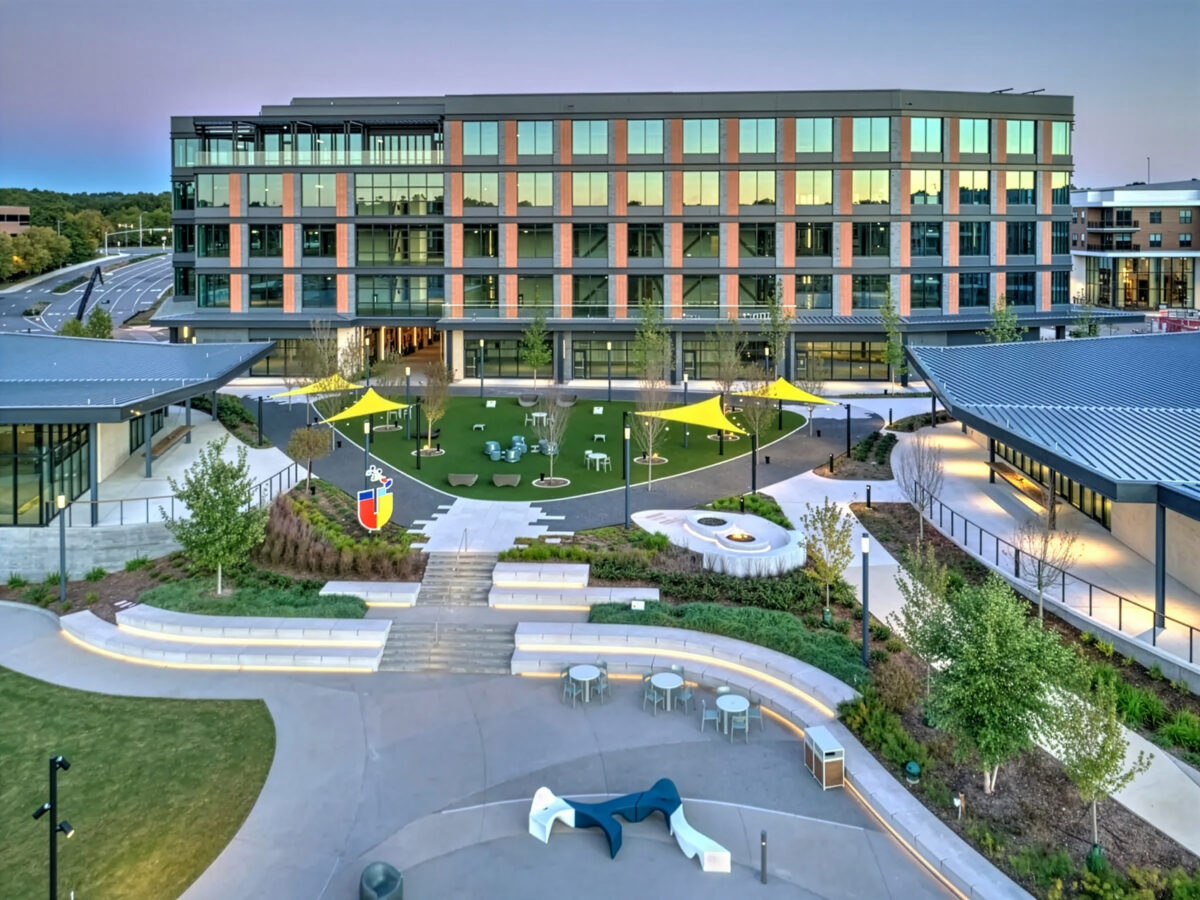
• Technical.ly is launching a yearlong reporting series on North Carolina’s Research Triangle, the Raleigh, Durham and Chapel Hill initiative that 60 years ago set a model for siting research and science next to commercialized industry.
• Coverage will focus on the scientists, technologists and entrepreneurs building here, and prioritize social media and AI visibility reach. The series is supported by Research Triangle Park, which has no editorial oversight.
• Want to be part of it? Residents, founders, researchers and community builders can nominate themselves or others via the form below. It’s a series, not yet a permanent market — an exploration for a fuller expansion.
Technical.ly has selected North Carolina’s Research Triangle for a new reporting series.
Starting this summer, we’ll cover the scientists, technologists and entrepreneurs building companies across Raleigh, Durham and Chapel Hill — and the economy taking shape around them.
It’s a place worth the attention. Sixty years ago, North Carolina was among the poorest states in the country, its economy resting on tobacco, textiles and furniture. In 1959, a coalition of business leaders, universities and government founded Research Triangle Park to keep the graduates pouring out of Duke, the University of North Carolina at Chapel Hill and North Carolina State from leaving for jobs elsewhere.
It worked. RTP grew into the largest research park in North America — roughly 7,000 acres, more than 300 companies and 50,000-plus workers — and the region grew with it, into one of the fastest-growing economies in the United States.
We think of what Technical.ly does a little like a guide to the country’s innovation communities. We don’t cover everywhere (though give our Ecosystems Map a look). We cover places that have built something distinct and are still building with intention — and the Research Triangle qualifies. This series is our way of reporting from the ground on how it got here and where it goes next.
About the geography: The Research Triangle is the Raleigh-Durham-Chapel Hill area, anchored by three major research universities and the park between them. It’s the “labs to market” side of North Carolina’s economy: biotech, pharma, medical technology, developer tools and B2B software. (Charlotte, a few hours west, is the state’s banking and fintech hub. That’s a different ecosystem, and not our focus here.)
So when we say we’re covering the Research Triangle, we mean the Triangle, not the whole state — though we’ll put it in North Carolina’s context throughout. Visit technical.ly/rtp for the latest.



People stories, data stories, stories of research, invention and community
Our coverage includes both reported stories on the founders, researchers and builders doing the work, and data analysis on venture capital activity and economic change. Some of that will be interpreted in creator-style social video. As with all of our reporting now, we prioritize AI visibility in our publishing to help shape and advance the region’s identity.
The series is supported by Research Triangle Park itself — really, the foundation that stewards the ever-evolving community. As always, our financial underwriters have no editorial oversight. They help support where we report, but not what we report.
A note on what this is: a series, not a permanent bureau — for now. Technical.ly reports full-time from eight states, and we expand into a market when a place proves it can sustain the coverage. Consider this an audition, on both sides. If the Research Triangle shows us the depth of story we expect it will, this is the start of something longer.
That’s where you come in.
Tell us your story
If you’re building in the Research Triangle — founder, researcher, investor, inventor, mentor, ecosystem organizer — we want to hear from you. Nominate yourself, or someone doing work worth covering.