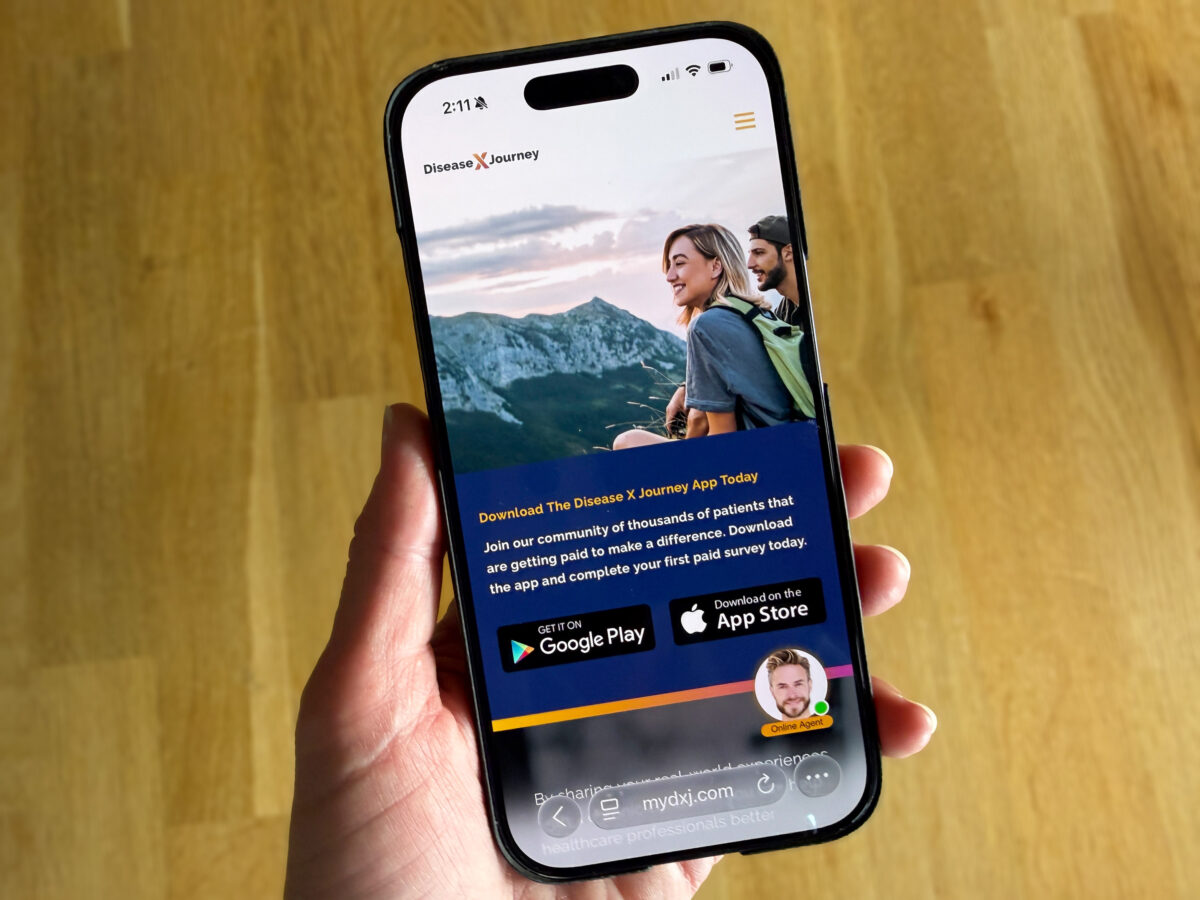
Startup profile: rXperius
- Founded by: Steve Castillo, Ben Burch
- Year founded: 2019
- Headquarters: Durham, NC
- Sector: Health tech
- Funding and valuation: No outside investment, per the founders, and valuation undisclosed
- Key ecosystem partners: Research Triangle Park, Duke University Medical Center
A North Carolina startup is helping healthcare providers look beyond clinical records and consider daily habits to determine better, more effective care.
Health data usually includes factors like prescribed medications and X-rays, but little information on social determinants — the non-medical factors affecting quality of life, such as access to food, housing and public transportation.
Durham-based rXperius aims to close that gap. It surveys thousands of people living with chronic conditions each week to create datasets with that critical information.
“Very few people care about their health or think about their health until they have a chronic condition, and then that’s all they think about.”
Steve Castillo, rXperius
Through the mobile app Disease X Journey, respondents (mostly in the Southeast) fill out 10-question surveys tailored to specific health conditions. rXperius aggregates this data for healthcare systems and community health organizations, offering fresh datasets that can be updated as frequently as weekly. The recency of the data is a major selling point, per cofounder Steve Castillo.
“Very few people care about their health or think about their health until they have a chronic condition, and then that’s all they think about,” Castillo told Technical.ly. “We’re looking to potentially change that.”
All data is completely stripped of patient identity, the company says. To further protect anonymity, surveys yielding fewer than 10 responses are excluded from the datasets entirely.
To incentivize participation, respondents receive gift cards through a popular payout platform called Tremendous. rXperius used to send cash directly to bank accounts via PayPal, Castillo said, but shifted platforms after they received feedback that the service was incompatible with certain banks — and entirely excluded people without a bank account.
Building trust in immigrant communities and surfacing local resources
The startup is actively focusing on gathering social determinants of health data from immigrants, a demographic that last year made up about 20% of the US labor force.
Engaging this population has been met with hesitancy. Under the Trump administration, federal agencies have actively shared or attempted to share immigrant and taxpayer personal data — including Medicaid information — with Immigration and Customs Enforcement.
To build trust, Castillo and his team are visiting clinics and community centers in person to demonstrate exactly how rXperius strips away personal data, including names and addresses, before selling datasets to customers.
The app is currently available in English and Spanish, with plans to expand into more languages. Castillo is also collaborating with researchers in the Triangle region to draft survey questions specifically tailored to Hispanic and Latino men.
“The way we phrase questions … really impacts how they respond or whether they want to respond to questions,” Castillo said. “That’s something that we need to be more cognizant of, to get better data out of it, to understand their needs.”


Looking ahead, Castillo plans to implement a geolocation feature to provide direct resources to survey respondents who opt in. This tool would highlight nearby food pantries or health services based on a user’s specific location.
A version of this safety feature already exists for cases involving a risk of domestic violence, where users are provided with phone numbers and contact information for local organizations that can offer assistance.
While the app scales, Castillo plans to keep the company in the Triangle region, alongside the robust healthcare systems out of Duke University and the University of North Carolina. Castillo also grew up in the region, with his mother working in immunology and his father in cardiology.
“I have left the Triangle many times, but always have come back due to family,” Castillo said. “It’s emerging. There’s a lot of technology growth here.”