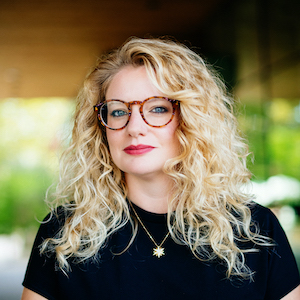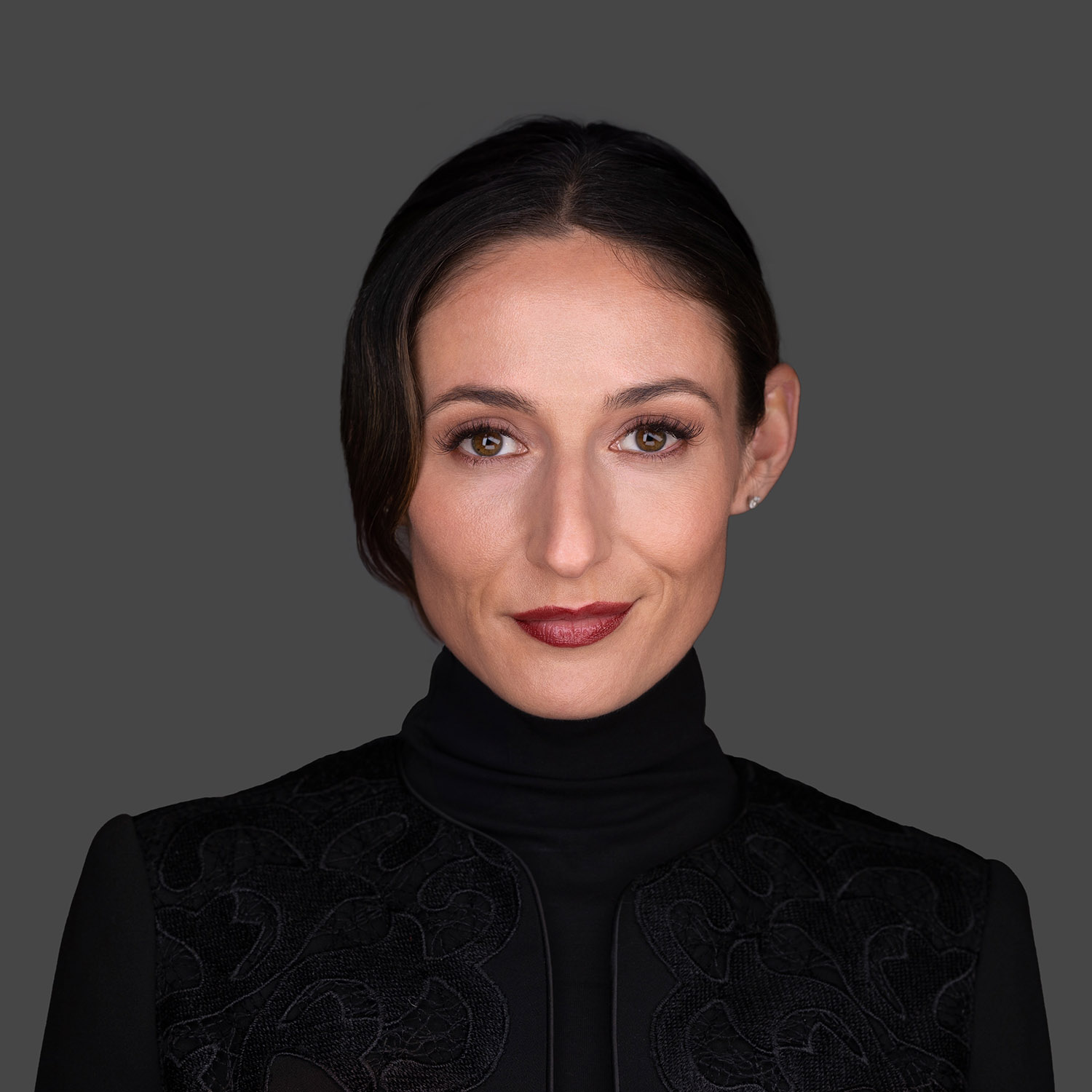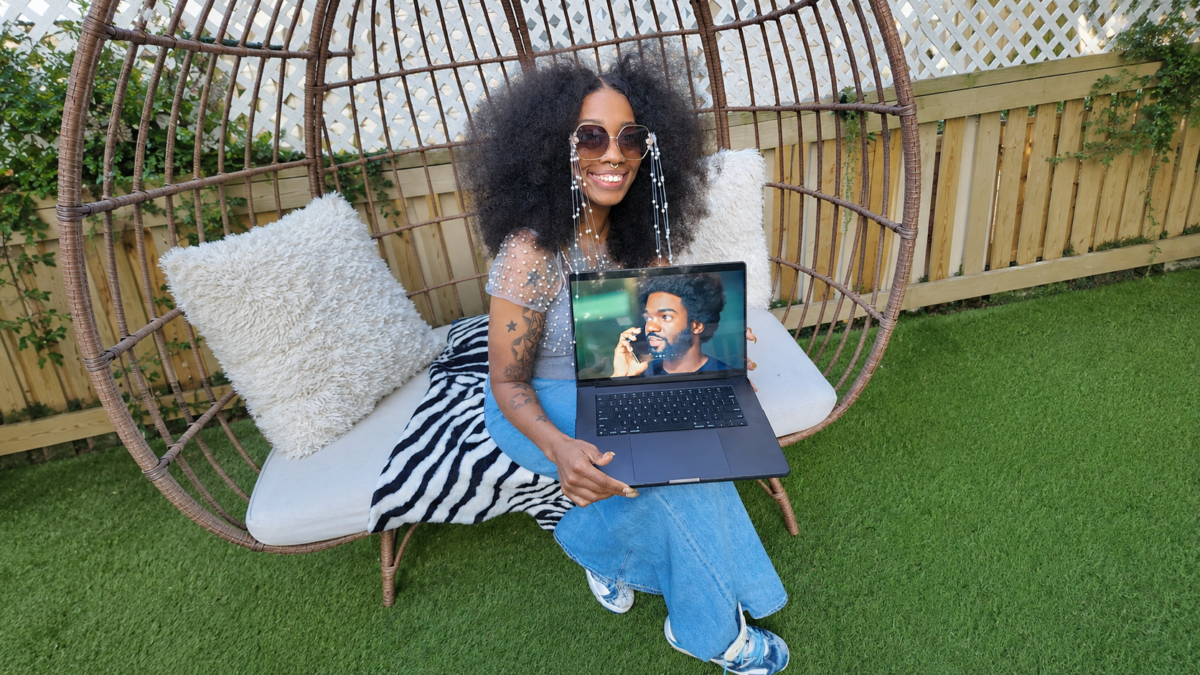
Minista Jazz has been keeping receipts her whole life.
Before she turned that habit into a tech platform, the Bear, Delaware-based founder built a career in beauty and entertainment, touring as a celebrity hairstylist with artists including Madonna and Miley Cyrus. After seeing her image and likeness used without her permission, she started paying closer attention to who controls a person’s identity — and who profits from it.
That all led to Much Different World, an AI-era consent registry Jazz built to help people put their voices, likenesses and creative work on the record before someone else uses them without their permission.
“Instead of going the route of, ‘What job can I get?’ I said, ‘What can I create with this?’”
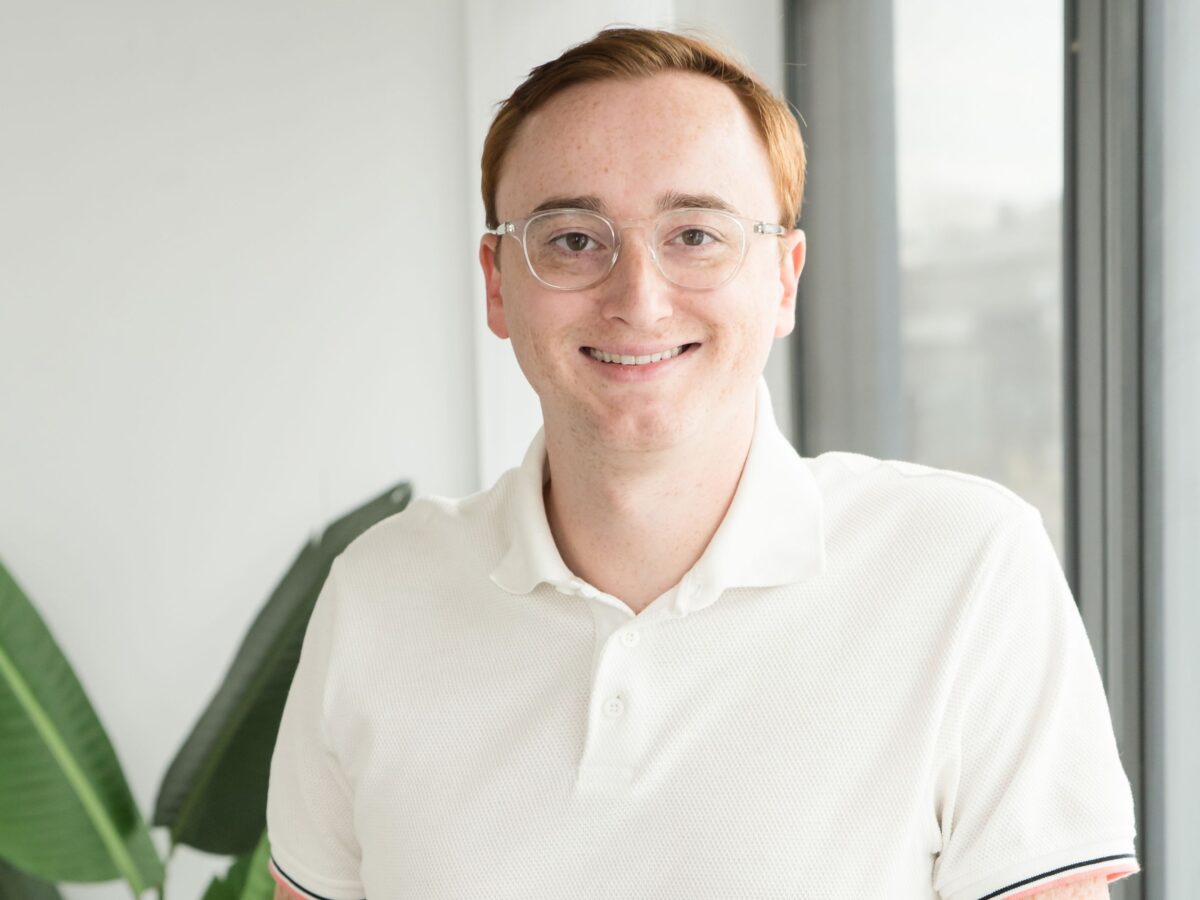
Minista Jazz
AI, Jazz said, is not something that can be stopped. During her time at Tech Elevator’s Delaware bootcamp, she used it to translate coding lessons into language that made sense to her. Much Different World similarly recognizes that AI is part of daily life.
For this edition of How I Got Here, Technical.ly caught up with Jazz about braids, bootcamp, grief and why she wants to keep humans at the source.
This Q&A has been edited for length and clarity.
How did your journey start?
My mother taught me about source and origin, long before there was a thing called AI. The registry didn’t start in tech. It started with her.
It started with braids. It started with hair. It started with pattern recognition. It started with wanting to make sure that all of the blue barrettes and the white barrettes were in rows. That started around 1985.
With that, I graduated through life. I became a celebrity hairstylist. I toured. Being on those stages and being in those rooms and having that energy around me left a definite impression.
I was also really, really inspired by my ancestors and the work that they do, such as Ida B. Wells and her keeping the receipts.
When I got into the tech arena, when I put myself through “COVID college,” I brought all of that with me. I brought the love of pattern recognition. I brought the beauty, the business, the big dreams, the global awareness. All of that came with me when I created what I created.
What experiences made you think differently about ownership and consent?
I was the $100,000 winner of Hair Battle Spectacular in 2010. My image and likeness were used several times. Around that time, Facebook started doing facial recognition. I would get pinged every time someone would post my image, and it would connect right back to me.
I was seeing all of these different people that were using my image, and there was nothing that I could do about it — or that’s what I felt.
Because I had the evidence of the photos, and I kept that evidence, it became a habit. That habit has turned into this registry.
What led you to Tech Elevator?
I had been doing digital literacy for years. My sisters and I had created digital literacy programs out of Philadelphia and surrounding areas.
During COVID, we were so reliant on the machine. I started getting calls because people knew me as the digital girl. I was teaching people how to do things, and I just wanted to go deeper.
Then my father passed away, and I found myself sitting on my couch, like, “What is life without him?” It was just this extreme amount of grief.
I asked myself a question. I said, “What would make my father proud?” And I applied for Tech Elevator.
I got in the same day. They said, “The cohort starts in November, in two weeks. Are you ready?” I was like, “Oh my God, I’m ready. I don’t have anything else to do.”
I was 45, and I was the oldest person in my cohort. I went into Tech Elevator in November 2024 and graduated in February 2025.
How did AI fit into your bootcamp experience?
All the while, they were telling us not to use AI because they wanted us to develop our skills. But I felt like, AI is where things are going. Why wouldn’t you teach us how to integrate this?
I was learning how to use AI to translate those things that were extremely boring into things that would make it interesting for me. I would hip-hop-ify the lessons. I was able to barbershop the lessons. I would make things make sense in my terms, using my words and my language, in a way my professor would have never been able to do.
That was when I understood how powerful of a tool AI was.
In that experience, I got the nickname Purple Squirrel. The recruiter’s dream: Someone who is able to translate tech into regular language for other people to understand.
Instead of going the route of, “What job can I get?” I said, “What can I create with this?”
How did Much Different World come out of the rise of AI?
My child is an artist, and she said to me, “AI is dangerous. It’s taking our stuff. It’s making it really hard for artists.”
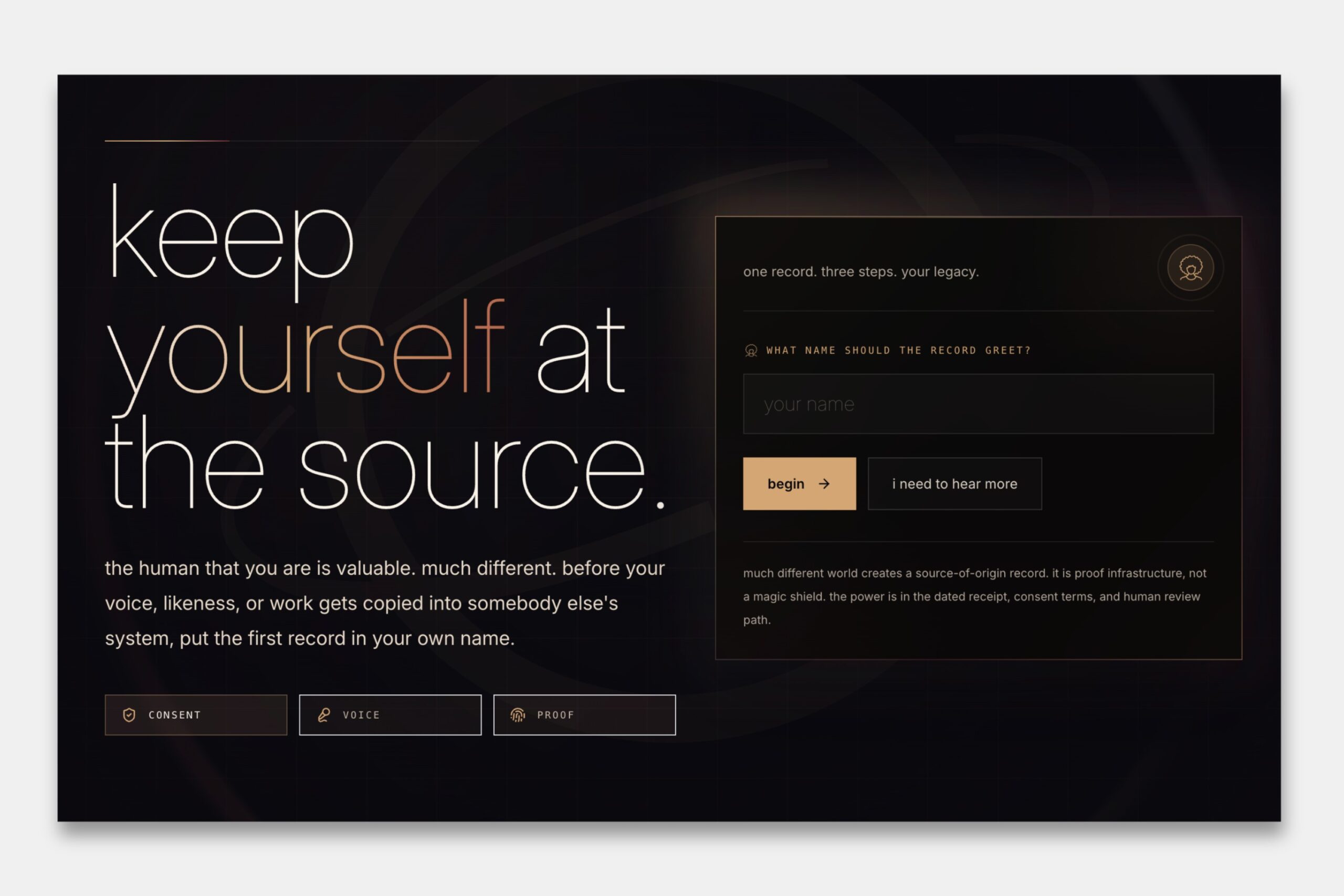
I turned into Mama Bear. I said, “I’m going to make something that’s going to keep you at the source of what it is that you create,” because I know AI ain’t going nowhere. I’m not oblivious to that. But what I can do is keep you at the source.
What’s going on now is this is the first time in history where who it is that you are — the way that you speak, your image, your likeness, your face, your methods and your creations — can be recreated without you, easily and effortlessly, in seconds.
What happens to a world when you, the human who created the thing, no longer have to be in the room to say, “I did this” or “I didn’t do this”?
The registry sets that precedent: I am the source of the things that I create. I am the source of my voice, my image, my likeness. I get to decide what happens to me and my voice when I’m gone.
What do you want the registry to do for people?
It starts with your voice. Everybody’s voice is unique. Your voice is like your fingerprint. Once you connect something to your voice, it can always connect back to you, and that can be measured with mathematics. When the math adds up, then it’s you.
We can’t protect you from somebody cloning your voice. Nobody can do that right now. But what we are saying is that we can keep you as the human source. If somebody did do something with that voice, you have the provenance to say, “I didn’t say that, and here’s why.”
My mother is visually impaired, and I grew up supporting my mom with my voice. In an age where someone can take the voice that she trusts and pretend that it’s me, and she can’t see, that is a danger. I wanted to create something that protected my child and their artistry, but also my mom, so she could trust that the voice she hears is mine.
All of this is brand-new territory. Until someone actually has to go to court and say, “This is the law, and this is what I’m standing on,” I don’t know. But we designed it ahead of that, so when you do go to court, these are the things they’re looking for: time, date, stamps.
Again, Ida B. Wells: Make sure you have your receipts. Put it on the record.
That’s what we do.