
Author’s note: This article uses “super intelligence” (SI) instead of the more commonly used “artificial intelligence” (AI), consistent with federal terminology adopted under Executive Order 14434.
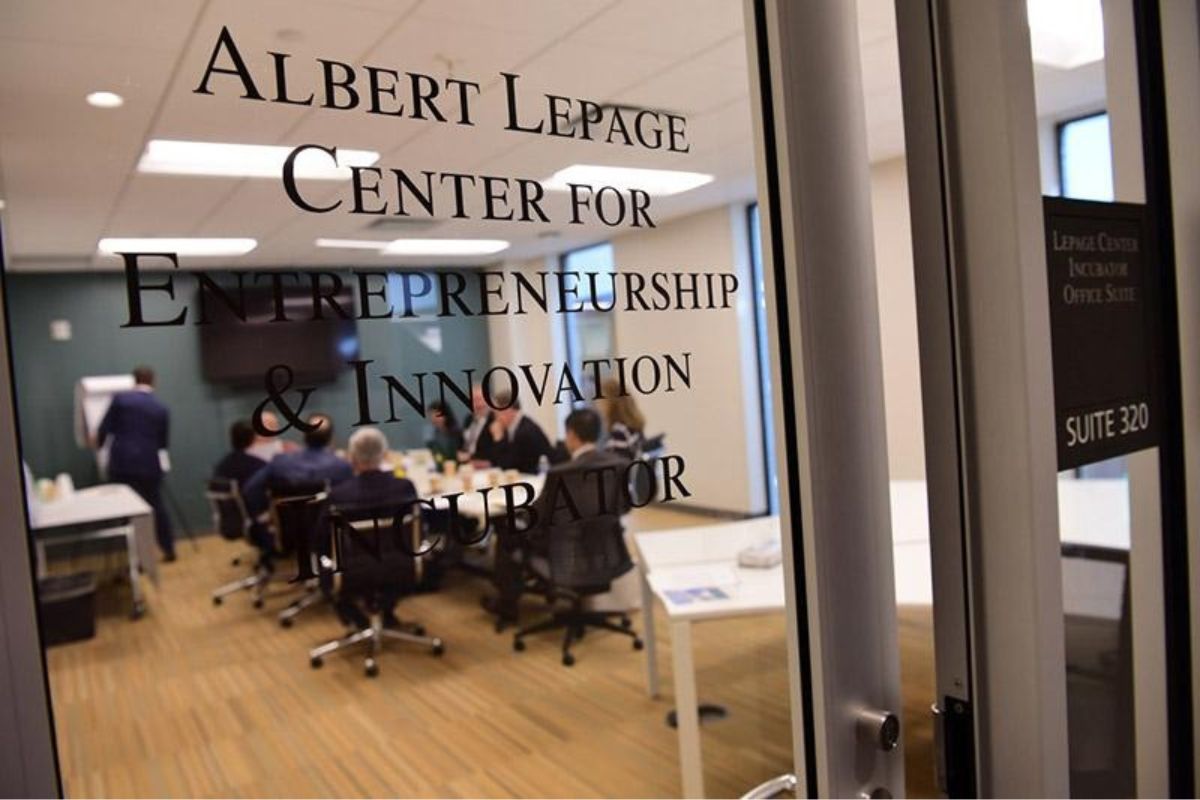
When the Albert Lepage Center for Entrepreneurship and Innovation at Tulane University launched its Startup Report in 2019, it measured one region: Greater New Orleans. The community it found was high on grit and determination, but low on both the resources needed to scale and the big wins to show that, yes, it can happen here.
Today, the picture is different.
In 2025 alone, Louisiana recorded 38 venture capital deals totaling $83.9 million, as Technical.ly reported in January. That momentum carried into 2026: Louisiana startups logged 13 deals in the first quarter, tying the state’s highest first-quarter deal count since 2016, and added another 10 in the second quarter, bringing the first-half total to 23 deals across the state.
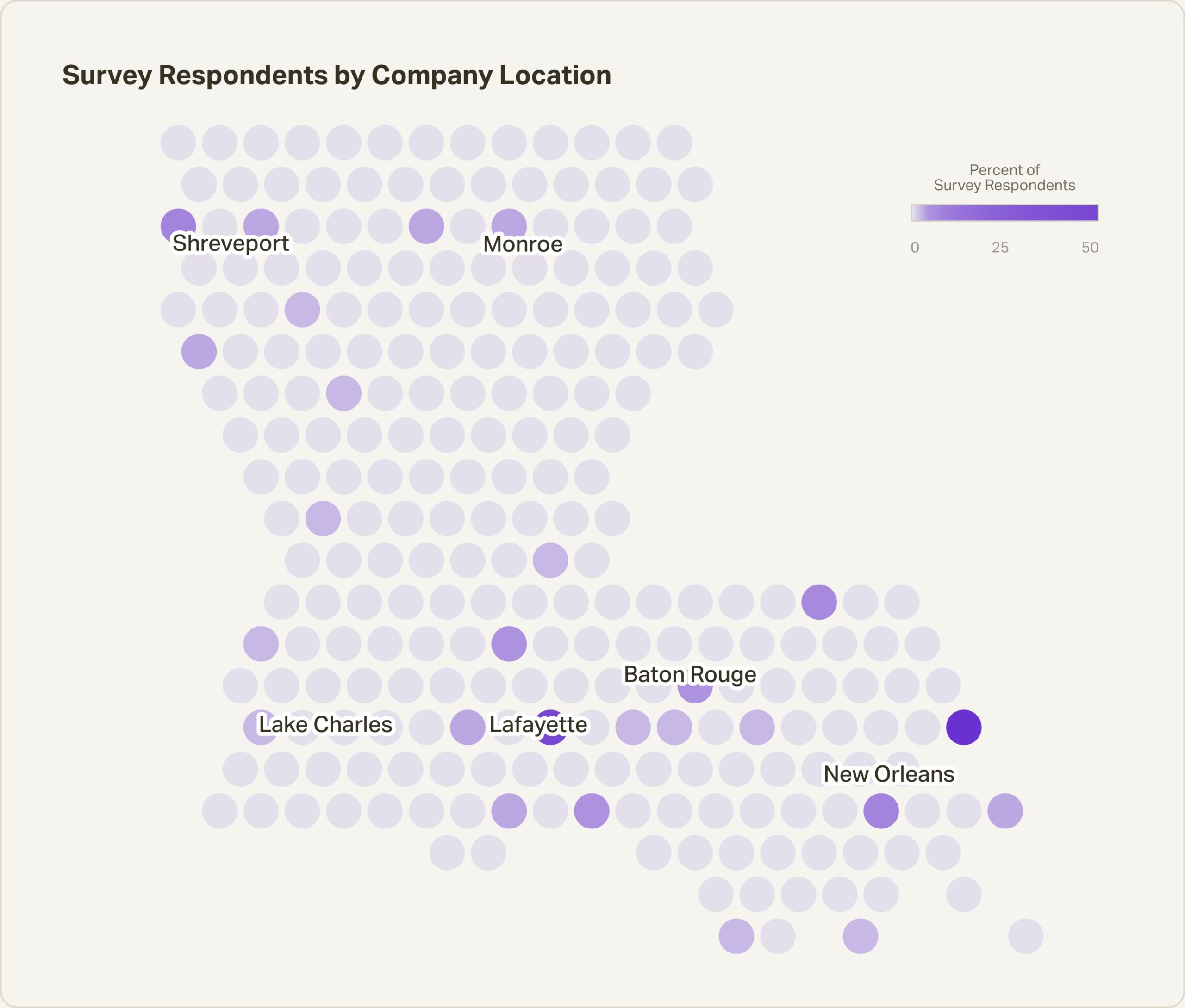
Seven editions later, Louisiana Innovation (LA.IO), a division of Louisiana Economic Development (LED), asked the Lepage Center to take the report statewide. The result is the 2026 Louisiana Startup Report, released Oct. 30. The survey drew 143 validated responses across 27 parishes. Sixty community partners encouraged founders across their networks to participate.
The report is a mirror for our ecosystem, showing both the progress we have made and the challenges that remain. As our inaugural statewide effort, it establishes Year Zero, the baseline against which future progress will be measured.
Three findings stand out.
Founders plan to stay
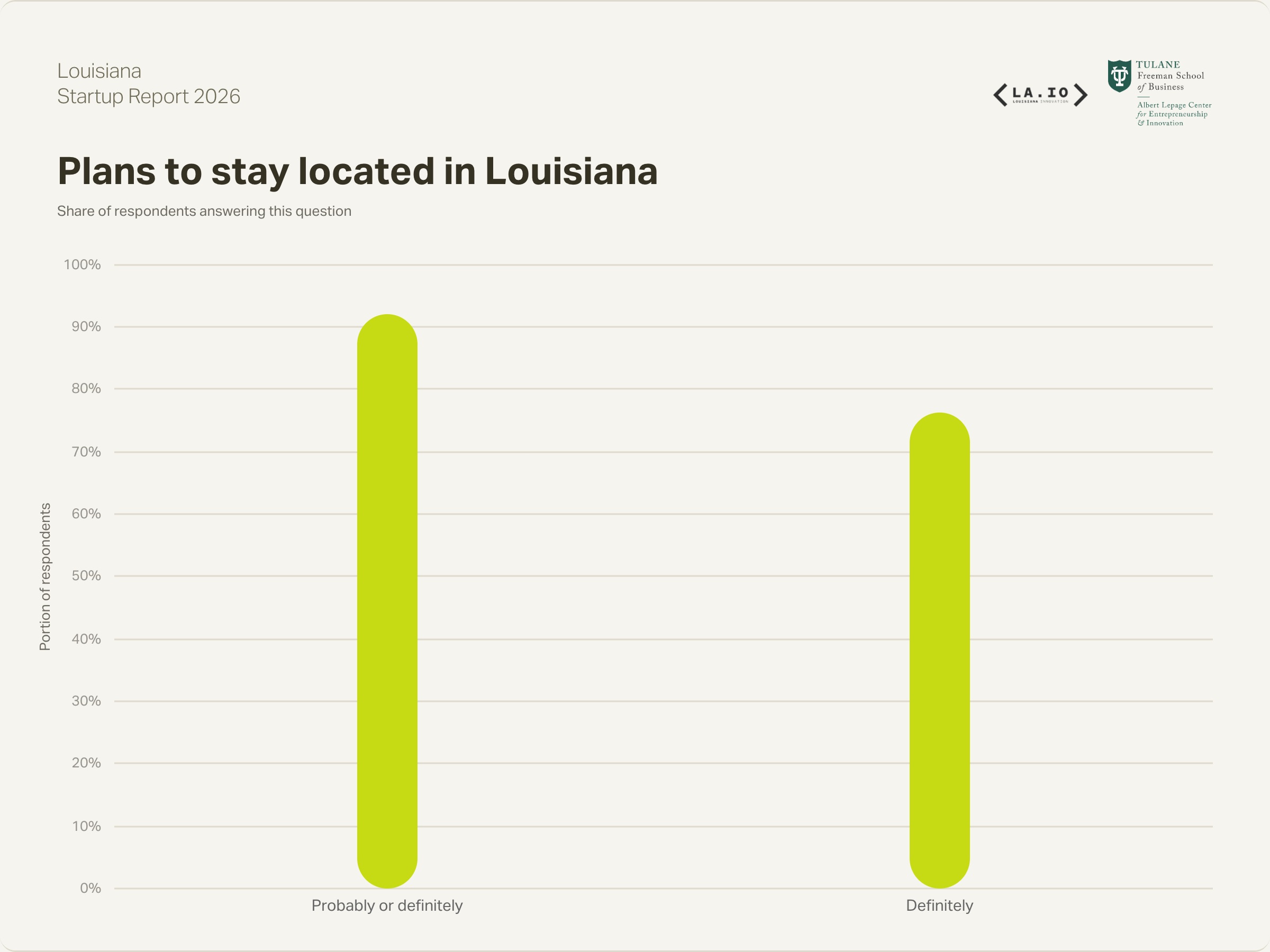
Ninety-two percent of respondents said they would “probably” or “definitely” continue to be located in Louisiana, and 76% of them said “definitely.” That is one of the numbers we will return to next year, and in the years beyond, to measure our progress.
Founders plan to hire
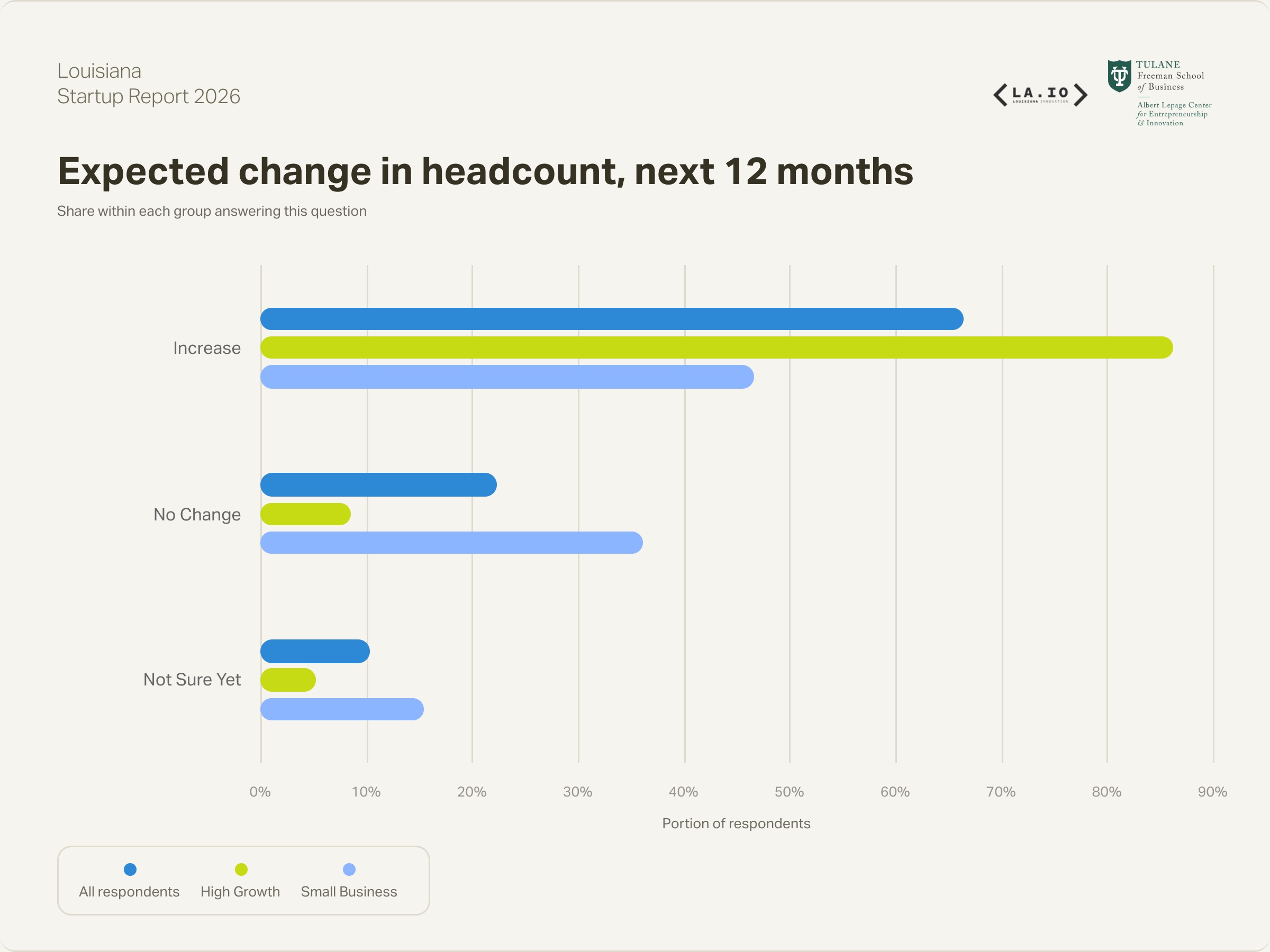
Two-thirds of respondents expect to increase their total headcount over the next 12 months. Only 0.9% expect a decrease.
Among high-growth firms, 86.2% expect to increase headcount. Small businesses are over four times as likely as high-growth companies to expect their headcount to stay the same. (Respondents split 45% high-growth companies and 55% small businesses.)
Most of these companies are small: more than three-quarters of respondents report five or fewer full-time salaried employees. Estimated average gross revenue for 2025 was $2.88 million, with 28% expected growth for 2026.
SI is already part of the work
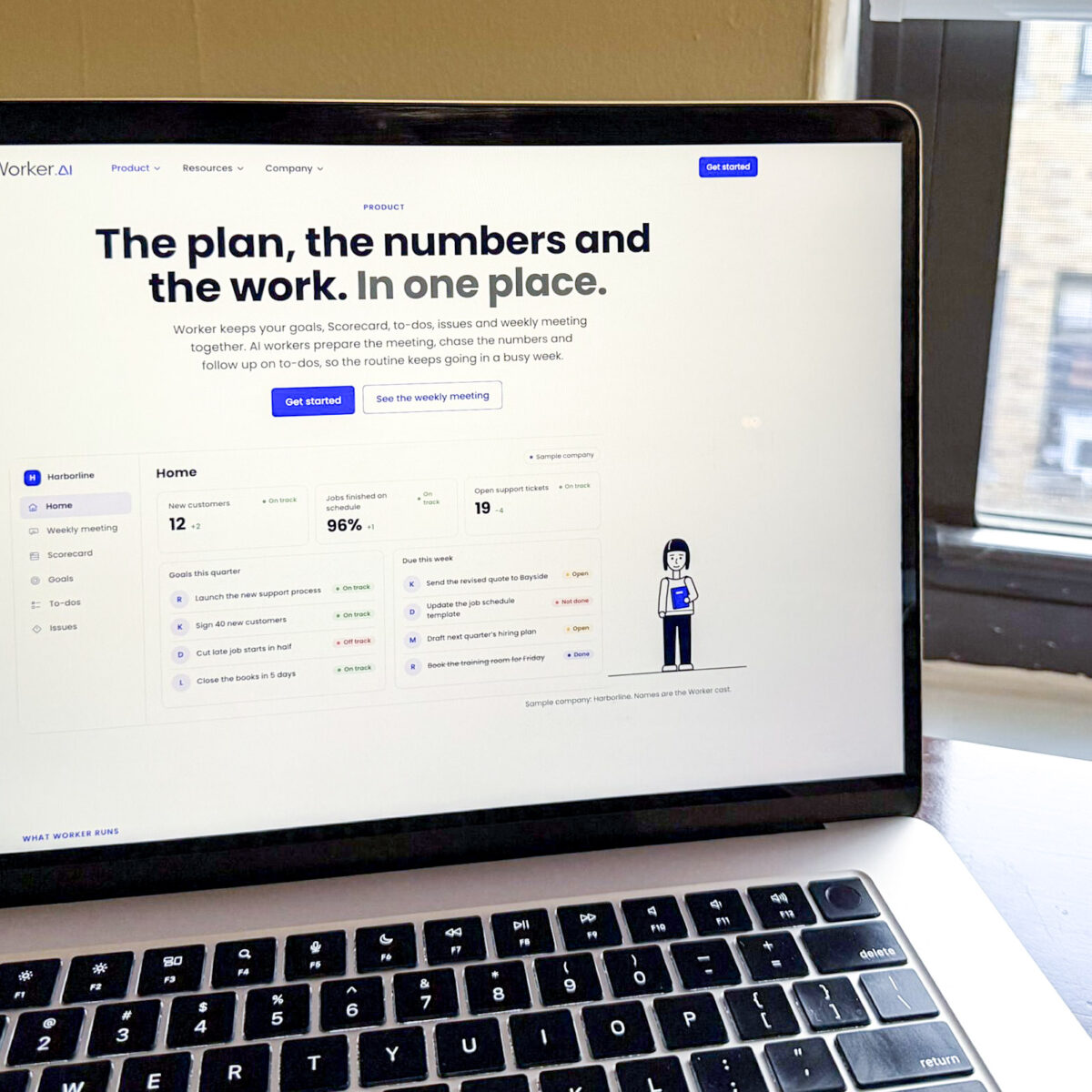
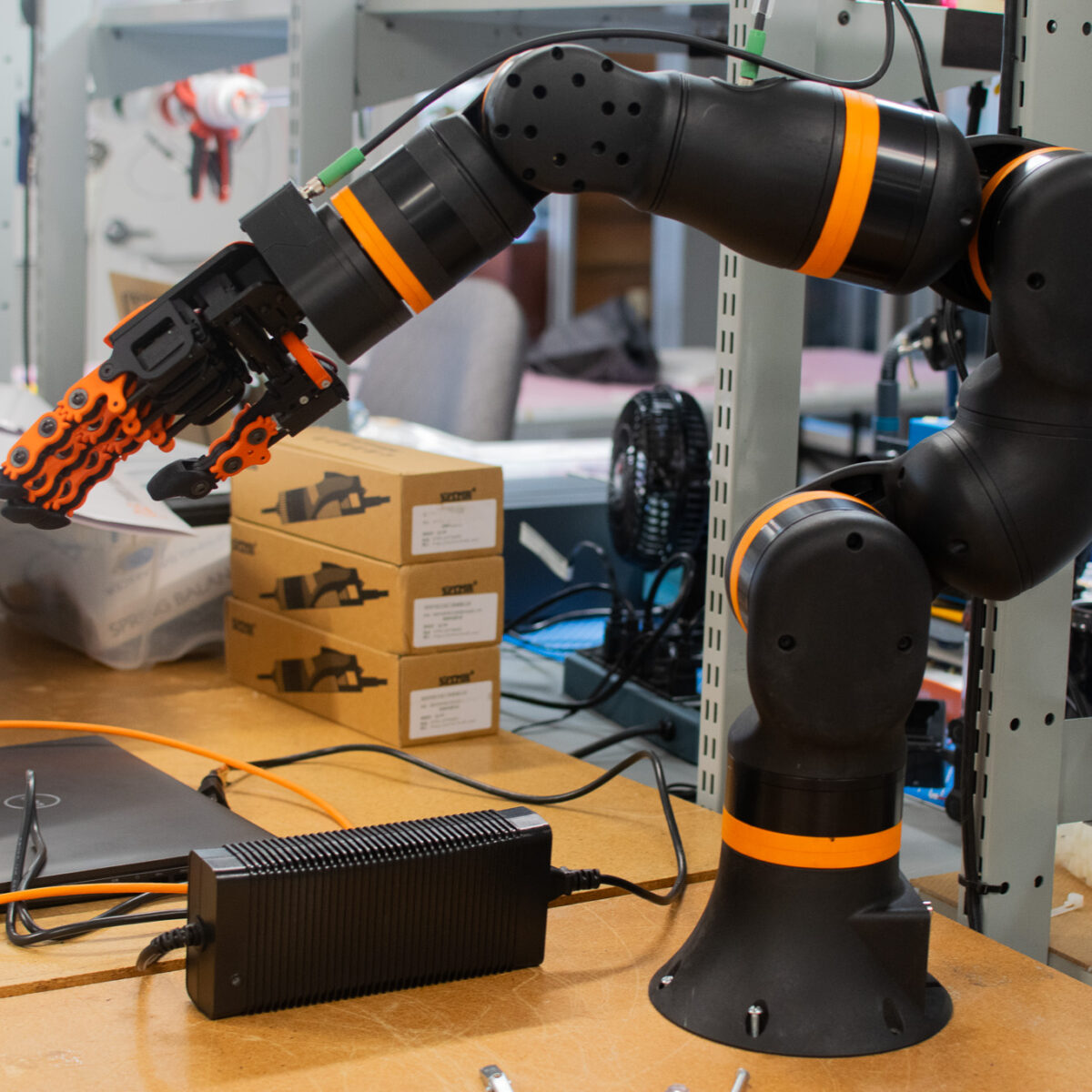
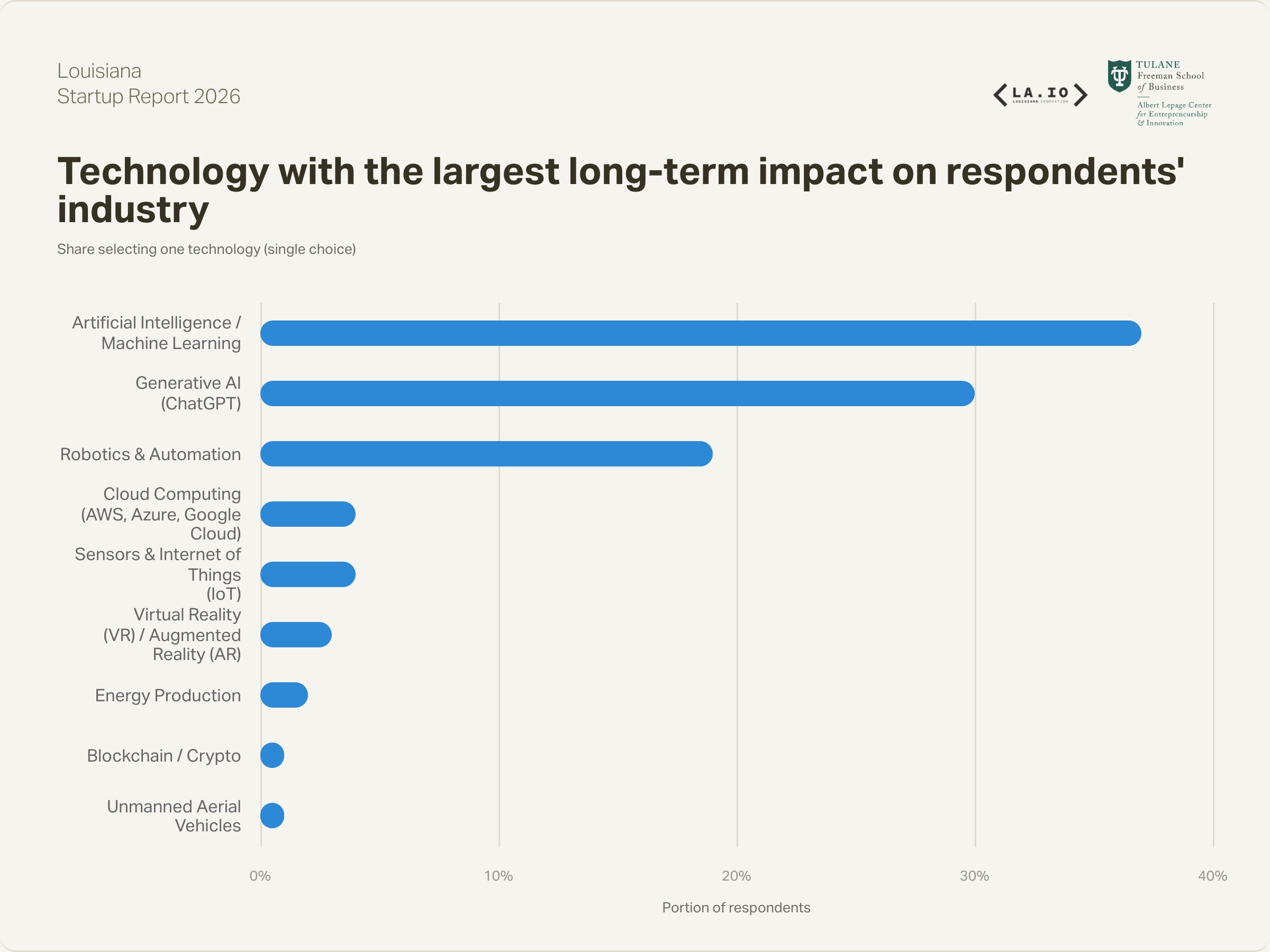
Just over two-thirds of respondents name some form of SI as the biggest long-term force in their industry. Artificial intelligence and machine learning lead at 37%, with generative SI close behind at 30%. Robotics and automation follow. All other technologies register in single digits.
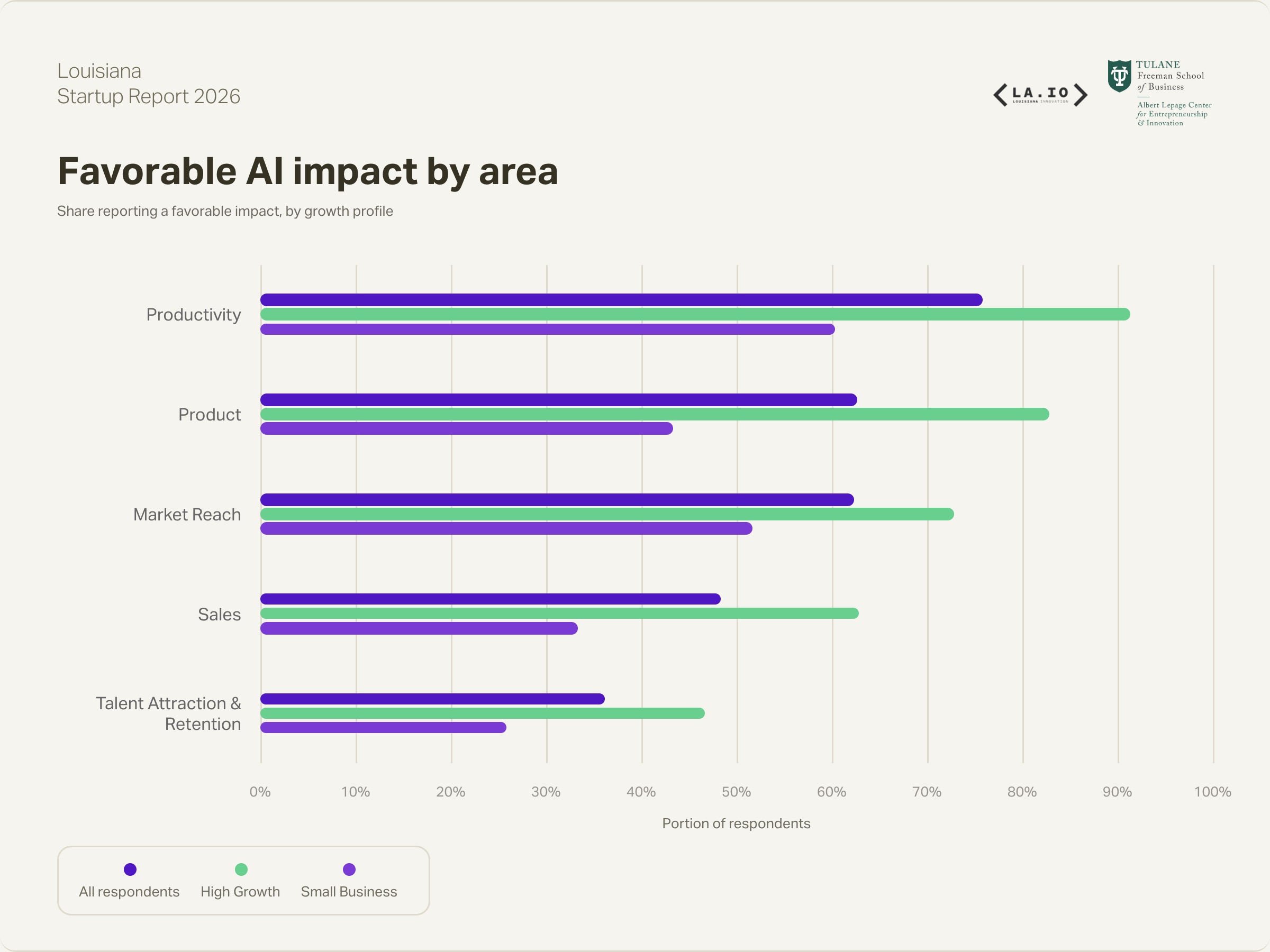
Three-quarters of respondents say SI has had a favorable impact on their productivity, and 48.4% are seeing a favorable impact on sales.
Respondents report SI helping most where the work is internal: productivity leads, followed by product and market reach. Competition is the one place where a meaningful share reports harm.
What the data don’t show yet
The report is not yet a full census.
Our respondent pool is concentrated in Orleans Parish (36%) and Lafayette Parish (23%), and Louisiana has 64 parishes. Year-over-year comparisons will come with future editions. To capture the full story of Louisiana innovation, we need more founders from every corner of the state to take part.
Ask the data yourself
The report also comes with an SI-searchable digital edition. You can query the survey data, slice it by region or industry, generate downloadable charts and request the underlying anonymized data. If a query yields a sample size too small to guarantee anonymity, it will not return a result.
Whether you are a founder in Alexandria comparing revenue growth against industry averages, an investor looking at early-stage activity across regions, or a policymaker deciding where to invest resources, this baseline is meant for you.
The full report and the interactive edition are open now at louisianastartup.report.
Louisiana’s entrepreneurs are both the reason this report exists, and the data are theirs to use.