
• West Virginia opened the nation’s first state entrepreneurship office that reports to a statewide elected official.
• It runs on $300,000 for two years, promises not to duplicate other agencies and reports barriers to the legislature.
• The effort builds on a 150-organization ecosystem and a $321 million NSF Engine award. Its first real test comes in January.
In 1950, West Virginia sent six representatives to the US House. Today it sends two. That was the year the state’s population peaked, at just over 2 million; it’s about 1.77 million now. That slow decline has shaped seven decades of economic development strategy.
For most of that time, West Virginia used the same playbook as everyone else: chase the plant, the headquarters, the 1,000-job announcement. Kris Warner ran that playbook. As USDA Rural Development state director and later executive director of the West Virginia Economic Development Authority, he helped land the kind of deals that “some people might call buying jobs,” he said.
Now, as secretary of state, Warner is running a different experiment.
“We just need more folks opening their own businesses.”
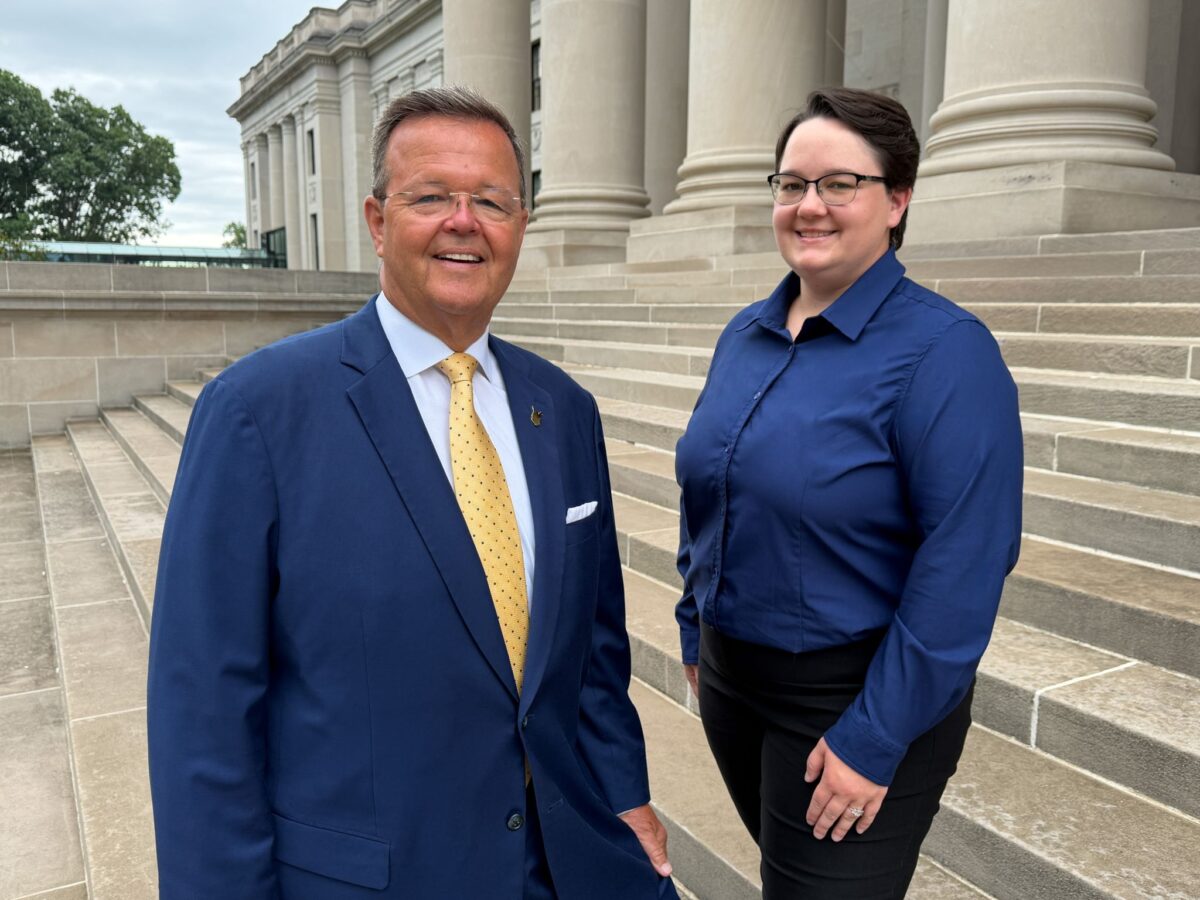
Kris Warner, WV Secretary of State
On July 1, West Virginia opened its Office of Entrepreneurship, created by Senate Bill 878 in a single legislative session. It’s the first state entrepreneurship office in the country to report directly to a statewide elected official. It has two staffers, including coordinator Lesli Taylor and one more planned hire, and a budget of about $300,000 for two years.
“We’re going to have to do it ourselves,” Warner told me in a recent Builders Live interview.
West Virginia’s problem isn’t keeping businesses alive. It’s getting them started. A longevity study released this summer ranked West Virginia first in the country for 5-year business survival: Nearly 60% of businesses launched in 2019 were still operating five years later, against closer to half nationally.
“We know that we have a long success rate once they open that business,” Warner said. “We just need more folks opening their own businesses.”
His office focuses on firms less than five years old, and Warner draws a line that matters: There’s “a very real difference between an entrepreneur and a small business owner.”
Small businesses are the cultural backbone of a place. New businesses are where net new jobs come from. Amid a national surge in new business creation, a state with strong survival rates but too few starts needs more people trying. The office’s design is worth studying for any state trying to shift from recruiting firms to creating them.
Taking advantage of the existing front door
Secretaries of state are usually in the news around elections. “If people are waiting two hours in line to vote, they’re going to be focused on our office,” Warner said.
But in most states, the secretary of state also registers every new LLC and corporation. That makes it the one place in government that sees every founder at the moment they ask, “What’s next?”
The West Virginia office works alongside the state’s One Stop Business Center, which is part of why it can run so lean. Its first-100-days finding was practical: Founders need a playbook organized by industry and location. Most states could build that. Few have.
To win passage, Warner promised legislators the Office of Entrepreneurship wouldn’t replicate anything the Department of Commerce or the Economic Development Authority already does.
Instead it acts as an ombudsman: The office refers founders to existing help, and when agency heads can’t fix a barrier among themselves, it takes the problem to the part-time legislature, which meets in January and February. For states with sprawling program inventories, the lesson is that the gap is often navigation and red tape, not the lack of another grant program.
Warner’s case for putting the office under an elected official is accountability. Taylor, the coordinator who is one of the office’s two staffers, answers to him, and he answers to voters. That’s a real advantage over a sub-agency buried three layers deep. But it also puts generational work on an election clock, when even the biggest champions of grow-your-own strategy talk in 5- and 10-year cycles.



The funding model further raises the stakes. Warner has promised not to come back for appropriations in future years; instead he expects contributions to sustain the office. One likely source, he said, is mineral-rights owners who want manufacturing built on top of West Virginia’s natural gas rather than shipping that gas to other states.
Any state copying this model should decide upfront how private money can flow into an office overseen by an elected official, and what happens to the office when that official leaves.
A decade in the making, now facing the test
West Virginia’s office didn’t come from nowhere. Warner gives credit to the people who built the ecosystem over the last 8 to 10 years and “had just finally gotten to a point where they said, ‘The state’s got to be able to recognize what we’re doing.’”
Technical.ly reported last year on that groundwork. The volunteer-run West Virginia Entrepreneurship Ecosystem, launched in 2019 and co-chaired by Amber Ravenscroft of the EdVenture Group, connects more than 150 support organizations. West Virginia BusinessLink, coordinated by Mark Burdette of the state’s Small Business Development Center, routes founders to 177 resource partners. The work has been funded largely by the Benedum Foundation and the Appalachian Regional Commission, even as the state ranked 49th in the country for innovation.
Bigger bets are arriving too. In July, the National Science Foundation named the WVU-led Resilient Energy Technology and Infrastructure (RETI) consortium one of its Regional Innovation Engines. The potential award for the engine, which counts the University of Pittsburgh and Carnegie Mellon as partners, is up to $160 million from NSF over a decade, matched by $161 million from partners. Its focus: Grid security, energy hardware and AI-enabled energy technology.
Warner’s office won’t steward projects like that. But it can make sure the founders who come out of them find the front door.
That’s the stack states across the country are trying to assemble: organizers doing the work on the ground, research-driven big bets and a clear signal from state leadership. West Virginia had the first two. Now it has a version of the third.
Warner has a personal reason for the initiative. All five of his children went to the US Air Force Academy, and two have moved back to West Virginia.
“There are too many other families that have not had their kids … have that opportunity to return,” Warner said. “I’m confident that it’ll be entrepreneurs that make that happen.”
The real test comes in January, when the office reports its first findings to the legislature. If it names real barriers and lawmakers fix them, other states will have a model worth copying. If it delivers only a referral directory, they’ll have a cautionary tale about what an elected official’s name can and can’t do on its own.