

Companies in the DMV collectively raised close to a billion dollars in the first quarter of 2026, nearly half the totals of last year’s record-breaking third and fourth quarters.
What remains true: A relatively small handful of companies are nabbing those funds. Private companies in the region raised $949.7 million invested across 61 deals, according to the latest Venture Monitor report released quarterly by PitchBook and the National Venture Capital Association, mirroring a national trend.
Across the US this quarter, just five deals represented more than 70% of all deal activity, according to PitchBook EVP Nizar Tarhuni.
“I want to make sure that the other companies aren’t missing the access to capital as a result of that concentration.”
Les Alexander, UVA Darden
The average deal size in Q1 in the DMV region, defined for this report as the Washington-Arlington-Alexandria MSA, was around $16M. That matches the average last year — when local companies raised $5.3 billion, the metro area’s second-highest annual total in a decade — but it’s significantly more concentrated than the $11M average across the previous five years.
“I want to make sure that the other companies aren’t missing the access to capital as a result of that concentration,” Les Alexander, a professor at the University of Virginia Darden School of Business, told Technical.ly. “So far, it’s been okay, but I don’t want it to get worse.”
Other regions are seeing similar concentration: Pittsburgh saw $1.7 billion across just 26 deals, for an average deal size of $65M.
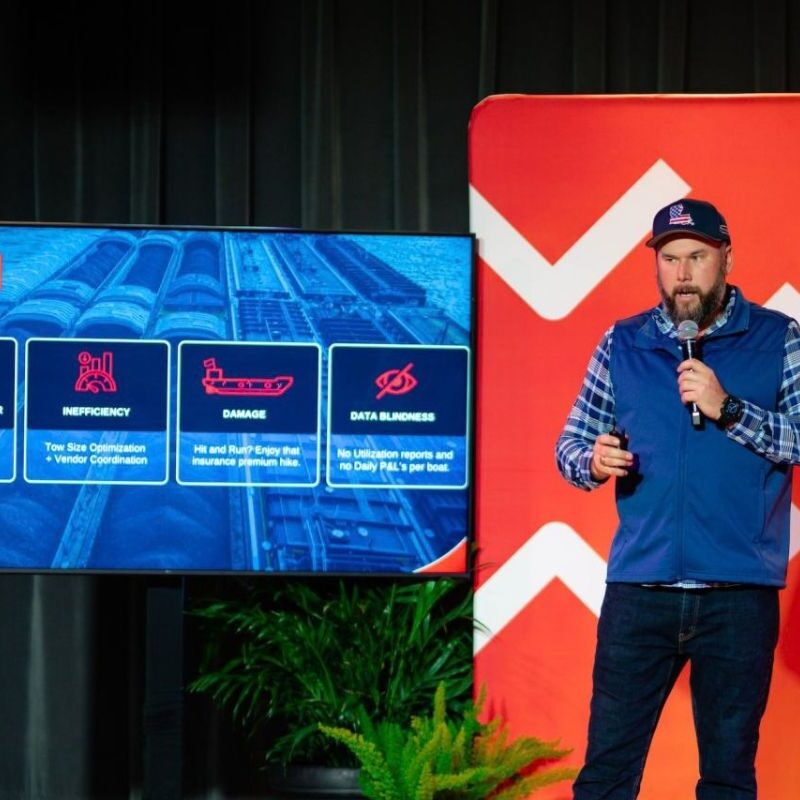
However, in the DMV, early-stage companies reported bigger deals this quarter than recent years. Transportation logistics startup GenLogs, founded in 2023, reported $63 million. Data center energy startup Emerald AI, founded in 2024, raised $25 million.
(Of note, PitchBook reported $52.7 million for the Emerald raise, but chief of staff Jack Megrue directly confirmed the lower figure — which exemplifies an important point about these quarterly Venture Monitor reports: They’re not entirely accurate when released, and are often revised in future quarterly reports. They are useful to track trends, which is why we show them in context.)
Capital is ‘not as limited as it had been before’
While a few companies are getting capital, potential exits are making experts hopeful for the next few years. HawkEye 360, a Herndon-based provider of satellite-based radio-frequency intelligence, filed for an IPO in April.
Higher chances of an exit can make investors more willing to dole out funds, said Shane Martin, an investor at the peace-focused venture capital firm B Ventures Group.
“I think there are a lot of downstream effects that we’re going to see,” Martin told Technical.ly. “I’m seeing some green lights.”
Alexander, the UVA Darden professor, agrees the trend is a good sign. Anecdotally, he’s also seeing founders more willing to sign term sheets. “The capital is not as limited as it had been before,” he said. “It just seems to be a very positive environment for both investors and founders.”
At the federal level, the Trump administration is “trying” to be business positive, Alexander said, through revamping procurement and pushing to regulate crypto. But he believes the messaging needs to be clearer.
“The market could benefit from a little bit more predictability and consistency in some of those policy decisions,” he said.



Martin, meanwhile, is encouraged by the growing programming for early-stage companies in the DC region. DC Startup and Tech Week, which hosts lots of programming for young companies, saw a record number of attendees last year. Techstars launched a new accelerator in the region, and the DC government now has a VC fund for companies in city limits. That all shows that the region is a solid place to build a business and to invest, he said.
Investors seek originality, experts say
When pitching to investors, founders should emphasize what makes their company sustainable, especially as investors are still hesitant.
“It’s essential to show why you’re different,” Martin said, “to ensure that you have a clear mode, a clear distinction that an LLM will not take you out of business.”
Founders also shouldn’t sign the first term sheet presented to them, per Alexander.
“Don’t go out to one or two investors, go out to as many you can find,” Alexander said, “so that you can at least have a good sample size of alternative proposals to compare.”