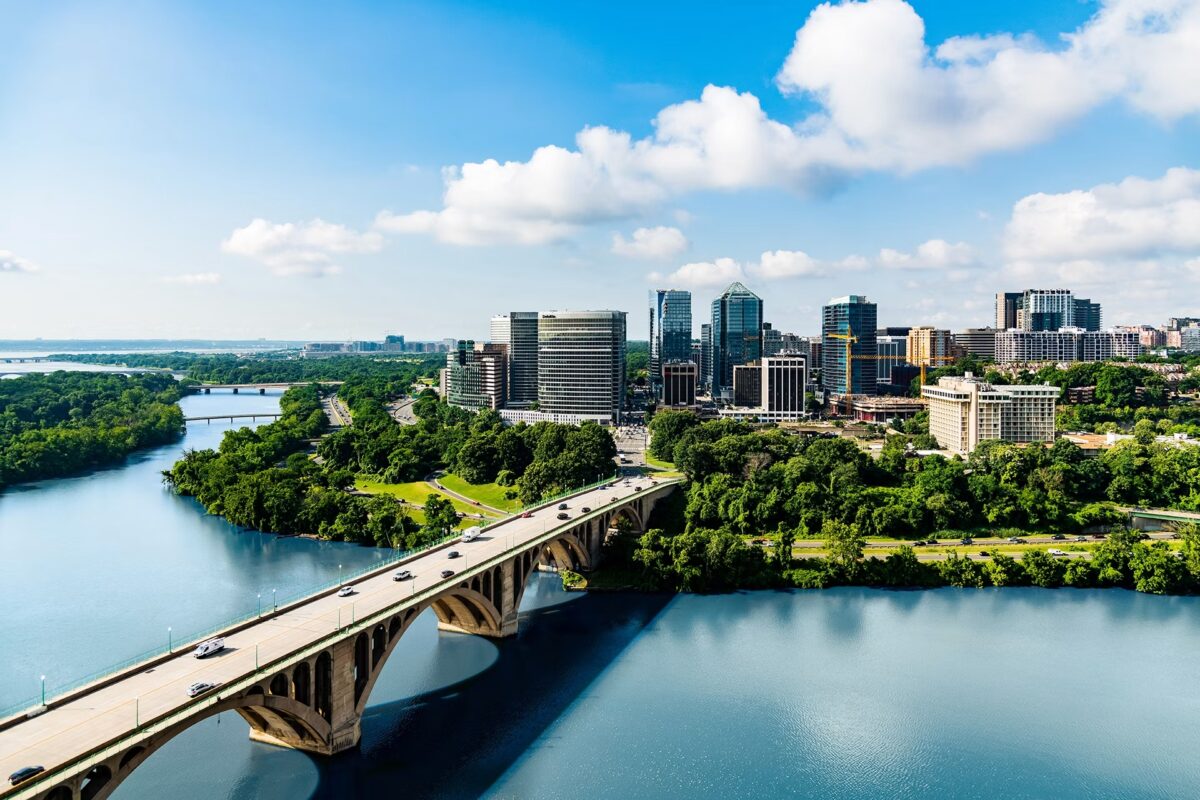
• Just outside Washington DC, Arlington ranks No. 1 among US counties for knowledge-work concentration — it accounts for more than a quarter of all local jobs.
• Arlington roughly ties that figure in office vacancy, though. Federal jobs are down 11% since 2014, while private payroll nearly doubled.
• Entrepreneurial engagement is changing the region’s workforce, part of an innovation-led economic development strategy focused on the future.
Next summer marks 50 years since the first commuter trains ran over the Potomac River from Arlington, Virginia, to downtown Washington DC.
That easy commute has served generations of federal employees traveling between once sleepy bedroom communities and buzzy federal office buildings. Over the decades, new reasons for packing the Metro have emerged.
As Washington DC’s economy has slowly diversified, Arlington’s has changed even faster. Since 2014, federal jobs in the county have declined. Meanwhile, private sector jobs are up, and a more urbane, innovation-led, mixed-use economy has emerged.
As DC’s economy has slowly diversified, Arlington’s has changed even faster.
Good thing, as the federal workforce has been transformed in recent years. Also, while government jobs are necessary for administering the services of a state, they aren’t very good for stimulating economic activity. Research into employment multiplier effects finds each new job in a competitive private industry generates roughly 1.6 additional jobs locally. Economist Enrico Moretti estimates the multiplier for high-tech jobs is nearly 5. Government work is closer to 0.
That logic is at the heart of Arlington’s economic development strategy, famous in certain circles for winning the high-profile bid for Amazon’s second headquarters. Some HQ2 construction has been delayed, but that still represents the county’s ambition.
More compelling, and at the forefront of a growing trend, the county has prioritized an innovation-led strategy of entrepreneurial engagement and tech workforce development.
Technical.ly has been reporting in the DC region since 2015. Thanks to Arlington Economic Development, which financially supports our independent newsroom without any oversight of our coverage, we’re now a year into deeper reporting specifically on Arlington.
Here’s our one-year check-in. It starts with a number that surprised us.
Arlington is the densest knowledge economy in America
More than a quarter of all jobs in Arlington County — 26.6% — sit in what government data call professional, scientific and technical services. Think engineering, R&D, software, systems design and technical consulting.
That’s close to four times the national rate. Among the 178 US counties with at least 10,000 jobs in the sector, none is more concentrated. Not nearby Fairfax. Not San Francisco. Not Cambridge-dominated Middlesex County in Massachusetts, or Manhattan or Silicon Valley-concentrated Santa Clara County.
Three-quarters (77%) of Arlington adults hold a bachelor’s degree or higher, among the highest rates of any jurisdiction in the country.
The transformation shows up in payroll, not headcount. Since 2014, federal civilian jobs in Arlington fell from close to 30,000 to below 25,000. In contrast, private-sector jobs rose by 12% to over 140,000 in that time. Total annual payroll climbed from $13.6 billion to $23.7 billion. Arlington didn’t add many net jobs over a decade. It changed what the jobs were.
That economic transition has consequences.
More than a quarter of Arlington office square footage was empty at last count, according to CBRE. A newly appointed economic development leader put it bluntly this summer: “We are hemorrhaging people out of the area.”
After a pandemic shock, the population has begun to grow again, to just below 250,000. Commercial real estate is another story. Arlington’s own office density was first developed by large institutions — federal agencies, defense primes, consultancies, trade associations. Those jobs have shrunk, and with them their leases. The innovation economy that has taken root isn’t looking for the same buildings.
What’s working
The new firms cluster around the one thing Arlington can’t be copied on: proximity to the federal customer.
- Two Six Technologies, founded in 2021, now runs about $300 million in annual revenue and employs 900 people on contracts with ceilings in the billions.
- Rune Technologies raised a $24 million Series A for a battlefield logistics AI system that’s already deployed with the Army and Marine Corps.
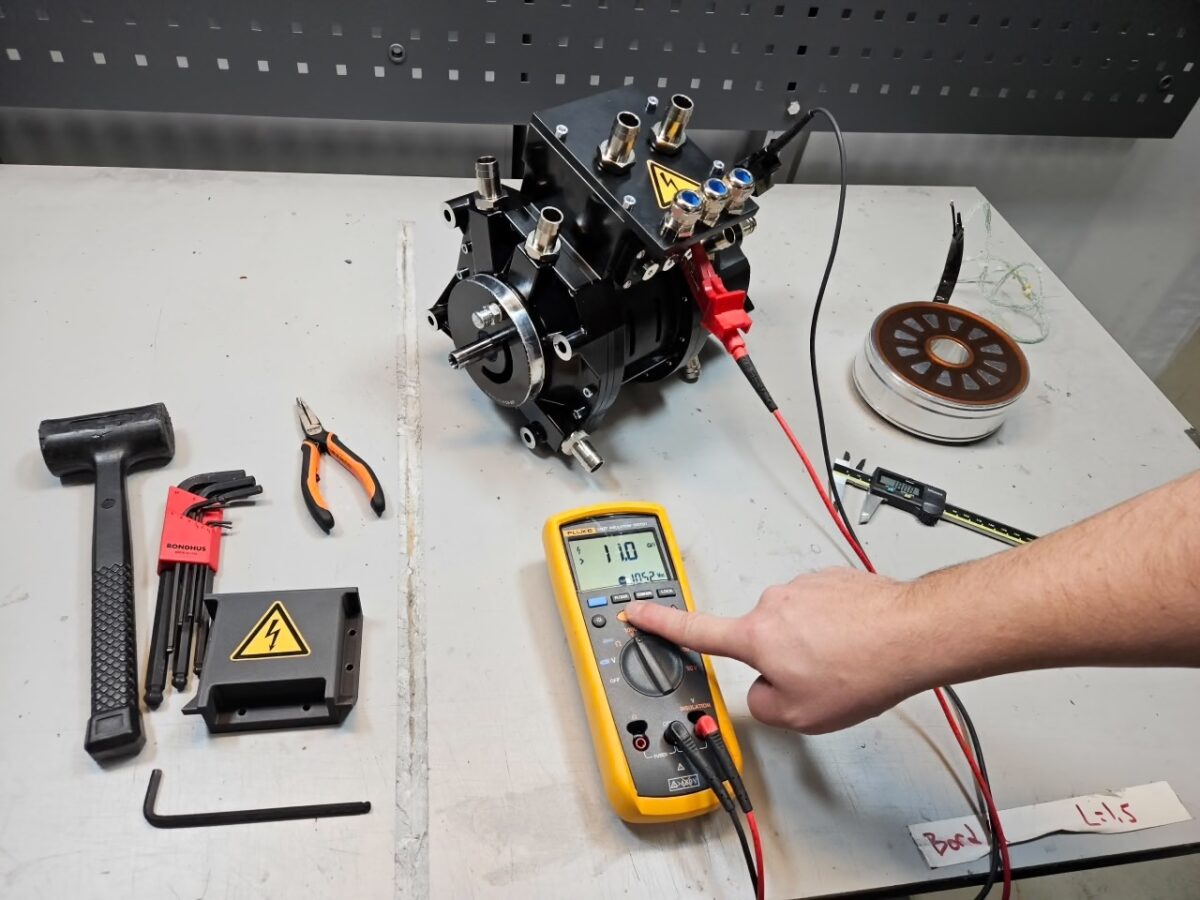
- Torev Motors, building EV motors that skip rare-earth magnets, won the Virginia bracket of the DMV’s Battle of the Regions.
Underneath them is actual ecosystem plumbing, most of it recent.
The Arlington Innovation Fund has spent close to $1 million since 2023; its nine Catalyst grantees went on to raise $25 million and create 60 jobs, with three-quarters of those founders coming from underrepresented backgrounds. FedTech runs a Homeland Security Startup Studio pairing entrepreneurs with federally funded lab technology. Unstuck Labs added a four-week accelerator that it plans to run 10 times a year.
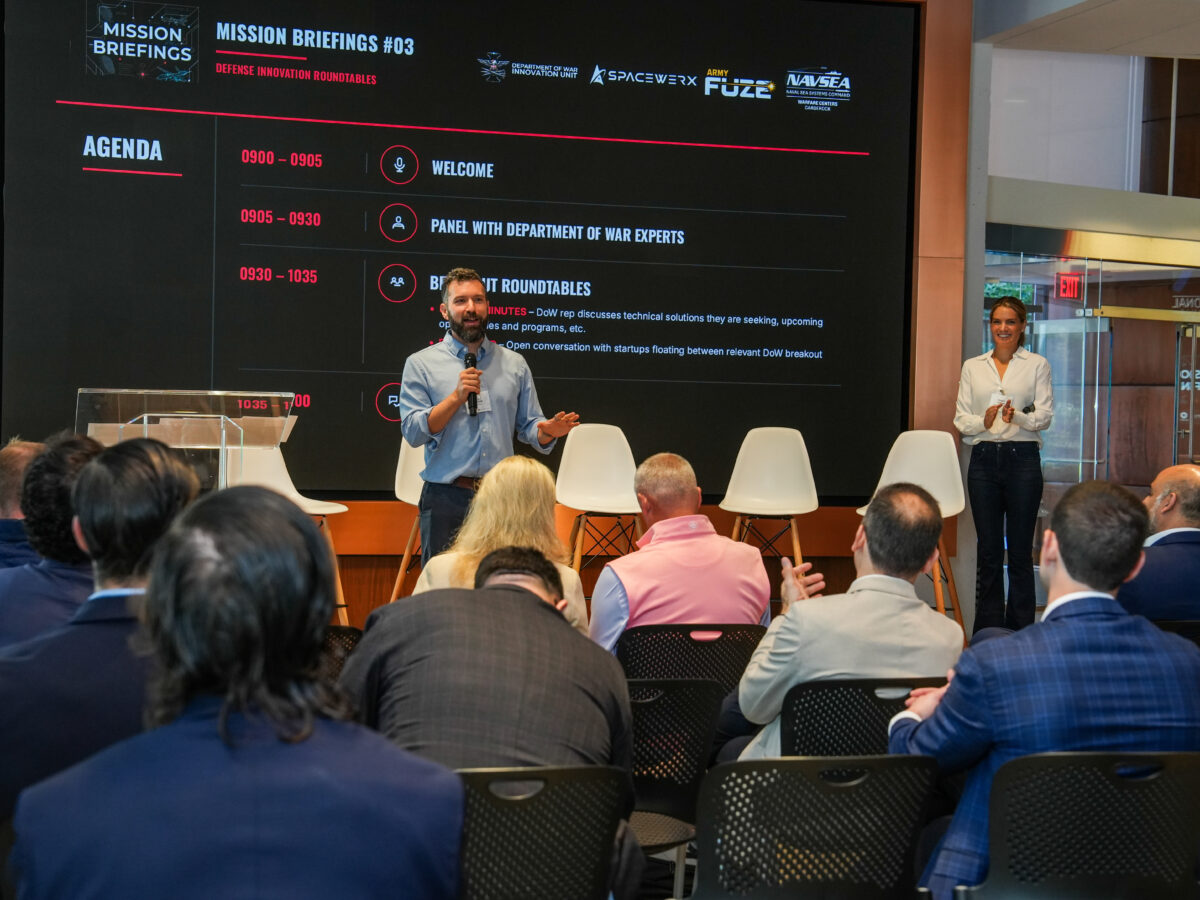
And the National Innovation Quarter — a $5 million, three-year innovation district spanning Arlington and Alexandria — launched in February, with a CEO who’s not shy about sharing his lofty goals. Last month Deep Tech Week Washington debuted with 3,000 registrations and 25-plus events, many in Arlington.
These are credible signals of a new more dynamic and resilient economy developing as cracks appear in traditional strengths. Will the new get enough sustained support to replace the old?
What’s hard
Capital
The DMV is plenty rich, but cash is directed largely to established government services.
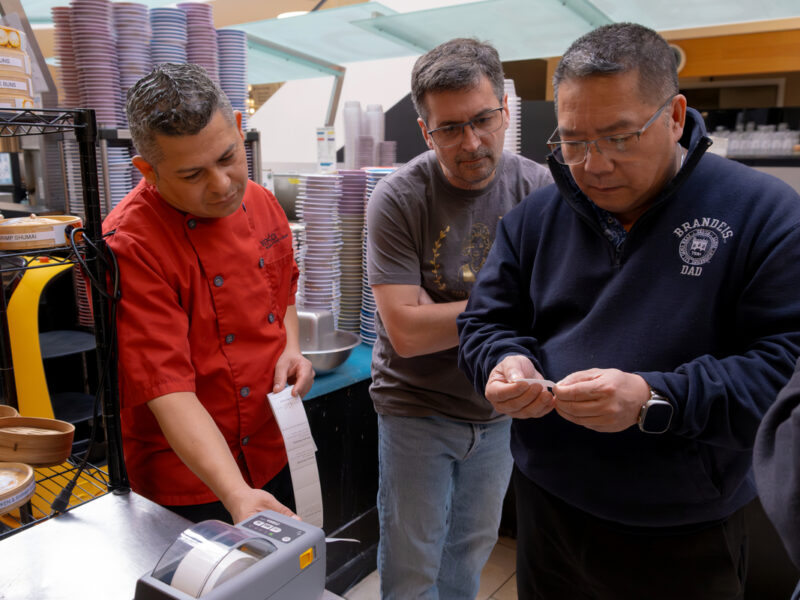
Aseel founder Nasrat Khalid, an Afghan refugee running a marketplace and aid platform from Arlington, raised $850,000 — mostly from personal contacts — after meeting 300 venture capitalists. Pryze cofounders Natalia Micheletti and Tim Hylton reached roughly $1 million and 57 customer locations, with a $50,000 Catalyst grant as early fuel.
Good outcomes. Small numbers for the most technically concentrated county in America. Raising money for new businesses is hard anywhere, so a county that wants to diversify its economy must encourage new investment networks for emerging entrepreneurs. Hence a flurry of Arlington programs intending to do just that.
Continued federal government exposure
One in five working Arlington adults is a federal employee, and the federal government leases about 12% of the county’s office space. The county has begun its economic transition. Work remains.
Patience
Amazon’s second HQ2 phase, PenPlace, is still paused, with the county’s construction deadline extended to June 2028. That whole spectacle is a sore spot for many in Arlington. Others view it more generally as part of a broader story. Bets on long-term entrepreneurial engagement are as much civic infrastructure as is reimagining commercial real estate, courting an array of corporate offices and defending high-quality public transit.
Tell us your story
A year ago, an Arlington economic development leader advised entrepreneurs to find a place to live first. His rubric put life fit ahead of everything: commute, housing, walkability. Then the visible signals — meetups, coworking, whether a connector answers your email. Talent pipelines and tax policy came last, as tie-breakers.
The DC Metro was built to carry federal workers to federal buildings. It now also carries a founder to a Wednesday pitch night in Rosslyn, a George Mason University grad student to dinner in Clarendon, a defense-tech engineer to a reception in National Landing. The commute runs both directions now, and increasingly it isn’t a commute at all.
That’s an economic transformation Technical.ly is following.
So tell us. If you’re a founder, an engineer, a scientist or a federal technologist in or around Arlington, we want to know what you’re building — and what’s in your way. We’ll use it to report the next year even more deeply than we reported this one.