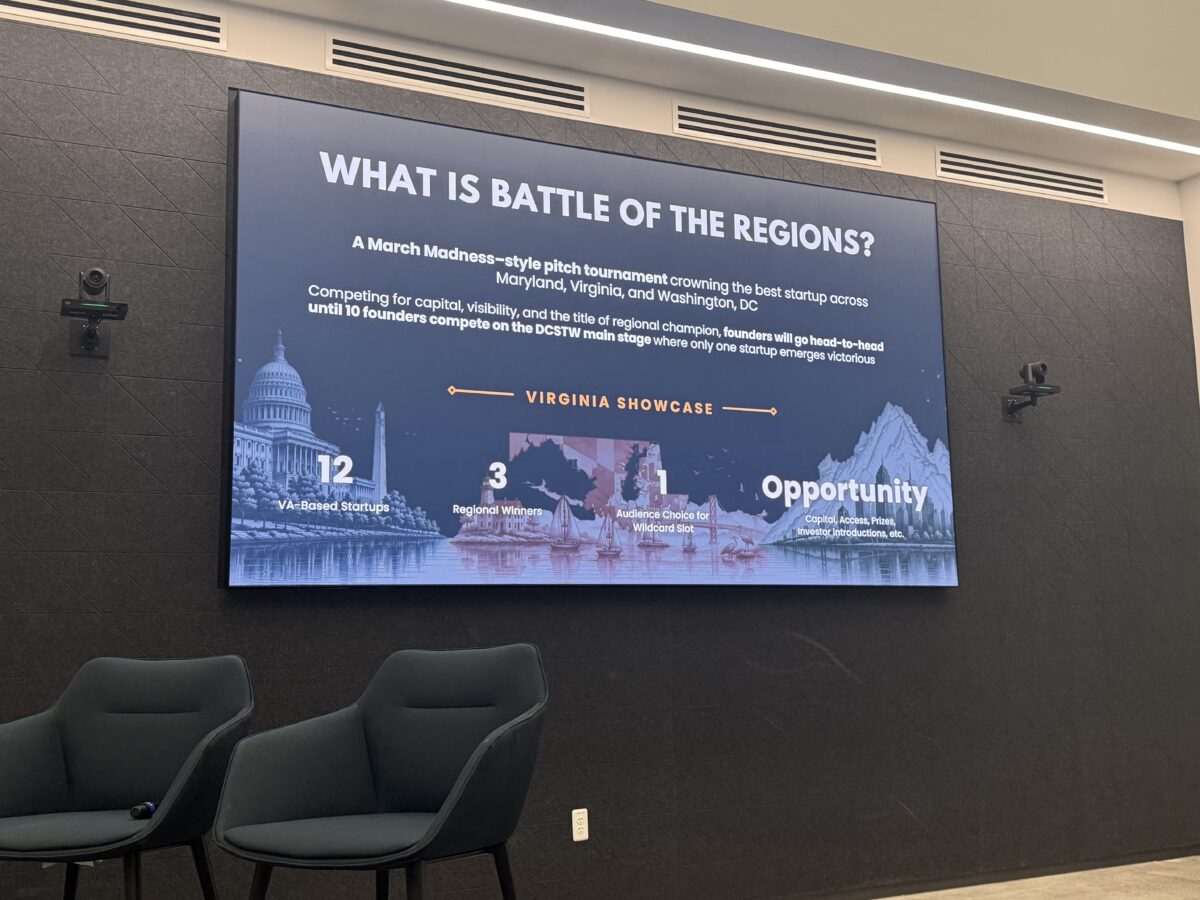
Three Virginia founders are moving forward in a March Madness-style pitch competition between the DMV’s three jurisdictions — and are closer to the chance of winning $1 million.
Called Battle of the Regions, the contest is a new initiative created by local entrepreneurial organizations to foster friendly competition between the neighboring jurisdictions.
“The intent behind this initiative was to bring together startups, investors, ecosystem builders and leaders alike,” said Ryan Pierce, program manager at the nonprofit Inspire Access. “Additionally, we wanted to answer a very controversial question: Which region in the DMV is truly the best?”
“We wanted to answer a very controversial question: Which region in the DMV is truly the best?”
Ryan Pierce, Inspire Access
Other host organizations include the investing group District Angels, DC Startup and Tech Week and Baltimore-based charitable organization Abell Foundation.
The first contest of the bracket, for Virginia startups, was filled with 12 companies headquartered across the state, from Arlington to Charlottesville (not considered part of the DMV, but we’ll give them a pass). An EV company, a biotech firm and an AI platform for homeowners associations will continue on to the final competition this October at DC Startup and Tech Week (DCSTW), where they’ll face off with the first-round winners from DC and Maryland.
Winning the DCSTW final comes with more than just bragging rights: It includes a flight to San Francisco and a spot to compete in the Startup World Cup, which comes with that million-dollar cash prize.
The winners: Torev Motors, Lympha Bio, GoodFences
The three-person panel of investors — all based locally in Virginia — chose as first-place winner Torev Motors, an Arlington startup designing EV motors that don’t depend on tenuous-to-source rare earths. Instead of magnets, the startup uses additional coils and a different physical design, said founder Rory Brogan.
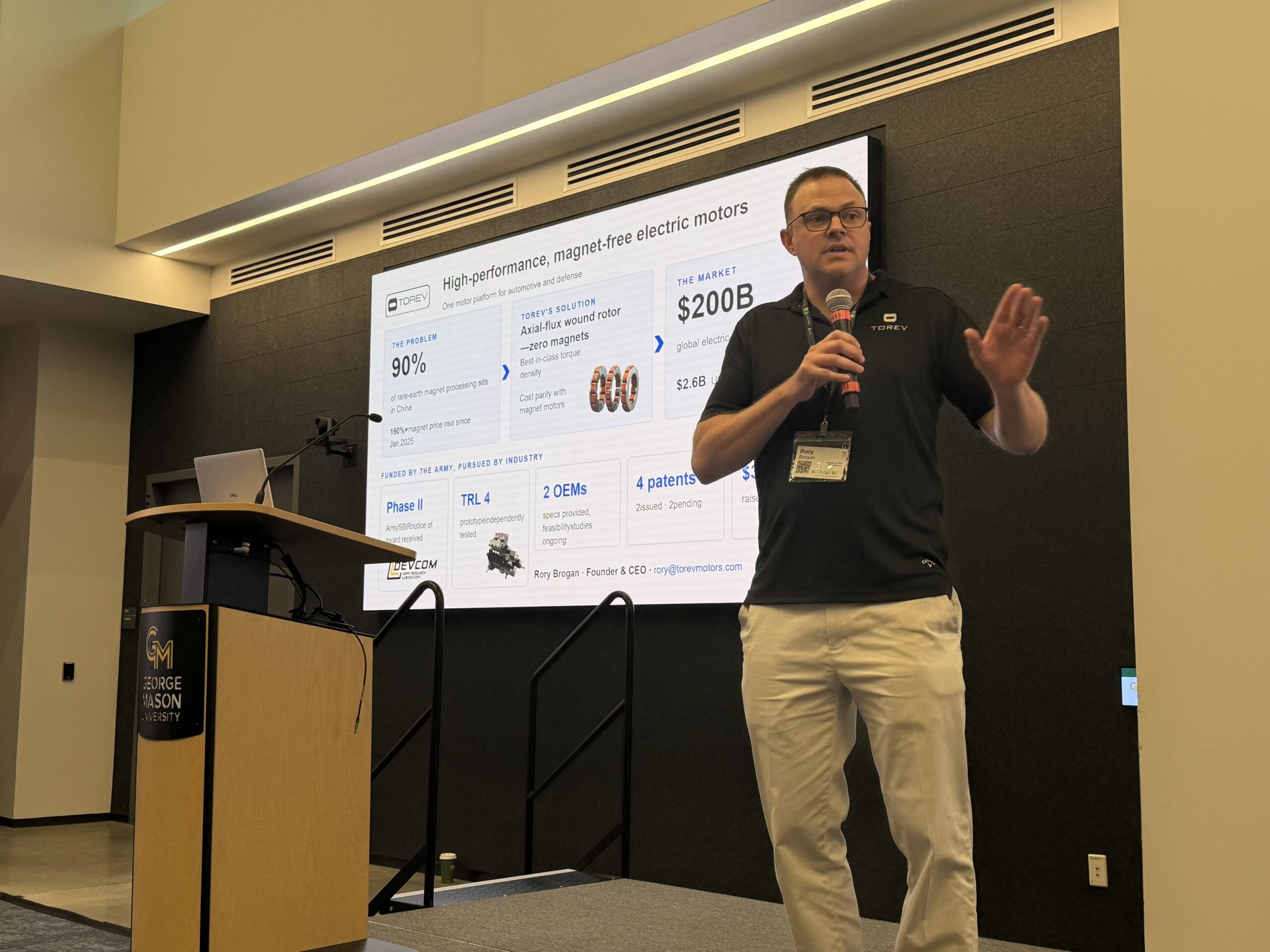
His startup recently validated that its motor works and can be scaled through a round of third-party testing this spring. Brogan told Technical.ly plans call for deploying motors in sedans in the next year.
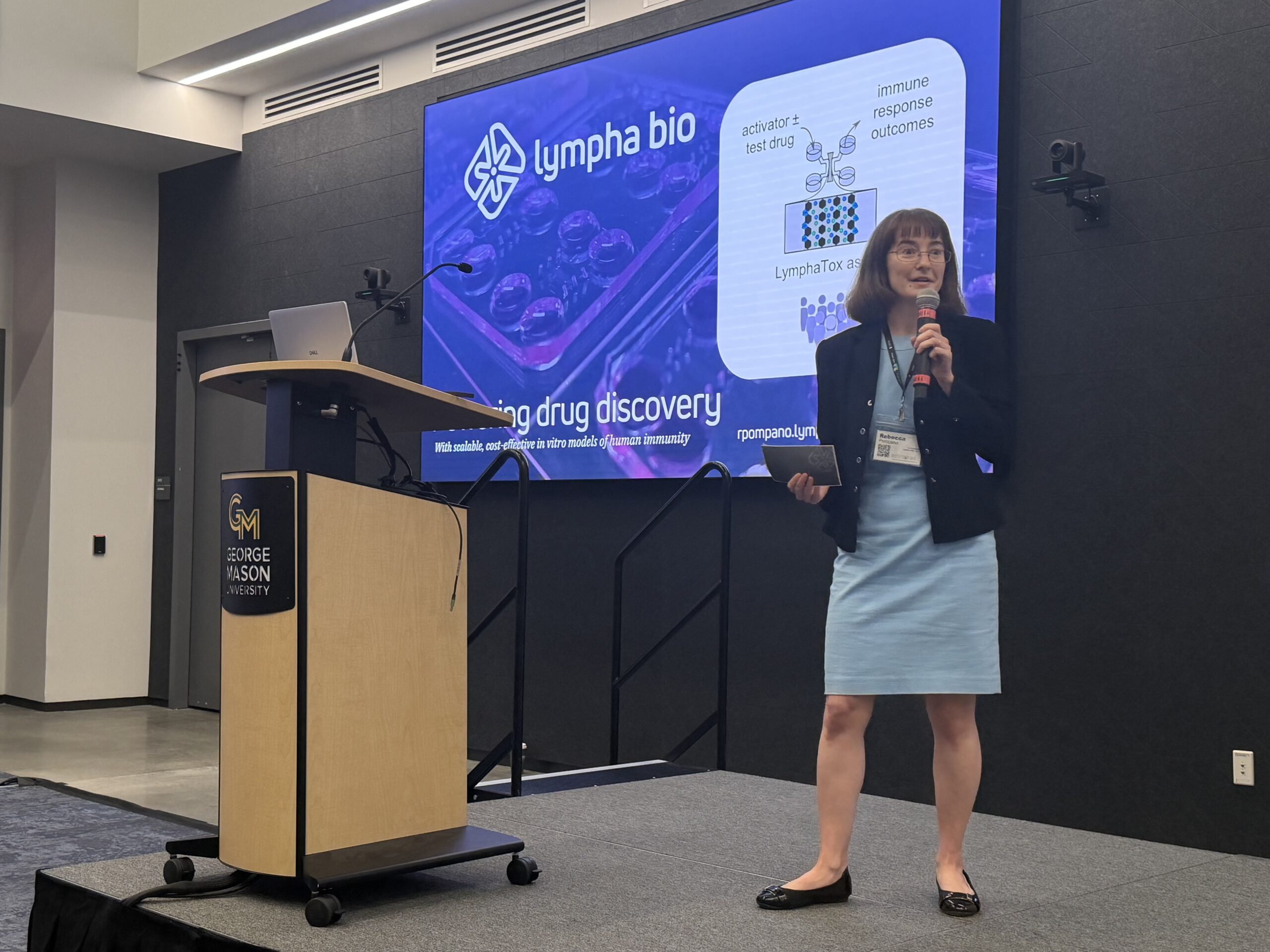
Second place went to Lympha Bio, a biotech startup in Charlottesville building drug development methods that use human cells and tissues (that are outside the body) instead of testing on animals. That’s to get more accurate data about immune responses in clinical trials, per cofounder Rebecca Pompano. The product isn’t yet on the market, she said; an MVP is currently under development.
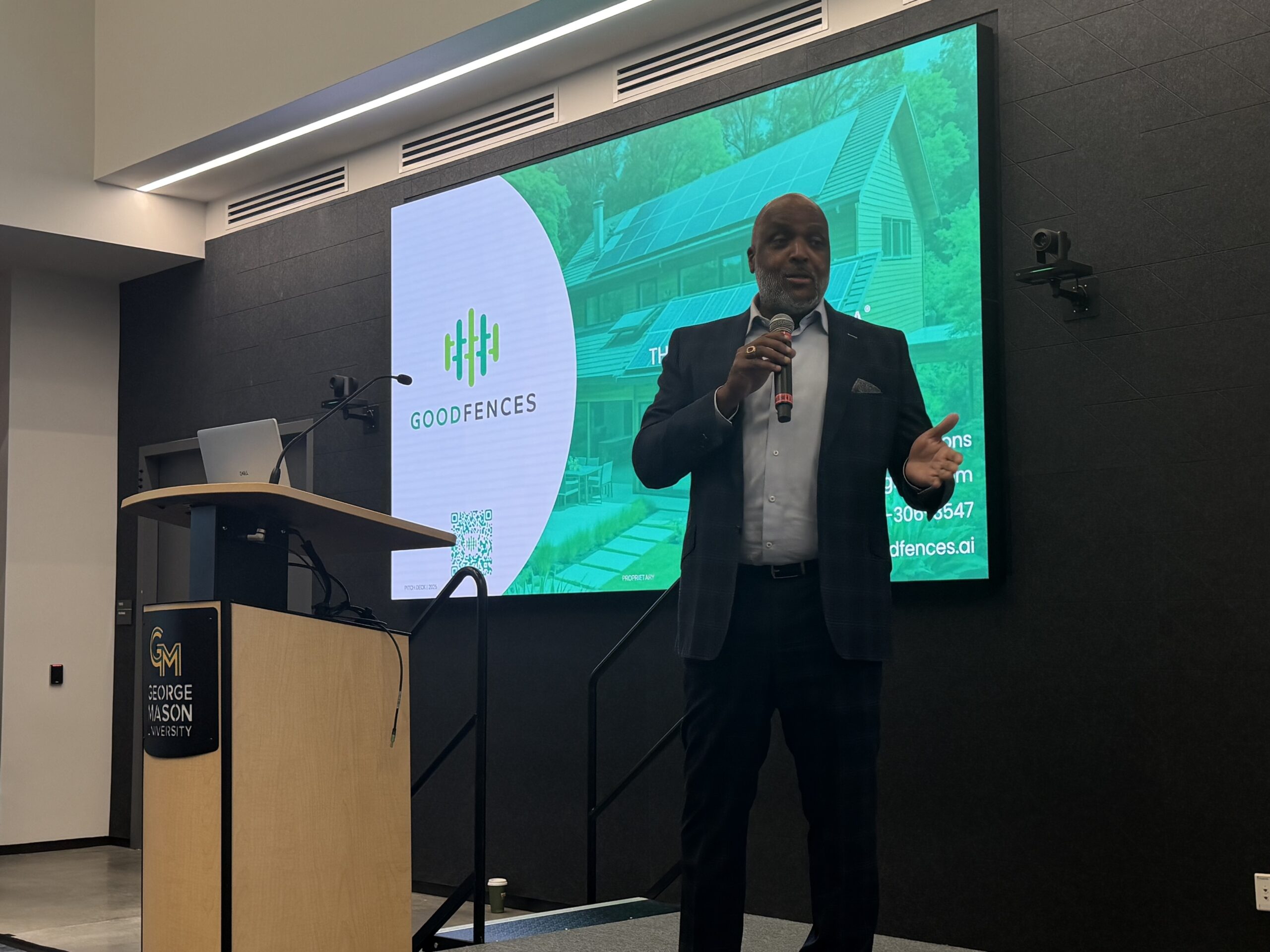
GoodFences, an AI platform in Leesburg automating homeowners association operations like processing maintenance requests and violation notices, nabbed the third place slot. Founder Michael Timmons was inspired to start the company when it took his HOA six months to approve a solar panel project on his roof.
They beat out other impressive finalists, described below.
Additional competitors: Northern Virginia
- DentaSmart AI (Alexandria) is developing an app for people to get personalized “Oral Health Scores” and dental treatment tips through uploading mouth photos and X-rays, to be more informed at the dentist and log oral health over time.
- Primi (Leesburg) makes instant Italian pasta dishes. The pasta cups have 9 grams of protein and ingredients sourced from Italy. The founder is going the direct-to-consumer route first, then will look at selling through major retailers.
- Pivvot Space (Reston) is creating systems that coordinate different satellites and components to operate together as a coordinated fleet.
- Enclavia.ai (Fairfax) builds software for healthcare, finance and government organizations to deploy AI agents securely. The agents can analyze medical records, automate due diligence and verify policy compliance.
- Freedom Buckets (Dulles) is a fintech app that partners with employers to help workers make financial decisions. Using AI, the software will recommend how to build financial wealth based on their paychecks, in paying off credit card bills and saving for emergencies.
- Kshetra PBC (Reston) is a marketplace matching investors with social enterprises that seek non-dilutive capital and debt at the early-stage or between funding rounds.
Startups further south
- EqualityMD (Richmond) operates a virtual health platform — not traditional insurance — connects users to primary, urgent and mental healthcare appointments. The company, sold to employers, also built the tool Thrive Ai, which provides self-care resources and anonymous group wellness sessions.
- Ara (Richmond) preserves the background reasoning and evidence behind a company’s data reports. By keeping past research searchable and easy to trace, the goal is to prevent wasting time redoing old work and have transparency in the logic behind key business decisions.
- Animus (Charlottesville) captures audio and video on walks through construction sites via smart glasses, to automate how superintendents draft daily reports. The tech started piloting in May.