The first CEO of Northern Virginia’s new innovation district has lofty goals for the next two years — and he’s willing to put out actual numbers to be held accountable.
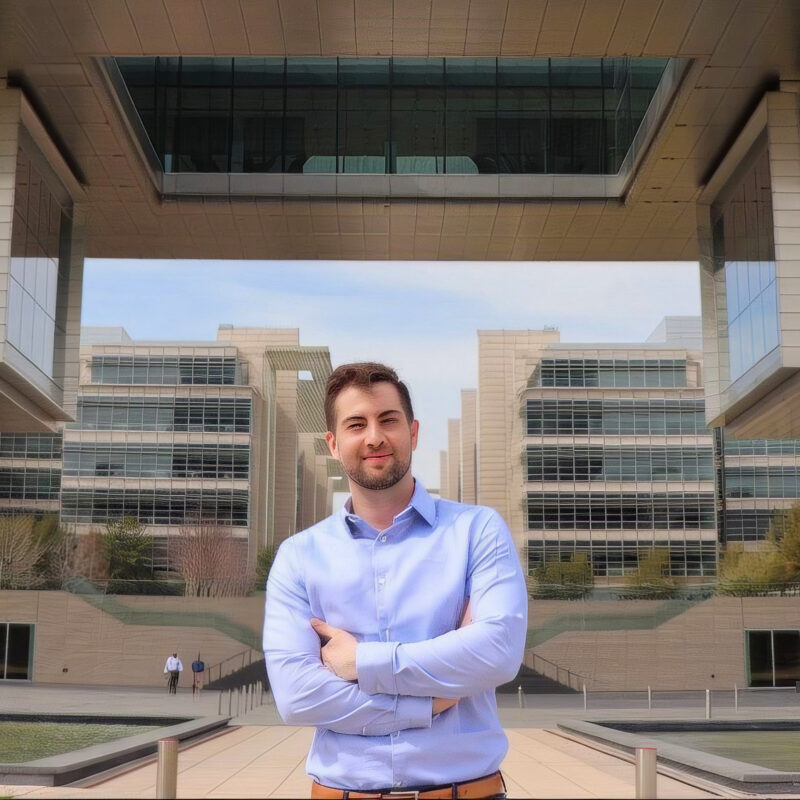
Michael Manuccia recently took the top job at National IQ, which debuted earlier this year.
The initiative stretches from Arlington to Alexandria in what’s called National Landing, involving local universities, private companies and economic development groups. It aims to support national security and defense tech firms through programs like new accelerators and investor-startup founder events — areas where Manuccia, a former FBI operations specialist and frequent startup COO, brings relevant experience.
“You’re going to be on your own in a lot of things. But it doesn’t have to be for everything. So ask for help.”
Michael Manuccia, National IQ
“I was always very involved in, for lack of a better term, ecosystem building,” Manuccia told Technical.ly. “I wanted to have an opportunity to help companies get through this period where I see a tremendous amount of venture investment in defense tech and national competitiveness.”
By 2028, he’s striving to hit the following metrics:
- 350 new local jobs within tech companies
- $100 million raised by startups that have participated in the innovation district
- 32 businesses attracted to the region
National IQ recently received nearly $4 million through a GO Virginia grant — a state-supported funding program with matching investment from private companies and other public funds — which will go toward initiatives including a hardware and robotics lab and a dual-use focused accelerator.
As he starts this role, Technical.ly chatted with Manuccia about the startup programs planned, where the ecosystem can improve and the defense tech funding boom.
This Q&A has been edited for length and clarity
What was your path to get to National IQ?
I’m very mission-driven in the opportunities I like to take on. That brought me to the FBI. I had a great experience there, and then decided somewhat out of nowhere that I would do early-stage companies and went and founded a company with a close friend of mine in Silicon Valley.
Then came back to DC and scaled another defense tech company. Then I was over in London for a little while in a healthtech company.
The through line with all this was that I’ve probably hired 500, 600 people across all those companies. I always stayed in touch with folks, and a lot of them started their own businesses, and I would be a sounding board. This opportunity came along to helm National IQ, and I really loved the national security space.
I wanted to be able to do even something small to increase the likelihood that those companies are successful. Let’s give people that are really passionate about solving a problem the resources to do it and see what comes out of that.
What programs are you going to focus on to help startups?
We’re going to run about 10 or so accelerators over the course of the next two years, targeting different types of companies at different stages.
Something that I feel has been lacking in the ecosystem is support for the mature seed stage company to Series B company. Or a company that’s dual use and is trying to get into defense, national competitiveness.
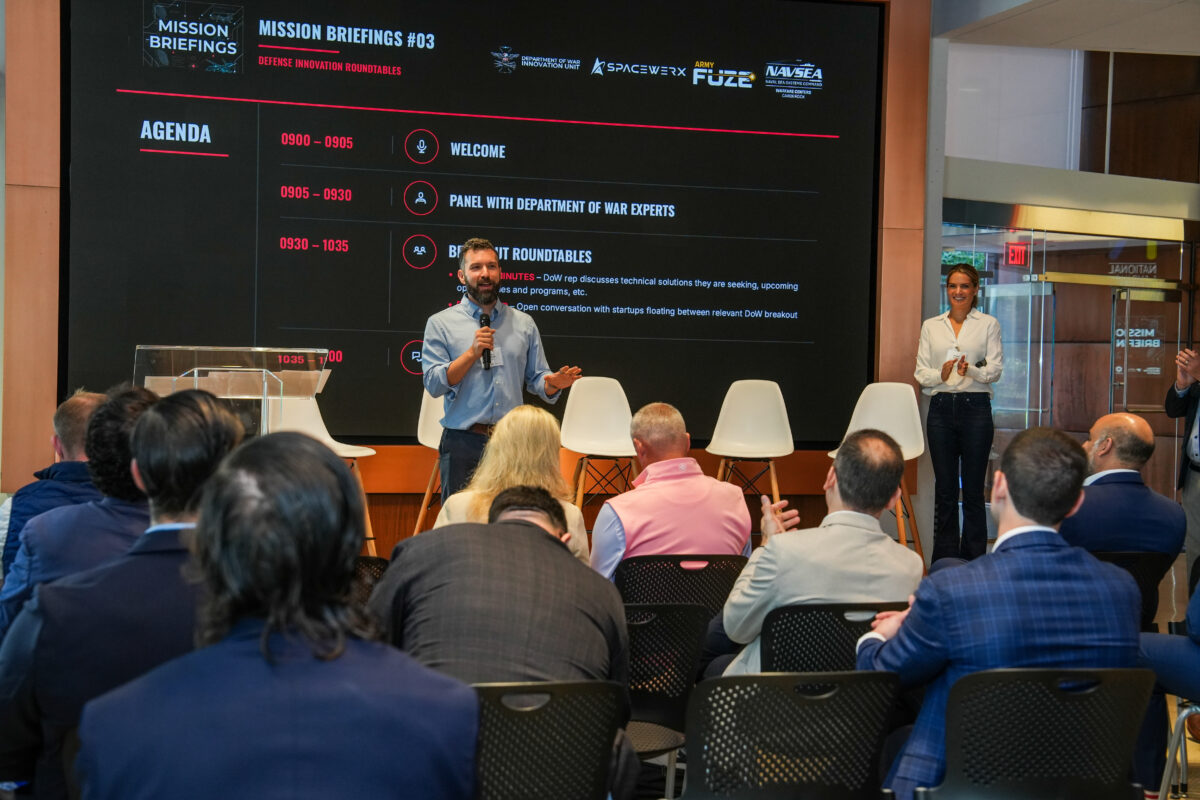
We right now put on demand signal events. We had an event a couple weeks ago where we had representatives from the Army, Space Force and Navy come out and facilitated small group discussions with about 60 different startups.
National IQ encompasses several municipalities. How are you navigating working across them?
A lot of it is just having open lines of dialogue and communication with folks, and understanding what their priorities are. And leveraging some unique aspects of the community.
Bringing all events together in a way that just has more people excited about early stage companies in this space has been an exciting challenge. I’m looking forward to continuing to do so.
How will you approach disagreements?
I think there’s been so much enthusiasm for a coordination of effort and alignment on these top-level goals around jobs in the region, venture investment.
Obviously, the boundaries are a little bit — I don’t want to say arbitrary — but just because a company is based in Alexandria or Ballston, the people are living all around that area. They’re doing meetings in different places.
Our board is very enthusiastic about giving me the flexibility to solve the actual problems.
What’s underrated or overrated about the DC region?
I think the tech scene is really underrated. One of the biggest challenges in California is you are competing with the people that have the deepest possible pockets in the history of civilization. DC, you can have people that are just as capable and qualified, and you’re not necessarily competing with those entities. I think that’s a major advantage.
I would love it if not everything had to be government related. I think that we can have companies that stand on their own.
Another advantage is the other side of that coin. A company that might be building in Colorado and doing something related to mining, let’s say, needs to have a presence in the DC area — as a necessary outpost, in a way that other cities aren’t going to be able to tap into.
You lived in Silicon Valley and London. What can Northern Virginia learn from those places?
The biggest issue that I faced when I had a company here was hiring in defense tech. DC historically has been government, large primes, nonprofits — a very “stable” type of employment.
I had to do a lot to sell people on the idea that we only have 18 months of runway, but don’t worry, that’s totally normal and that’s pretty good actually.
In Silicon Valley, there’s enough of a perpetual motion of new startups that everybody is very aligned on the risk profile.
How do you see people getting more comfortable with risk here?
I think that the first step is getting people to realize who’s hiring in our region.
Trying to bridge the gap for people to understand this is a career path that is not different from what you’re doing. You go back into the government if you want. You can go into a large company if you want. But you have an opportunity to have a really phenomenal impact at the smaller entity that’s growing really fast.
Outside of defense and national security, what other sectors are well suited for the region?
Quantum computing has applications really across the board, but especially with this new center that’s going into George Mason. I think that we’ve got a real advantage there.
I think there’s a lot that this region can have to say in terms of cybersecurity testing.
What specific pieces of advice that you’ve given to startup founders?
One of the things that I’ve been harping on is if you are selling to the government, it is a long sales cycle, and you need to get a demand signal as soon as possible. It will help if there is also a commercial buyer for something that you’re doing, both to demonstrate that there’s dual use applicability and as a way to bridge the gap.
Unfortunately there’s this narrative of the omniscient founder that posts on LinkedIn that they’ve got it all figured out and everything’s phenomenal. That is not the reality.
They don’t ask for help enough. You’re going to be on your own in a lot of things. But it doesn’t have to be for everything. So ask for help.