
• A proposed mega-development that was pitched to become the largest data center campus in the world has been paused due to ongoing litigation.
• The case is headed to the Virginia Supreme Court and could be a potential precedent-setter as data centers become more of a focus in communities across the country.
• The crux of the legal argument hinges on rezoning approvals and claims that local residents were not given enough notice. Digital Gateway’s proposed campus also abuts a historical battlefield and a state forest.
A giant cluster of 37 data centers in Northern Virginia has been halted, with two of the main backers walking away amid legal tangles. But the project isn’t dead yet.
The fate of Digital Gateway, a debated project spanning the last half-decade, appears to rest in the hands of the Virginia Supreme Court. At the beginning of May, operator QTS Data Centers — the lone remaining defendant in an advocate-driven lawsuit after Compass (the developer) and Prince William County (the governing jurisdiction) dropped out — filed a last minute appeal after two years of litigation.
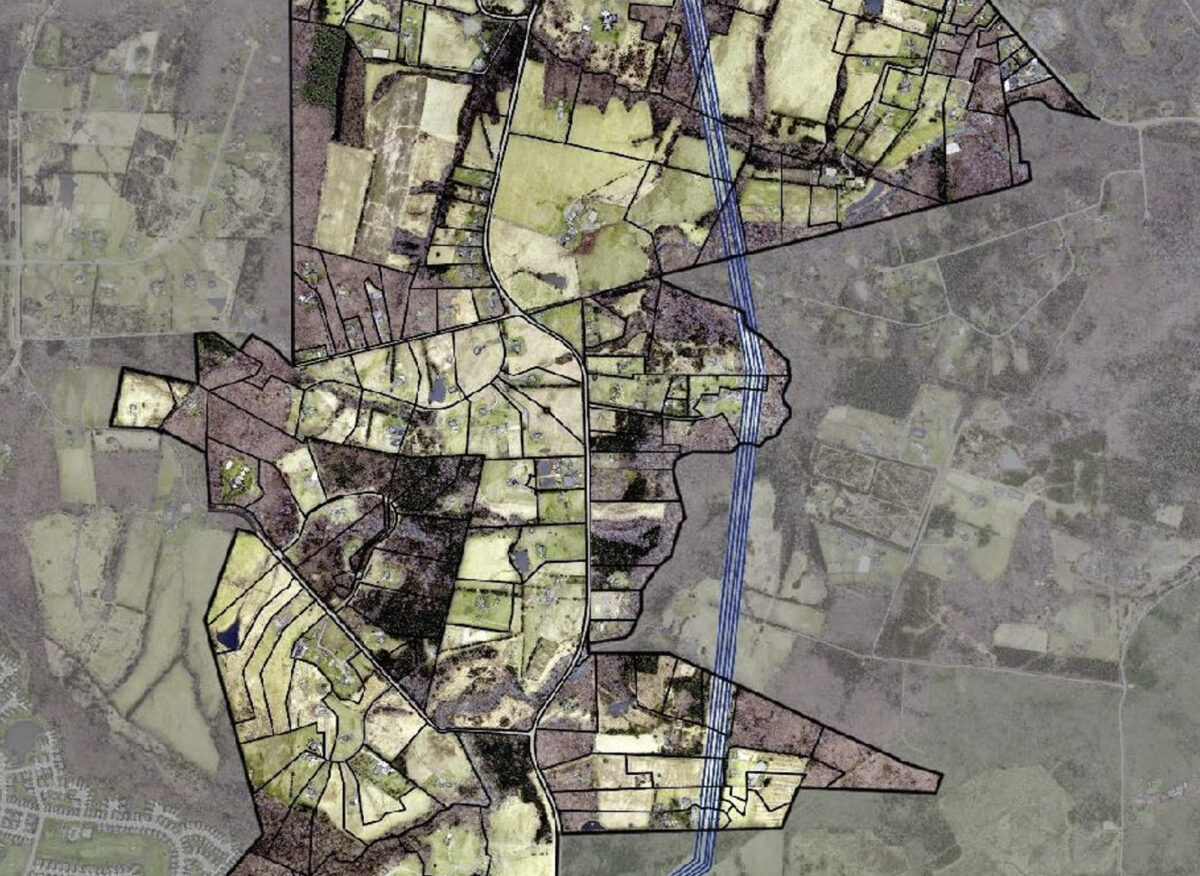
A proposed 2,100-acre mega-development adjacent to Manassas National Battlefield Park and a Virginia state forest, Digital Gateway was pitched as what would in 2021 have been the largest data center campus in the world. It could be brought down in part by a minor procedural misstep: The county didn’t follow its own rules in getting feedback from local residents.
As data centers emerge as a hot button issue across the US, experts consider this case a potential precedent-setter.
“I think it will be written about in business communications case studies for years, if not decades,” Terry Clower, an economic development researcher at George Mason University, told Technical.ly. “How an entire industry … has blown the public relations.”
Several land preservation nonprofits, environmental justice organizations and Prince William locals have rallied against Digital Gateway since its inception, partially because of its proximity to the historic battlefield. Resistance against data center developments is growing, with 70% of Americans saying they oppose constructing them where they live, per a recent Gallup poll.
Opposition usually centers around noise, aesthetics, lack of long-term jobs and potential to affect electric bills. Those butt up against potential economic benefits: in Prince William, for example, data center property taxes brought in $144.2 million in 2024 — that’s 10% of the county’s total tax revenue for the fiscal year — and data centers contributed 92% of all commercial real estate growth, per government reports.
Virginia has the largest concentration of data centers in the world, with more than 600 of them throughout the state, per Data Center Map. Nearly 300 more are planned for the state, per a Pew Research analysis. Prince William County, located near Washington DC, hosts 55 of them, and more than 46 new projects are planned, according to county data.
That’s on trend. More than 1,500 new data centers are in various stages of development nationwide, also according to Pew Research.
How the rezoning came apart on a technicality
The Prince William County Board of Supervisors formally started the process of changing the land-use designation for what would become Digital Gateway back in 2021. Over the following two and a half years, the county hosted public comment sessions, voted to advance the applications and sorted through recommendations to deny the project.
In December 2023, the hearing for Digital Gateway’s final zoning approvals lasted 27 hours and drew 400 residents.
Then it came out that residents had not been properly notified. According to county law, property owners within 500 feet of the proposed case must be notified by mail, and it needs to be advertised in local newspapers. But a planned Washington Post advertisement was not published — by fault of the paper, officials say.
“County staff did everything properly,” reads an internal email obtained by the advocacy group Coalition to Protect Prince William County, “however, due to the error solely attributed to The Washington Post, the newspaper advertisement did not appear.”
Despite that, officials went forward with the December rezoning hearing. Latching onto that technicality, residents and the American Battlefield Trust in January 2024 filed suit to stop the project, naming QTS, Compass and Prince William County as defendants.
“It’s a little bit ironic,” said David Duncan, president of the American Battlefield Trust and a plaintiff in the suit. “If they had just played by the rules, we might not have been able to stop them.”
The case moved through the courts over the last two years, and this March the Virginia Court of Appeals upheld a lower-court ruling, siding with the project’s opposition. After that, Compass and the county dropped out of the case. By that time, Prince William had spent $1.72 million in taxpayer funds on legal fees. The county declined to comment on the case. Compass blamed the lawsuit.
“While we still believe this project offered significant benefits for the region and our neighbors,” Compass president AJ Byers wrote in a statement, “recent legal actions and compounding regulatory hurdles have effectively closed a viable path forward.”
In May, within three hours of the deadline, QTS filed an appeal of the injunction, moving the case to the Virginia Supreme Court.
“We remain committed to the project and being a responsible partner to the Prince William County community,” QTS spokesperson Karen Cohen said in a statement. “As demand for digital infrastructure grows, QTS remains focused on being a good neighbor and building lasting partnerships in every community we serve.”
Next steps for the lawsuit entail QTS making its case before a three-justice writ panel, which will happen as early as September, per plaintiff’s lawyer Chap Petersen. If it goes through, there will be a full hearing, he said, likely in early 2027.
Timeline: How Digital Gateway got to this point
• July 2021: Prince William County Board of Supervisors votes to start process in changing land-use designation for what would become Digital Gateway.
• January 2022: County hosts community 200-person meeting about the proposed project.
• September 2022: Prince William County Planning Commission voted 4-3-1 to recommend approval of the first application for the project — the first major formal approval recommendation.
• November 2022: Prince William County Board of Supervisors voted 5-2 in favor of the land use plan that would redesignate land in the planned Digital Gateway.
• May 2023: QTS hosts a public engagement meeting about Digital Gateway.
• November 2023: Planning Commission switches stance and recommends to deny all applications for the Digital Gateway project.
• December 2023: Board of Supervisors approves the three rezonings despite the county’s recommendation after concurrent hearings for each application.
• January 2024: American Battlefield Trust and others file a lawsuit challenging the approved rezoning applications.
• August 2025: Prince William Circuit Court rules to void the Digital Gateway project.
• March 2026: Virginia Court of Appeals upholds lower-court ruling, siding with the project’s opposition.
• April 2026: Compass and Prince William County drop out of the project.
• May 2026: QTS files appeal within three hours of the deadline, moving the case to the Virginia Supreme Court.
Potential conflicts of interest and a recall election
Two decisionmakers in the Digital Gateway effort had financial ties to the project, adding to local frustration.
Ann Wheeler, who was chair of the County Board of Supervisors as the Digital Gateway project was going through approvals, responded to resident outcry by selling at least $50,000 in stock she held in Blackstone — the asset manager of the parent company of QTS.
Prince William Supervisor Pete Candland, meanwhile, was one of several homeowners who filed to change the zoning designation of his property and sell his home to pave the way for Digital Gateway. He recused himself from votes related to the project, but the Coalition to Protect Prince William County campaigned for and triggered a recall election for both officials.
Candland ended up resigning and Wheeler stayed on, to be later defeated in 2023. Neither responded to a request for comment for this story.
“The recalls were an opportunity to educate the community,” said Elena Schlossberg, the leader behind the coalition.
Residents were also frustrated by a lack of transparency around project details, thanks to non-disclosure agreements (NDAs) signed by county officials, keeping documents from being released even for Freedom of Information Act filings. It’s become common in this field, according to reporting: Of 11 NDAs signed by Prince William County’s Economic Development Department in 2022, seven were with data center developers.
The county did hold some town halls on Digital Gateway, but coalition leader Schlossberg said they lacked specifics about how project energy use would affect consumers and the water supply. Going forward, she hopes for more studies on data centers’ community impacts.
Ali Mehrizi-Sani, a researcher studying data centers at Virginia Tech, agrees. There needs to be more research from trusted third parties, he said, like universities.
The money involved can make these projects appealing to government officials trying to grow their economies and balance budgets, noted Clower from George Mason University. In Virginia, the industry accounts for $5.5 billion in annual income for workers, per the state’s Joint Legislative Audit and Review Commission, though it’s mostly attributed to shorter-term construction jobs. It’s also a boon for the state’s GDP, accounting for $9.1 billion annually.
But data center tax exemptions have been a sticking point for state and county leaders. In 2025, the industry reported the state waived $1.9 billion in sales taxes from data centers thanks to the exemption.
What this could mean for future data center developments
Data center companies are also starting to file suits. Prince William County Chair Deshundra Jefferson is being sued by developer Atlantic Funding Limited for hosting town halls about data center proposals. The company alleges the public events spread misinformation and were used to rally opposition to the projects.
Tim Cywinski, director of the Virginia chapter of the longstanding environmental advocacy group Sierra Club, believes legal action like this will only fuel community members to “keep resisting” data center development.
“She was punished for doing the right thing,” Cywinski said about the town halls. “People are not going to be able to ignore that.”
Aligned with the national rise in anti-data center sentiment is a shift happening in Prince William. Some of the landowners who’d had their zoning changed so they could sell to Digital Gateway developers, like former county supervisor Candland, are now suing to get out of their sales contracts — including some who’d lobbied for it to be built.
Opposition also came from groups upset about Digital Gateway’s proximity to a historical landmark, and if it doesn’t end up moving forward, that could help set a precedent, said Duncan from the American Battlefield Trust. The group is a plaintiff in another case to halt development of a mixed use project that includes a data center in Orange County, Virginia.
Even if the court sides with Battlefield American Trust, there’s potential that the developers could introduce the project all over again, though Duncan said the current board of supervisors has been “more friendly” to their stance.
“I’d hate for this to become a Groundhog Day situation where we’re doing the same thing over and over and over again,” Duncan said, “but we’re ready to do that if we need to.”