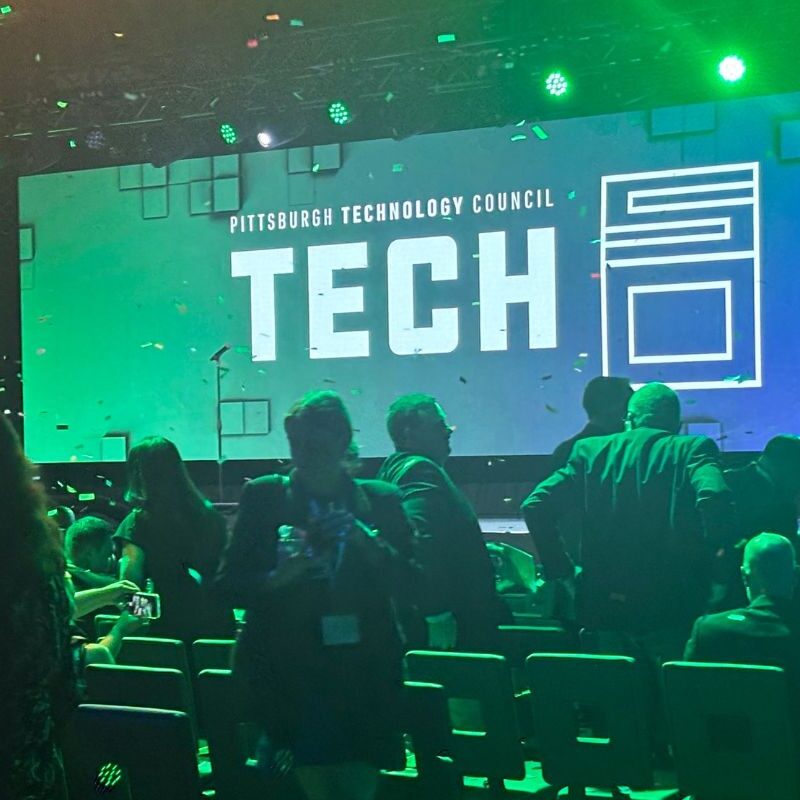
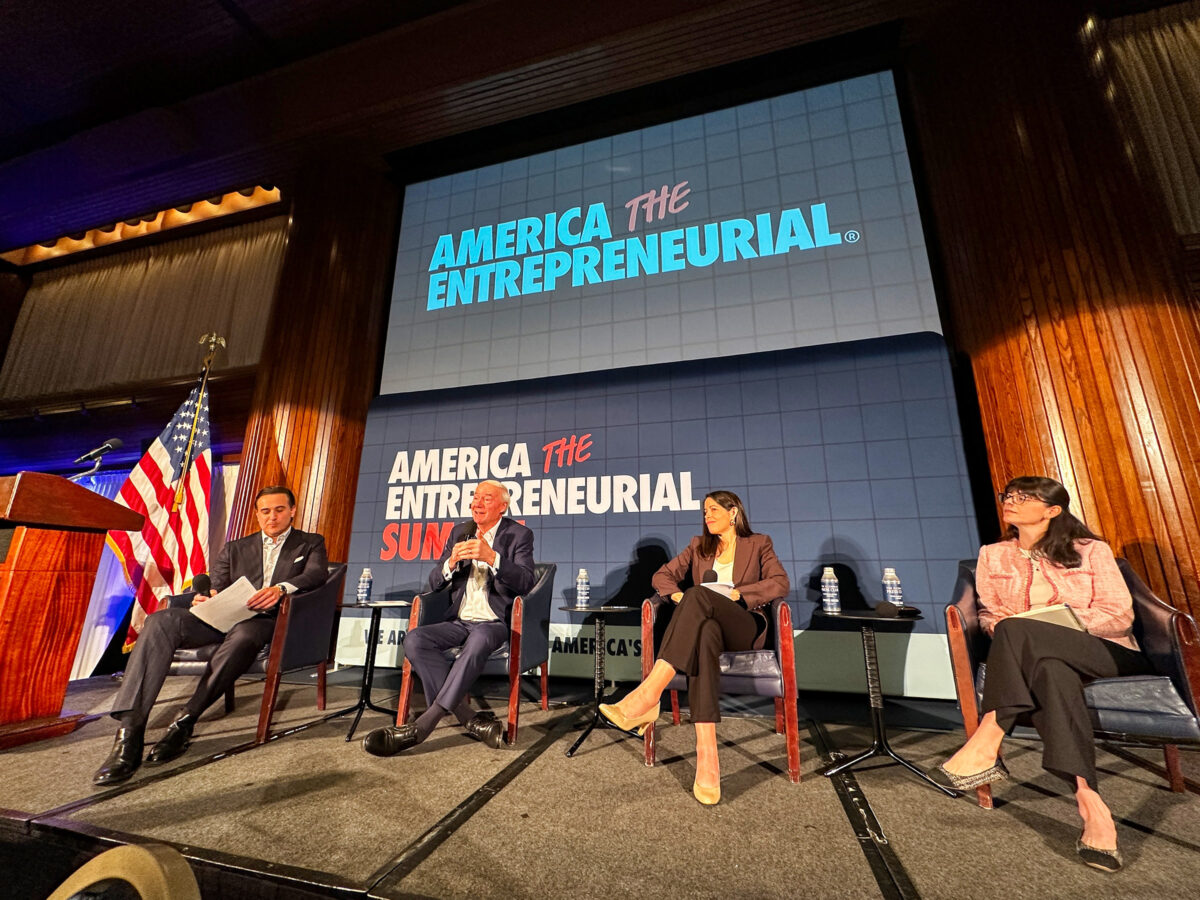
• The America the Entrepreneurial Summit, organized by Right to Start at the National Press Club in DC, organized its main stage around how pro-entrepreneurship policy plays out at the local, state and federal levels.
• Only 23% of American adults say the federal government makes it easy to start a business, with state (28%) and local (29%) governments barely better.
• The campaign said 32 governors and more than 150 mayors have signed on. Its test now is whether earnest conference energy translates to license reviews, one-stop shops and federal reform.
When then-Arkansas Gov. Asa Hutchinson visited Cuba after relations were normalized in 2015, his team arranged what he understood to be a low-key pickup basketball game: a bit of diplomacy for a delegation hoping to sell Arkansas rice and poultry.
When he arrived, he found the Cuban national team warming up beneath a portrait of Fidel Castro. Hutchinson, then in his 60s, got the ball. The five far younger, far better players let him shoot.
“It’s good to be governor of Arkansas,” he remembered thinking, to the laughter of a ballroom at the National Press Club in Washington, DC, on Friday.
Basketball became a recurring part of Hutchinson’s diplomacy. It’s a reminder too: Deference to power can be alluring, but without competition you never quite know how good you are.
Deference to power can be alluring, but without competition you never quite know how good you are.
So went the spirit of the America the Entrepreneurial Summit, a daylong gathering of policymakers, economic developers and entrepreneur support organizations, organized by the national nonprofit Right to Start. Entrepreneurship policy, done right, is the work of making sure incumbents don’t get waved through to the basket.
The summit had all the earnestness of early conferences held by Code for America, which similarly mixed tech-conference splash with the can-do spirit of wonky pragmatists. Those civic tech summits brought policymakers, local organizers and evangelists together around government’s use of data. This one intends to do the same for government’s support of entrepreneurship.
Friday’s room skewed toward a particular kind of civic-minded believer: people whose gospel and service have long bent toward helping anyone with an idea sell their solution for a bit more than it costs to provide. If it was a church, they’d worship at the altar of invention, technocratic reform and the freedom to make as much of one’s life as one wants. Their politics blend interventionism and freer markets with a focus on prosperity.
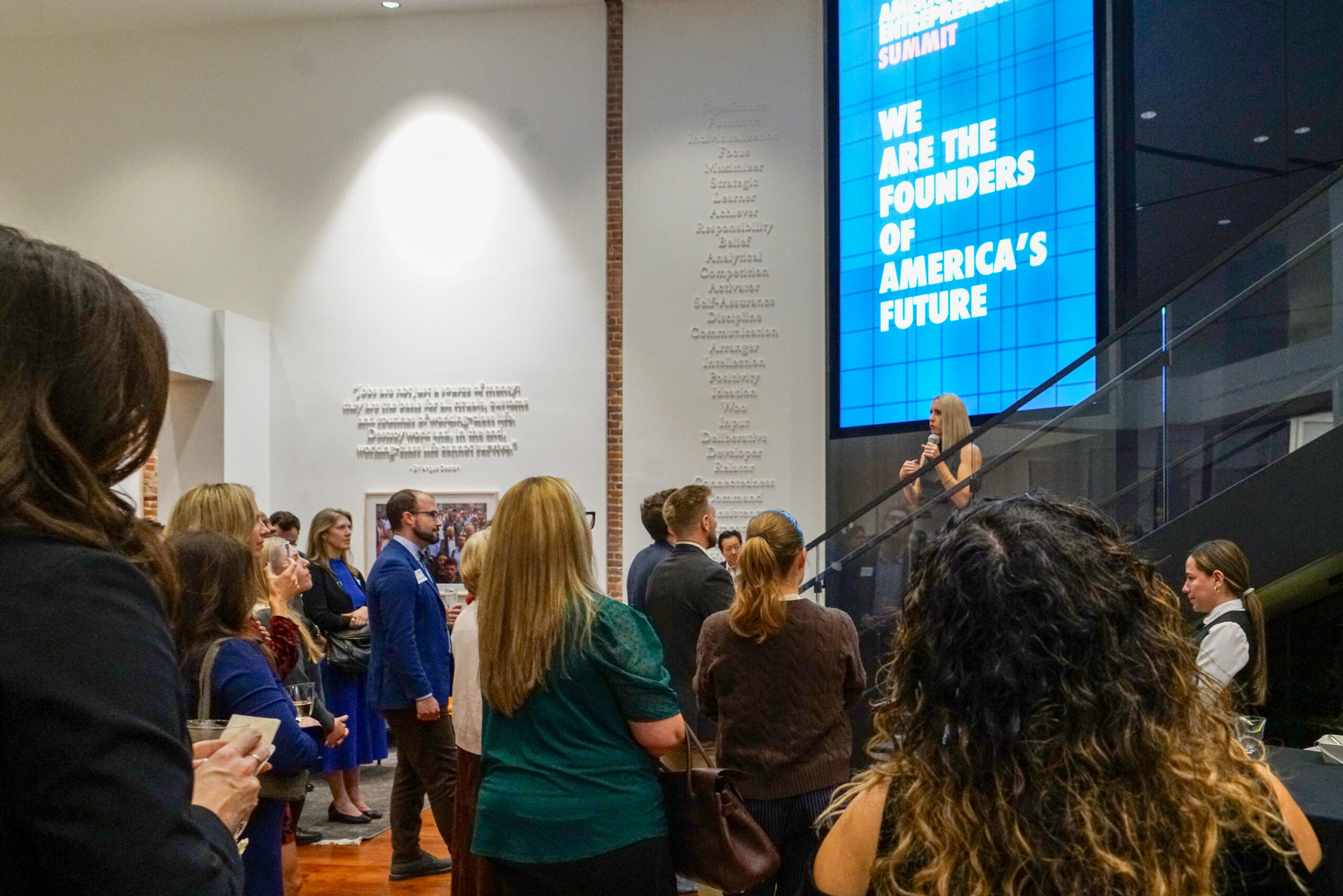
This movement is a response to “a hole in the heart of America where there should have been hope,” said Right to Start’s founding CEO Victor Hwang, with whom I co-host a monthly podcast. Credentialed with startup evangelism in the early 2000s and an influential stint at the category-defining Kauffman Foundation, Hwang is aging into a primary architect of the pro-entrepreneurship movement.
As he reminded, “the pursuit of happiness” committed in the Declaration of Independence 250 years ago was entwined with the idea of freedom and control. The US Constitution enshrines the rights to protect invention.
The faithful have reason to feel both vindicated and worried. Americans are filing to start businesses at record rates. But as Technical.ly reported last week, solo filings have doubled since 2019 while filings that plan to pay wages are 14% below 2019 levels.
The summit’s highest-profile spine was a trio of mid-morning forums on how entrepreneurship policy plays out at the city, state and federal levels. Each level gets poor marks from the public. In an April 2026 survey of 3,527 US adults commissioned by Right to Start, only 29% said their local government makes it easy to start a business. About the same of their state, and 23% of the federal government.
Local: ‘A free market of cities’
“All politics are now national. All entrepreneurship is now local,” said Woodstock, GA, Mayor Michael Caldwell.
“We have a free market of cities in this country,” he said, meaning people move to wherever they feel they have the best shot at opportunity, if you let them. On swapping ideas with other mayors, he offered that “R&D stands for rip off and deploy.”
Former Minneapolis Mayor Betsy Hodges, who moderated, called entrepreneurship the Dolly Parton of policy: “A bottomless well of goodness.”
State: Accelerators for all
Hutchinson, like nearly everyone onstage, flexed his own entrepreneurial roots.
He and his brother co-owned a Christian radio station in Bentonville in the 1980s, an FM pioneer. He also touted the state-backed accelerators run by the Venture Center in Little Rock, claiming a small state investment had returned many times over in follow-on funding.
Francesca Ioffreda, Maryland’s chief innovation officer in Gov. Wes Moore’s office, described a team better known for making government run better internally that is now turning outward, toward entrepreneurs. Among its projects is a startup accelerator for displaced workers, designed to help laid-off Marylanders start businesses.
Federal: ‘We will teach you to fish’
Jonathan Ortmans, president of the Global Entrepreneurship Network, which presided over last week’s Global Entrepreneurship Week, recalled fondly the era of Hillary Clinton’s State Department and Barack Obama’s Startup America, when Washington championed entrepreneurship abroad.
“We told the world we will teach you to fish,” he said, with a globalist’s admiration. Ortmans has called entrepreneurs “the diplomats of the world,” and encouraged that entrepreneurship can be taught. And should be too, he advised.
In his travels with entrepreneurs from more than 130 countries, Ortmans said many long viewed the United States as the entrepreneurial pinnacle: not naive to this country, but a belief in it being a force for good. That view, he said, has declined over the last decade. (Ortmans’ annual Global Entrepreneurship Congress was originally scheduled to be held this fall in Qatar, but was postponed to next spring due to the war in Iran.)
Federal reform may be slowest, but its wide-reaching The INVEST Act, which bundles nearly two dozen market reform bills, passed the House but stalled in the Senate. Advocates expect to restart that push in January.
The summit’s opener was Sheila Lirio Marcelo, current CEO of Ohai.ai and the founder of Care.com, which went public in 2014. Born in the Philippines, she said speaking up got her in trouble in school there. Later in Texas, her confidence and strong will protected her, she said: “I found my voice in this country.”
The America the Entrepreneurial campaign launched last year, timed to the nation’s 250th anniversary. Hwang and Kim Lane, Right to Start’s COO and the campaign’s executive director, said 32 governors and more than 150 mayors have now signed on. They are extending the campaign beyond 2026. Lane said supporters have logged more than 3,000 actions, against an original goal of 250.
Right to Start collects policies, regulations and interventions that serve entrepreneurs. Among the most practical are their playbooks for each level of government:
- Mayors: Run a time-bound review of business licenses and permits, form an entrepreneurship council with a direct line to the mayor’s office, and build a one-stop shop for starting a business.
- Governors: Look at Oklahoma’s January 2026 executive order. It created the nation’s first state chief entrepreneurial officer and aims to cut the cost of starting a business to $1.
- Federal advocates: Focus on capital access, procurement and regulatory reform, the “level playing field” priorities the campaign names.
Belief was abundant in the room. The harder part is what Hutchinson found on a court in Cuba. Nobody gets better when the defense steps aside. The people who will most need this movement, the solo filers trying to become employers, won’t be offered that courtesy. The governments in this room shouldn’t keep extending it to incumbents.
As Hwang said: “There is nothing more distinctly American than the belief in what could be, and intending to build it.”