
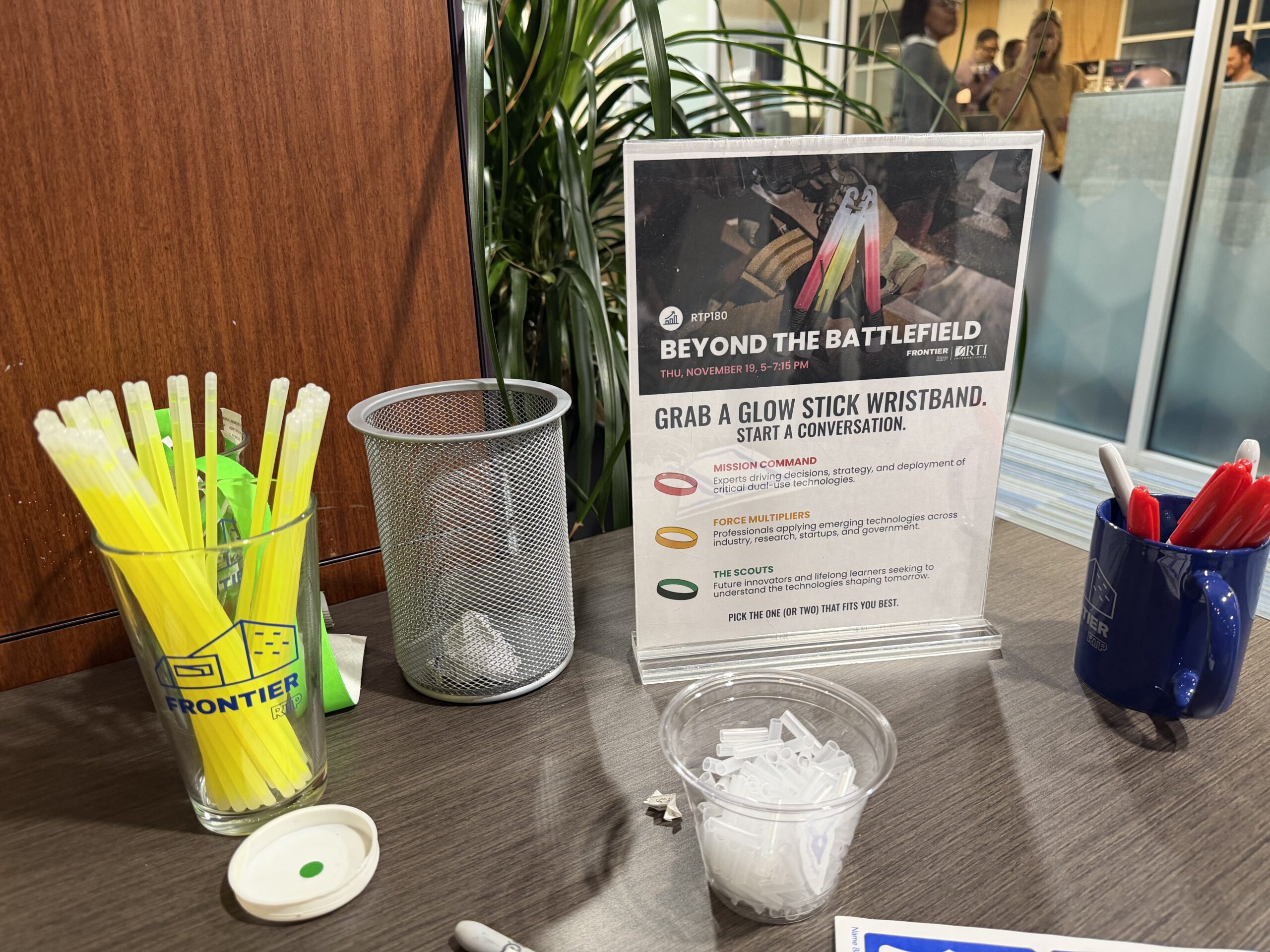
Most people might think of glow sticks as party favors, but they’re also useful for pitch black military operations.
The military was one of the first industries to adopt the glow stick in the 70s, right alongside attendees at Grateful Dead concerts. Leaning into dual use — selling a technology to both government and commercial customers — can be helpful for national security and defense tech founders trying to survive the often slow-moving contract and government funding cycles.
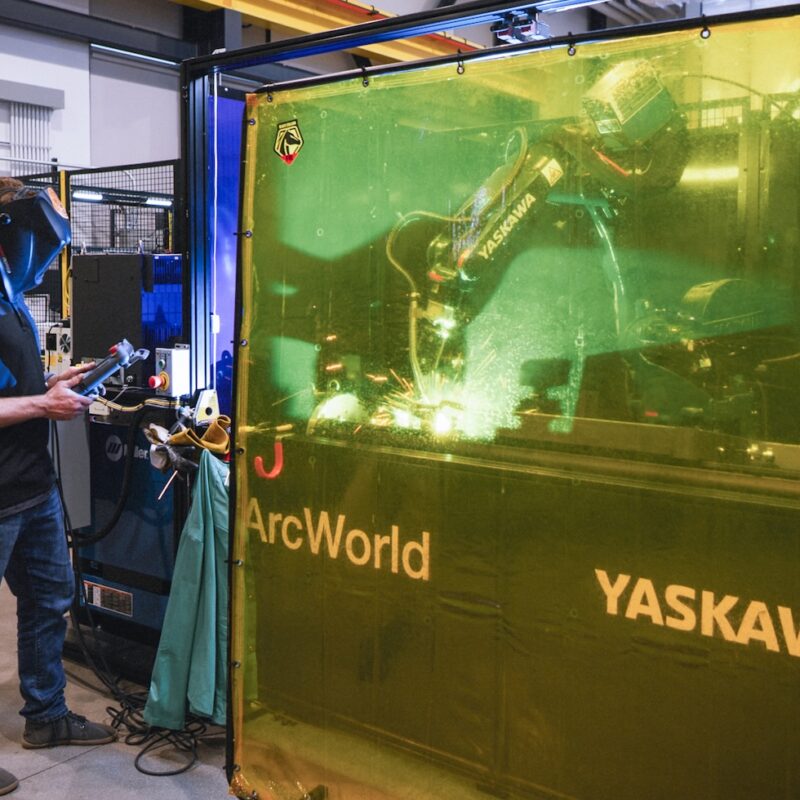
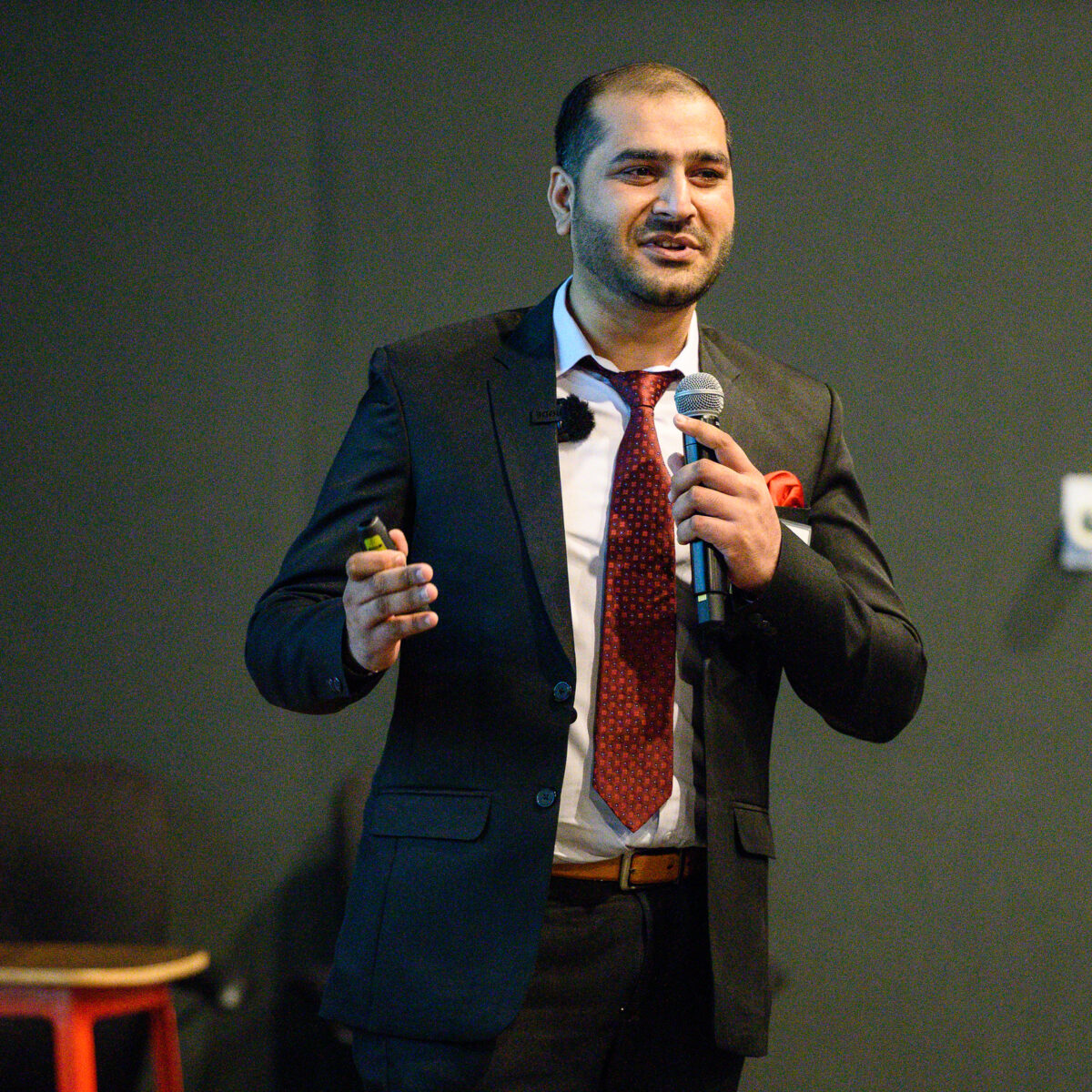
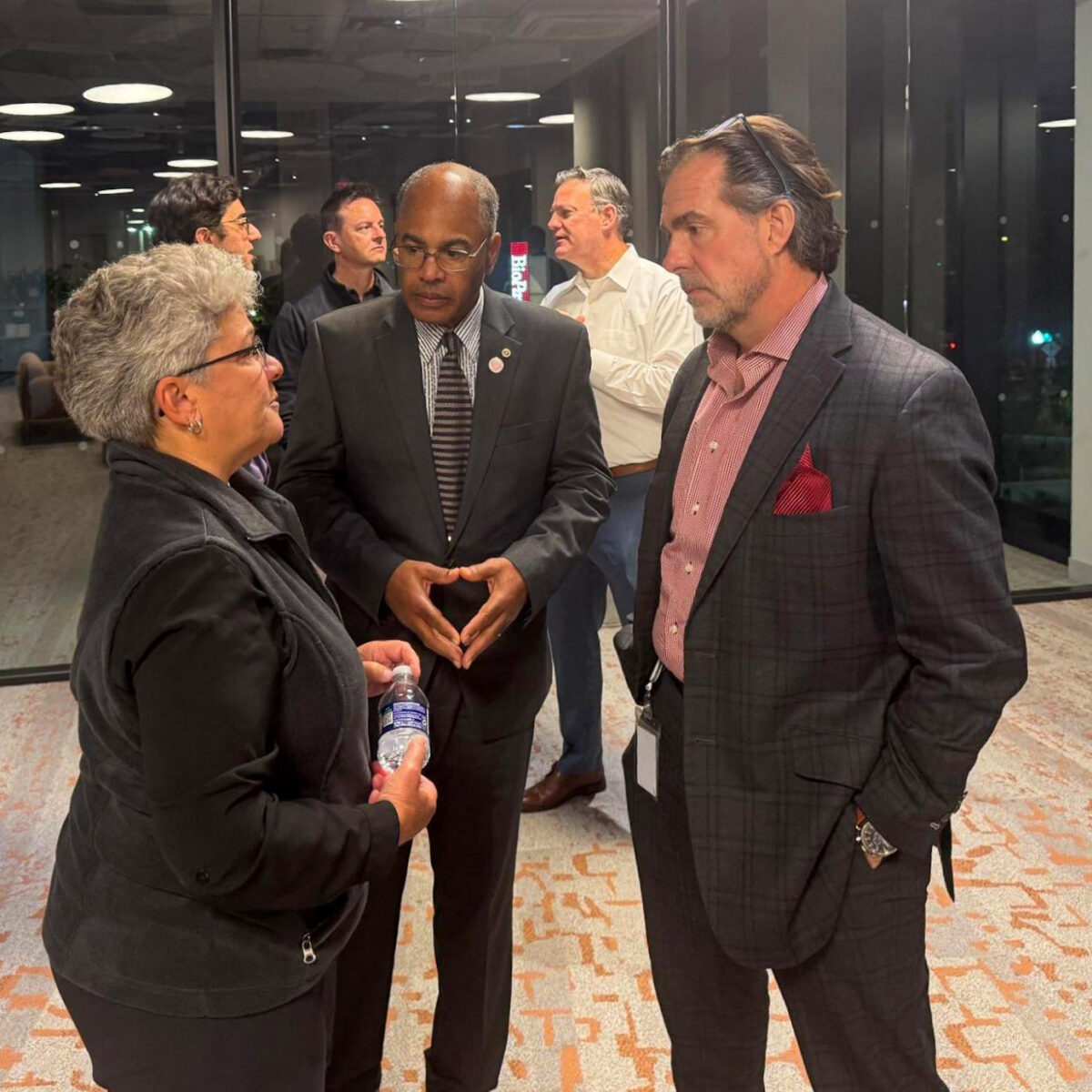
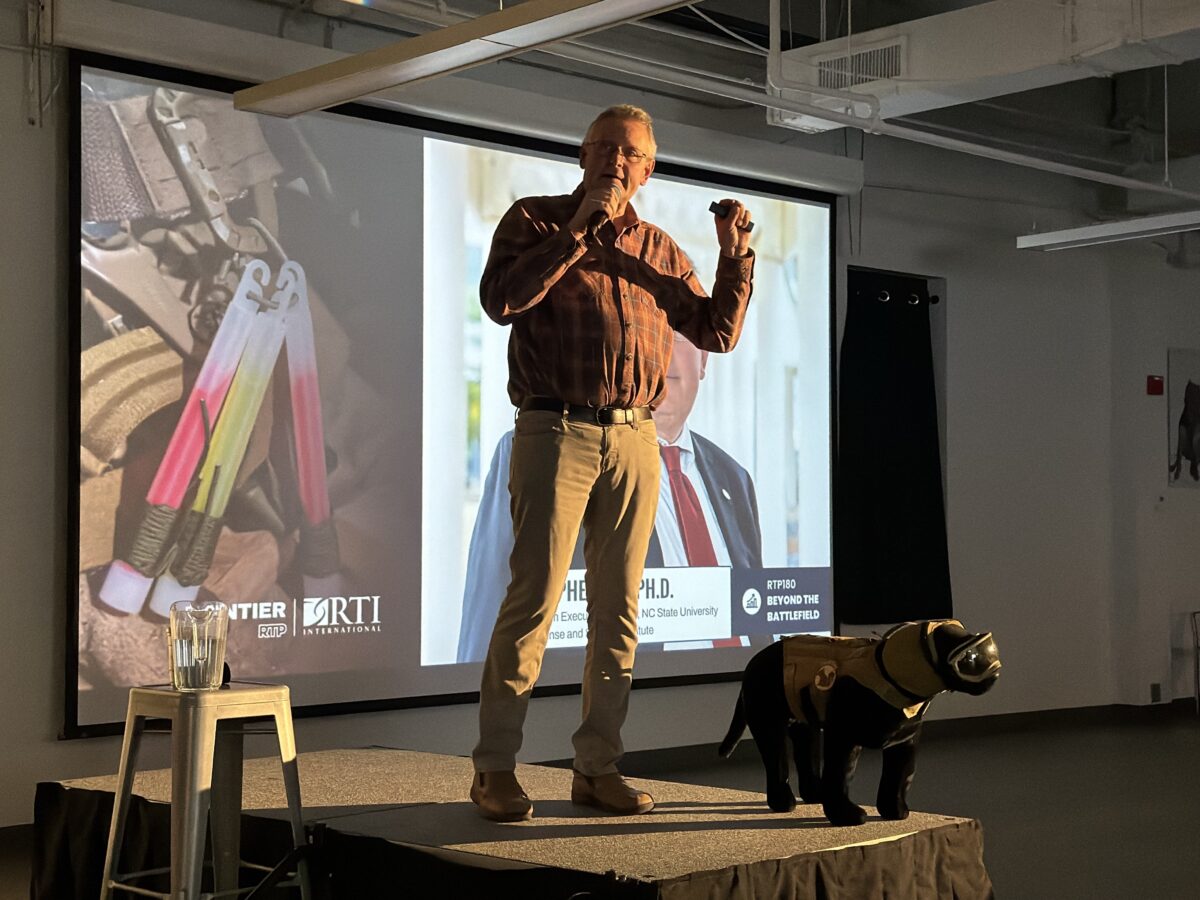
This strategy and business model was the focus of Research Triangle Park’s RTP180: Beyond the Battlefield event last week. Speakers included military and government contracting experts like Dennis McGurk, director of the North Carolina Center for Optimizing Military Performance, a branch of the nonprofit research institute RTI International.
“Beyond the battlefield, there’s so many opportunities.”
Stephen Lee, NC State’s Defense and Security Institute
“If it’s only for the military and it’s not a tank, or an aircraft carrier, or a machine gun,” McGurk told the audience, “you’re going to go out of business.”
Venture capital investors are pouring billions into defense and national security-related companies, and the Department of War has secured historic levels of funding under the Trump administration, with another $1.45 trillion requested for fiscal year 2027. (Budget debates are dividing lawmakers, with the ongoing $47 billion war in Iran being a sticking point).
Long standing government funding programs SBIR and STTR, which offer non-dilutive capital for founders, have been less reliable recently. Funding lapsed in late 2025 into the spring of this year, leaving companies scrambling to find other sources of capital.
Pulling solutions out of the commercial sector
Historically, many innovations have started as government projects (the internet, GPS, microwaves). But startups are finding it can work in reverse, too.
Rex Specs, which makes protective gear for dogs, originally created eyewear for their pets with light eyes in sunny climates. The military can also use that tech for its working canines, said Stephen Lee from NC State’s Defense and Security Institute.
“We’re pulling the information out of the civilian sector, the pet owners,” Lee said. “Beyond the battlefield, there’s so many opportunities. There are very few things that the military is uniquely working on: explosives, maybe nuclear weapons.”
He acknowledged that adapting a technology to work in the consumer or government sectors can be a challenge.
A commercial product might sell better with color options, Lee said, while a military version needs to be olive drab and ruggedized for extreme weather.
While innovations from the commercial side can find their way to the government, founders need to solve specific, existing problems to get attention from the Pentagon, RTI’s McGurk said. This applies whether the technology involves traumatic brain injury prevention, battlefield hemorrhage detection or wearable health trackers.
“Please don’t house a solution and then go look for the problem,” McGurk said.
The Triangle region is full of entrepreneurs spinning out inventions from universities. Tommy Sowers is the vice chancellor for innovation, entrepreneurship and economic development at UNC Chapel Hill, and has seen researchers struggle to adapt to the fast-moving environment of startups.
Ambiguity in launching a startup reminds him of the stress-testing he went through in Special Forces training while serving in the Army. There’s little sleep or feedback given, along with several tests and obstacle courses.
These same skills are needed when starting a business, he said.
“The first Special Forces imperative is to understand your operational environment,” Sowers said. “You got to start with listening to the customers. You got to start by listening and understanding what it is that they actually need.”