
Two years and $60 million in, Louisiana’s energy-focused NSF Engine is sharpening its focus on turning research into companies that can grow in the state, including by launching a venture studio.
Known as Future Use of Energy in Louisiana (FUEL), the National Science Foundation-funded initiative launched in March 2024 with programs focused on research, workforce development and helping new technologies reach the market.
Waste to Energy Systems, a family-run startup in Tickfaw, Louisiana, developing technology to convert wood and other waste into gas for heat and electricity, was awarded a $200,000 grant in May to help the company test whether it could separate out hydrogen.
“They’re saying, ‘Okay, here’s money to meet this goal, but also here’s some resources that you can use to help develop the business side along with the tech side.’”
Alissa Mahoney, Waste to Energy Systems
“We were able to rent equipment to actually strip hydrogen from our gas in place,” founder and CEO Richard Woods told Technical.ly. “And we wouldn’t have been able to do that without the grant.”
FUEL has also backed companies developing carbon emissions monitoring software, technology that converts carbon dioxide into useful products, specialized industrial valves and alternative construction materials. Its proof-of-concept grants help companies test and develop technologies, with awards to companies ranging from $171,000 to $200,000. A separate Super Pitch competition awarded cash prizes of $25,000 to $100,000 to three startups, while a fourth received networking support.
FUEL initially received a $15 million NSF award in 2024 as one of nine regional hubs. That was followed this year by a $45 million continuation award, bringing its announced federal funding to $60 million. As of March 2026, the initiative had distributed more than $8.5 million across research, workforce development and commercialization programs, according to a press release from Louisiana State University, which helps lead the initiative.
“This is a generational opportunity for Louisiana,” FUEL executive director Michael Mazzola told Technical.ly. “The strategic plan is about getting to a self-sustaining innovation ecosystem that creates its own new tech, creates its own new jobs, creates its own new companies that didn’t exist 10 years ago.”
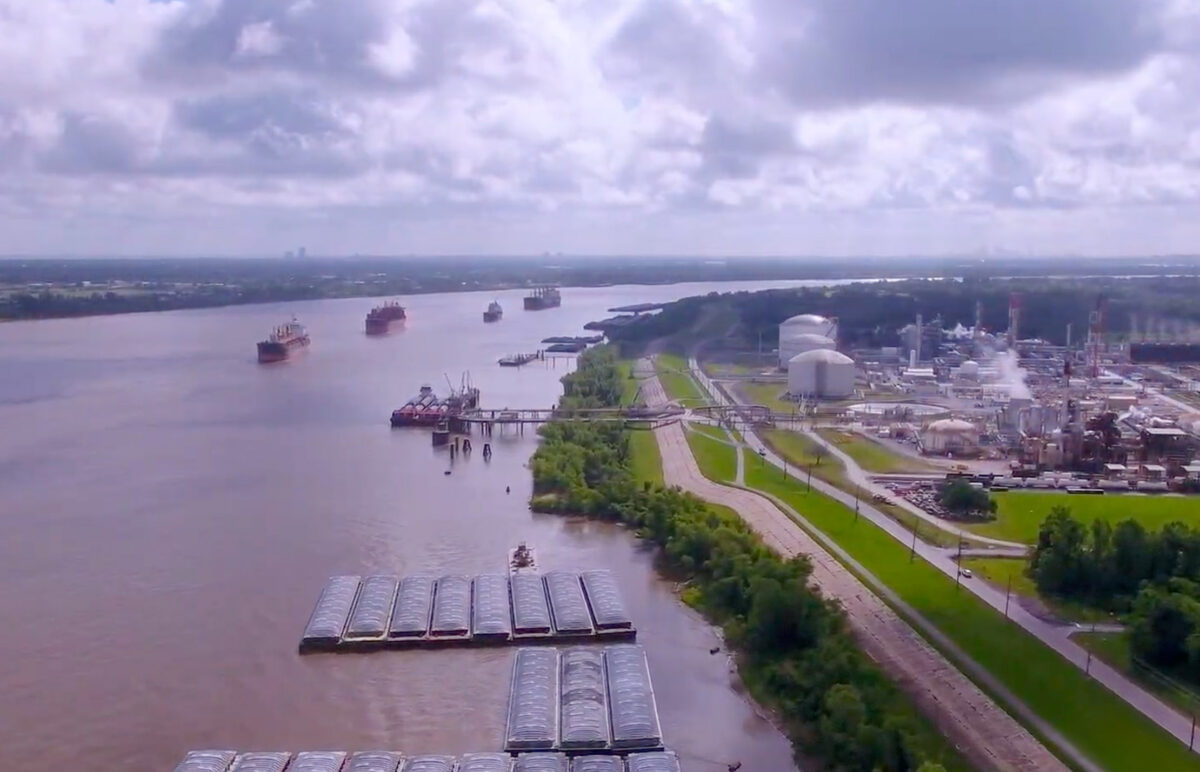
Louisiana has long been a major center for oil, natural gas and petrochemical production, with an established energy workforce and extensive port infrastructure along the Mississippi River and Gulf Coast. Those industries and resources give the state a foundation for developing new energy technologies, including ways to capture and reuse carbon emissions.
FUEL’s next phase will put greater emphasis on identifying promising technologies, according to Mazzola, matching them with entrepreneurs and helping build businesses around them. But while the initiative has distributed millions in funding and supported existing startups, its publicly reported results don’t yet establish how many new companies or jobs it has created.
The next test is whether FUEL’s early activity can produce businesses that attract investment, create jobs and remain in Louisiana.
12 startups supported over the first two years
According to FUEL’s 2026–2029 Incubator Strategic Plan, the initiative has supported 12 startups through proof-of-concept funding and its Super Pitch competition. The plan aims to expand FUEL’s network to more than 60 companies by February 2029.
Those numbers include existing companies receiving funding, coaching or technical assistance. They do not establish how many new businesses FUEL has helped create, how many jobs those companies have added or how much private investment they have attracted.
The NSF estimates that FUEL generated $700 million in regional economic impact during its first two years through research and development activity and private investment in affiliated startups. The agency has not published a detailed methodology for that estimate on its public FUEL profile.
Waste to Energy Systems was among six companies awarded approximately $1.2 million in FUEL’s second round of proof-of-concept funding. CEO Woods said the company successfully demonstrated hydrogen separation using the grant-funded equipment, although further development and independent verification are needed before the process can be commercialized.
FUEL also helped the company gather data and connect with a potential hydrogen customer, although no agreement has been reached.
“They’re not just saying, ‘Here’s money, meet this goal,’” said Alissa Mahoney, Waste to Energy’s chief operating officer. “They’re saying, ‘Okay, here’s money to meet this goal, but also here’s some resources that you can use to help develop the business side along with the tech side.’”
Which startups has FUEL supported?
FUEL has provided funding and business development support to energy technology companies through its proof-of-concept program and Super Pitch competition. These 12 companies were publicly named in program announcements between February 2025 and May 2026.
Proof-of-concept awards, February 2025
- ApplicaRAD ($171,000): Developing AI-powered sensors to monitor carbon emissions.
- CodeGig ($200,000): Creating software to track industrial emissions.
- Encore CO2 ($200,000): Developing technology that converts captured carbon dioxide into ethanol. Also received $50,000 through Super Pitch.
- Cavendish Energy ($200,000): Developing a hydrogen production process using aluminum.
Proof-of-concept awards, May 2026
- Renovigo Chemicals ($194,675): Developing methods to turn carbon dioxide into industrial chemicals.
- Westfield Fluid Controls ($197,675): Designing specialized valves for extremely cold liquids.
- Eray Geophysical ($197,769): Developing software to detect underground fractures for carbon storage projects.
- EcoGlobe ($200,000): Creating a marketplace for reusable industrial waste materials.
- NovaSpark Energy ($200,000): Developing technology for on-demand power generation and storage. Also received $25,000 through Super Pitch.
- Waste to Energy Systems ($200,000): Developing technology to separate hydrogen from gas produced through biomass gasification.
Additional Super Pitch recipients, February 2025
- Zentech Concrete Solutions ($100,000): Developing lower-carbon pavement materials.
- MaxBoring (No cash award announced): Developing technology to convert natural gas that would otherwise be flared into electricity. Received an investor networking opportunity.
FUEL also awarded $125,409 to Louisiana Tech University for research into lower-carbon cement alternatives, with BB&M LLC as a commercialization partner.
Turning research into business by recruiting experienced entrepreneurs
FUEL’s next major initiative is a planned venture studio that would identify promising technologies and recruit experienced entrepreneurs to build Louisiana-based companies around them, rather than expecting researchers to run businesses themselves.
“Inventors can keep inventing, and entrepreneurs can start companies,” Mazzola said. “We’re going to scout the tech that the inventors make. We’re going to run it through technical economic analysis, sort out the stuff that’s not ready or may never be ready for commercial use.”
Technologies that pass that screening would be matched with prospective founders recruited through the venture studio’s Talent Lab.
Prospective founders would develop business plans and pitch investors. If investors commit to funding companies that meet certain milestones, FUEL could provide proof-of-concept grants to help them reach those goals.
Founders would be required to establish their companies in Louisiana and live in the state. FUEL’s implementation plan also envisions relocation assistance for those moving there.
FUEL is also developing a separate statewide incubator to help early-stage entrepreneurs access coaching, business advice and industry connections through existing Louisiana organizations. Its strategic plan calls for an initial pilot involving four coaching organizations and approximately 15 founders.
Other planned resources include Proof Works, an incubator in Baton Rouge, a Newlab facility in New Orleans and access to industrial sites such as Cornerstone Energy Park, where companies could test new technologies.
The venture studio could be formally unveiled as early as January 2027, marking another step in FUEL’s effort to build a Louisiana startup community capable of sustaining itself beyond federal funding.
“Our ultimate objective is that we want wealth creators in Louisiana to be successful,” Mazzola said. “And then they will continue as privately operated innovation clusters, investing in the next company.”