
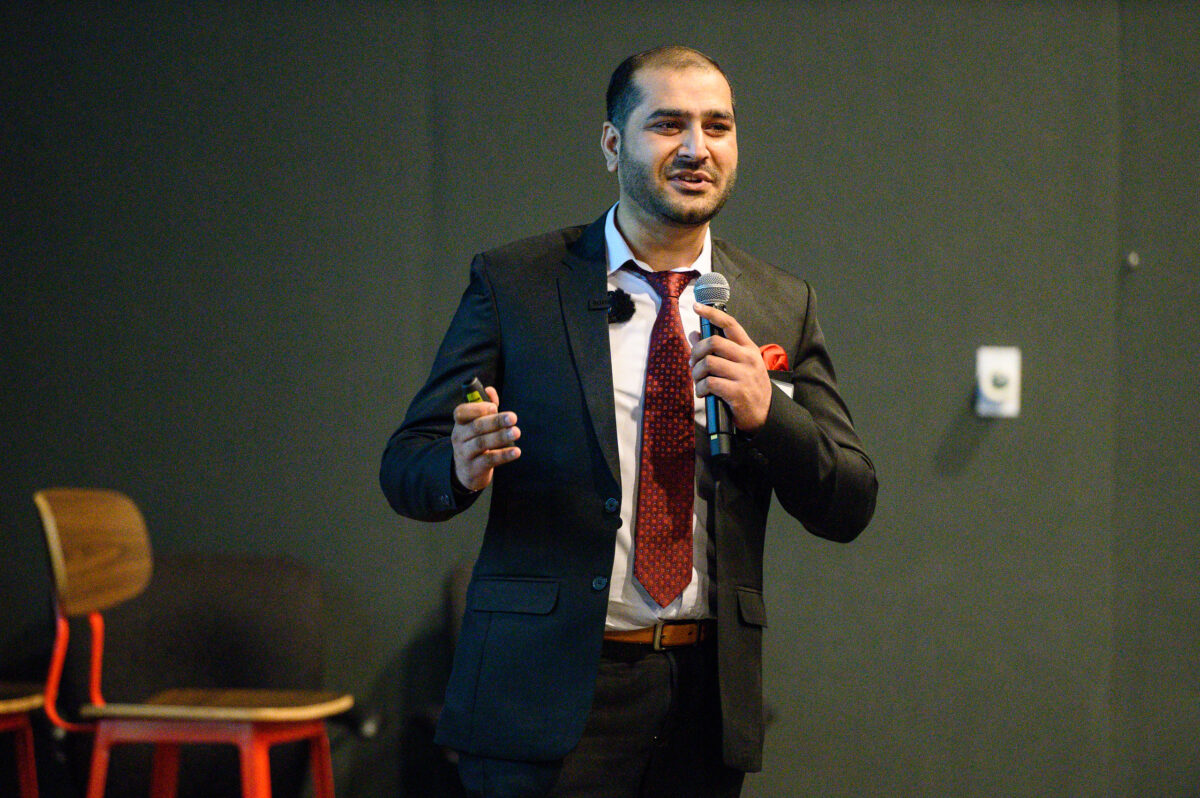
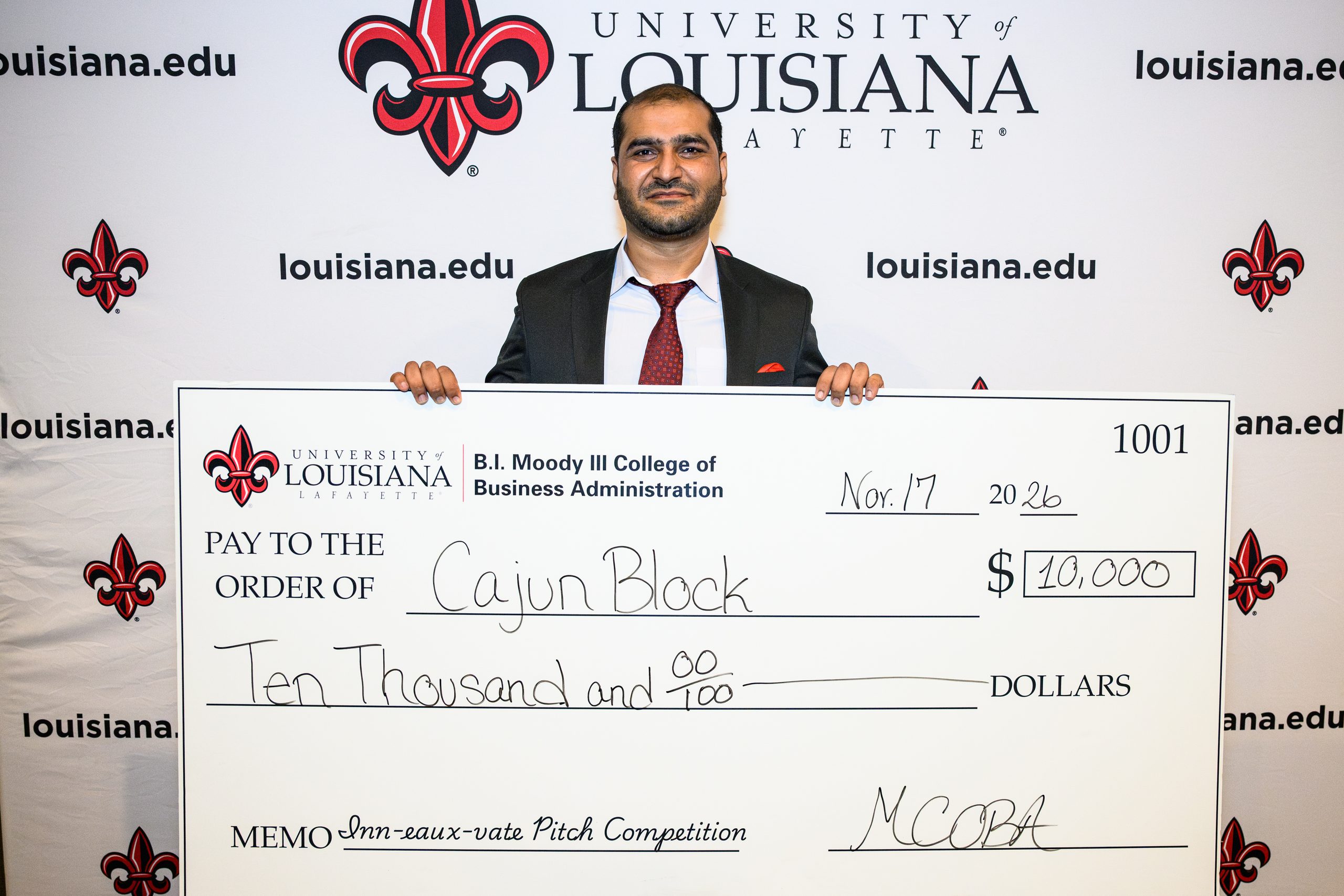
A University of Louisiana at Lafayette engineering student won $10,000 at the university’s annual Inn-eaux-vate Pitch Competition with a business model that turns agricultural waste into construction materials.
Atif Khan, a civil and environmental engineering student, landed first place with CajunBlock, a proposed cement-free brick made from the ash produced when sugarcane bagasse, the fibrous residue left after juice extraction, is burned.
The idea has roots in Khan’s childhood in Pakistan, where his father worked at a sugar mill.
“We can turn that ash into a business opportunity.”
Atif Khan, CajunBlock
“I grew up inside the sugar mill,” Khan told the audience during his pitch. “Each morning, when I woke up, I would see ash scattered on the ground. As a child, I always wondered, what can we do with all this ash?”
Years later, after moving to Louisiana, Khan recognized a similar problem within the state’s sugar industry. Louisiana produces about 22,000 tons of sugarcane bagasse ash annually, according to a 2016 study, creating environmental and waste-management challenges for sugar mills.
Khan saw an opportunity to put that waste to use while also addressing another challenge in the construction industry: cement production. Producing one ton of cement generates nearly one ton of carbon dioxide, according to Khan’s presentation.
CajunBlock also offers a production advantage, according to Khan. While conventional concrete blocks are commonly evaluated for strength after 28 days, CajunBlock can achieve its required strength in approximately two days, potentially reducing curing and storage time and allowing manufacturers to increase production.
How sugar mill waste becomes construction-ready
Bagasse ash is already commonly used as a partial substitute for concrete and cement, but its applications also include road paving, soil fertilizer and biodegradable disposable tableware.
During the judges’ question-and-answer session, Khan said that sugar mills currently have little use for the ash and often pay to have it removed.
One truck could transport approximately 15 tons of ash, enough material to produce an estimated 50,000 bricks, according to Khan. That could create an opportunity for CajunBlock to source its primary material while helping mills manage an existing waste problem.
He also discussed the testing behind the product, including compressive strength, water absorption and durability.
Khan’s research included exposing samples to sulfuric acid to evaluate their resistance to harsh conditions. He reported that CajunBlock samples retained more of their strength than conventional concrete samples during testing.
The company plans to initially target local contractors and landscaping businesses, with potential products including pavers, walkway blocks, landscaping materials and nonstructural masonry.
The blocks could also incorporate pigments to offer different colors, Khan said.
$54k awarded across more than 2 dozen startups
The Inn-eaux-vate Pitch Competition has grown considerably since its launch in 2021, when the event began in a classroom at F.G. Mouton, where the university’s Student Technology Enhancement Program is housed, with just eight to 10 students and a few thousand dollars in prize money.
This year, 75 students representing all seven academic colleges submitted business proposals. Organizers narrowed the field to 13 honorable mentions and 15 semifinalists before selecting seven finalists to pitch their ideas in front of a panel of six judges who were all UL Lafayette alumni.
Meet the seven finalists
CajunBlock: Founded by Atif Khan, civil and environmental engineering student (first place, $10,000)
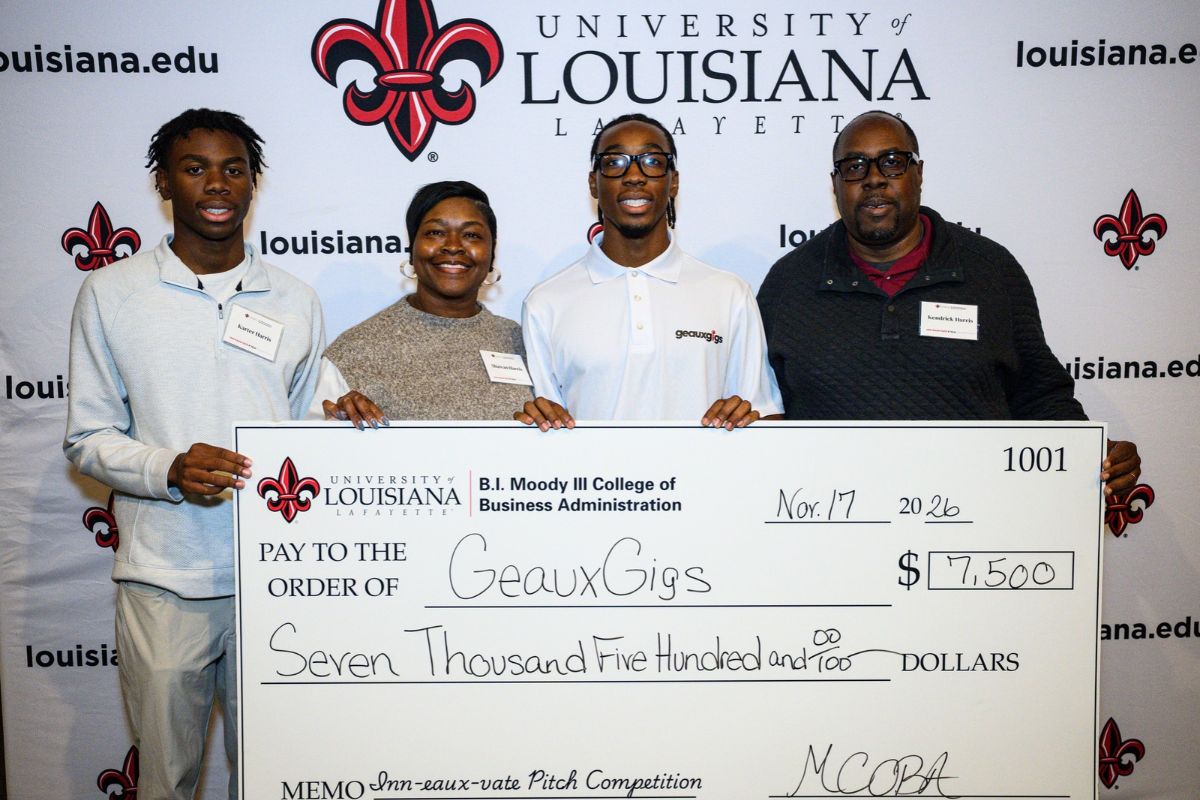
GeauxGigs: Founded by Kingston Harris, informatics student (second place, $7,500)
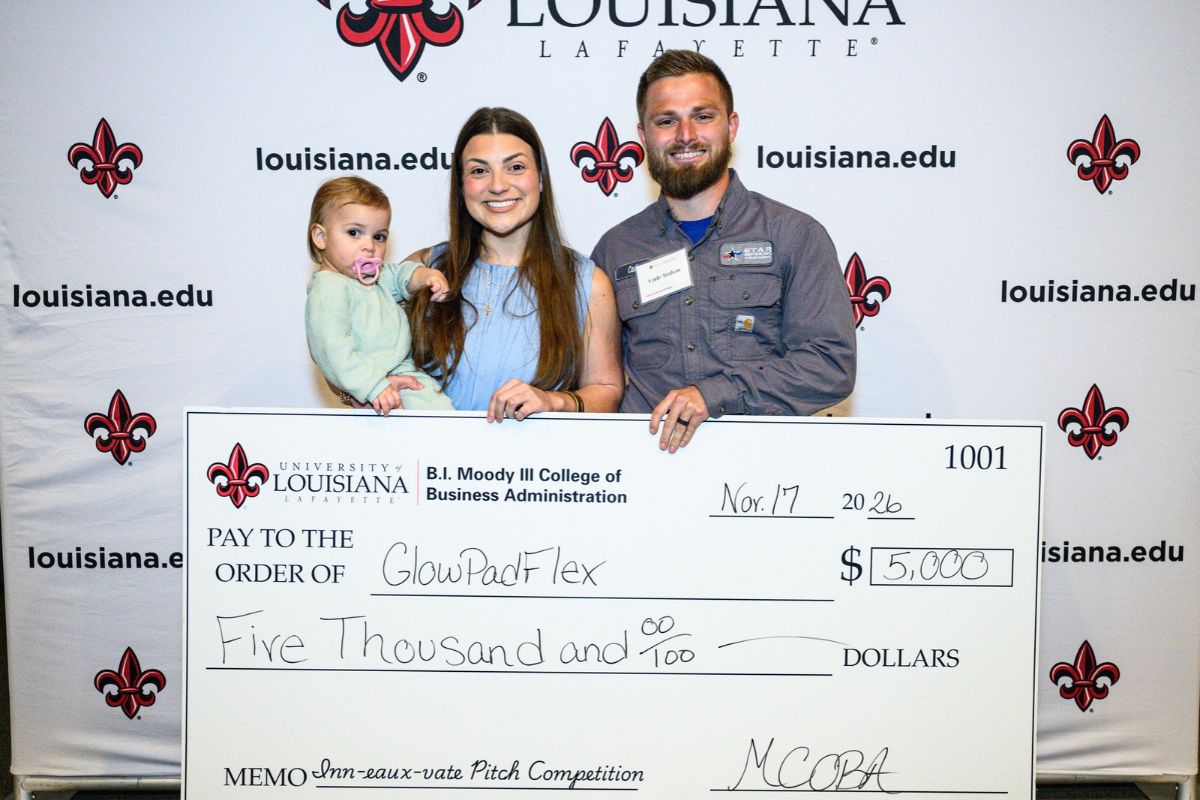
GlowPad Flex: Founded by Alyssa Louvierre, a master’s student in counseling (third place, $5,000)
Autovonics: Co-founded by Cody Clements, an electrical engineering student, and Landon Degeytaire, a mechanical engineering student
OutagePilot: Founded by Md Khairul Islam, a doctoral student in systems engineering with a concentration in electrical engineering
Amarrer: Founded by Titus Boudreaux, an MBA student with an undergraduate degree in chemistry
BeeswaxbyAllie: Founded by Allie Delome, a moving image arts student
Organizers said approximately $54,000 in total student support was distributed through this year’s competition.
The 13 honorable mentions each received a $500 award. The 15 semifinalists received $1,000 in seed funding, while each of the seven finalists was guaranteed at least $2,500.
Khan will use his share of the winnings to pursue the company’s next step: purchasing a brick-making machine with interchangeable molds. The equipment will help him produce different types of blocks and begin pilot testing with local customers.
A patent application has been submitted to the university for review, Khan added.
“Our goal now is commercial production,” Khan said.
He closed his pitch by returning to the question that first inspired the idea.
“When I was a child, I always wondered, what can we do with that ash? Today, I have an answer,” Khan said. “We can turn that ash into a business opportunity.”