Predicting complications can make a difference after childbirth.
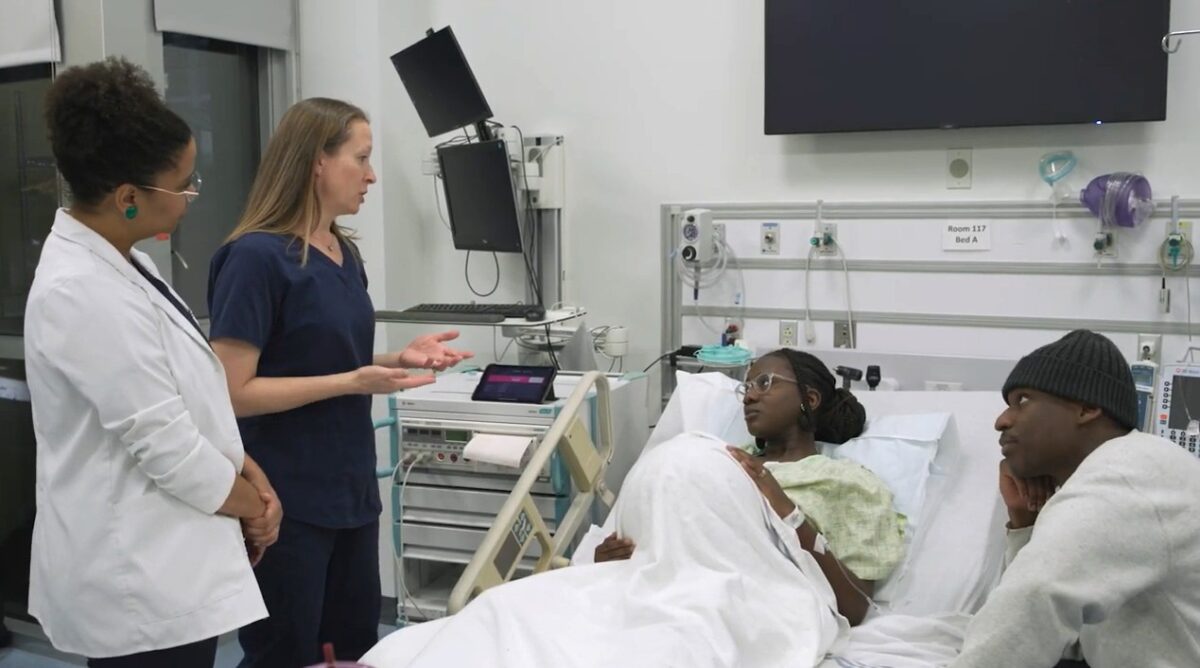
Philadelphia-based startup Vasowatch aims to give nurses an early warning system for postpartum hemorrhage risk using data collected by devices hospitals already use.
The company calls its algorithm “software as a medical device,” or SaMD, meaning the software itself performs a medical function.
Now Vasowatch has new funding to put that approach through its biggest test yet.
“We want to develop something that can be adopted across the standard of care.”
Christine Rohan, Vasowatch
Vasowatch is one of the first three startups backed by the University of Pennsylvania’s new $10 million StartUP Fund, receiving a $250,000 investment.
“It will go toward our pivotal trial, which we expect to start in January,” CEO Christine Rohan told Technical.ly. The study, she said, aims to “prove the safety and efficacy of our algorithm.”
Vasowatch has already tested the algorithm using observational study data collected at Pennsylvania Hospital. The next trial will use a larger group of patients to see whether using its predictions can help reduce life-threatening bleeding after childbirth.
The stakes are high: Postpartum hemorrhage affects an estimated 27 million women worldwide and causes nearly 43,000 deaths each year, according to a 2026 Lancet analysis. Delayed recognition is a major part of the problem, with researchers finding that visual estimates of blood loss can miss about half of cases.
Vasowatch has also received backing from investors in the SWAN Impact Network, Rohan said; the amount has not been publicly disclosed.
Built for hardware hospitals already have
Vasowatch analyzes heart-rate data to identify patients at higher risk of postpartum hemorrhage.
“What we’ve patented is the system, which is using heart rate as input, analyzing it and feeding an alert back,” Rohan said. “But what we’re seeking approval with the FDA for is the actual algorithm.”
The company is aiming for FDA authorization in mid-2028, per Rohan.
Because Vasowatch is designed to work with heart-rate devices and hospital systems already in use, hospitals would not need to buy a proprietary wearable to adopt it. Rohan said that could make the technology easier and less expensive to deploy.
“Hospitals are cash strapped,” Rohan said, pointing to financial pressure on rural hospitals and obstetrics units.
Advances in wearable technology and hospital data systems have made it easier to integrate new software into existing clinical systems, she said.
“We don’t want to develop something just for the top 10-percenters,” Rohan said. “We want to develop something that can be adopted across the standard of care.”