
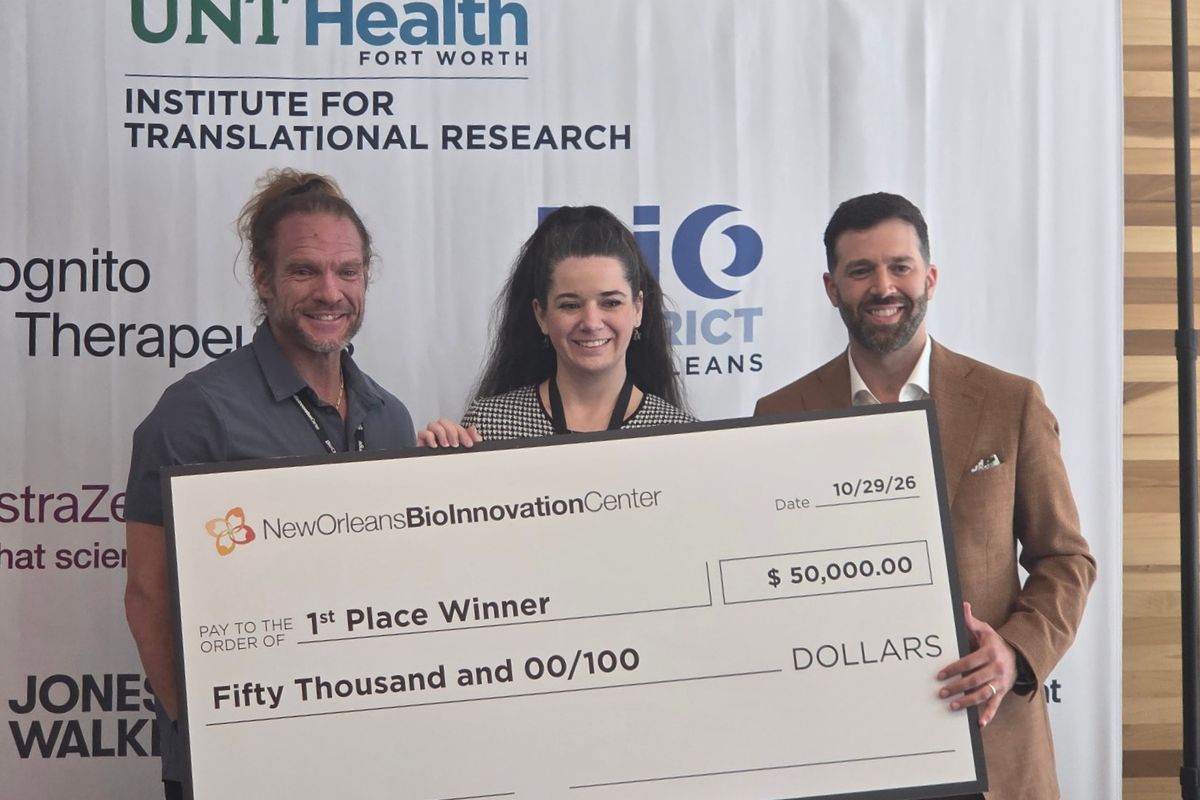
Cleaved Diagnostics, a New Orleans biotech company developing CRISPR-based diagnostics, won the New Orleans BioInnovation Center’s 2026 BioChallenge Pitch Competition.
Chandler Monk pitched CLEVR, a CRISPR-powered product designed to improve early detection of cytomegalovirus, a leading non-genetic cause of hearing loss in newborns. She won $50,000 for first place and an additional $10,000 as the crowd favorite.
“This win has given us the momentum to speed up our approach to market,” Monk told Technical.ly. “It has also given us the confidence that Cleaved and other New Orleans biotechs are competing with those on a national stage.”
“This win has given us the momentum to speed up our approach to market.”
Chandler Monk, Cleaved Diagnostics
BioChallenge began as an annual event in 2012, but paused during the pandemic. It returned in 2024 with a full focus on brain health, a field with an estimated $5 trillion annual cost to the global economy, according to the World Economic Forum. The competition received 240 entries from 35 countries and 31 US states, including nine from Louisiana, according to the New Orleans BioInnovation Center (NOBIC).
Five other finalists last month delivered pitches to a seven-member panel of judges at NOBIC’s Canal Street headquarters:
- Cenna Biosciences Inc., a San Diego-based company developing treatments for Alzheimer’s disease;
- Moleculera Biosciences, an Oklahoma City-based company developing diagnostic tools for neuroimmune disorders;
- Parley Neurotech, a Denver-based company developing hearing therapies;
- PathMaker Neurosystems, a Boston-based company developing noninvasive therapies for ALS; and
- Nervosave Therapeutics, a Montpellier, France-based company developing treatments for nerve health.
PathMaker Neurosystems won the $25,000 second-place prize for developing MyoRegulator, a device that uses electrical stimulation through the skin to treat ALS. Moleculera Biosciences took third place and a $15,000 prize for its test, which helps doctors identify immune system problems that may contribute to treatment-resistant psychiatric and neurological conditions.
The competition is part of NOBIC’s efforts to expand New Orleans’ brain health sector and support Louisiana’s life sciences industry.
“New Orleans can own brain health because we have the clinical institutions, the research, and now the event that brings the field to town every fall,” NOBIC Executive Director Kris Khalil said.
NOBIC will continue supporting all BioChallenge finalists, including those who did not receive cash prizes. During the competition, Khalil said participants would have access to mentorship, lab space, grant support and potential investors.
“The prize is one day. The network is forever,” he told Technical.ly. “We picked six companies out of 240 because we believed in all six. One result does not change that.”
Last year’s first-place winner, Baltimore-based JuneBrain, has since secured $6.4 million in grant and private investment funding and landed patents for its AI-powered retinal imaging technology, which helps detect and monitor neurological and eye diseases.
Cleaved plans prototypes, FDA designation
Before this year’s BioChallenge, Cleaved took first place at the 2025 New Orleans Entrepreneur Week Demo Day, earning $50,000. The prize helped the Tulane University spinout secure its first lab space at NOBIC and hire its first intern.
That win “was extremely transformational for giving me the confidence and support to put Cleaved into motion,” Monk said.
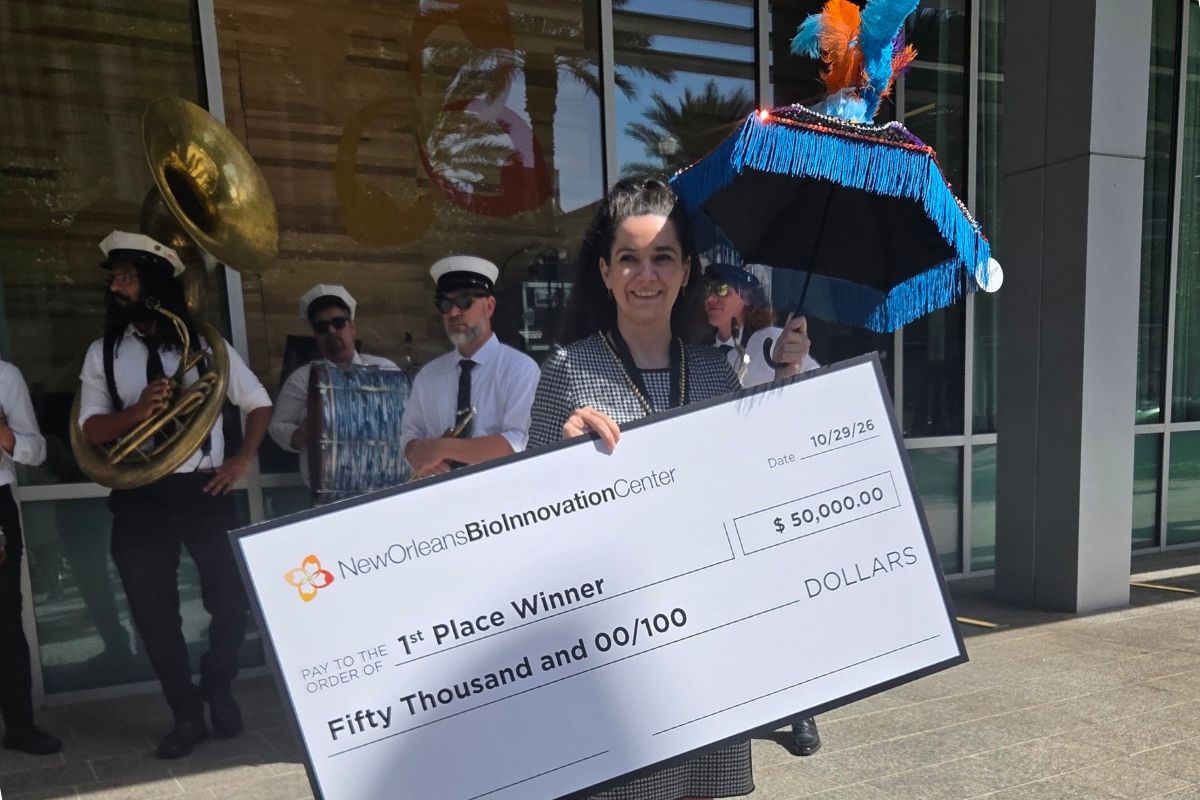
Cleaved also received a Phase I Small Business Technology Transfer grant from the National Science Foundation in August 2025, which funded development of the technology behind CLEVR. The BioChallenge prize will help the company take its next step toward market readiness, Monk said.
“We are looking to use some of [the BioChallenge funds] to accelerate production of our first prototype batch that will ease adoption here in Louisiana,” Monk said. “The second portion we will use for progressing towards FDA breakthrough designation to prepare for more widespread universal screening.”
The Cleaved team is currently working to make sure CLEVR’s launch goes well, according to Monk.
Looking ahead, the plan is to “apply for breakthrough FDA designation,” Monk said, “and start expanding to next markets in transplant and at-home testing with our second product CANARY.”