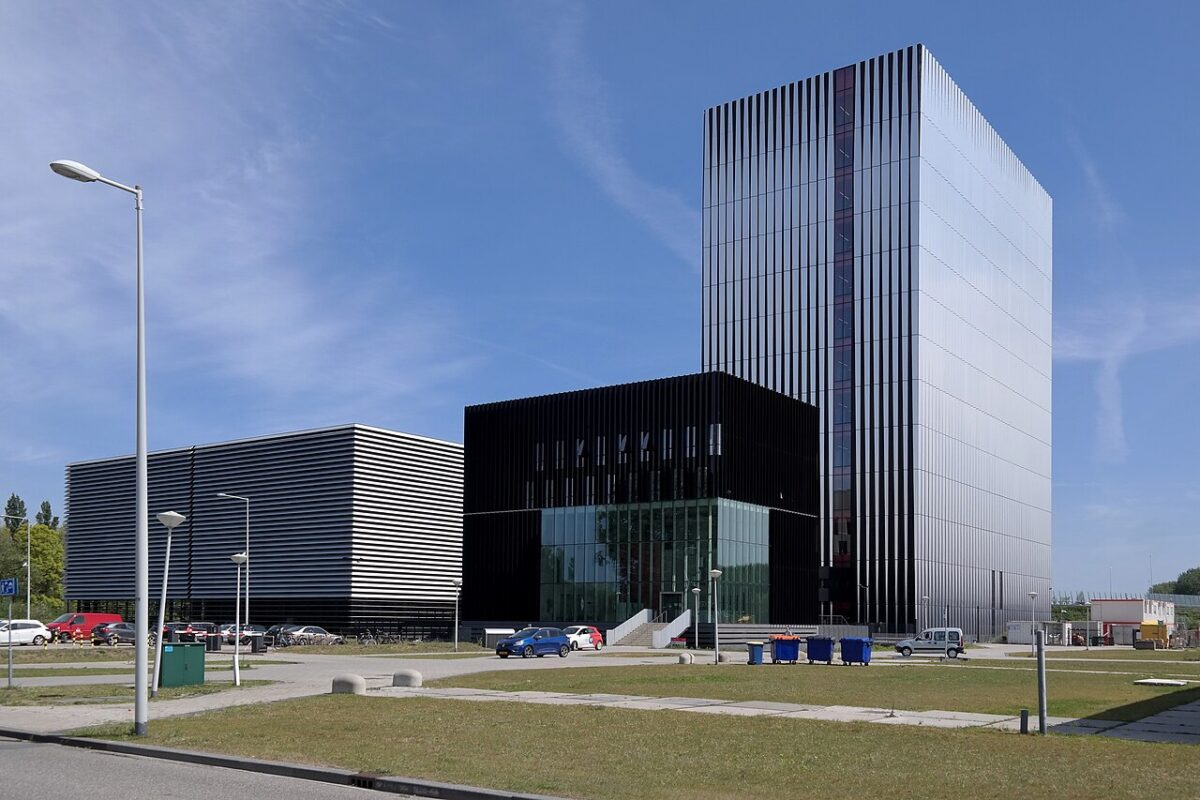
Data centers generate a lot of heat, and their cooling systems have to send it somewhere.
Often, that waste heat is released into the surrounding air or dissipated via water evaporation. Could it be captured and repurposed instead?
Yes, but there are a few hurdles to consider. Server farms are active year-round, while demand for heating rises and falls with the seasons. Also, the volume of heat they generate is usually only enough to raise water to lukewarm temperature, not to directly create the steam needed to power a turbine. And any kind of energy transfer needs an infrastructure system to make it happen.
One solution being used in Europe is storing data-center waste heat underground until it’s needed, though that still has limitations.
Here’s what to know.
➡️ Jump to a section:
• Why do data centers produce so much heat?
• What happens to all that heat?
• How much waste heat does a data center generate?
• Couldn’t that energy be used to heat buildings?
• Can the heat be stored for later use?
• Why store it underground?
• How does underground heat storage work?
• Where are data centers already doing this?
• How much stored energy can be recovered?
• Can the ground get too warm?
• What would it take for more data centers to use this?
Why do data centers produce so much heat?
Servers use electricity to process and store information. Nearly all that electrical energy eventually becomes heat.
Computer chips work by turning billions of tiny electronic switches called transistors on and off. That repeatedly moves electrical charge through their circuits, releasing small amounts of energy as heat. Each chip generates a relatively small amount of heat, but multiply that by thousands of computers running in the same building, and it adds up.
If the heat isn’t removed, the equipment will overheat and eventually stop working.
What happens to all that heat?
Traditional server racks use fans to pull air across the computers to cool them. Newer systems use tubing coiled next to the servers through which cool liquid can flow.
Depending on the facility, cooling systems then release the heat outdoors — often through big box fans on the roof — or transfer it into water.
How much waste heat does a data center generate?
It depends on how much electricity the facility uses, and that can vary quite a bit. Some conventional data centers have power capacities of 10 to 25 megawatts (MW), while larger facilities designed for AI processing can reach 100 MW or more.
A data center with 10 MW of continuously operating equipment could produce about 87.6 million kilowatt-hours of heat annually. That’s equivalent to the annual electricity consumption of approximately 8,100 average US homes, based on federal energy data.
A 100 MW facility would produce approximately 876 million kWh, equivalent to about 81,200 homes.
New AI-focused projects are even larger. Meta has said its Prometheus data center campus in Ohio could use up to 1 gigawatt — a thousand megawatts — while its Hyperion project in Louisiana could scale up to 5 GW at peak.
Note that only about 70%–80% of this generated heat is considered recoverable, according to researchers at the Lawrence Berkeley National Laboratory.
Couldn’t that energy be used to heat buildings?
Yes — and some places do. Heat captured from a data center can be transferred through a water system to nearby buildings or a district heating network.
The challenge is that a data center can produce enormous amounts of heat without temperatures getting hot enough for an existing HVAC system. Heat pumps can raise that temperature, but they require additional electricity and equipment.
Another practical constraint is finding buildings close enough to use the heat. Transporting it over long distances requires infrastructure and adds costs.

This machine in Delaware turns data center heat into water
AirJoule’s new Prime system is designed to pull moisture from the air using heat that industrial facilities would otherwise waste.
Can the heat be stored for later use?
Yes. That could help address another mismatch: Servers generate heat year-round, while demand for heating rises and falls with the seasons.
Storage gives the heat somewhere to go during those warmer months, allowing some of the energy to be used for heating months later. Systems built to do this often store the heat underground.
Why store it underground?
Groundwater, soil and rock can absorb heat, while the surrounding earth helps insulate the storage area. Under suitable conditions, that allows some of the energy to remain available from one season to the next.
The broad approach is called underground thermal energy storage. The storage material is the ground itself, with wells or buried pipes providing a way to put heat in and bring it back out.
How does underground heat storage work?
There are three types of energy storage in use:
Aquifer thermal energy storage (ATES) works across the seasons. In summer, cool groundwater helps cool buildings or data centers. As it absorbs heat, it warms up before being returned underground through a separate well. In winter, that stored warmth can be brought back up and used for heating.
Borehole thermal energy storage (BTES) uses closed pipes installed in drilled holes. A circulating fluid exchanges heat with the surrounding ground without pumping out actual groundwater.
Reservoir thermal energy storage (RTES) uses underground reservoirs, often deeper than those used for ATES, to store heated water for later recovery.
All of these methods depend on local geological conditions.
Where are data centers already doing this?
One example is Equinix’s AM3 data center in Amsterdam, Netherlands.
The facility uses groundwater to help cool its equipment. The water absorbs heat, which is transferred into an underground aquifer. The neighboring University of Amsterdam has a system in the same underground layer, and during colder months, it can draw on that stored warmth to heat its buildings.
The two systems exchange heat through an aquifer roughly 70 to 180 meters underground, according to the Netherlands Enterprise Agency.
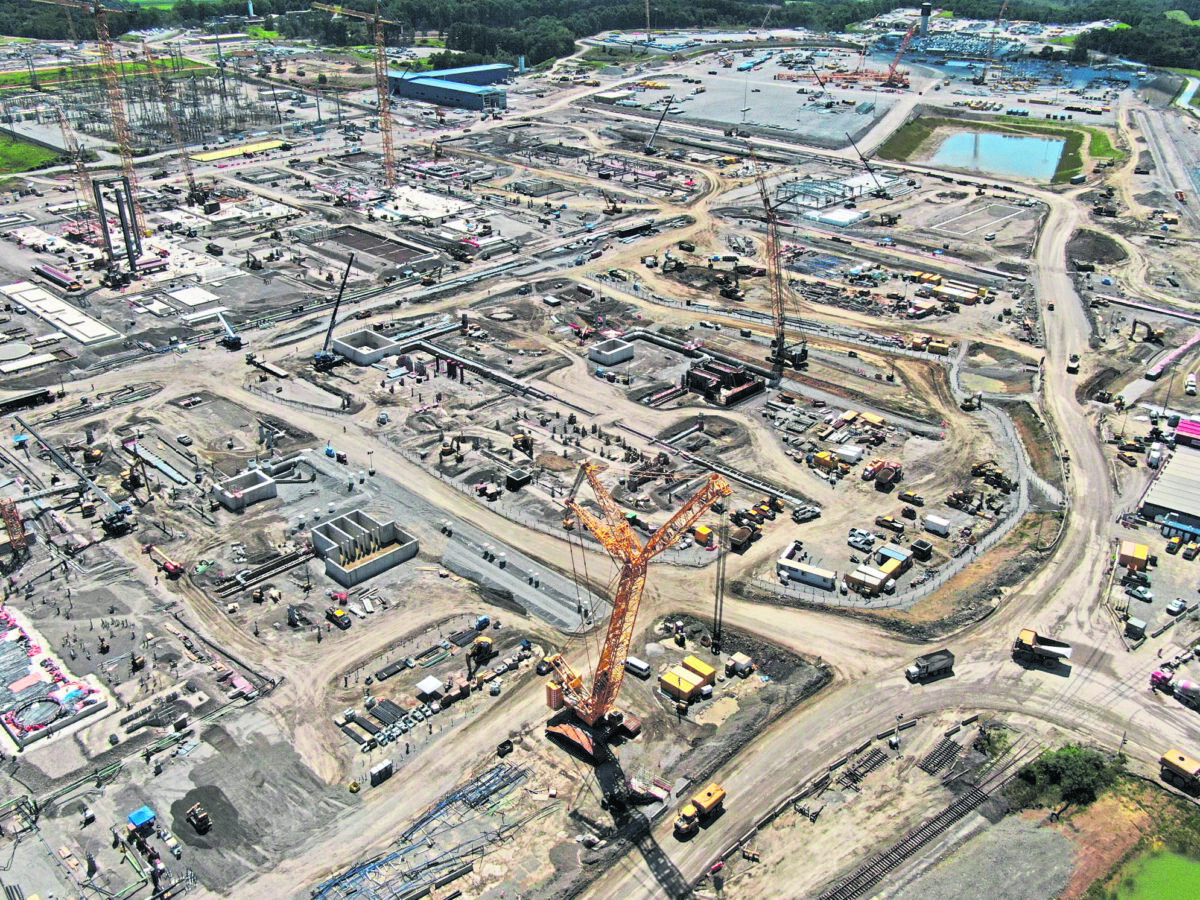


How much stored energy can be recovered?
Not all the heat put underground comes back. Some spreads into surrounding rock or moves with groundwater. How much can be recovered depends on the location and how the system is operated.
One Dutch aquifer storage system recovered an average of 68% of stored heat and 82% of stored cooling energy between 2005 and 2012, according to a 2014 study published in Hydrogeology Journal. (The study examined an underground storage installation, not a data center specifically.)
Can the ground get too warm?
Yes. Underground storage works best when the amount of heat going into the ground is the same, over time, as the amount taken out.
That can be tricky for data centers, which need cooling year-round, even when nearby buildings don’t need heating.
At the Bonner Bogen development in Bonn, Germany, an aquifer storage system provides heating and cooling to a mixed-use district that includes a data center. Researchers identified an imbalance: Year-round cooling demand contributed to more heat entering the aquifer than was removed, warming groundwater and reducing its effectiveness.
What would it take for more data centers to use this?
The biggest obstacles are geology, infrastructure, energy demand and cost.
An underground storage project needs suitable ground conditions and a way to move heat between the data center, storage system and buildings that will use it. Pipes, pumps, drilling and maintenance all cost money. So does the electricity needed to raise the temperature of recovered heat.
Projects like Amsterdam and Bonn show that underground storage can work alongside data center cooling. But storing the heat is only part of the equation: There must also be enough nearby demand to use it.
Underground storage could give some data center waste heat a second use, but whether it makes sense depends on the specific site.