When you turn on your lights each morning, do you know how the electricity gets there?
You may already understand the basics of how electricity is generated and be familiar with your local utility company. Power plants produce electricity through sources like natural gas, wind or nuclear, and your utility delivers that energy to your door.
There’s also a large, lesser-known organization that influences how that power gets to you: PJM Interconnection.
Across more than a dozen states, PJM manages the balancing act of matching electricity supply with consumer demand every second of the day. That responsibility is growing increasingly complex as extreme weather and the expansion of power-hungry data centers place unprecedented pressure on the regional grid.
“Our No. 1 job is keeping the lights on for the more than 67 million people who depend on us,” a spokesperson for PJM told Technical.ly via email.
Keep reading for a crash course on what PJM does, how it helps get electricity to your home and why it matters.
➡️ Jump to a section:
• PJM coordinates the flow of electricity
• Grid operator, not owner
• The largest power grid operator in the US
• Is PJM a government entity?
• Supplying, planning and managing the market
• 3 different markets: energy, capacity and ancillary services
• How does PJM impact my power bill?
• Power forecasts and lining up generators to meet demand
• Extreme weather and data centers drive costs
• Data centers throw a wrench in capacity calculations
• A cap on capacity pricing to rein in higher costs
• PJM’s work to address rising demand and costs
PJM coordinates the flow of electricity
PJM and orgs like it are sometimes called the “air traffic controllers of the grid,” the PJM spokesperson said.
Like air traffic controllers, PJM monitors and coordinates activity. In this case, instead of planes, PJM directs thousands of power generators, utility providers and power marketers.
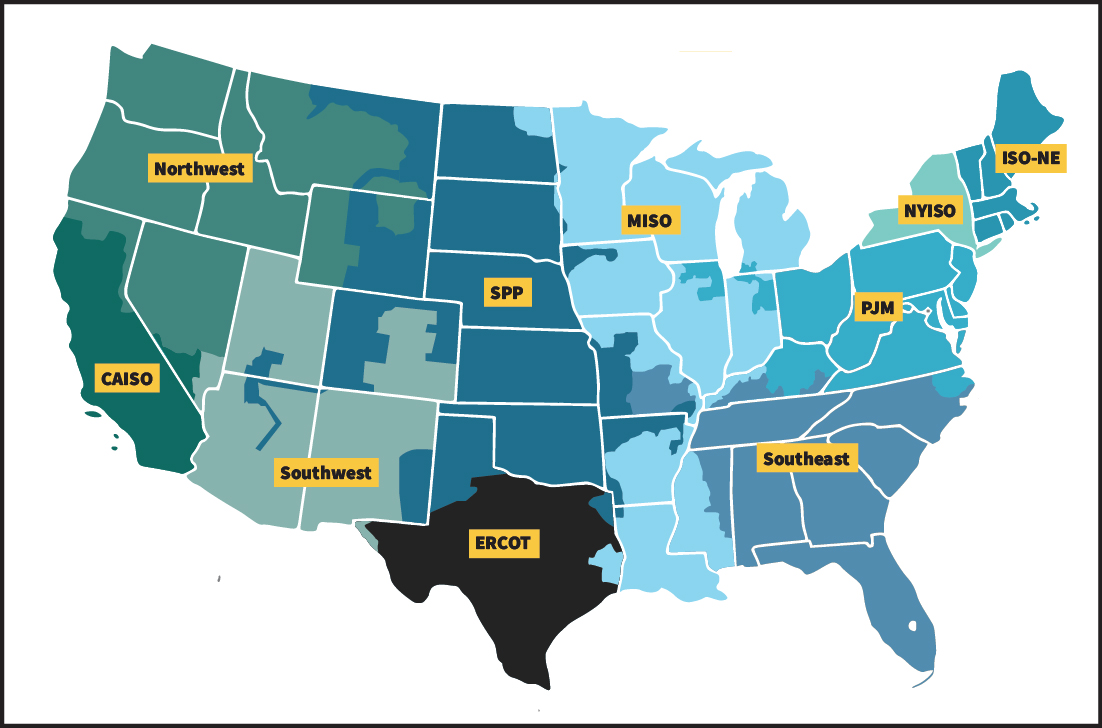
It’s one of many coordinating organizations across the country. In states like Kansas and Nebraska, that organization is SPP, the Southwest Power Pool. Or, in Michigan and Wisconsin, it’s MISO, the Midcontinent Independent System Operator.
The Federal Energy Regulatory Commission (FERC) established organizations like PJM in the late 1990s to lower costs, increase competition for power supply and improve energy reliability.
But, as some critics point out, these nongovernment organizations can have complex rules that make it hard for the general public to understand. Plus, they can uphold status-quo policies that don’t always keep pace with the nation’s fast-changing energy system.
Grid operator, not owner
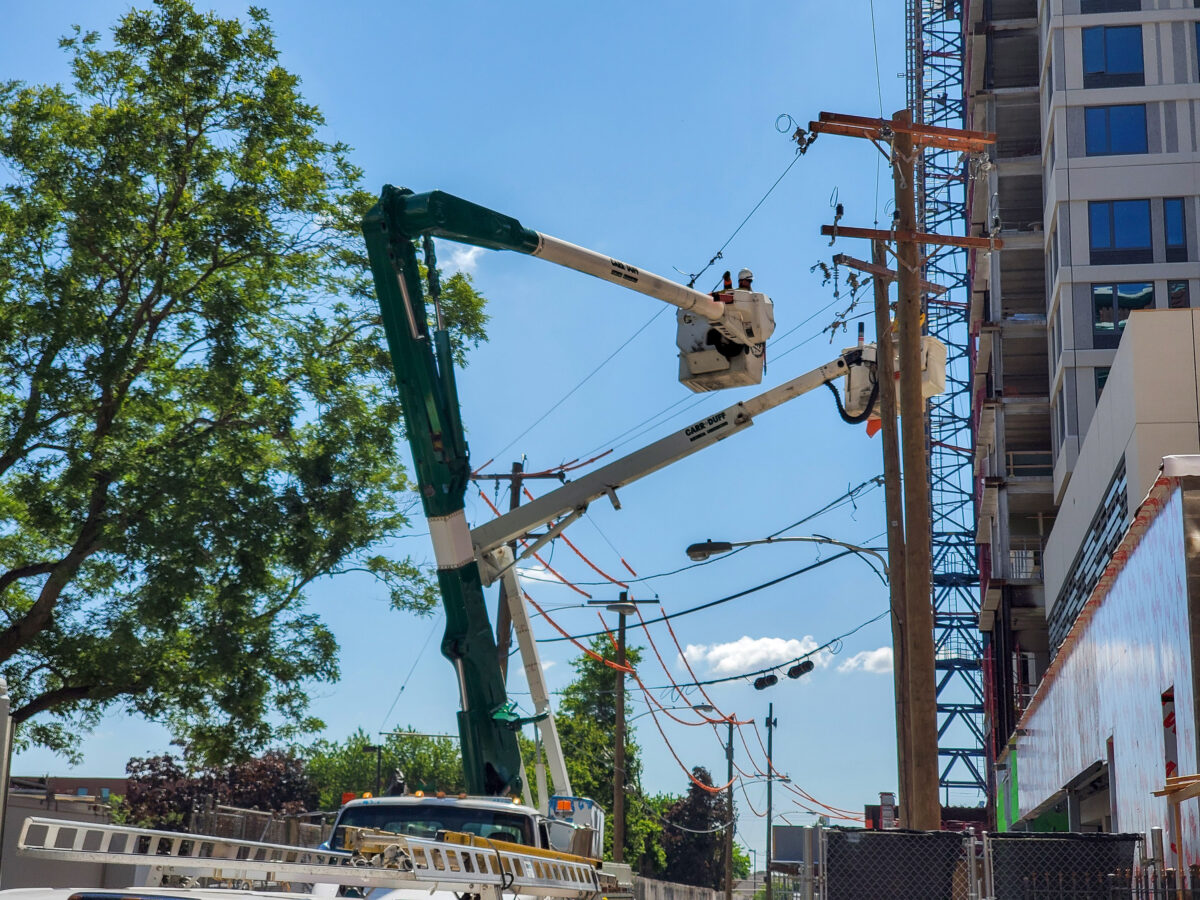
Electric utilities own physical power lines, utility poles or power plants. These companies serve homes and businesses directly, handling local distribution and billing.
PJM does not own the equipment that gets electricity to your house. As an independent regional grid operator, it coordinates the movement and sale of electricity.
The largest power grid operator in the US
PJM serves approximately 67 million people.
It operates in all or parts of Delaware, Illinois, Indiana, Kentucky, Maryland, Michigan, New Jersey, North Carolina, Ohio, Pennsylvania, Tennessee, Virginia, West Virginia and the District of Columbia. Its coverage area totals 369,054 square miles.
It coordinates more than 1,400 power generation sources and the dispatch of electricity over 88,417 miles of high-voltage transmission lines.
Is PJM a government entity?
PJM is a private, not-for-profit organization.
PJM was founded in 1927 when three utilities serving customers in Pennsylvania and New Jersey linked up, forming something called a power pool. Two Maryland utilities joined the group in 1956, and it became the Pennsylvania-New Jersey-Maryland Interconnection, or PJM.
It is regulated by FERC, the Federal Energy Regulatory Commission, and governed by an independent board of managers, which votes on internal policies. Some PJM members also have a voting say in how the organization operates.

Supplying, planning and managing the market
PJM manages the grid in three main ways:
- It tells power producers how much energy to supply in real time.
- It plans for the long and short term, modeling energy needs for what-if scenarios and identifying future grid upgrades.
- It operates several types of wholesale markets — digital marketplaces where power suppliers, utilities and industrial consumers can buy and sell electricity in bulk.
3 different markets: energy, capacity and ancillary services
Before electricity reaches everyday consumers, it is bought and sold on regulated, competitive wholesale markets operated by PJM.
PJM’s largest market, energy, is where buyers and sellers go for electricity in real time or for the next day.
Its second-largest market, the capacity market, looks farther into the future. This market is operated through a yearly capacity auction, where PJM looks to secure commitments from power suppliers that they will generate enough energy to meet peak demand in the future.
PJM also has smaller ancillary services markets, which pay for rapid-response and backup power in emergencies.
Together, these markets determine the total wholesale cost of electricity.

How does PJM impact my power bill?
PJM’s energy market made up about 58% of wholesale electricity costs in 2025, according to the organization, while the capacity market made up about 16% and the ancillary service markets made up about 3%.
Your final bill depends partly on this baseline cost.
“PJM operates the wholesale electricity markets and capacity auctions that establish wholesale market prices,” a PJM spokesperson said, “but state regulators and utilities determine the retail rates that appear on consumers’ electric bills.”
The bill from your local utility incorporates the wholesale electricity price and includes other expenses, like what it costs your utility to make grid infrastructure upgrades.
While the federal government monitors the wholesale markets through FERC, state public utility commissions (PUCs) are tasked with protecting energy consumers from being overcharged.
Power forecasts and lining up generators to meet demand
Every year, PJM forecasts how much power the region will need three years in the future.
It then holds an auction, in which power plants bid to make a certain amount of power available. PJM accepts bids from the cheapest to the most expensive until it has enough guaranteed standby power. Plants are paid even if they are never needed to supply the energy they promised.
These payments act like insurance. They help make sure enough power plants are ready to meet demand during unexpected or extreme circumstances.
“Auction prices reflect supply and demand,” the PJM spokesperson said. “When the system has excess supply, prices tend to be lower. When additional resources are needed, higher prices signal the need for new generation investment.”
Since the overall demand for electricity is rising, so are the prices in these capacity auctions.
Extreme weather and data centers drive costs
Data centers and extreme weather are two major factors driving up demand and prices, according to a spokesperson for PJM.
When extreme weather events occur, outages, equipment issues or fuel shortages can reduce the amount of electricity available. Demand rises because people need to turn on the heat or their air conditioners.
Data centers are the primary reason demand for electricity is growing in the PJM region, according to the latest report from Monitoring Analytics, the independent monitor for PJM.
Data centers are expected to use 7% to 12% of the nation’s electricity by 2028. When supply decreases and demand increases, the price of electricity increases.
“Electricity prices are rising because demand, especially from data centers and AI growth, is increasing faster than new electricity supply is coming online,” a spokesperson for PJM said.

Data centers throw a wrench in capacity calculations
Prices in the PJM region have jumped significantly in 2026, according to Monitoring Analytics.
In the first half of 2026, the total cost of wholesale power jumped 50.3%, reaching $114.50 per megawatt-hour (MWh) — up from $76.16 per MWh in the first half of 2025.
Monitoring Analytics attributes $11.11 of that price increase directly to data centers.
Since PJM’s capacity auctions are driven by future demand forecasts, projections of increased data center use can lead the grid operator to buy more capacity than it otherwise might. This drives up capacity prices and costs customers billions, according to the watchdog organization.
A cap on capacity pricing to rein in higher costs
Pennsylvania leaders and watchdogs have criticized PJM for rising prices.
Some experts argue PJM’s capacity auctions are flawed. Since these auctions are driven by estimates of future demand, they can be overstated and lead to higher capacity prices.
PJM’s independent watchdog raised a red flag on this in its most recent report. It called the capacity auctions “not competitive,” likely caused by flawed market design rules and power generators improperly withholding capacity to artificially inflate the market.
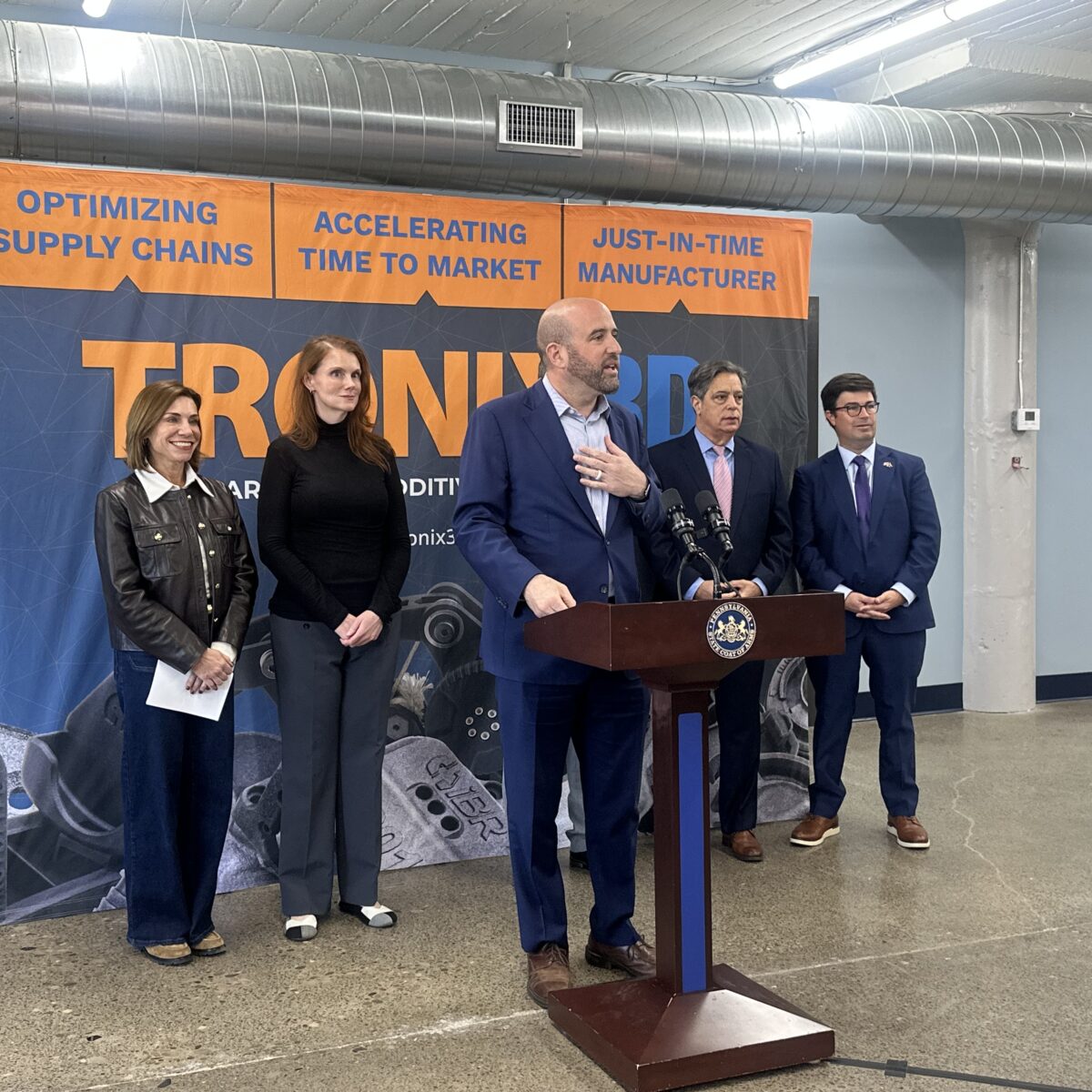
Pennsylvania Gov. Josh Shapiro has repeatedly criticized PJM, threatening to pull Pennsylvania out of the organization’s coverage area if it doesn’t address rising costs.
Facing criticism from Shapiro and consumer advocates, PJM agreed to a temporary cap on capacity auction prices.
PJM’s work to address rising demand and costs
PJM is doing a host of things to drive down costs, according to a PJM spokesperson. One priority is getting more power generators connected to the grid so they can supply electricity.
It doesn’t decide whether or where new power plants are built. But PJM does oversee the process those projects must go through to connect to the regional grid, including studies of their potential impact on the system.
PJM recently reformed this process. It now takes about two years, and the grid operator is working to cut that timeline in half, to one year, the spokesperson said.
“We also are working with our states and federal government to find ways to make sure that the needs of data centers coming online are financed by those companies,” the spokesperson added.