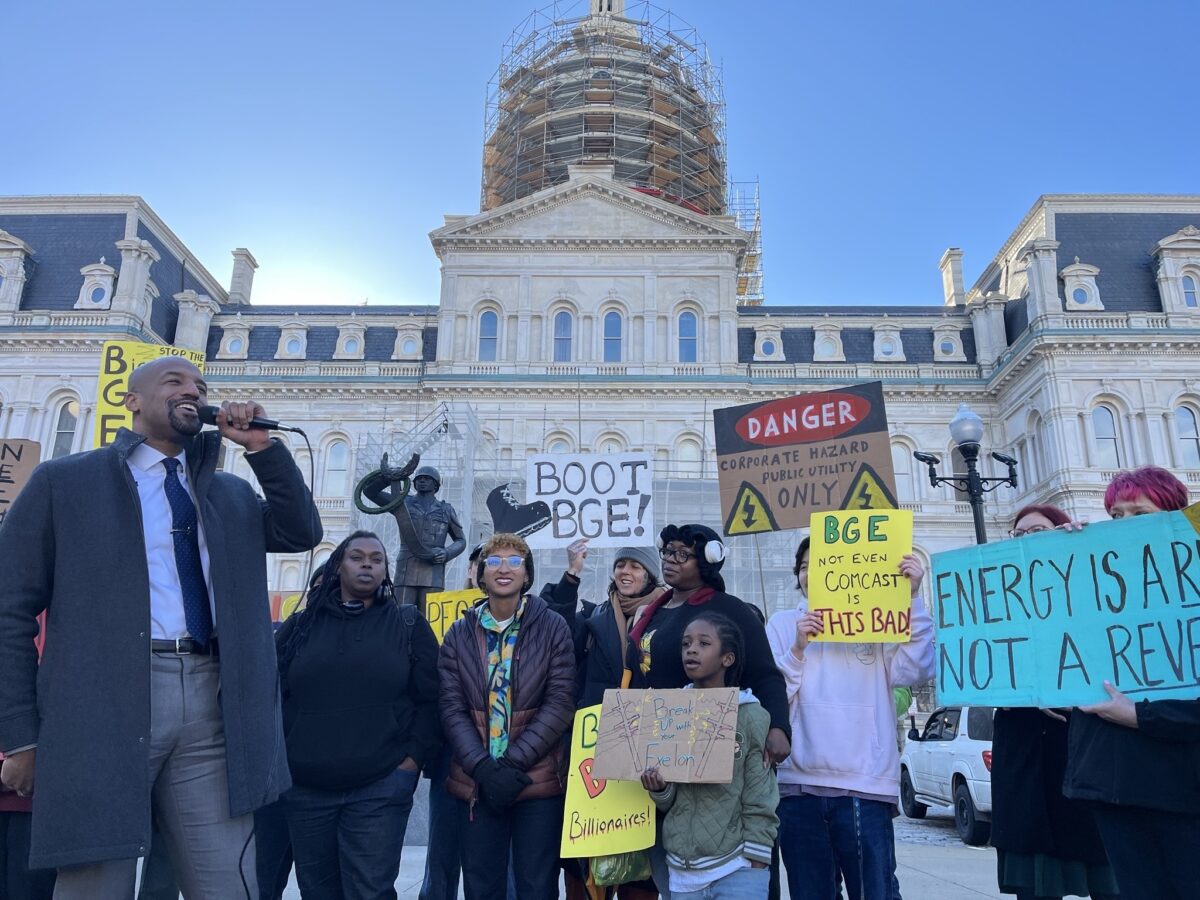
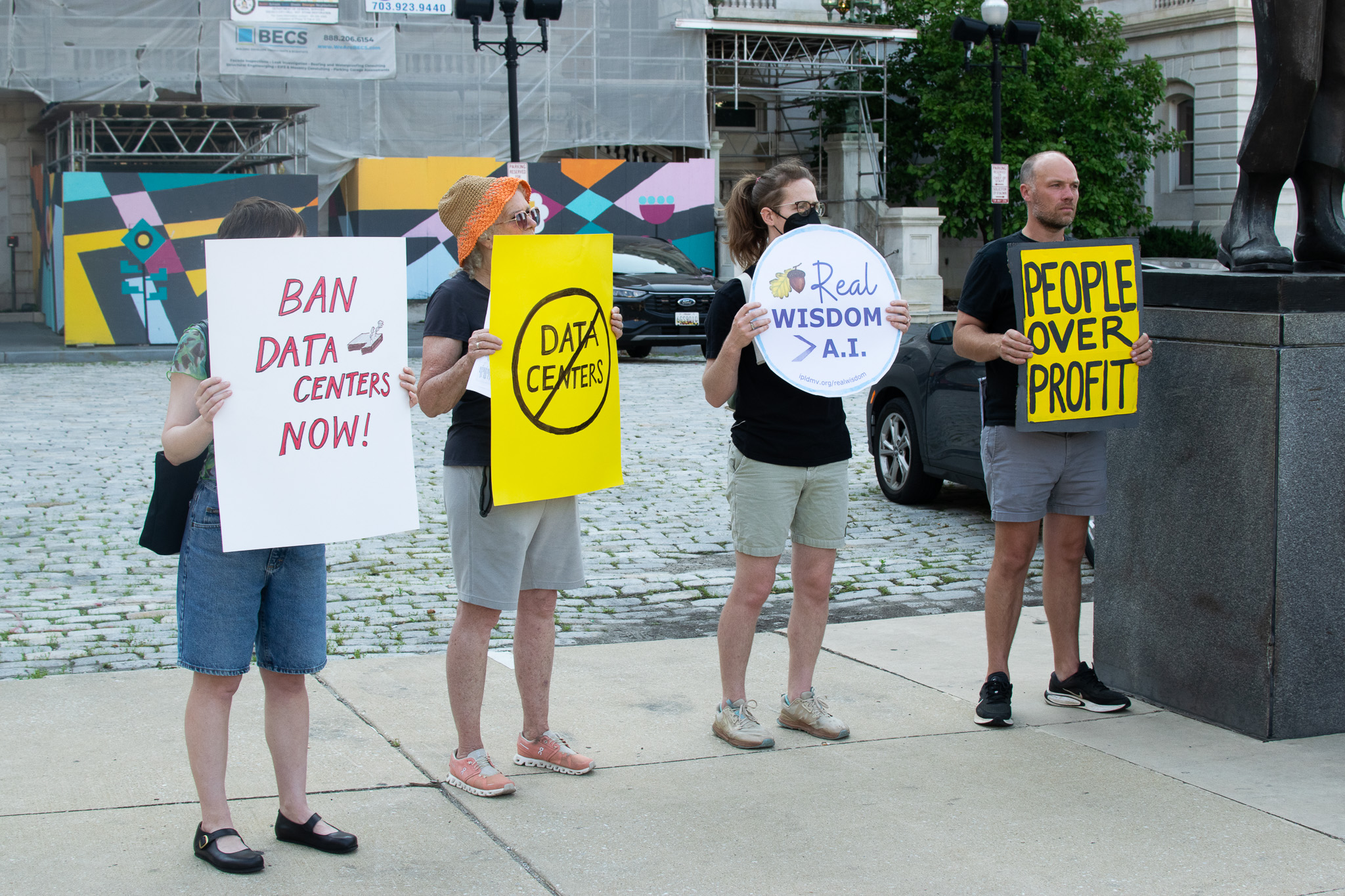
Baltimore’s data center backlash is giving a grassroots campaign a new opening to challenge the private utility model itself.
Baltimore Public Power is arguing that public power, meaning a city-run electric system, would help reduce costs and increase transparency for ratepayers. The push against Baltimore Gas and Electric (BGE) comes amid surging power bills — and record-breaking profits for Exelon, the parent company behind BGE.
While data center growth and aging infrastructure are beyond BGE’s control, who should pay for the resulting grid upgrades remains up for debate.
Only seven of the 64 public power initiatives over the last 25 years resulted in a public utility.
the Brattle Group, 2025
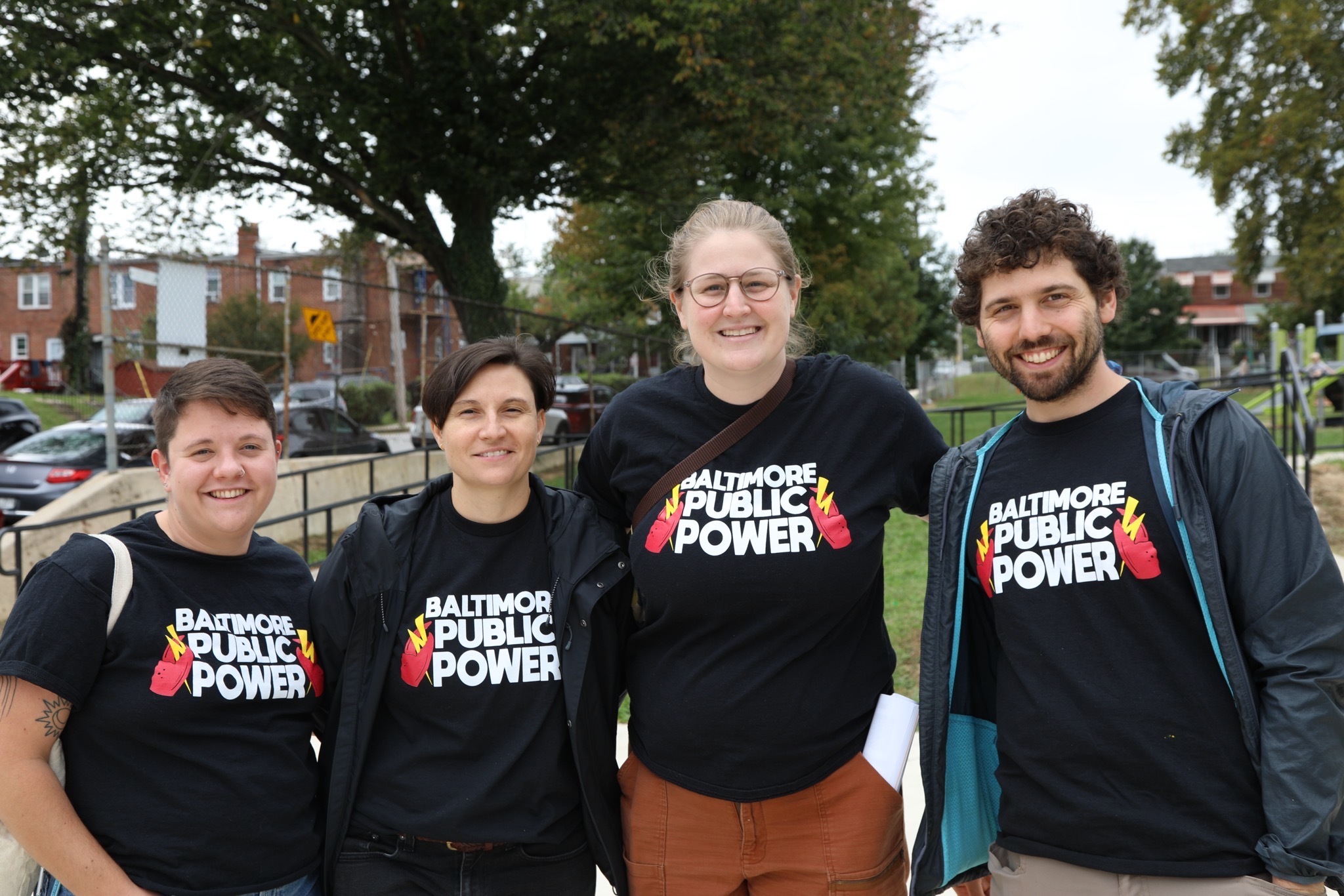
“There’s a lot of buzz about BGE right now,” Baltimore Public Power member Shelby Averys told Technical.ly. “We want to bring people into the fold who are upset and angry, and move towards something new.”
Baltimore Public Power launched in 2025, with a pledge asking candidates and sitting officials to reject contributions from BGE and Exelon, which was the state’s second-largest campaign donor in 2025, according to campaign finance records.
Four of Baltimore City Council’s 15 members, plus three recently elected councilmembers, have signed the pledge, according to recent polls.
When asked for comment, BGE questioned the viability of the campaign’s promises, as no Baltimore-specific data exists to show a municipal utility would lower rates. National studies from the trade and lobbying group American Public Power Association (APPA) suggest public utilities often save ratepayers money, but local energy supply, weather patterns and infrastructure age vary widely across systems.
“We know our customers are worried about rising energy costs, many due to factors beyond BGE’s control, and we take these concerns very seriously,” BGE spokesperson Nick Alexopulos said in an email. “Our focus remains on what we can control — helping customers manage costs through assistance programs, energy efficiency options, and flexible payment plans — especially for those who need it most.”

Public power proponents point to lower rates
Public power advocates argue that privately owned utilities have a built-in incentive to prioritize investor returns over lower customer costs.
BGE plans to spend about $7.7 billion on infrastructure from 2026 through 2029. In July, it also asked Maryland regulators to let it collect another $156.1 million a year from customers through higher electric rates, including a proposed 10.4% return on shareholders’ investments.
The state’s top consumer advocate, David Lapp with the Office of the People’s Counsel, argues that BGE’s plan would raise costs for customers while boosting profits for investors. Regulators have not yet ruled on the request.
“[Private utilities] are motivated to spend more on capital investments than may be necessary,” Lapp said. “A publicly owned utility doesn’t have that same sort of incentive that can be very adverse to customer interests.”
BGE maintains that those investments are essential for grid reliability, and only two cents of every dollar on an average residential bill represents delivery profit, according to BGE spokesperson Alexopulos.
Still, recent data from the American Economic Liberties Project show a stark difference between public and private utility rates nationally. Investor-owned electric utility rates outpaced inflation by 49%, while their publicly owned counterparts trailed inflation by 44%, according to its 2025 report.
The trade-offs of local control
Advocates say that a public model gives residents more opportunities for oversight.
Currently, the Maryland Public Service Commission determines BGE rates in formal proceedings, and the Office of the People’s Counsel can intervene on behalf of consumers. In a public system, those decisions happen at local meetings, allowing residents to testify and hold leaders accountable at the ballot box.
That’s not to say public utilities don’t bring distinct challenges.
Bound to the political process, they often move more slowly and get tangled in government bureaucracy. Because local officials oversee them, acquiring extra cash means facing the political music of raising utility rates.
Plus, as BGE wrote in a letter to Maryland officials, without private shareholders to absorb financial risks, the burden falls entirely on taxpayers.
“You could have situations where decisions are made for political reasons,” Lapp said, “rather than economic reasons.”
A national movement gains traction, but wins are rare
While the Maryland pledge comes amid other national efforts to rein in private utility power, the organizers behind Baltimore Public Power say it faces an uphill battle.
Michigan voters recently approved a ballot measure banning regulated electric and gas companies from donating to political campaigns, but successful municipalization efforts are rare.
A 2025 study by the Brattle Group revealed that only seven of the 64 public power initiatives over the last 25 years resulted in a public utility.
Corporate spending often tilts the scales. In 2023, Maine voters rejected replacing the state’s two investor-owned utilities with a public power company. The incumbent utilities spent more than $40 million to defeat the referendum, outspending the grassroots effort 34 to one.
But public power isn’t a total anomaly. Roughly 15% of Americans are served by public utilities, according to APPA research, and similar grassroots efforts are popping up in San Diego, Ann Arbor and St. Petersburg.
The first hurdle is financial
One of the first major steps in any public power campaign is commissioning a feasibility study, according to APPA expert Ursula Schryver.
Study costs vary depending on the size of the municipality, but they can reach into the hundreds of thousands of dollars. Cities generally weigh multiple routes to municipalization, whether that means acquiring an existing electric distribution network or building a new system.
“You should know how much it would cost to acquire the system,” Schryver said. “You should know who would provide the power supply, the legal backing, and whether it is technically feasible.”
Baltimore Public Power is focusing first on raising public awareness and holding conversations with elected officials, coalition member Averys said.
Typically, a city hires an outside consulting firm to conduct a feasibility study, but with only a few council members signing their pledge so far, the group doesn’t want to risk a losing vote.
A win down south recently encouraged coalition members. In June, St. Petersburg City Council in Florida voted to fund a public power study.
“Public power fights take a long time,” Averys said. “There’s a lot of money that goes into these fights, so for us, building people power is crucial.”