

Startup profile: ArcHoops
- Founded by: Ronald Dupree (Cofounders: Ashley Brio and Laura Bloch; Technical Consultant: Brian Davis; VP of Marketing: Jamila Dupree)
- Year founded: 2025
- Headquarters: Baton Rouge, LA
- Sector: Sports tech
- Funding and valuation: Undisclosed
- Key ecosystem partners: Nexus Louisiana
For basketball fans, debating the outcome of an upcoming game is practically second nature.
Which team has been on a winning streak? Does a player’s recent performance suggest they’re due for another big night?
It’s the kind of analysis typically associated with professional sports analysts and front-office executives. ArcHoops, a new learning platform built around real-world basketball statistics, wants to make it a classroom exercise, turning an interest in basketball into an introduction to data science.
“Learning to make a sound judgment, watch it go wrong, and still trust the reasoning is the core skill of data science.”
Ronald Dupree, ArcHoops
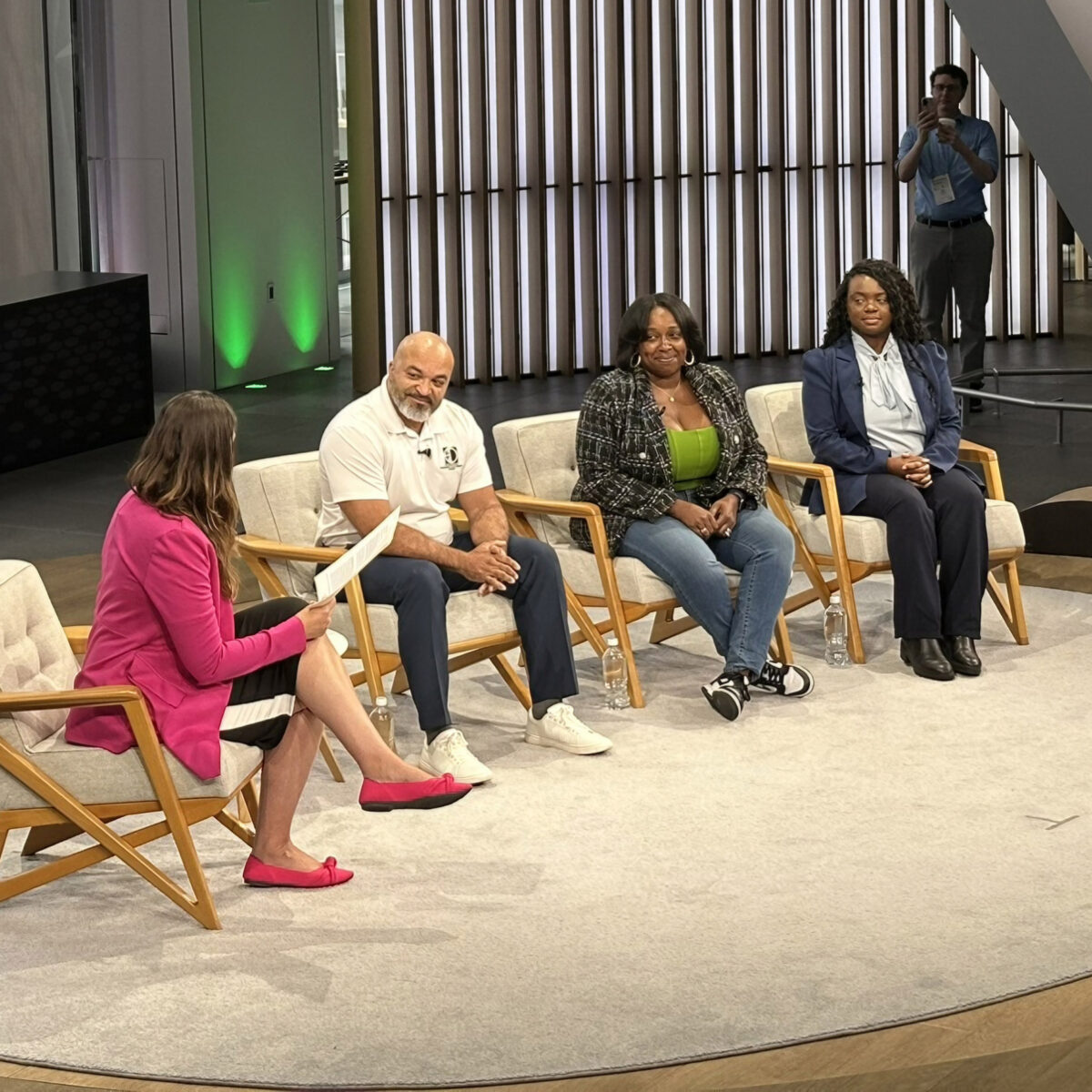
“We wanted to expose more youth earlier to the career of data analytics, particularly in sports,” Ronald Dupree, ArcHoops founder and former NBA player, said. “The notion that you don’t have to be a player or coach to make a legitimate career around the game of basketball.”
The platform uses professional basketball data to help students in grades six through 12 better understand concepts such as ratios, percentages, averages and probability.
For example, consider a seventh grader predicting that the New Orleans Pelicans will beat the Los Angeles Lakers.
Before submitting that prediction, they’re asked to research the matchup, looking at each team’s recent performance, shooting percentages and home-court advantage. What starts as a familiar debate about who will win becomes an exercise in gathering data, identifying patterns and using evidence to support a conclusion.
Dupree also sees an opportunity to improve math skills through the platform. State and national test results point to gaps in student achievement, with only about one in five Louisiana eighth graders scoring at the proficient level or above on the 2024 National Assessment of Educational Progress.
An engineering degree, an NBA career and a new venture
For Dupree, the idea brings together two parts of his background.
He played professionally for 11 years, including six seasons in the NBA, before joining the Milwaukee Bucks front office. During his eight years with the organization, including four as director of global scouting, he evaluated talent, interpreted statistics and made decisions with imperfect information.
How it works: The learn, predict, reflect loop
ArcHoops uses real-world basketball data to teach math concepts through a three-step process.
Learn
Students start with a short lesson led by a basketball player or coach. Each lesson introduces a specific statistic or math concept, such as three-point percentage, and explains how to interpret it.
Predict
Using real team and player statistics, students research an upcoming matchup and make predictions. They might choose a winner, estimate a final score or predict how many three-pointers a player will make. Each prediction includes an explanation of the reasoning behind it.
Reflect
After the game, students compare their predictions with the actual results. ArcHoops provides feedback on their analysis, helping them identify where their reasoning held up, where it fell short and how much of the outcome came down to chance.
The bigger picture
Students can track their predictions over the season, while classroom and team leaderboards add a competitive element. The browser-based platform is free for families and can be used in classrooms as a supplement to existing math curriculum. It does not require a school procurement process.
Dupree also holds an electrical engineering degree from Louisiana State University. While working in the NBA, he noticed a lack of diversity in the league’s data analytics workforce.
“We thought more exposure in expanding the diversity of thought and participation would only help to improve the game of basketball that we all love,” Dupree said.
ArcHoops also marks a step in Dupree’s entrepreneurial journey. This past summer, he participated in Stealthmode Startup School, a cohort program through Baton Rouge-based technology incubator Nexus Louisiana.
After moving his family back to Baton Rouge, Dupree met Brian Davis at church. The two connected over their professional and business interests, and Davis joined ArcHoops as a technical consultant and partner, helping develop the platform’s interface and functionality.
Moving from player performance to classroom probability
ArcHoops wasn’t originally designed as an educational platform.
The initial concept focused on helping basketball players improve their performance through analytics, from identifying more efficient shot selections to understanding where to focus their practice.
Eventually, Dupree saw an opportunity to apply that same data-driven approach to teaching students how to interpret information and make decisions.
“The part I care most about: basketball outcomes are uncertain,” Dupree explained. “The better team loses 30% of the time. That’s exactly the thing traditional assessment can’t teach, because a worksheet has one right answer. A game doesn’t.”
During an early pilot, the team found that students improved their prediction accuracy by roughly 15%. While encouraging, the results didn’t tell the whole story. Improved accuracy could reflect a better understanding of statistics, increased familiarity with the game or simply more opportunities to make a correct prediction.
The ArcHoops team also recognized that scoring students exclusively on outcomes could penalize sound reasoning when an unexpected result occurred. Rather than focusing solely on whether a prediction was correct, the team began exploring how to evaluate the reasoning behind it, accounting for the uncertainty in sports.
“That’s statistical thinking, and it’s the thing we’re building the research program around,” he said.
The team also decided to launch directly to consumers rather than wait for school and district partnerships.
The browser-based platform launched free to families at the start of the NBA season, giving the company an opportunity to reach basketball fans and students immediately. It can also serve as a supplemental resource alongside existing classroom math curricula.
Over the next year, ArcHoops hopes to attract between 25,000 and 50,000 users, with a 30-day retention rate above 20%. Beyond those numbers, Dupree wants students to recognize that an interest in basketball can translate into opportunities in technology, analytics and business.
“Learning to make a sound judgment, watch it go wrong, and still trust the reasoning is the core skill of data science,” Dupree said, “and sports is the one place kids already live with that every night.”