As more startups build devices equipped with on-board processing to run AI models — sometimes called “edge AI” — Hellbender’s Brett Phillips sees a future where that’s no longer a novelty.
“I think eventually it’ll get to the point where we drop saying, ‘Hey, this is physical AI,’” Phillips told Adam Conner, host of web series Proof Points. “Whether it’s the warehouse inventory tracking drone, or whether it’s the sports camera or whether it’s the stethoscope — eventually, you’ll get to the point where we don’t even care about the fact that it’s physical AI. We care more about the function.”
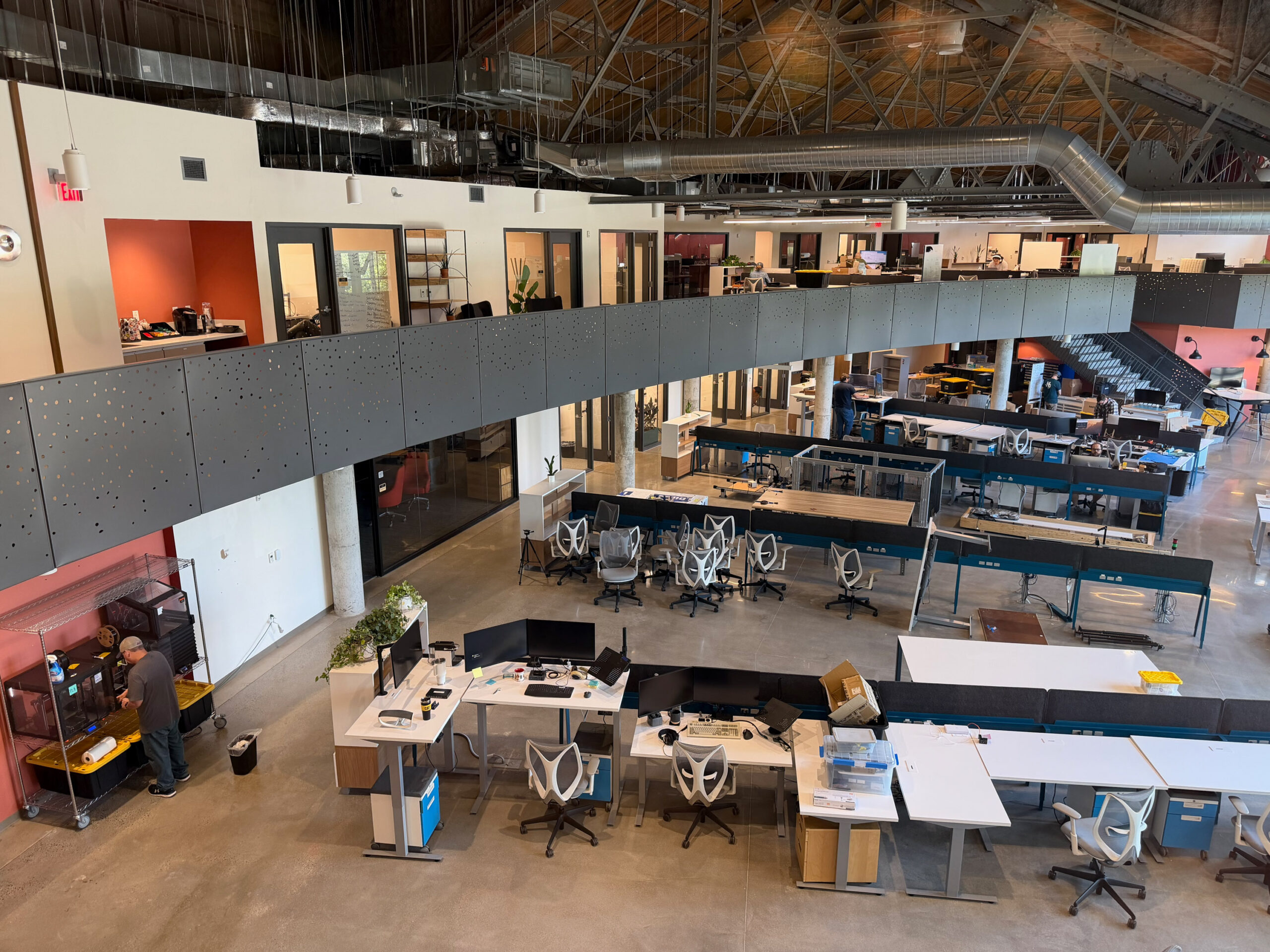
Phillips is the chief revenue officer of the Pittsburgh hardware firm, which earlier this year raised $12.5 million in funding. Operating out of the Roundhouse and Mill 19 at the repurposed steel mill site known as Hazelwood Green, the company engineers and manufactures devices including mobile robots, medical diagnostic tools and livestream cameras that can act autonomously without internet or cellular connections.
“The whole concept of physical AI is really the next evolution of AI.”
Brett Phillips, Hellbender
“Basically, the whole concept of physical AI is really the next evolution of AI,” Phillips said. “And really it’s in direct opposition to the traditional way you use AI, which is entirely based upon the cloud.”
The startup is a prime example of something regional leaders have been striving to show: that Pittsburgh’s historical industrial strength and current robotics expertise can combine to retain and grow critical technology production amid the current AI boom.
Many hardware companies rely heavily on overseas supply chains, particularly in Asia, to keep labor and component costs down. And while engineering and contract manufacturing are often split, Hellbender is attempting to prove that both design and production can exist simultaneously in America without relying on foreign intervention.
Achieving independence from China
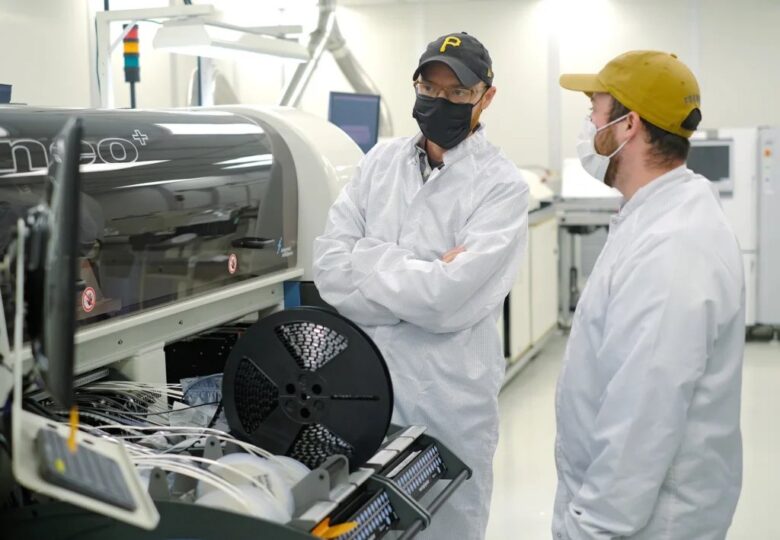
To build physical AI devices, the company established a sophisticated production environment, selecting equipment from France, Japan and the US.
“We wanted to be very cognizant and intentional on picking machinery that came from countries other than China,” Phillips said. “And so every single piece of machine you can see here in this line has no ties to China whatsoever.”
That independent approach extends to the intricate core components of the devices.
“We have the highest quality, highest yield, first pass printed circuit board assembly line on the east coast and maybe in the United States right now,” said Hellbender President and CEO Brian Beyer, who also joined the interview.
Competing with overseas manufacturing requires creative solutions, especially since the company prides itself on paying all employees a living wage.
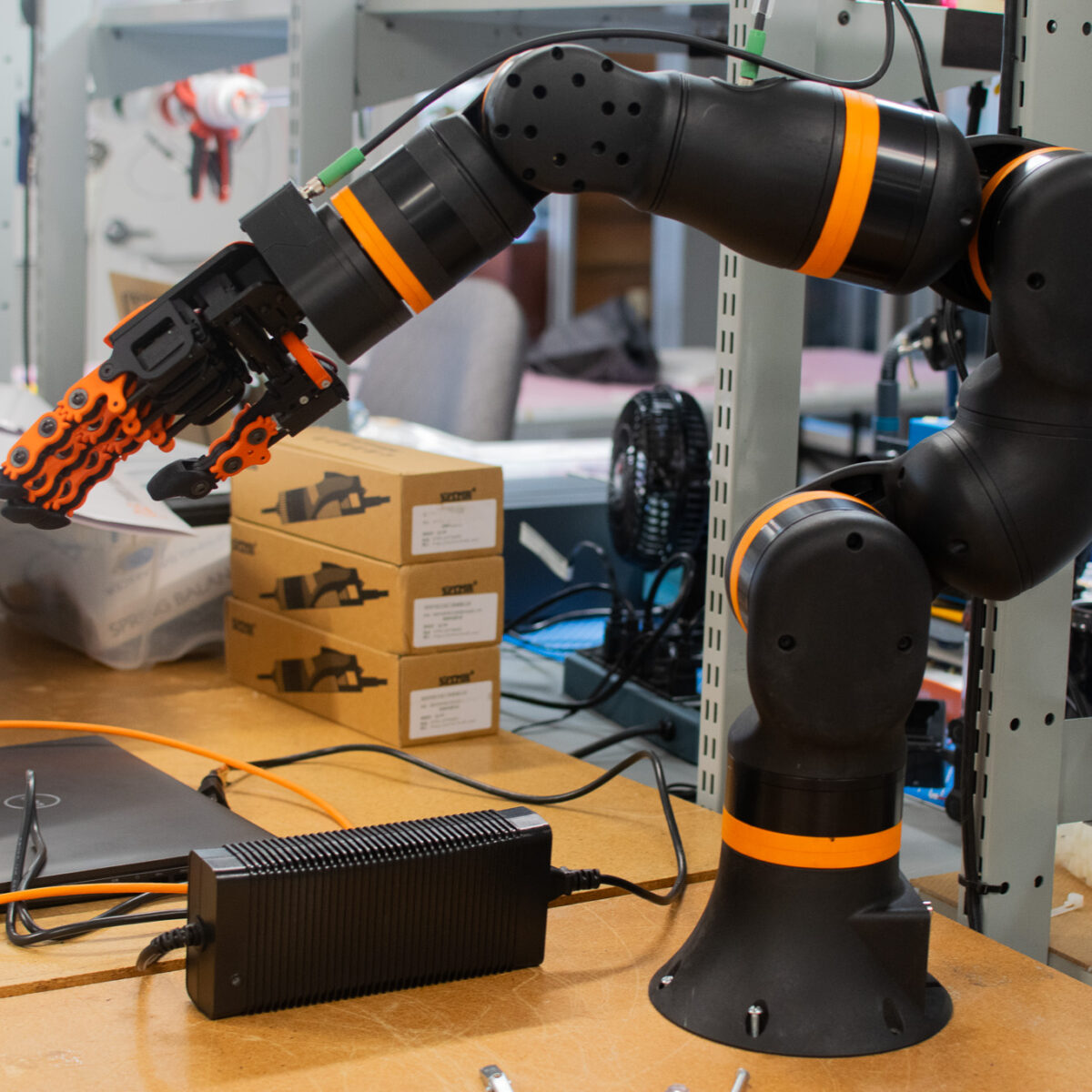
“We actually developed completely in-house these ‘cobotic work cells’ all based around a single UR 3 kilogram arm, and this is essentially how we compete with China,” Phillips said. “This allows us to augment human labor.”
By using collaborative robots, one operator can simultaneously manage two different manufacturing cells, he explained. The growing operation also creates new workforce development opportunities for the local talent pool, beyond just recruiting highly credentialed graduates from local universities.
“Our strategy there has been to hire some contract talent and convert those that are really good,” said Hellbender VP of People Operations Karen Walter, the third team member joining the interview. “Train them for IPC electrical training, and we get them up to speed as soon as possible and we keep typically the cream of the crop.”
Building a local ecosystem flywheel
The company takes its name from the giant North American salamander, a clean water indicator species that nearly went extinct but is now bouncing back.
“We think it’s a perfect analogy for Hellbender,” Phillips said. “The manufacturing base here in America came very close to being extinct. Now we’re bringing it back, and Hellbender is really leading that path.”
Partnering with other local tech innovators helps accelerate that regional recovery. For several years, Hellbender has worked with fellow Pittsburgh startup Velo AI, creating multiple prototypes for a smart bicycle camera. The edge AI algorithms monitor surrounding traffic to raise awareness for cyclists, acting like an autonomous vehicle safety system.
These types of collaborations help boost the broader technology ecosystem across the city.
“I think Pittsburgh is uniquely situated to be able to capture this — all these various organizations and entities that really create this rising tide that really help the overall Pittsburgh ecosystem, and you start to get a flywheel function,” Phillips said. “And Hellbender is very fortunate and very thankful to be able to support in the way that we do.”