This story was made possible through support from TEDCO, the Maryland Technology Development Corporation, which enhances economic empowerment growth through the fostering of an inclusive entrepreneurial innovation ecosystem. TEDCO identifies, invests in, and helps grow technology and life science-based companies in Maryland. Learn more at tedcomd.com. All stories are independently reported, with no partner review.

Baltimore’s industrial glory days might be gone, but tucked away in Pigtown, a small shop is retooling for the future. 

Since 2008, Harbor Designs and Manufacturing has churned out everything from hair stylers to medical devices to rail equipment. To keep up with firms overseas, the team is embracing robotics to make production more affordable.

“We’re not going to compete with Chinese labor rates,” COO Josh Barnes said. “The big augmenter is going to be robotics.”

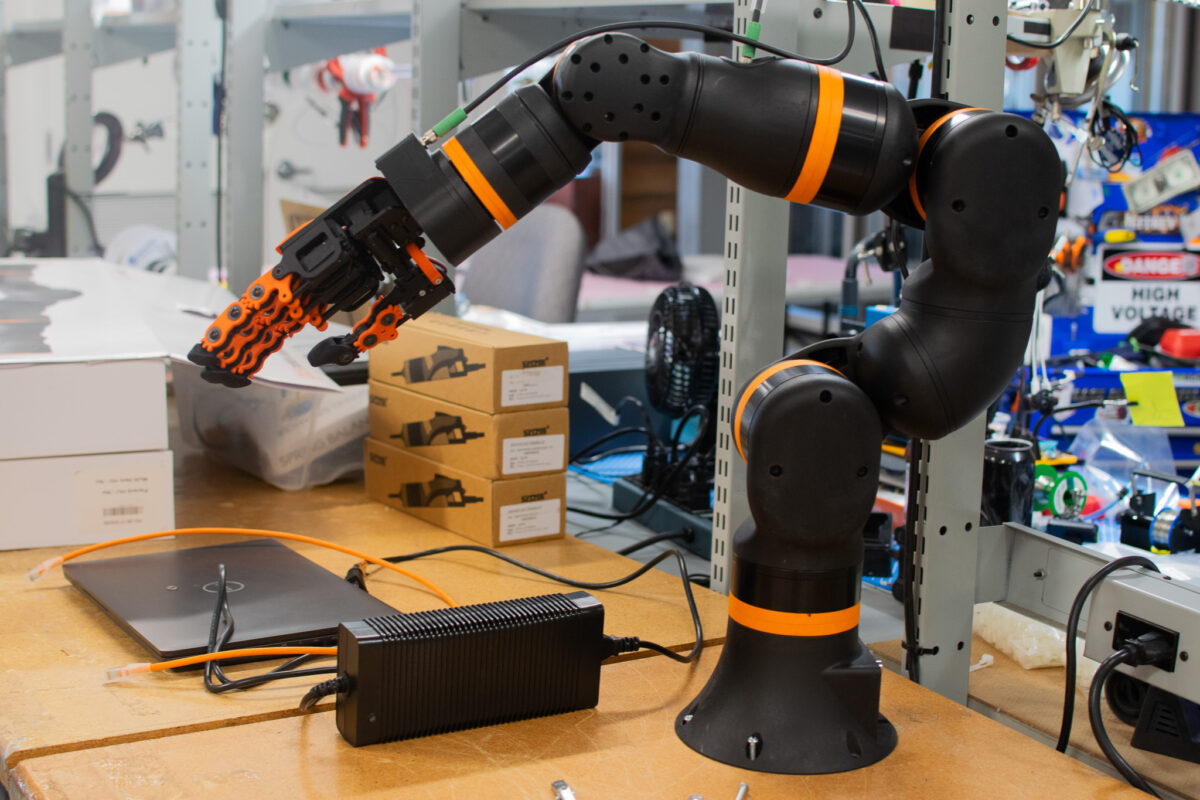
In 2024, the company secured a state manufacturing grant to purchase a robotic arm for production. But don’t fret — the robot isn’t here to take anyone’s job. Known as a “cobot,” or collaborative robot, it handles tedious steps in the assembly process to help human workers, not replace them.

For now, the team is still proving the concept. They’re starting small, using the cobot to handle packaging for select products. That’s largely because the cobot’s skills stop there: the machine can’t handle precise work. 

“The goal is to have a bank of these,” Barnes said, “for small-batch production that are just lowering labor rates a little bit.”

Eventually, the team hopes to graduate to purpose-built robots for larger projects. That goal won’t come cheap, especially considering its single starter arm already cost $15,000.

Harbor Designs and Manufacturing has served over 450 companies in its nearly two decades of operation, including startups and established firms. 

Barnes holds office hours at Johns Hopkins University’s Pava Center to advise on product design, which has helped with landing customers. He’s played a similar mentoring role at TEDCO and the Maryland Business Opportunity Center.

“Every once in a while,” Barnes said, “those folks graduate and [their startups] become actual projects that we can work on.”

Scroll on for a look inside Harbor Designs and Manufacturing and the startups it’s supporting. 
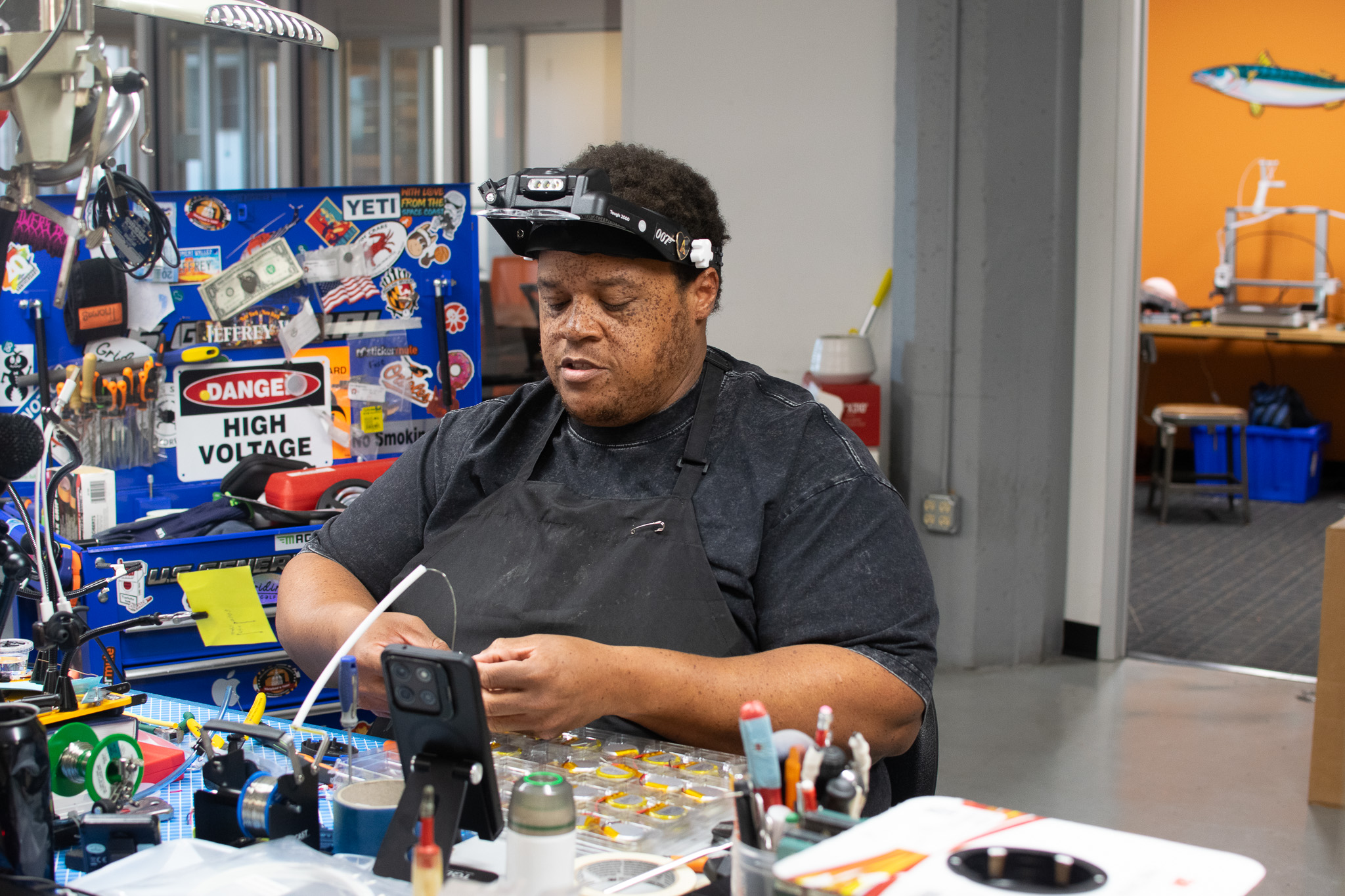
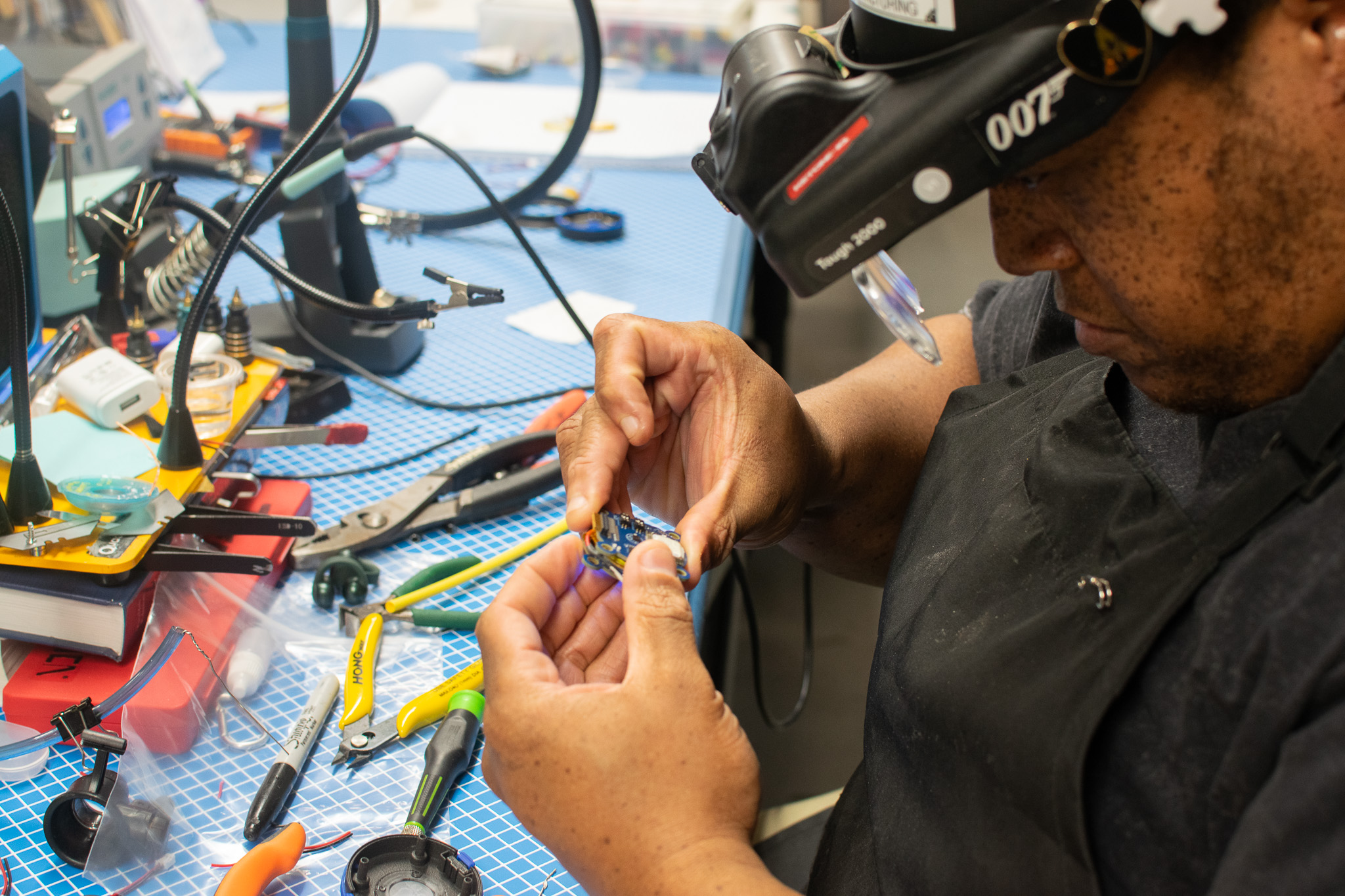
A person wearing a head-mounted magnifier works on small electronic components at a cluttered workbench.
Harbor employs 15 people full time (Maria Eberhart/Technical.ly)
A technician wearing magnifying headgear examines a small circuit board at a workbench cluttered with electronic repair tools.
An employee works on a part for Baltimore-based startup Linshom Medical, which produces respiratory monitoring devices (Maria Eberhart/Technical.ly)
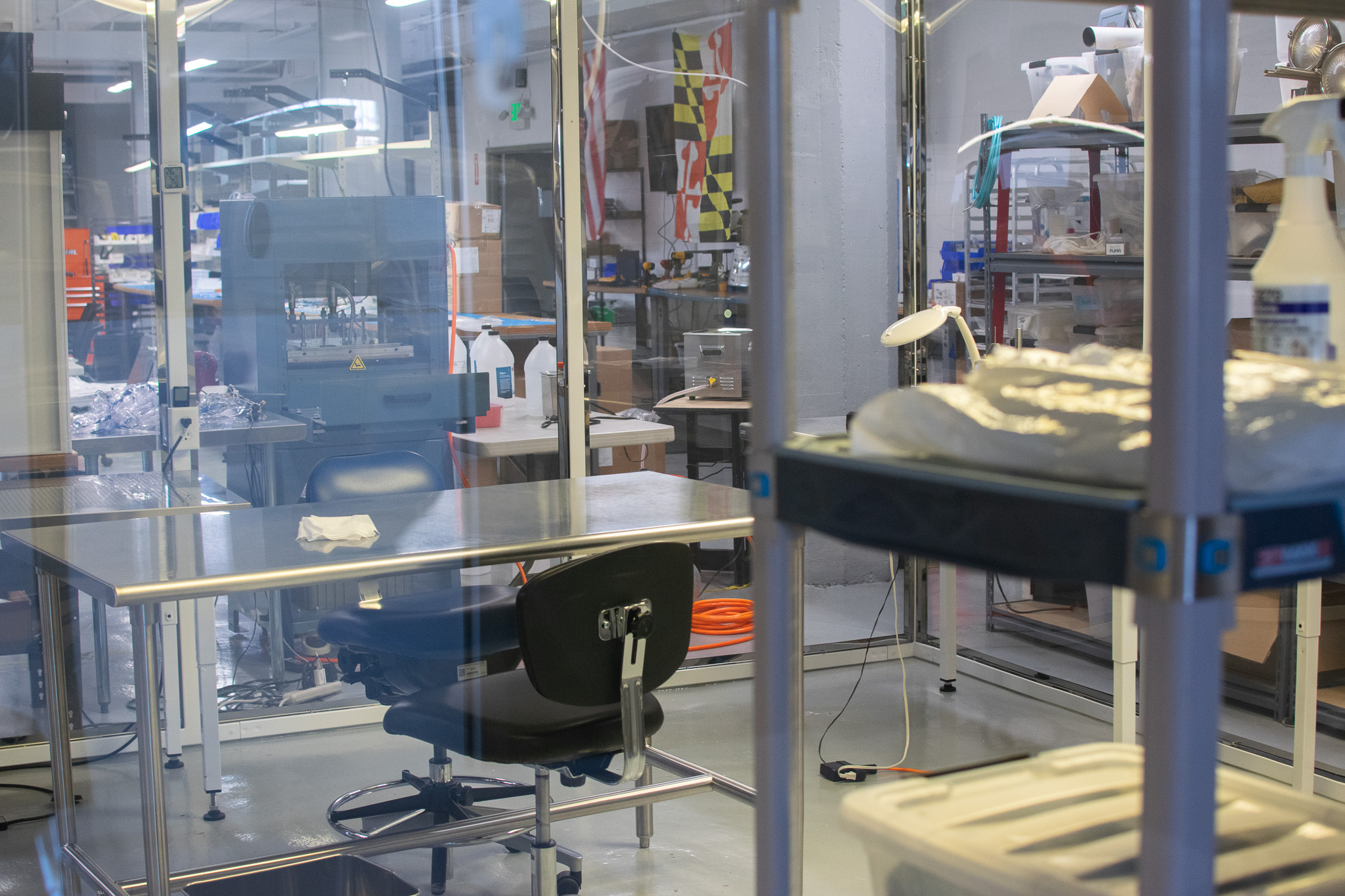
A view through a glass partition into a clean room or laboratory setting with stainless steel workstations, chairs, and various pieces of manufacturing or testing equipment.
The team builds sensitive medical devices in a separate clean room (Maria Eberhart/Technical.ly)
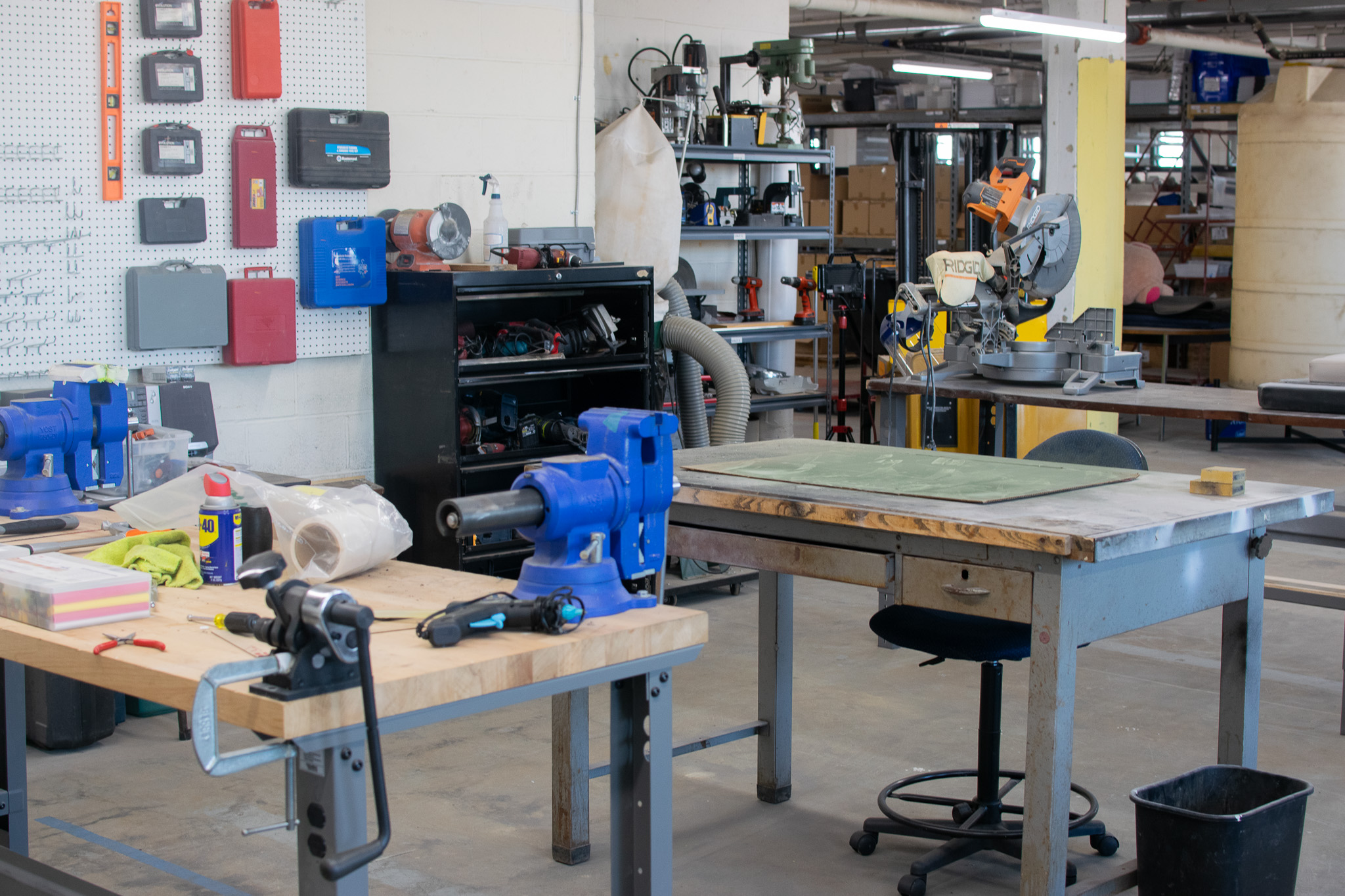
Workbenches in a workshop featuring blue vises, a miter saw, a wall-mounted tool board, and assorted hand tools.
Messier, larger builds happen in a different room on the shop floor (Maria Eberhart/Technical.ly)
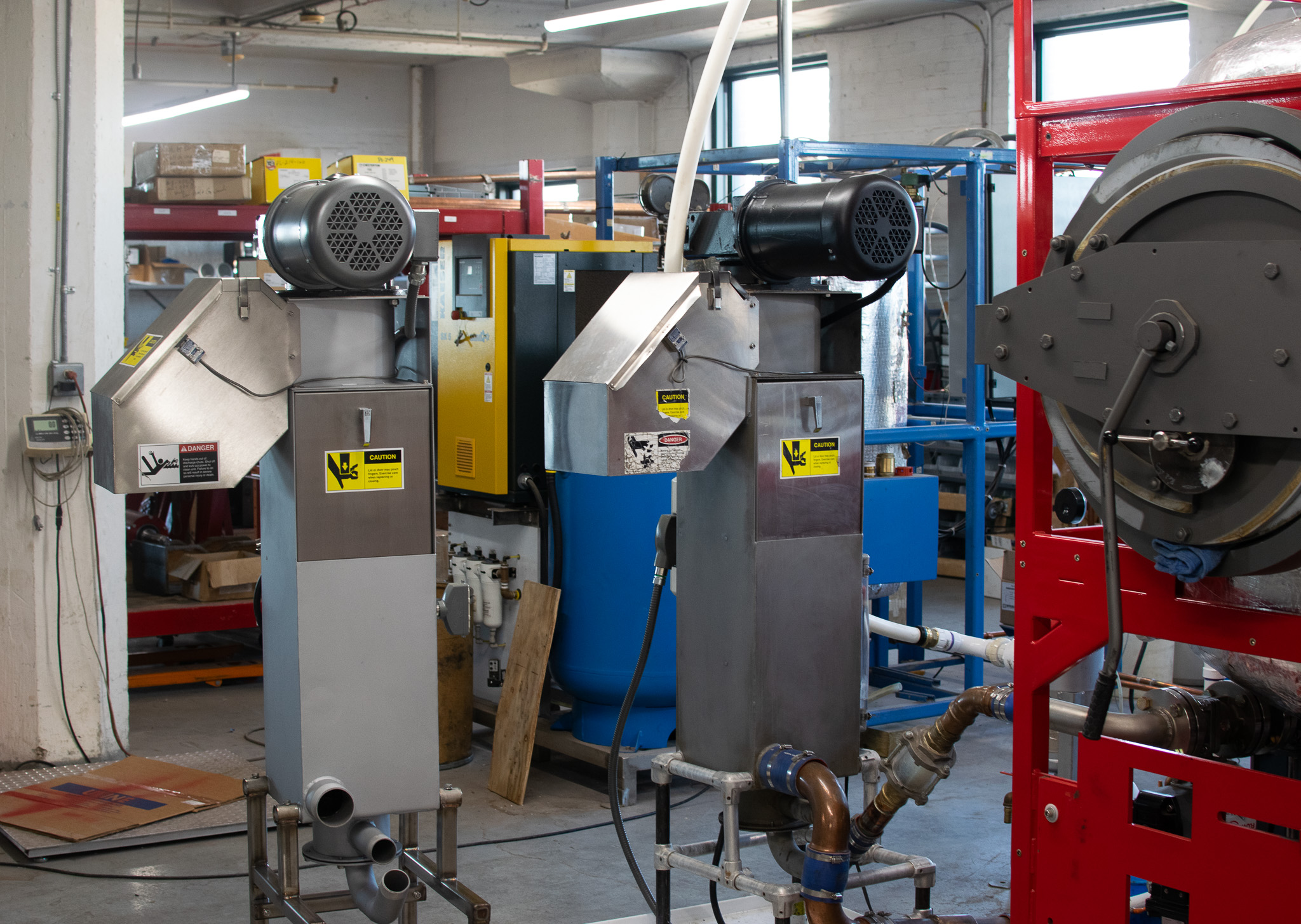
Two industrial metal machines with motors and caution labels stand on a concrete floor in a workshop.
The company helps assemble a system for incinerating hazardous medical waste, including used bandages and needles (Maria Eberhart/Technical.ly)
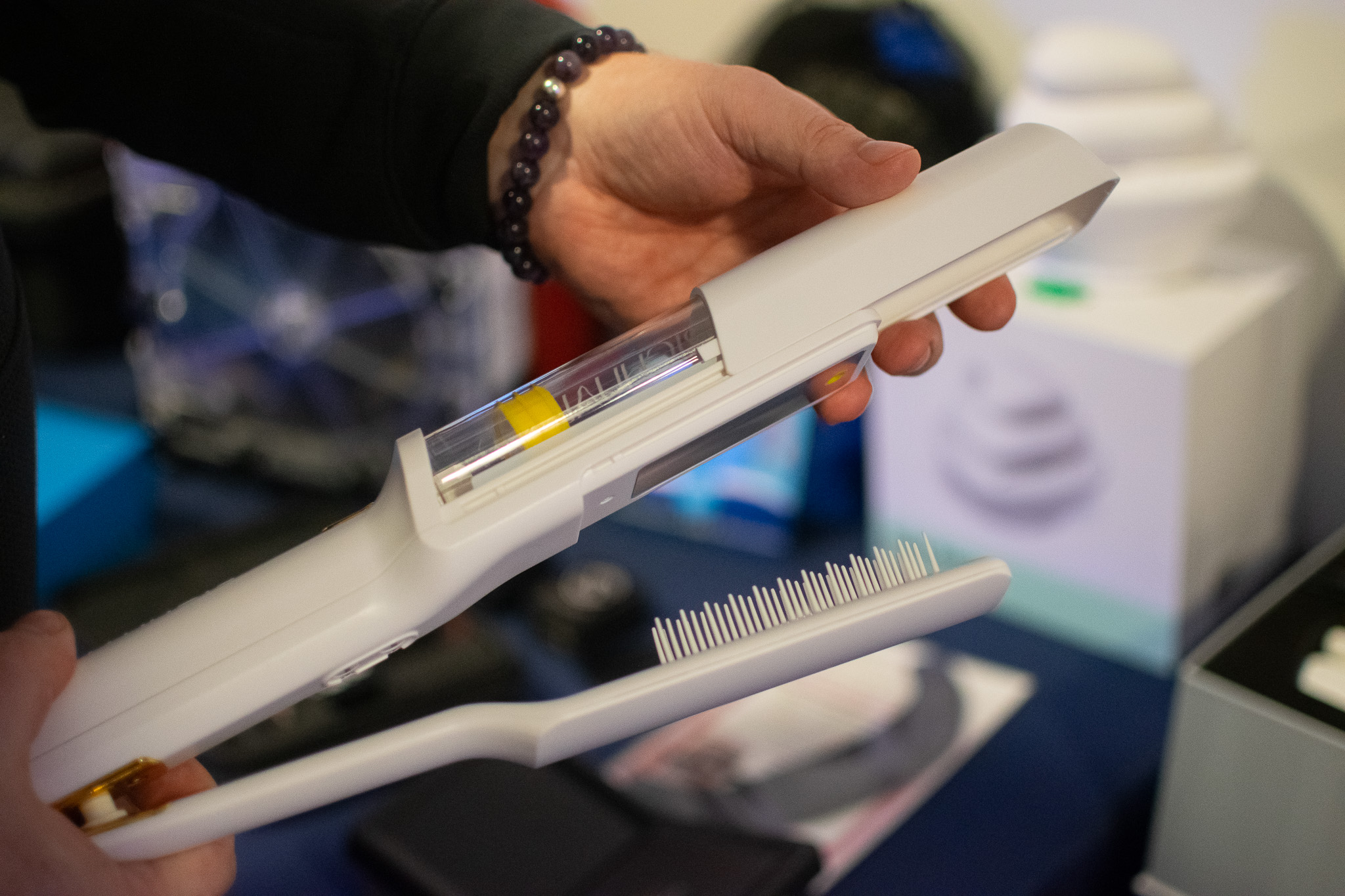
A person holding an open white hair styling tool with a visible internal glass cylinder and a row of plastic teeth.
Dawn Myers, a DC-based founder, tapped Harbor to manufacture the Mint, her styling tool for curly hair (Maria Eberhart/Technical.ly)
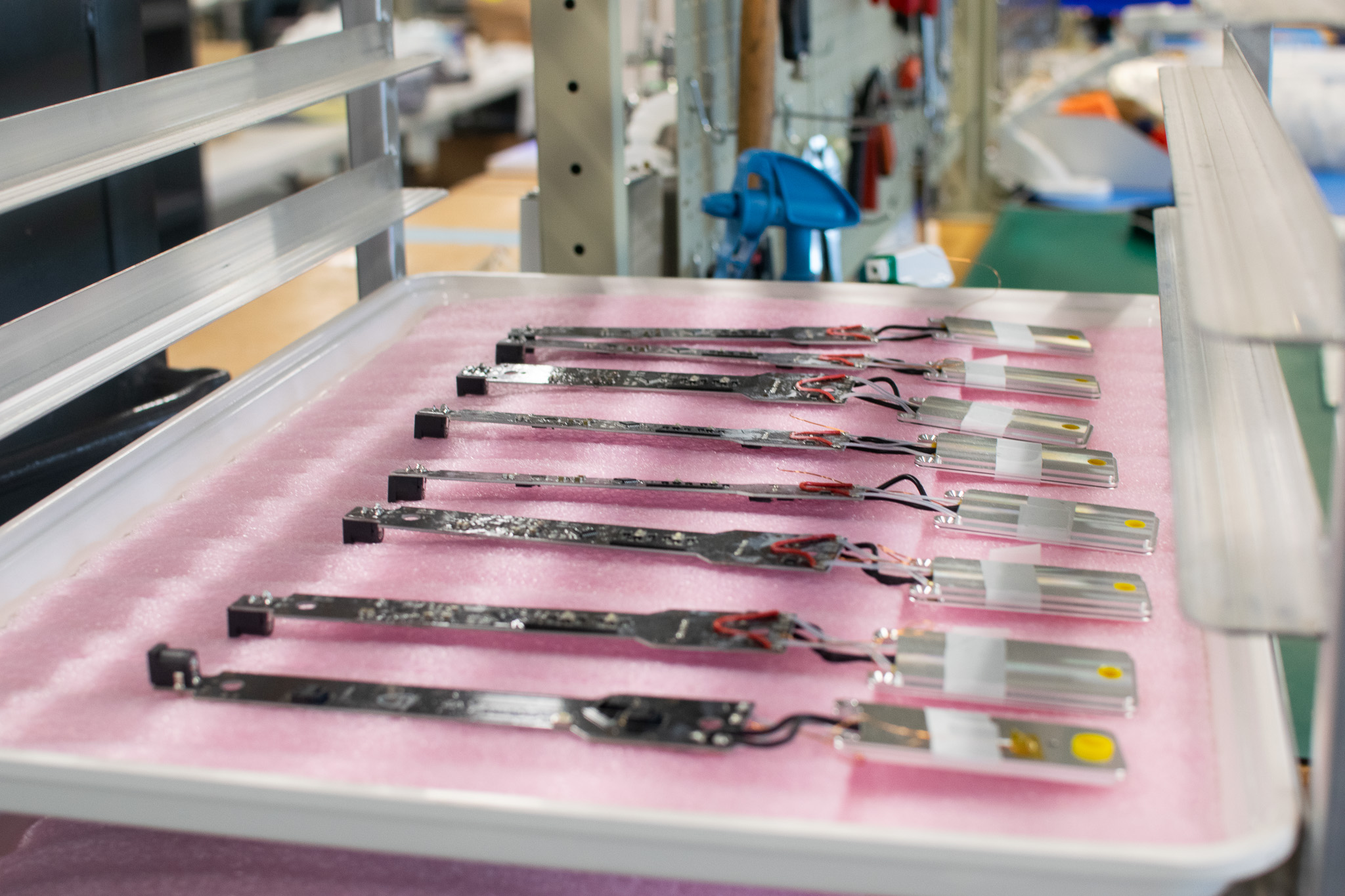
A tray of thin electronic sensor strips with batteries lined up on a pink foam mat.
The Mint’s interior parts (Maria Eberhart/Technical.ly)
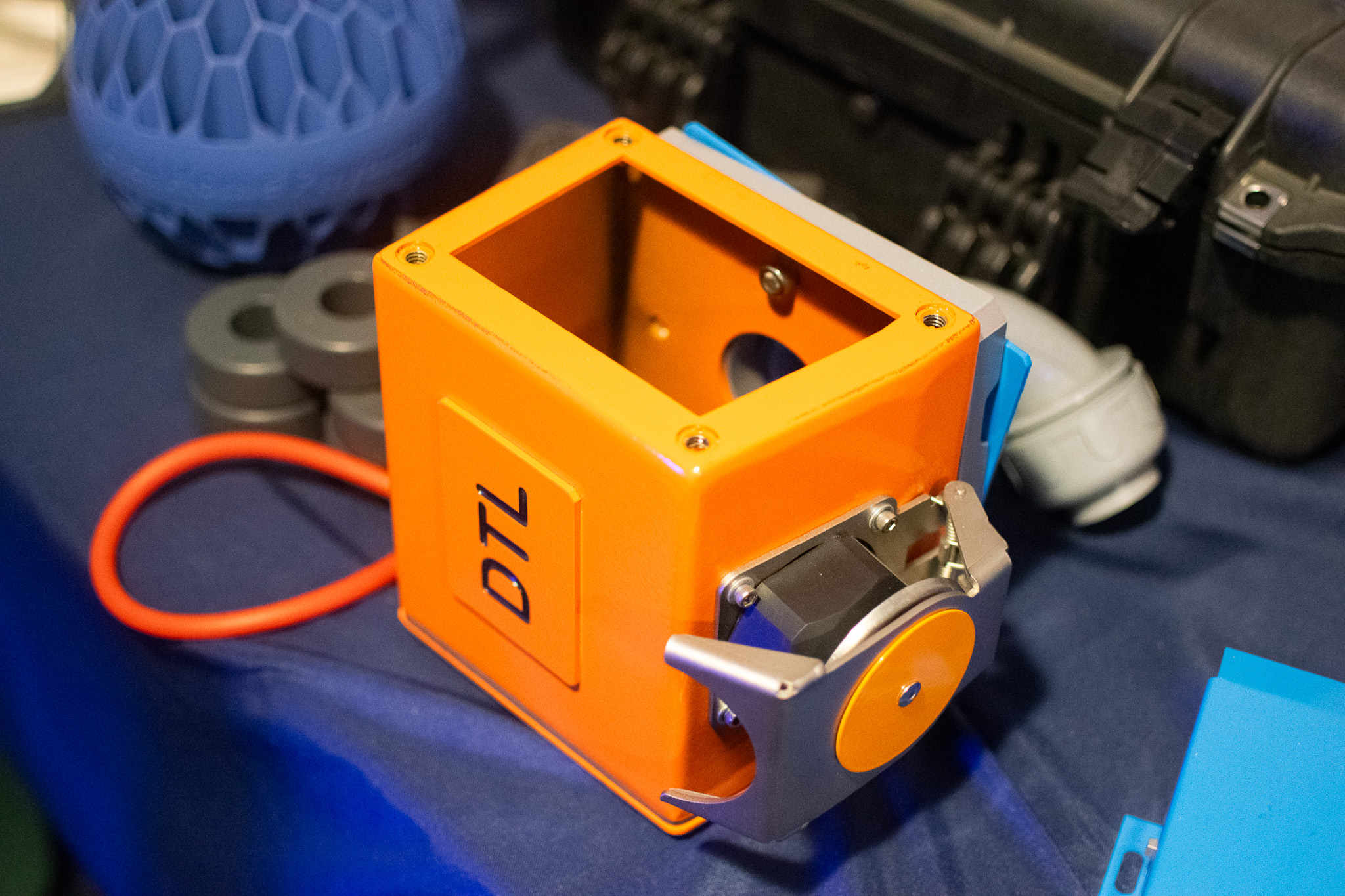
An orange cube-shaped enclosure with the text “DTL” on its side, featuring a mounted electronic component and metal hardware.
These days, Harbor’s biggest customers are rail companies such as Amtrak. The company builds a part called a data transfer link to help with adding WiFi to trains. (Maria Eberhart/Technical.ly)
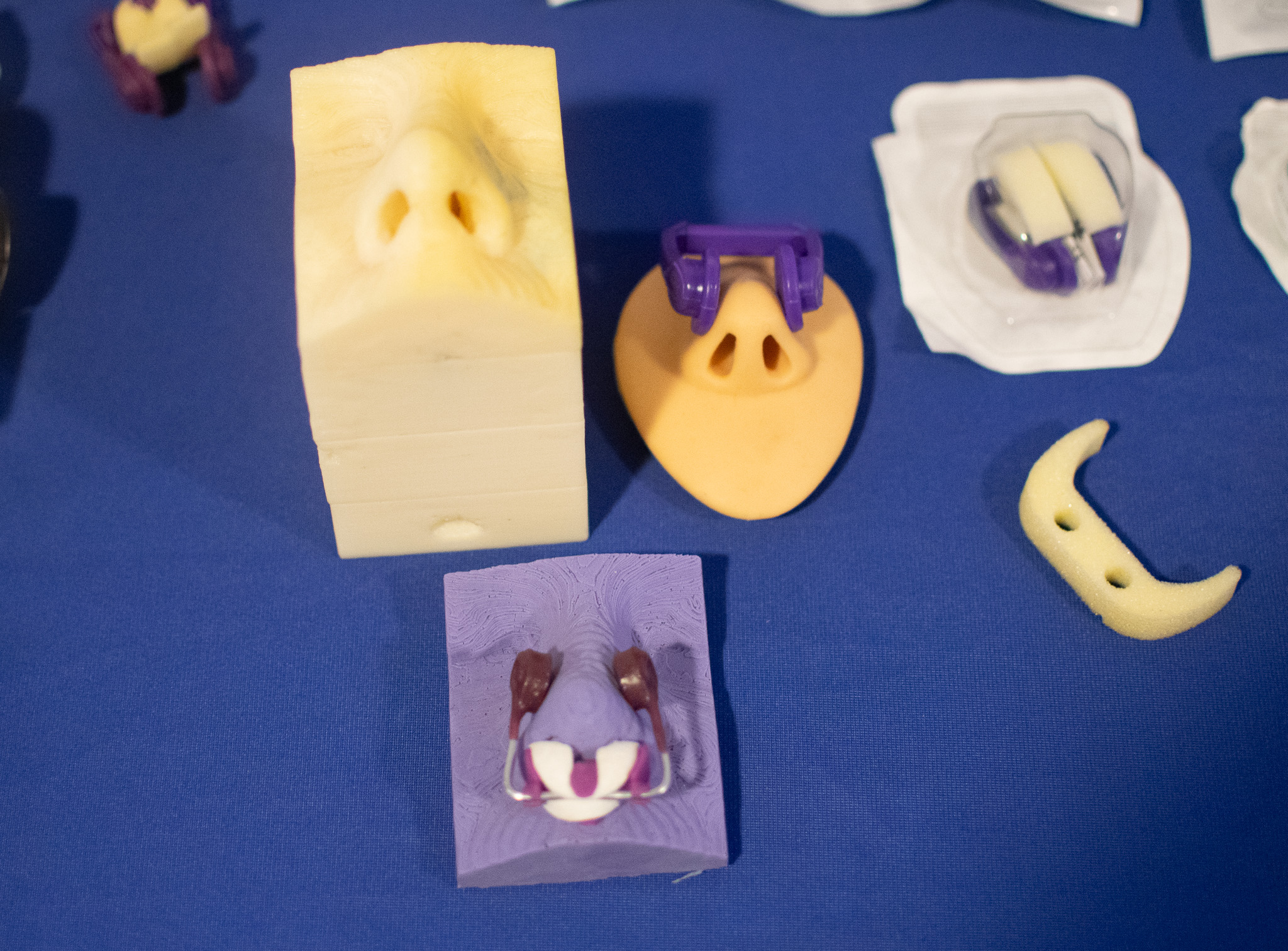
Several 3D-printed facial anatomy models and orthodontic appliances displayed on a blue surface.
Baltimore-based NasaClip, a medical device to stop nose bleeds, contracts with Harbor (Maria Eberhart/Technical.ly)
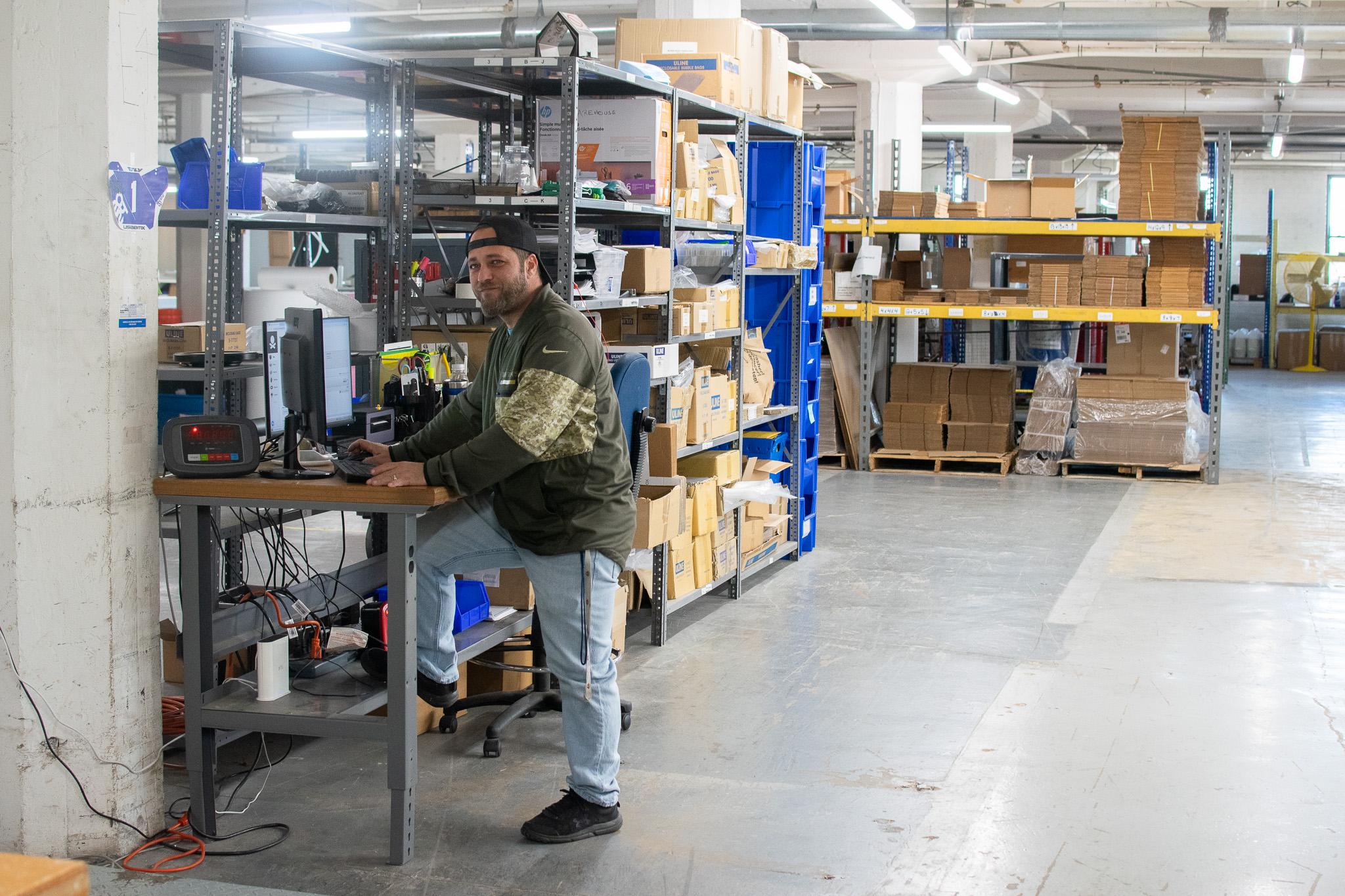
A man wearing a baseball cap and a camouflage jacket sitting at a computer workstation in a warehouse.
In addition to design and assembly, the team also packages and ships products for some clients (Maria Eberhart/Technical.ly)


Maria Eberhart is a 2025-2026 corps member for Report for America, an initiative of The Groundtruth Project that pairs emerging journalists with local newsrooms. This position is supported in part by the Robert W. Deutsch Foundation and the Abell Foundation. Learn more about supporting our free and independent journalism.