Behavioral health-related startups and devices dominated this year’s $150,000 pitch competition at Georgetown University.
That’s not surprising to Ted Leonsis, the Capitals and Wizards billionaire owner whose family backs the program, which is open for students and recent graduates. The emerging companies at the 10th Bark Tank had a double bottom line, he said — both revenue and impact.
“Every one of these pitches had a higher calling to it. It wasn’t your typical Silicon Valley,” Leonsis, himself a Georgetown alum, told Technical.ly. “Just making a profit without purpose is not fulfilling.”
“Every one of these pitches had a higher calling to it. It wasn’t your typical Silicon Valley.”
Ted Leonsis on Bark Tank 2026
Novinway, a platform connecting parents with neurodivergent kids to specialized childcare, won first place and $30,000 to spend on developing the website platform and a new app. Most of Novinway’s interface is vibe coded outside of outsourcing tech for sensitive tasks like processing payments, per cofounder Jeffrey Moeller. Using AI to develop tech is increasingly becoming a way for founders to build faster with less cash needed.
That tactic has worked, Moeller said, but to scale and address a three-month waitlist to bring more families on, the startup will spend some money, contracting an app developer to improve the user interface and actually get on the App Store.
“It’s awesome because you can get the MVP like that, but there’s still so much room for professionals to come in,” Moeller said. “At least right now, it’s kind of this Frankenstein monster of parts.”
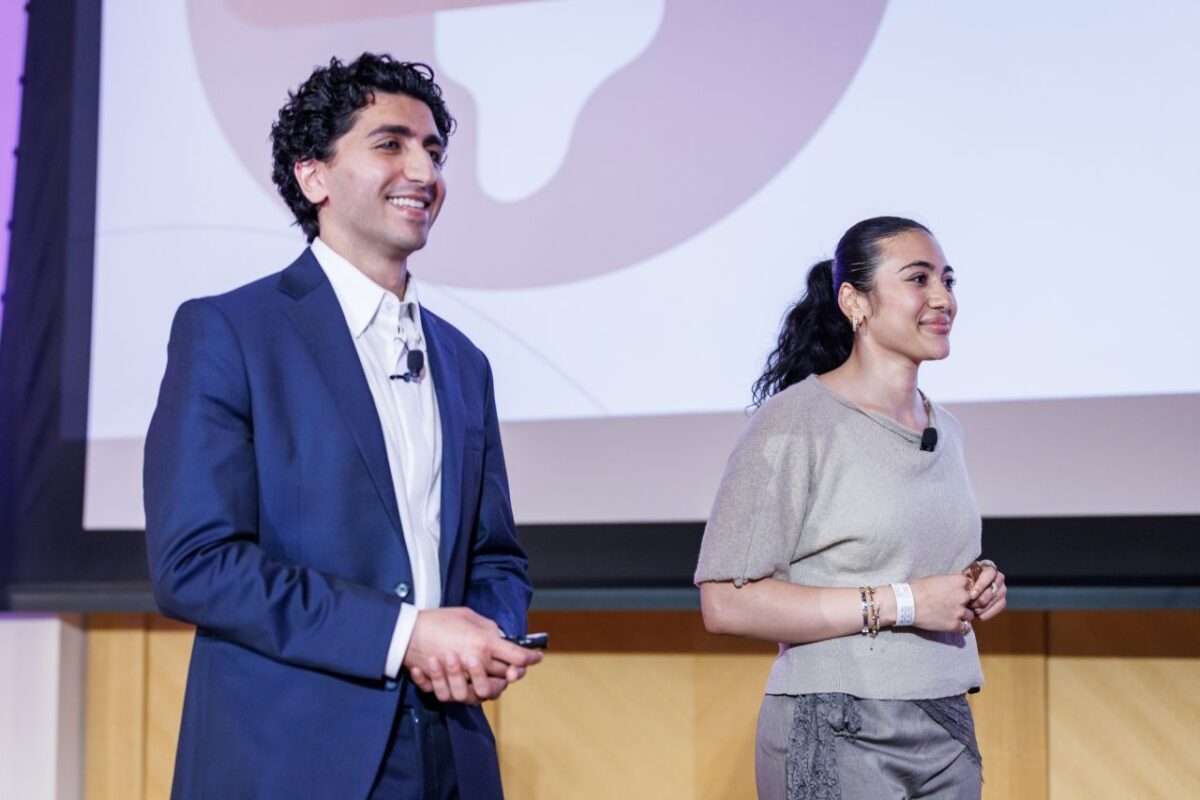
Periodology, a startup developing tech to test for reproductive health-related biomarkers using menstrual blood, tied for second and won $25,000. The money will be used to build an MVP and launch a pilot with Georgetown students. Thirty people have already signed up, cofounder Tiyam Assadpur said.
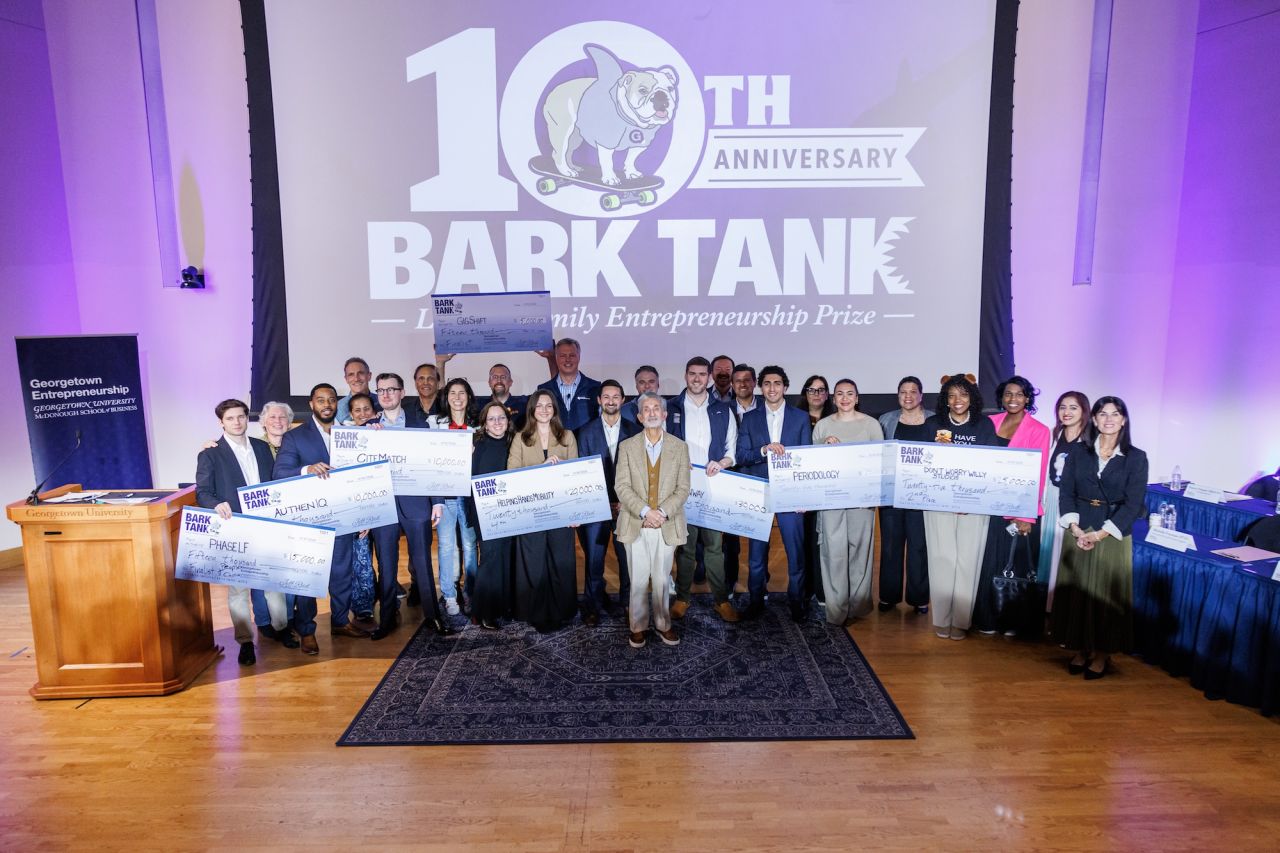
Since it started 10 years ago, the Bark Tank competition has distributed $1.25 million to founders. Each startup in this year’s competition won funds out of the pot, which Leonsis increased at the last minute by $50,000 from the initial $100,000 announced. That’s not a new move — Leonsis also added more money in 2025.
Keep scrolling to meet the rest of the 2026 Bark Tank contenders.
- Don’t Worry Willie Studios ($25,000): A neurodivergent entertainment network that features original characters, books and a touring musical aimed at children.
- Helping Hands Mobility ($20,000): This startup developed a non-invasive orthotic device to help children with cerebral palsy improve their gait and mobility.
- Phase LF ($15,000): An active noise-canceling ring that fits around data center cooling fans to eliminate the low-frequency noise pollution that plagues nearby residents. The startup also won the People’s Choice Award.
- GigShift ($15,000): A platform that matches local food service professionals with restaurants facing immediate staffing emergencies due to no-shows.
- AuthentiQ ($10,000): This security startup continuously authenticates humans using a platform, rather than just at the login, to thwart deepfakes and bots.
- CiteMatch ($10,000): the legal tech platform verifies legal citations and prevents lawyers from citing AI-hallucinated cases.
The path for all of these founders will require resilience, a trait Leonsis said he learned the importance of from his own early days knocking on doors to mow lawns in Massachusetts.
“You’re going to hear lots of no’s,” Leonsis said. “The reason I do this, they’ve all now heard yes, and the motivation that this gives them, the confidence.”