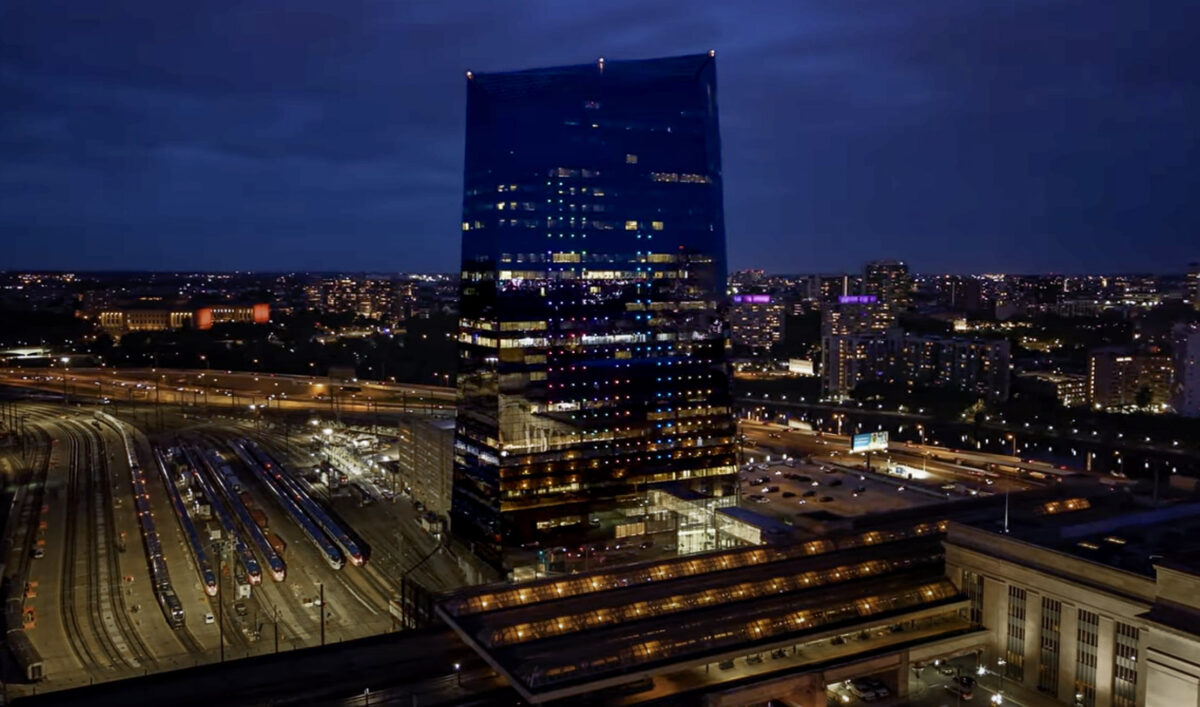
• In May 2026, a computer science team from Drexel and NJIT collaborated with Technical.ly to play Tetris and other games on the 29-story Cira Centre.
• Brandywine Realty developed, owns and operates the building, and sponsored this year’s activation to mark the US Semiquincentennial and the close of Philly Tech Week.
• The collaboration is a case study for similar work. This one is part of efforts to encourage middle school student game development.
The Cira Centre was built to look like it didn’t belong.
When the 29-story glass tower opened in 2005 beside Philadelphia’s 30th Street Station, it rose out of old railyards and stood apart from the brick and stone skyline across the Schuylkill.
Its developer, Brandywine Realty Trust, wanted it that way. Under Jerry Sweeney, who has led the company since 1994, Brandywine cast itself as the developer interested in what comes next, both in its architecture and in its pursuit of technology and life sciences tenants.
It fit that a game designer looked at the building and saw a screen.
So it fit that a game designer looked at the building and saw a screen.
In 2008, Drexel University professor Frank Lee was driving into Center City on I-76 when he saw the LED lights on the Cira’s facade and imagined Tetris blocks falling down it. This past spring, 18 years later, a crowd at Drexel Square watched games designed by middle schoolers play across that same facade. It was the latest chapter of what Guinness World Records still recognizes as the largest architectural video game display.
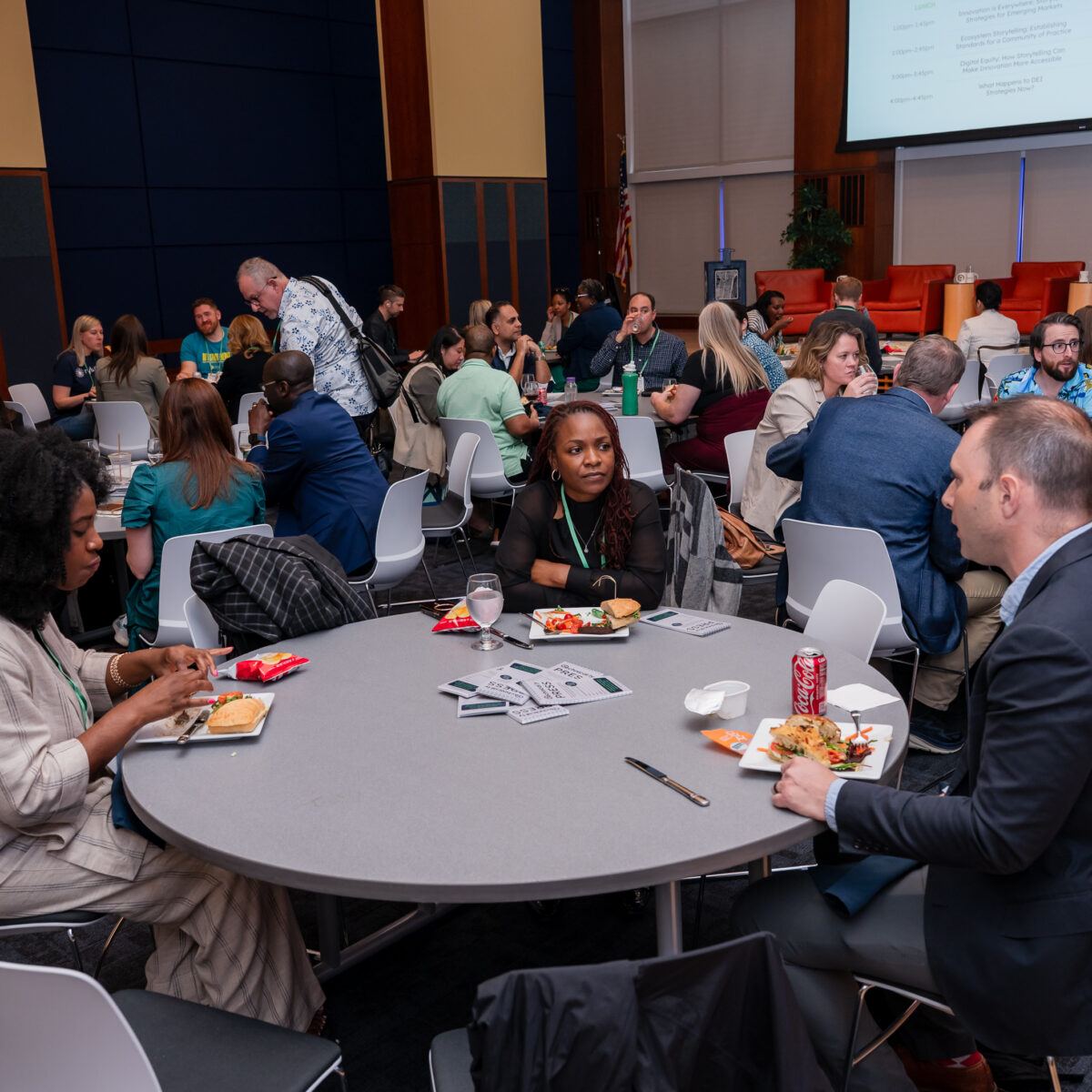
Reflecting on the many ways we at Technical.ly marked the US Semiquincentennial, I got to thinking about how this particular interactive outdoor arts and tech ecosystem demonstrates a lot about what I believe community organizing looks like. The night doubled as a closing celebration for both Philly Tech Week, which we founded, for our Technical.ly Builders Conference, which drew more than 300 attendees from 35+ states focused on ecosystem storytelling. The night felt like as good a representation as any — given the crossroads it was of entrepreneurs, technologists, inventors and creatives.
Frank deserves credit for the idea, and he gets it. The Cira Centre’s history shows the idea was only the start. Across four iterations and close to 15 years, plenty of others contributed: Brandywine CEO Sweeney who said yes, his staff, those at Drexel and their students debugging code at night — plus a news organization’s curation and an ecosystem fitting to celebrate.
Frank had pitched the idea for years before it went anywhere. Then he and I got to work.
I thought it was one of the coolest things I’d ever heard. Philly Tech Week, which Technical.ly first hosted in 2011, needed a signature moment, and this was it. In fall 2012, we started working relationships: University City District, the Philadelphia Museum of Art and WHYY, whose board Sweeney chaired. In January 2013, Sweeney and his IT team signed off, and a first test showed it would work.
On April 19, 2013, Pong on the Cira Centre kicked off Philly Tech Week as hundreds watched from the Art Museum steps. Drexel’s communications team then led the application that got it into Guinness World Records.
In 2014, for Tetris’ 30th anniversary, we went bigger. A multiplayer Tetris ran across both the north and south facades for more than 2,500 people at one of the first large public events on Eakins Oval, breaking the team’s own record.
Then we stepped back. Big outdoor events are expensive and at the mercy of the weather, so we went back to covering Frank’s work rather than producing it. That work turned toward kids. A $100,000 Intel grant in 2015 helped launch Drexel’s Entrepreneurial Game Studio and its middle school game design workshops. In 2019, Frank’s team used games designed by students played on the Cira to open Drexel Square, a pretty urban crossroads outside the train station.
Early last year, I messaged Frank. Our country’s semiquincentennial felt like the right moment for one more run.
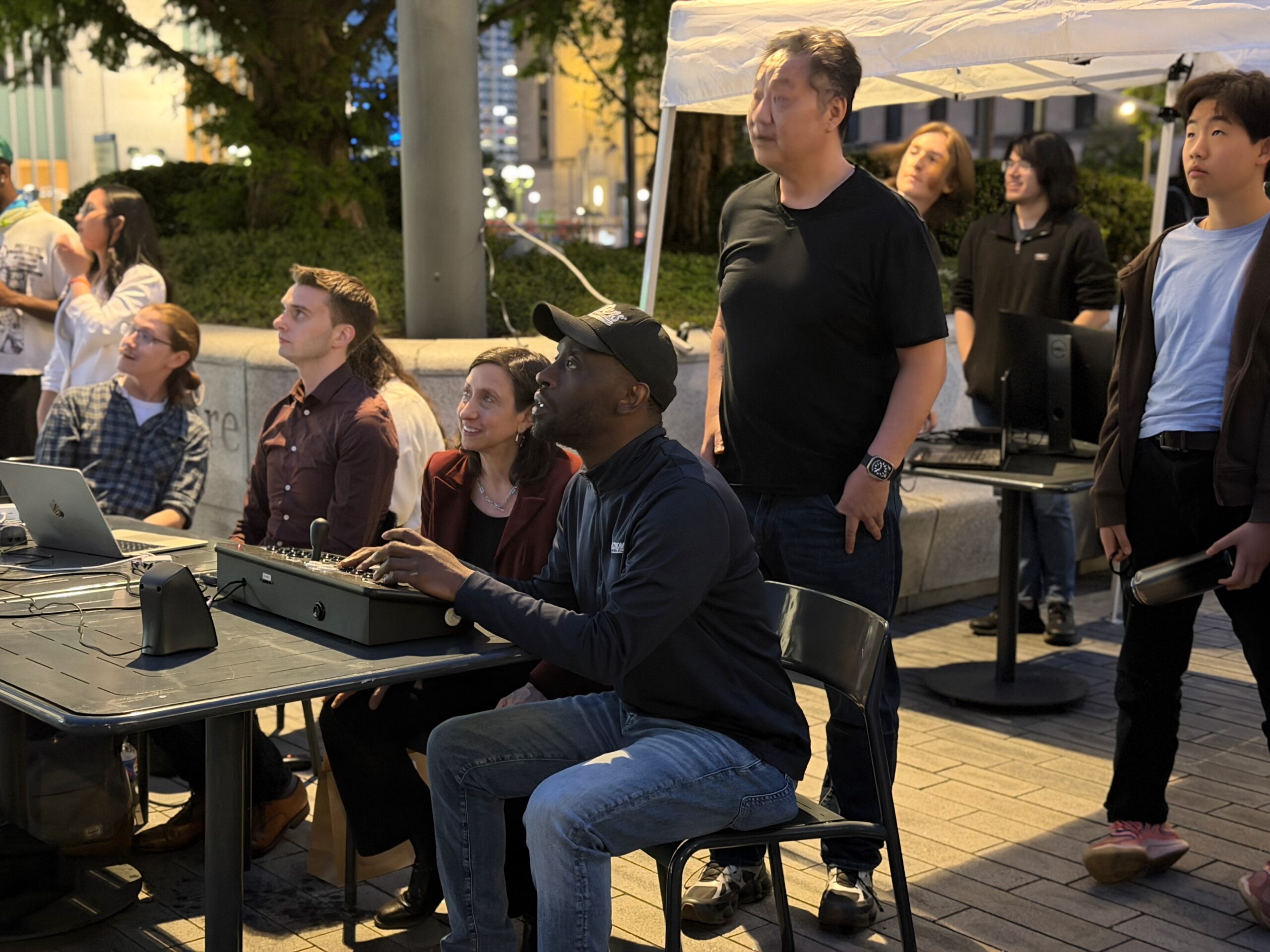
Brandywine funded it, and most of its support went as a gift to youth game design programs organized by Frank at Drexel and the New Jersey Institute of Technology, where Frank’s collaborator (and former student) Erin Truesdell now is a professor. Their teams rebuilt their Skyscraper Games website with a block-based coding interface that lets beginners switch over to Python. They also ran game design workshops for kids aged 10 to 14 and built a Fortnite digital twin of the Cira Centre. Drexel’s Trevor Phaneuf and Colan Biemer handled the building’s technical setup across many evening test sessions. NJIT undergraduate Aleen Ponce built the Fortnite island, and a Drexel senior design team built the website.
Technical.ly’s job was turning a demo into a public night out. We ran a lottery that drew close to 1,000 entries for about 50 chances to play. We folded the game into the Philly Tech Week closing party, now organized by 1Philadelphia, at Drexel Square and the new Gather Food Hall. More than 500 people came out, including Councilmembers Rue Landau, Isaiah Thomas and Nicolas O’Rourke, and state Rep. Jason Dawkins.
Four games that started in the workshops played on the building. CBS Philadelphia put it on the 11 o’clock news. Influential Philly creators got to play (shoutout Streets Dept, Drizz Beauty, Chelsea Cox and TechLifeSteph). By our estimate, news and creator videos about the night drew more than 250,000 views.
In a 2024 essay for us, Frank’s advice for Philadelphia was to “support folks who have big ideas.” He’s right, and it’s worth being specific about what support looks like.
Here it meant a public company CEO willing to hand his building’s lights to a professor, and a university comms team that knew how to work with Guinness. It meant students and junior faculty doing much of the engineering, city and museum officials willing to say yes to a crowd, and someone to organize all of them into a night people would show up for.
Big ideas are plentiful. What’s rare is the infrastructure around them, and building it takes an ecosystem.