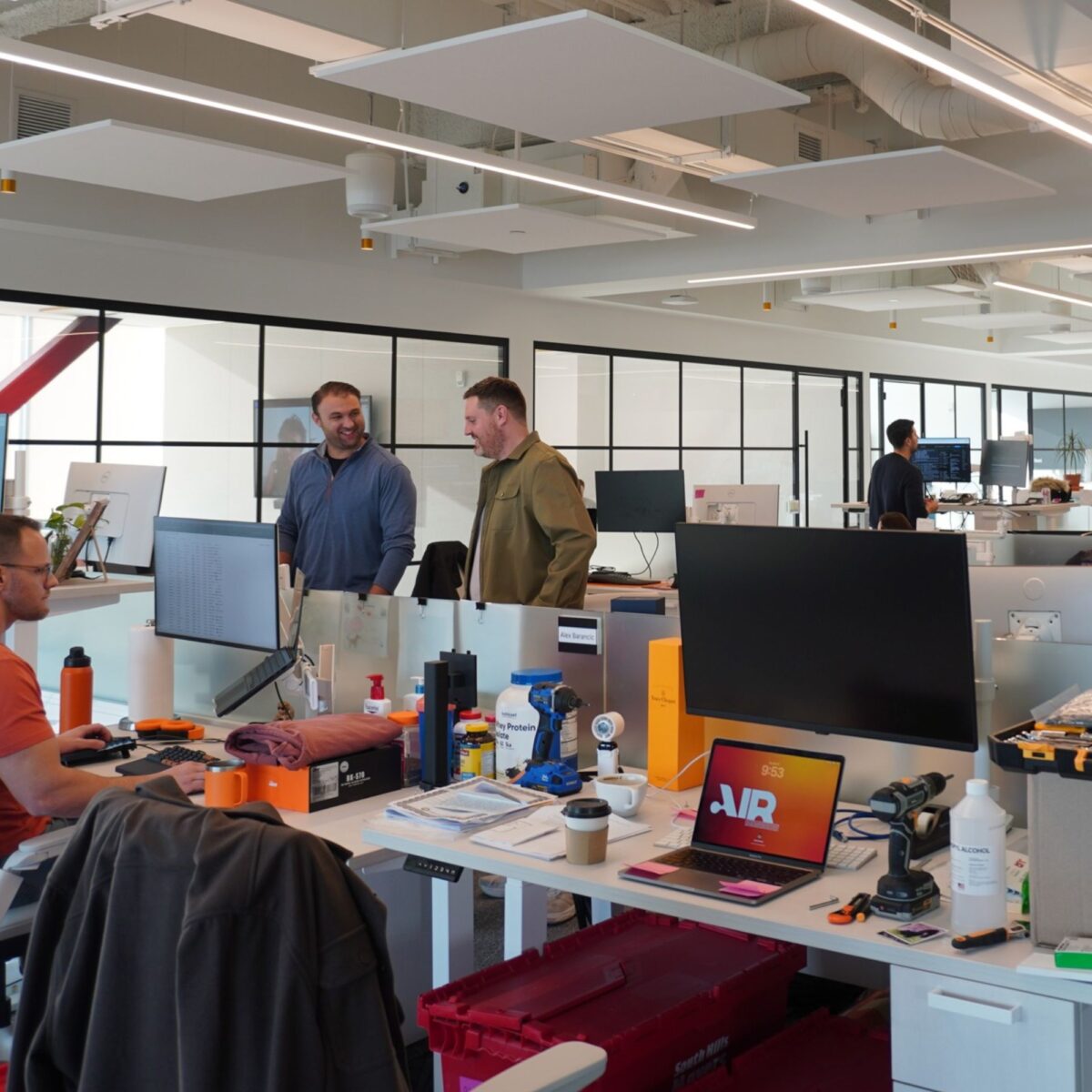
A Philly-area startup just achieved unicorn status: Runpod, a platform for AI developers, announced it raised $100 million and hit a $1 billion valuation.
While Runpod celebrates this milestone, others in the region are just getting started.
Penn Health-Tech Accelerator hosted its annual Demo Day, where seven companies from its most recent cohort pitched to a panel of judges. Two of the startups ended up taking home awards from both the judges and the audience.
Plus, Drexel announced the biggest donation in its history, $112 million to support new facilities and scholarships for its College of Engineering and Computing.
Keep scrolling for all the details and more Philly money moves.
Runpod raises $100M and achieves unicorn status
Founded by two former Comcast engineers, Runpod raised a $100 million funding round led by investment firm Summit Partners, the startup announced, citing a $1 billion valuation.
It joins a list of Philly-area unicorns that includes Gopuff and Phenom.
“We’re thankful for everyone who has had a part in the growth, we’re excited to keep growing and building at a time where compute is at such high-demand,” CEO and cofounder Zhen Lu told Technical.ly.
To date, Runpod has raised $120 million, according to PitchBook. The new funding will support continued development of the platform, expansion of the team and Runpod’s global presence, according to the announcement.
“The funding will allow Runpod to scale its infrastructure capacity, better serving customers who rely on the platform end-to-end while bringing more of the lifecycle under one roof,” Lu said.
Is it still a Philly-area company? Lu is based in South Jersey, and PitchBook lists Runpod’s headquarters as Moorestown, NJ. But the company says the 4-year-old startup is now headquartered in San Francisco.
Startups win thousands at Penn Health-Tech Demo Day
CIRCA, an AI tool that provides health information to people early in their pregnancy, won $7,500 as the judges choice winner at the University of Pennsylvania’s annual Health-Tech accelerator Demo Day earlier this month.
“As we are expanding across the city, the award funding will help us engaging partner sites and support continued software to ensure the platform can scale effectively as usage grows,” Alice Abernathy, lead of the CIRCA team, told Technical.ly.
Over the next year, Abernathy hopes to expand the company’s outreach and learn how CIRCA’s platform can better support high-risk populations, she said.
“Our goal is to provide more effective guidance to patients facing barriers to care and to demonstrate measurable improvements in health outcomes and public health impact,” she said.
Elong, a device that slowly stretches the esophagus in babies with esophageal atresia so that it can be connected more safely, won $2,500 as the audience choice awardee.
While participating in the accelerator program over the last year, Elong’s product evolved from just a sketch to a prototype that is ready for testing, Duy Dao, lead of Elong’s team, told Technical.ly. The prize money will support a preclinical large animal study, to test the safety and efficacy of its device.
After the pre-clinical study, the startup plans to file a provisional patent and prepare for FDA pre-submission, he said.
“Within the next year, we hope to generate robust large-animal data that will position us to pursue FDA submission under the Humanitarian Device Exemption pathway,” Dao said.
Drexel receives $112 million for College of Engineering and Computing
Drexel University received a $112.6 million donation earlier this month from the Howley Foundation to establish the Nick Howley College of Engineering and Computing. This is the largest donation in the University’s history.
In 2025, the university announced that it would combine its College of Engineering, College of Computing & Informatics and the School of Biomedical Engineering, Science and Health Systems into the College of Engineering and Computing by September of this year.
$76 million will support scholarships and other financial aid programs for students. $36 million will go towards building out classrooms, labs and other workspaces.
Specifically, the university will create a new learning lab at its 3101 Market Street location. The space will include engineering and computing labs and workspace for undergraduate students, along with a robotics facility, a flight simulator, a jet engine lab, a soil and concrete analysis lab and wet labs.
Drexel will also build out an “innovation garage” at 32nd and Market Streets for students to build hardware, like race cars, electric vehicles and airplanes. Work on these new facilities will begin next spring.
“This contribution ensures that Drexel students will have access to top-notch facilities and faculty who are leaders in their fields,” said Eunice Santos, incoming dean of the College of Engineering and Computing.
More Money Moves:
- Penn spinout Agni Semiconductor raised a $10 million seed round, reported the Philadelphia Business Journal. The startup is developing memory hardware for defense tech and AI companies.
- Accounting and advisory firm Centri Business Consulting got a $20 million credit facility from Citizens Financial Group to expand its business. Specifically, the company will use this line of credit to make acquisitions and bring on new talent. Recently, Centri announced it acquired insurance firm Altair Associates.
- The Department of Community and Economic Development announced $3.14 million in grants to support advanced manufacturing research projects at Pennsylvania universities. Projects at Drexel University, Thomas Jefferson University and the University of Pennsylvania, among other institutions, were selected for this round of the Manufacturing PA Innovation program.
- Nokia of America Corporation announced a $30 million expansion of its photonic semiconductor facility in Allentown. This expansion will create 250 new jobs over the next three years. The Pennsylvania state government is contributing $3 million to the project.
- Tolerance Bio, a local biotech company researching therapies to help with thymus function, raised $15 million, according to an SEC filing.
- Wynnewood-based biotech company StromaGenesis, a company using AI for diagnostic and therapeutic tests for cancer, raised $175,000, according to an SEC filing.