
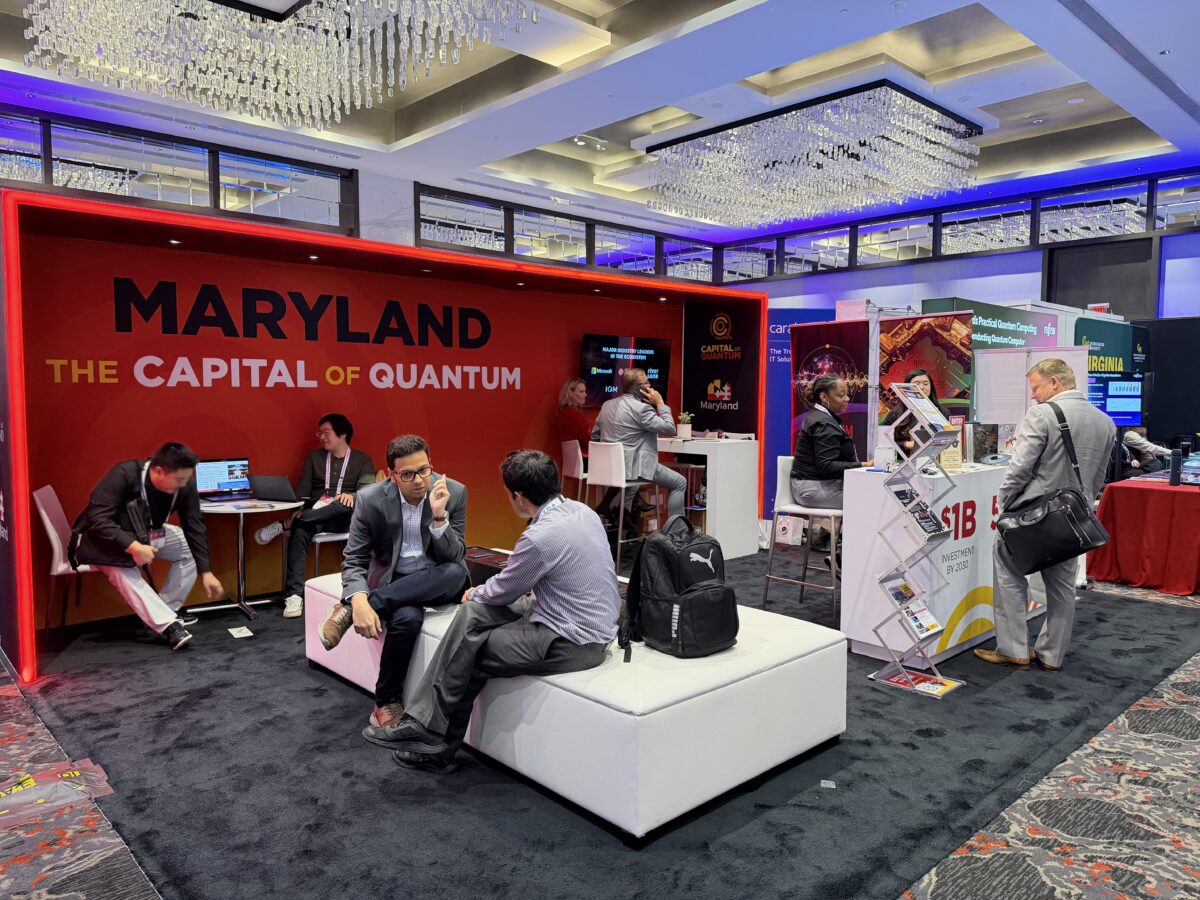
Quantum companies are going beyond universities and recruiting workers elsewhere — including nail salons and Etsy — for their transferible skills.
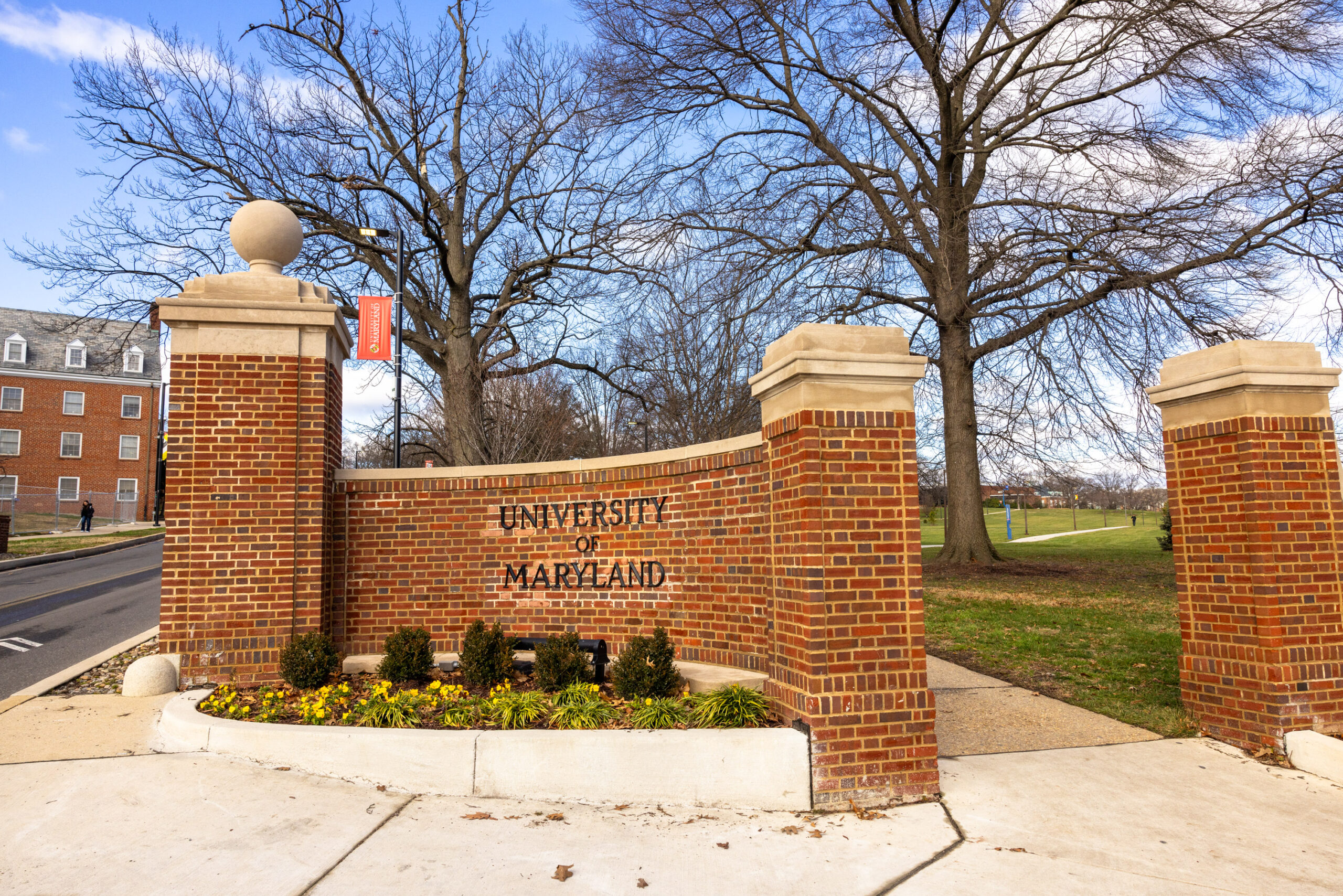
Beauty styling, crafting and other hands-on work requires the kind of steady control and attention to detail that’s crucial for building and maintaining quantum hardware, business and economic development leaders noted at the annual Quantum World Congress, held last week at the University of Maryland, College Park.
Quantum technology, which harnesses the sub-atomic physics described by quantum mechanics theory, is being developed for everything from computing to drug discovery. Governments and other organizations are putting billions toward it, setting up university research facilities, making investments in startups and establishing workforce development programs.
“There is just a huge range of skills and degrees that qualify you for a job in this industry.”
Celia Merzbacher, Quantum Economic Development Consortium
Right now the tech is mostly in the experimental phase, but leaders across the globe stressed the need to build job training now — and not just for PhDs.
The industry could do a better job at communicating the variety of roles available, said Quantum Economic Development Consortium Executive Director Celia Merzbacher.
“There is just a huge range of skills and degrees that qualify you for a job in this industry,” Merzbacher told Technical.ly. “It’s an interesting area of opportunity.”
Public investment in quantum-related initiatives is skyrocketing. In 2025, governments across the world committed $12.7 billion in new funding, up 310% from the year before, per a study by the quantum consortium.
For example, Maryland aims to attract $1 billion in total public, federal and private quantum spending by 2030, and Gov. Wes Moore announced at the conference the state already has $500 million committed. That includes publicly-traded IonQ setting its global headquarters at the University of Maryland, which is a $200 million project.
“I want businesses to know it is strategically disadvantaged for you not to be in Maryland,” Moore told the crowd. “I want people to know that quantum helps to serve for the foundation of that.”
These investments then translate to local residents — including construction, seen directly outside the conference venue, and the jobs that come with it. That also translates to spending at local businesses, said deputy secretary Ricardo Benn, the head of the state’s innovation and growth.
“Part of Maryland’s rationale was to preposition ahead of [the] curve, so that we can benefit, and benefit in a way that’s broad spectrum,” Benn said. “The focus from an economic development is creating a sense of place.”
New initiatives, from K-12 to community college
Industry jobs have been increasing steadily each year, according to that report, with 2,000 jobs added between 2024 and 2025 for quantum-specific work. Quantum-related roles are also growing, with the most frequently far being engineering, followed by operations and business development.
Initiatives to boost the workforce are happening across the country.
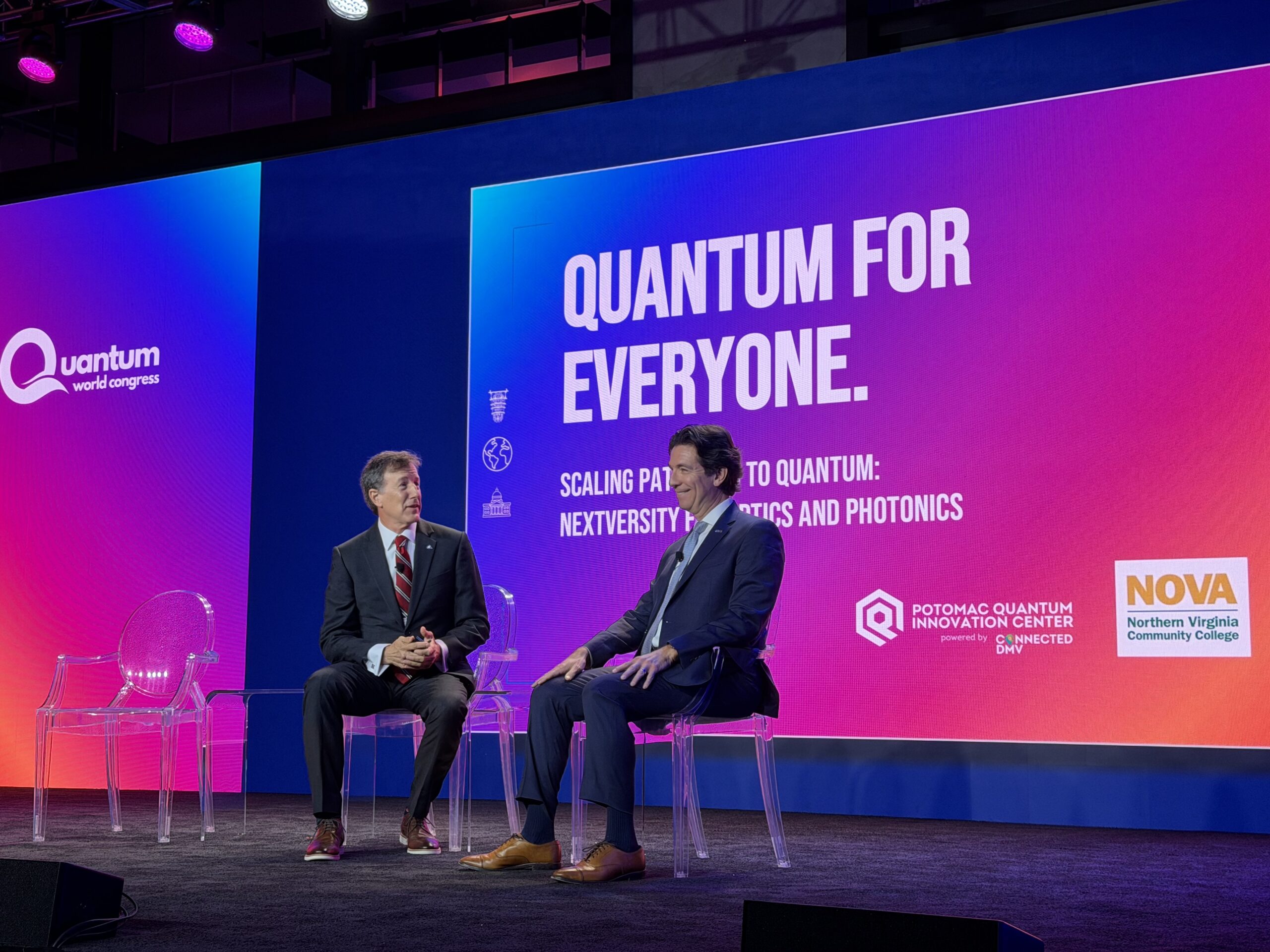
Northern Virginia Community College in collaboration with other orgs is expanding its technician training programs to include quantum, where students will learn how to maintain equipment without needing a four-year or more degree.
Workforce development needs to start at the K-12 level, said Fairfax County Economic Development Authority CEO George Thomas. The organization announced on Friday that a Fairfax high school will house an operational quantum computer for students to use.
“Quantum is going to be one of those fundamental, foundational technologies that is going to change everything,” told Technical.ly. “Like when we moved from horse carts to cars.”
Quantinuum, which just announced a new research facility in Albuquerque, New Mexico, is recruiting people who work on sets in film. The Colorado startup receives some salary reimbursements from the state for new employees, per general manager Jennifer Strabley.

“It reduces that barrier of bringing them on,’ Strabley said on a panel. “You can maybe take a little bit more risk because you’re going to get some help in training them.”
Many companies avoid putting quantum in job descriptions “because it scares people off,” said Merzbacher, from the Quantum Economic Development Consortium.
She encourages universities to skip creating entirely new master’s programs in quantum, and instead teach the tech to as many students as possible in other majors and degree programs.
“If you just get a little bit of quantum knowledge,” Merzbacher said, “that makes you at the top of the heap in terms of being qualified for a job.”