
This story was made possible through support from TEDCO, the Maryland Technology Development Corporation, which enhances economic empowerment growth through the fostering of an inclusive entrepreneurial innovation ecosystem. TEDCO identifies, invests in, and helps grow technology and life science-based companies in Maryland. Learn more at tedcomd.com. All stories are independently reported, with no partner review.
Think you need a Ph.D. to understand quantum technology? Well, the Frontier Technology Institute says otherwise, offering coursework to students as early as high school.
The nonprofit introduces young learners to complex physics concepts to build a workforce pipeline as the sector gains steam. Known as Qubit by Qubit, the initiative has trained more than 22,500 students since launching in 2019.
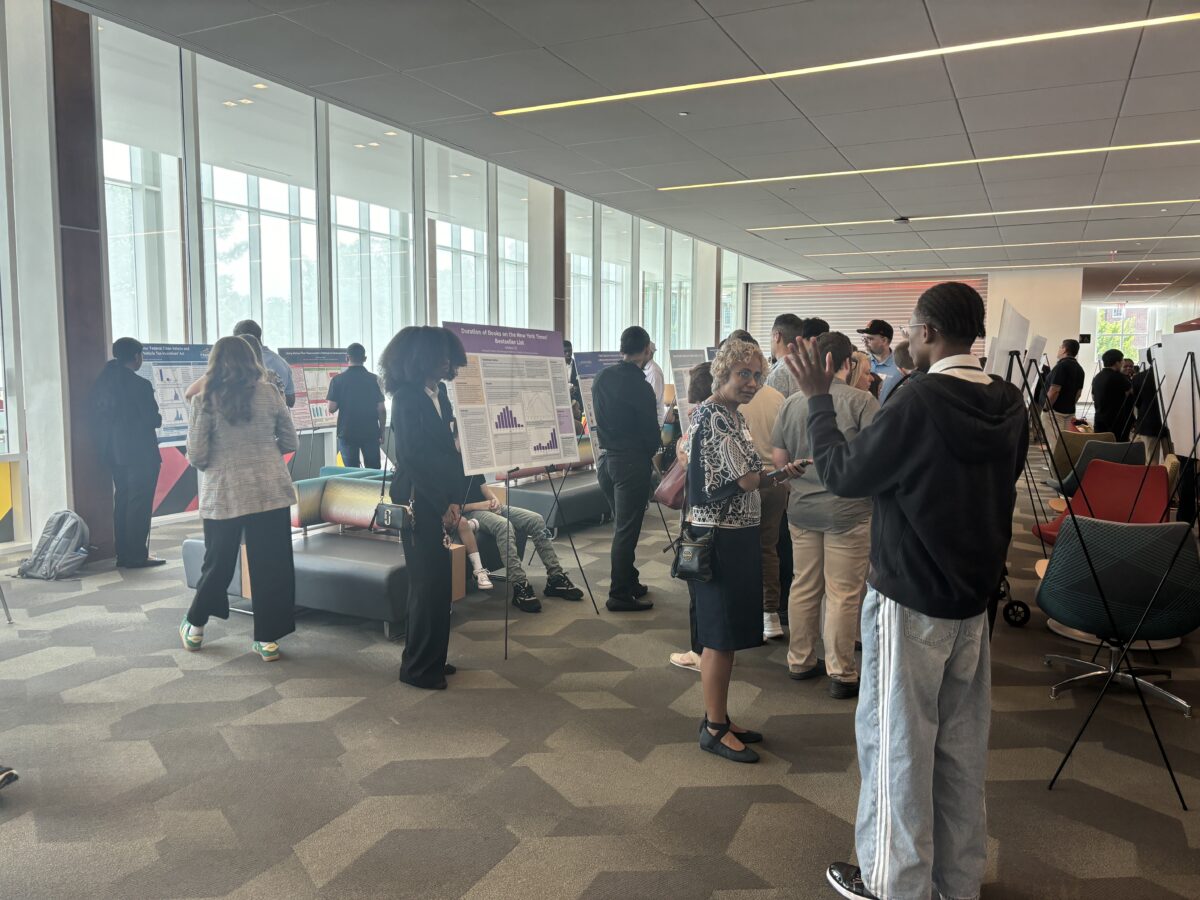
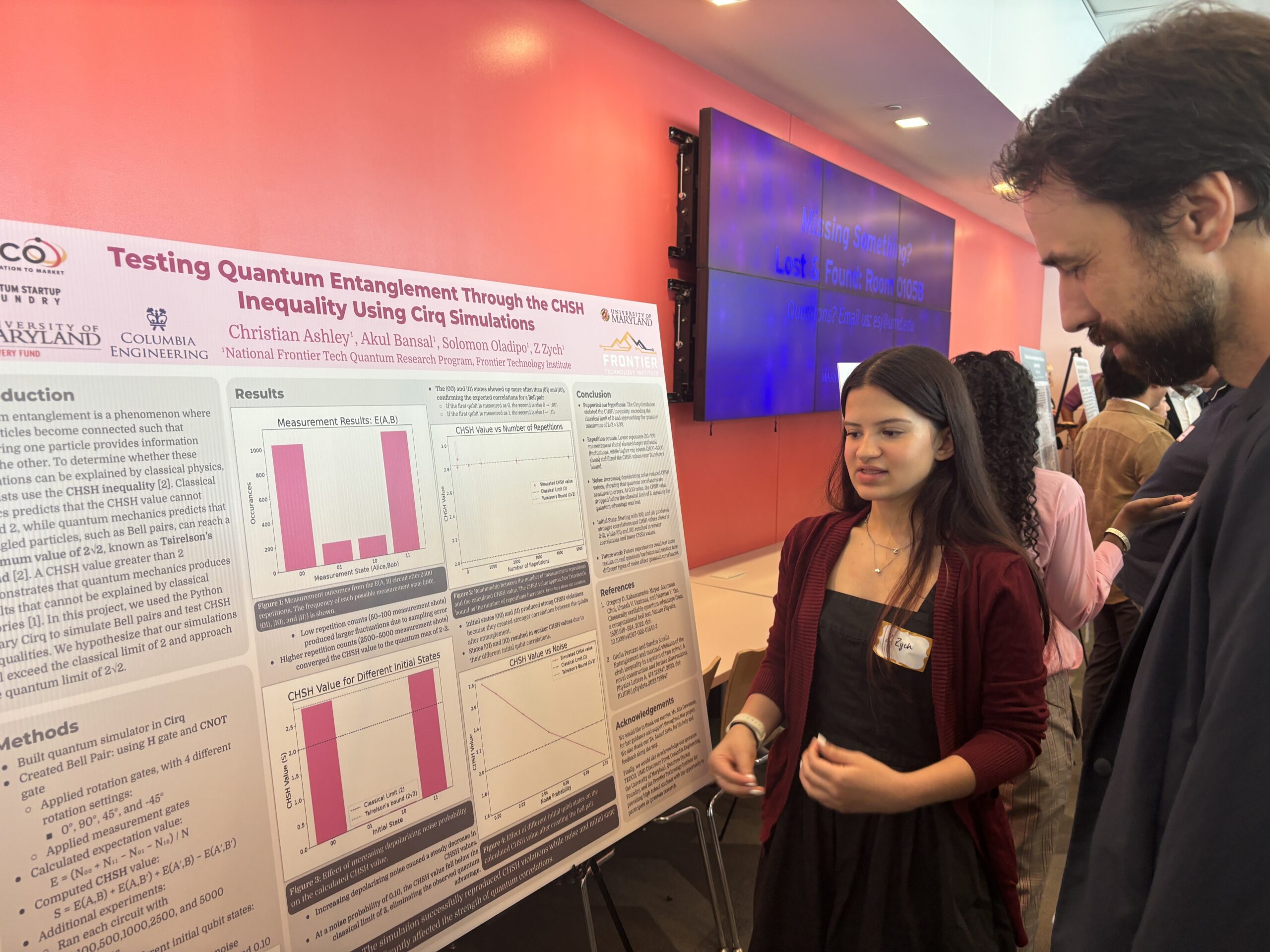
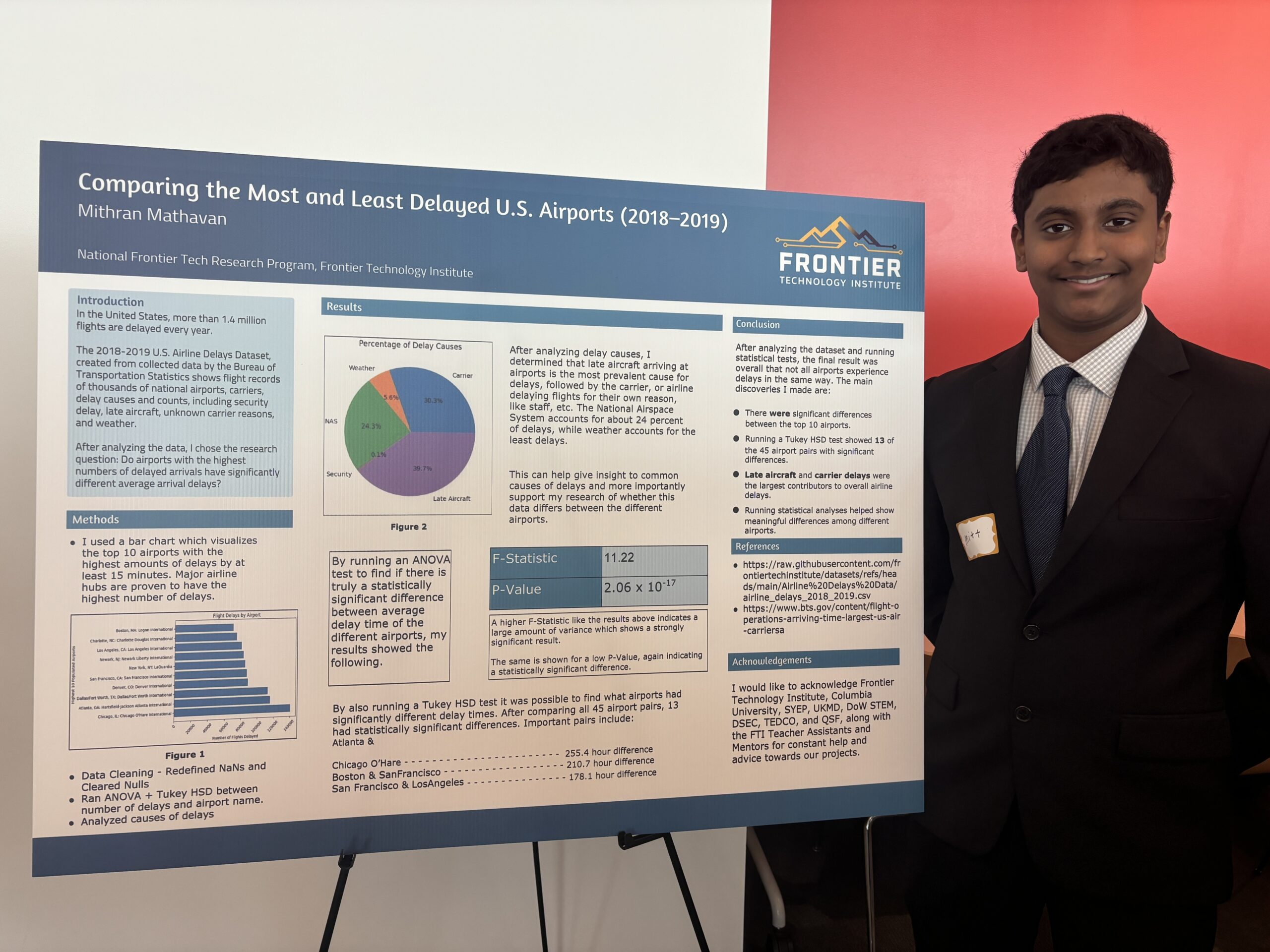
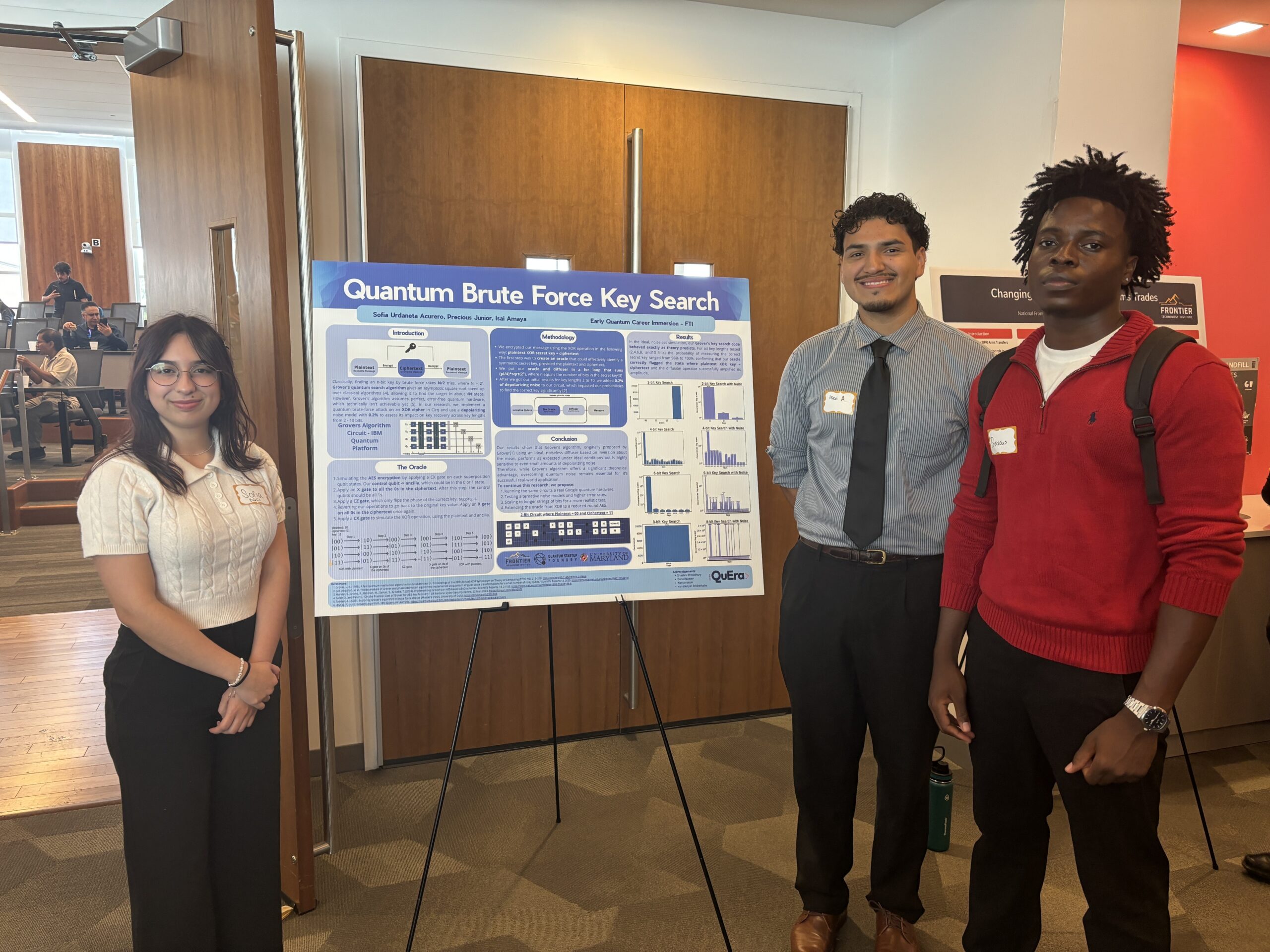
Frontier recently capped off its latest summer cohort with a research showcase at the University of Maryland, College Park (UMD), where high school and college participants presented original projects across the quantum, data science and AI fields.
“A lot of people hear quantum and think it’s only for geniuses like Einstein,” Frontier CEO Keira Peltz told Technical.ly. “But if we can actually get started early, we can hopefully expand the pool of talent and also change who’s in that pool.”
The program aligns with the organization’s broader mission to demystify complex, emerging technologies, Peltz said. Frontier, which rebranded from the Coding School earlier this year, selected the DMV region as its primary quantum hub because of Maryland’s robust investment in the sector.
Under Gov. Wes Moore’s “Capital of Quantum” initiative, Maryland is targeting $1 billion in public and private funding to cement its status as an industry hub. Though quantum computing is still inching toward commercial viability in fields like drug discovery and cybersecurity, market data projects that 250,000 quantum jobs will need to be filled by the end of the decade.
Practical experience gets a foot in the door
Frontier offers virtual classes for its high school research program, pairing students nationwide with live instruction and dedicated research mentors. While tuition for the high school track isn’t cheap — running roughly $4,000 for the summer — grant funding supports 150 full scholarships for students in select states and rural communities.
For undergraduates, the offerings go even deeper. Summer research programs are fully funded for college-aged DMV students interested in cybersecurity and quantum applications. Participants tour quantum companies based at UMD, and students in the six-week early-career track receive a $1,600 stipend, split between training and work at a quantum firm.
Real-world experience aims to help students get an early foothold in a competitive industry, according to Peltz.
“I don’t think it’s fair to train students and say, ‘Hey, work on this game-changing technology, but you have to wait six years to get an internship,’” Peltz said. “It’s a huge accessibility problem.”
That approach paid off for one student, Isai Amaya. Before joining the program, the UMD student knew little about the campus’s quantum initiatives beyond the “Capital of Quantum” banners, he said.
A cybersecurity professor recommended him for Frontier’s career program, where he collaborated with a mentor at Boston-based QuEra Computing. Now, Amaya plans to pursue quantum and cybersecurity coursework at the university during his senior year.
“This program opened up another world for me,” Amaya said. “I’m really fascinated to see where the future of this technology goes.”