
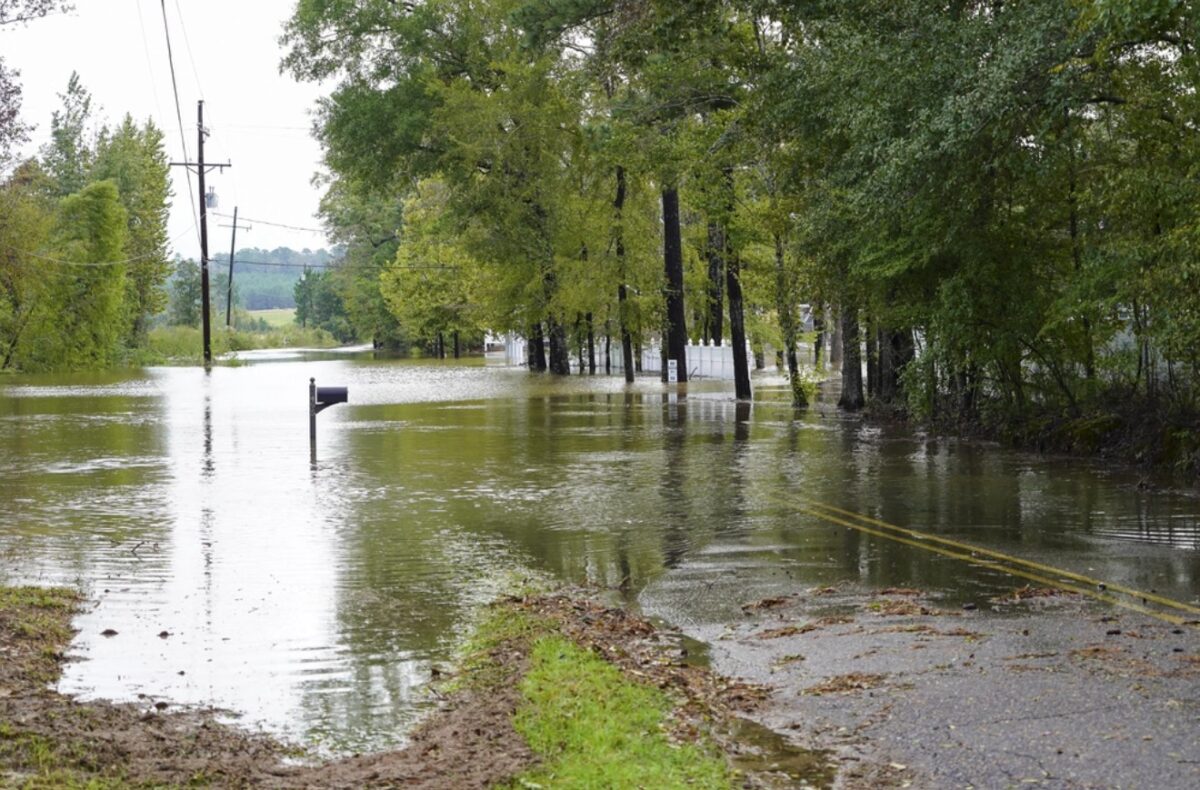
As Hurricane Laura approached southwest Louisiana in 2020, state officials called Baton Rouge nonprofit The Water Institute with an urgent request.
“You remember that thing you said you could build?” President and CEO Beaux Jones recalled them asking. “Build it now.”
That “thing” became FloodID — a flood-forecasting tool that combines weather and water data with computer modeling and machine learning to show emergency managers where flooding could hit and what could be affected.
“We don’t have the time to play it safe. We’ve got to move fast, and we’ve got to innovate.”
Beaux Jones, The Water institute
Six years later, it’s expanding internationally. Finnish satellite company ICEYE has acquired FloodID for an undisclosed amount and brought The Water Institute’s four-person core development team into the company.
For Jones, handing off the technology was part of the plan.
“The way you build technology and the way you scale technology around the globe is you capitalize it, you build it and then you deploy it,” Jones said.
The Water Institute, an applied research nonprofit founded in 2011, could have kept expanding the tech through government contracts, grants and philanthropy. Louisiana lawmakers appropriated $250,000 this year for FloodID forecasting and decision support. But Jones believes that approach would take years to achieve the kind of scale ICEYE can pursue with its capital, international reach and satellite network.
For the Finnish corporation, FloodID adds a prediction layer to its disaster-monitoring business.
“It begins to create a marriage of not only being able to provide world-class data on what just happened,” said Hugh Roberts, ICEYE’s head of predictive intelligence and one of the four former Water Institute employees who moved with FloodID, “but also what might happen soon.”
ICEYE’s radar satellites can observe the Earth through clouds, smoke and darkness. FloodID adds forecasts showing where water could move and how deeply communities could flood.
From Louisiana flood tool to global product
Expansion of FloodID is already underway.
In time for this year’s hurricane season, the FloodID Coastal+ pilot — supported by Amazon Disaster Relief, AWS and several partner organizations — has enrolled more than 200 participants from federal, state, regional, local and tribal governments. That includes participants in 10 states, three federal agencies and 51 local or regional agencies. Louisiana accounts for nearly a quarter of them.
FloodID was built around a problem Louisiana emergency managers know well. Storm surge, heavy rainfall, rivers and saturated ground can combine in ways that are harder to predict than any one source of flooding on its own.
“One plus one plus one doesn’t always equal three,” Jones said. “Sometimes it’s six or seven.”
FloodID models how those sources of water could interact, then translates the forecasts into maps and dashboards.
The goal is to turn a flood forecast into decisions: who should evacuate, which roads could close, whether a nursing home or shelter is at risk and where to position pumps or search-and-rescue teams.
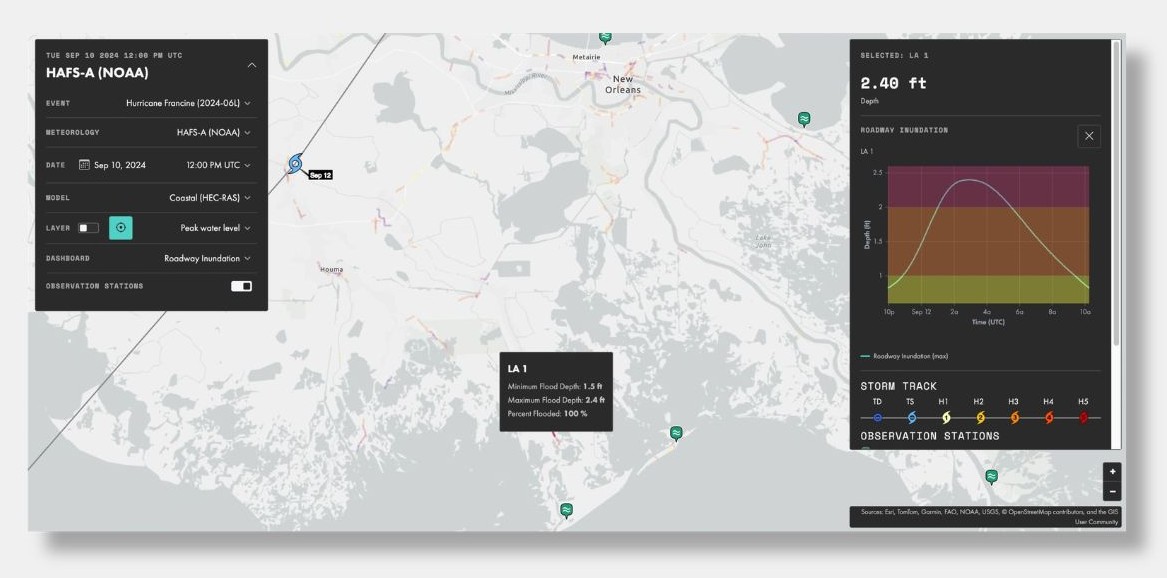
Before the acquisition, FloodID had already expanded beyond Louisiana to Jacksonville, Florida. ICEYE gives it a much larger potential reach: The company has a local presence in 14 countries, while its flood, wildfire, deforestation and earthquake products have supported operations in more than 30.
That reach was one reason The Water Institute chose ICEYE from among potential paths for commercialization, Roberts said.
The four FloodID team members, including himself, who joined ICEYE are remote workers, Roberts said. Three are based in Colorado and one in Connecticut.
‘We don’t have the time to play it safe’
The acquisition won’t end Louisiana’s involvement with FloodID.
To avoid disrupting users during hurricane season, the platform will continue running on The Water Institute’s systems for now. State and local emergency managers will keep using it, and The Water Institute remains involved in those relationships.
Jones said the goal is for Louisiana eventually to have access to a more capable set of tools than the nonprofit could have built on its own timeline.
The deal also arrives as Louisiana officials try to turn the state’s water-management expertise into an economic asset.
Earlier this year, Louisiana Innovation launched the Water Innovation Studio of Louisiana, housed at The Water Institute, to connect researchers, government agencies, startups and established companies.
FloodID predates that effort, but Jones sees its move to ICEYE as evidence for the larger idea behind it.
“The lessons that we learn can be both intellectually and commercially relevant to the rest of the world,” Jones said.
Jones and Roberts both believe ICEYE can help the tool reach more users while continuing to serve the state where it was created. For Jones, the stakes are also personal. He has spent his life watching Louisiana’s coast and wetlands change and communities absorb repeated disasters.
“We don’t have the time to play it safe,” Jones said. “We’ve got to move fast, and we’ve got to innovate.”