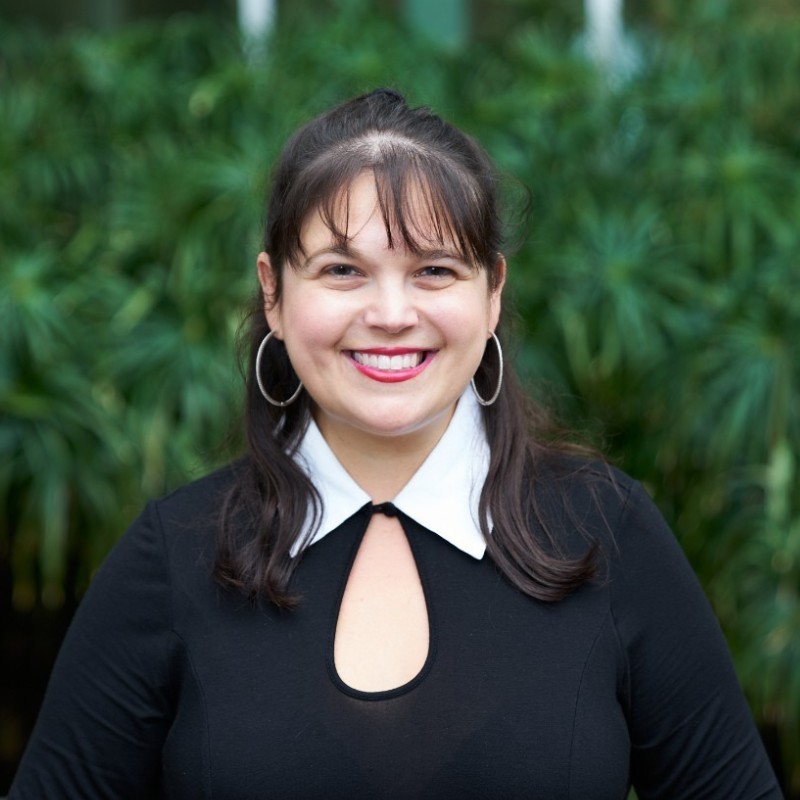
Danya Henninger and I are squabbling about this.
She’s Technical.ly’s editorial director and before that a longtime culture writer and editor about Philadelphia. I’ve spent 20 years following what changes — or doesn’t — in this place I call home.
I also happen to have a longstanding fixation on the concept of micromuseums: small spaces with few objects curated around a tightly defined subject.
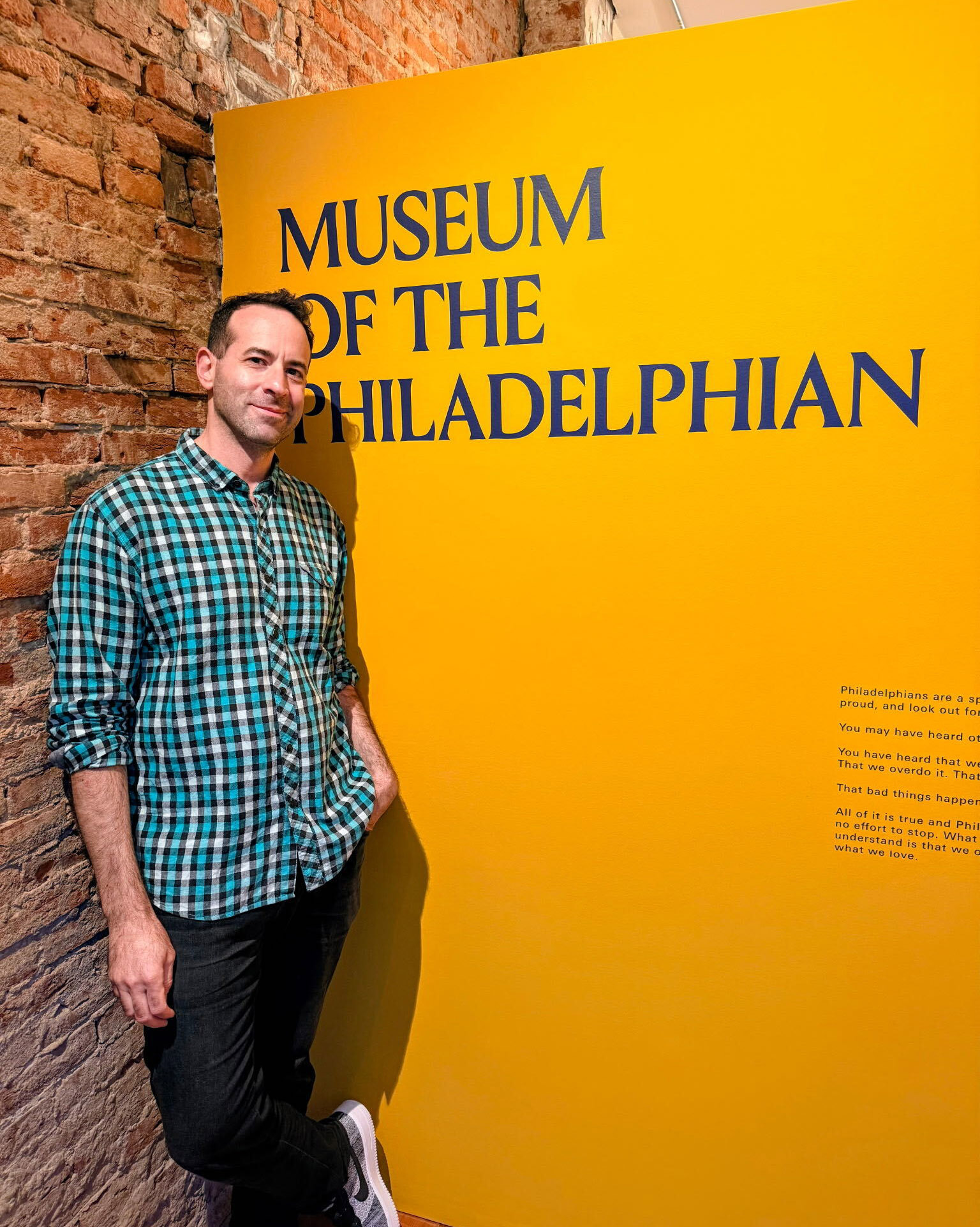
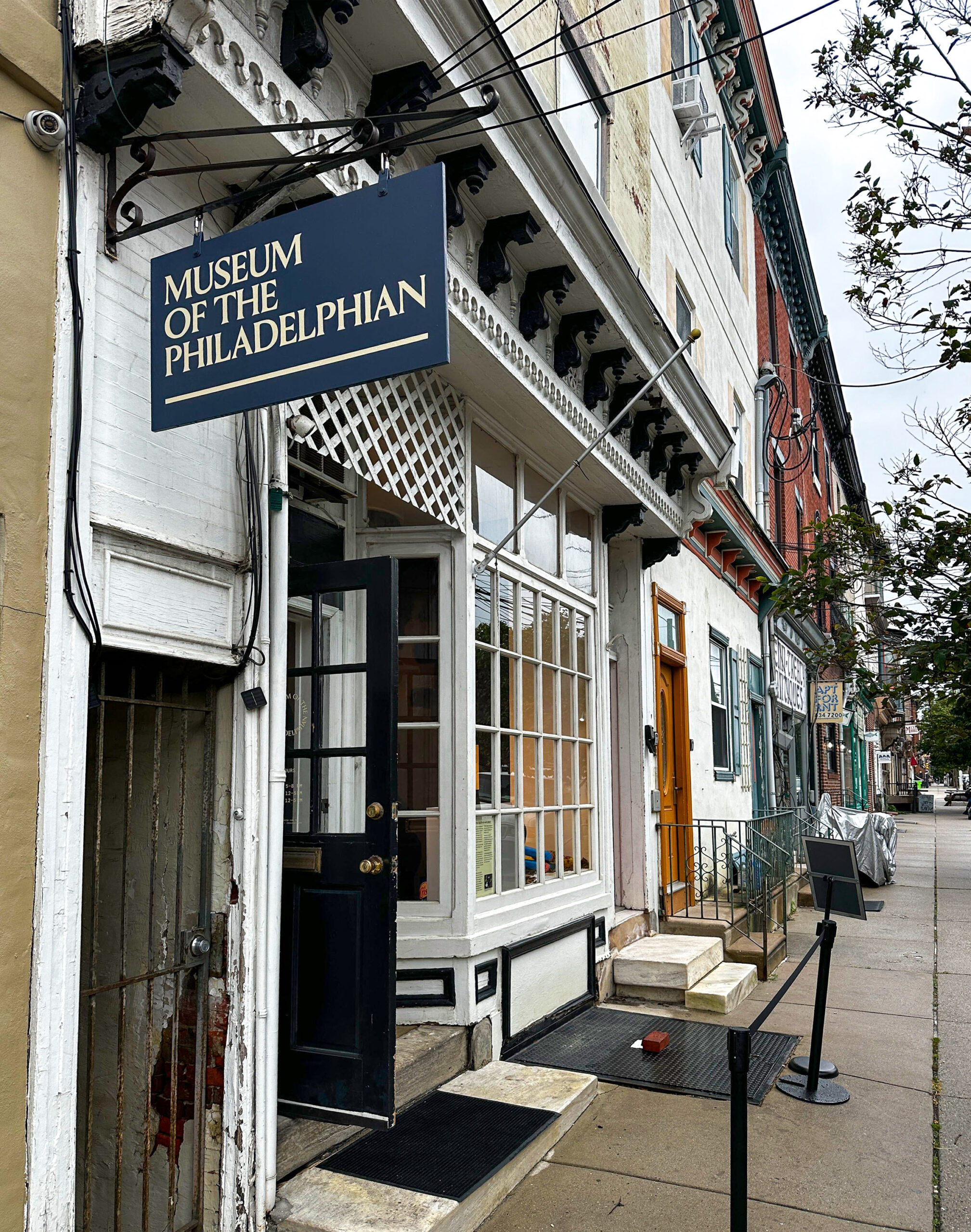
That’s why I was an enthusiastic “yes” to an offer to join an early press preview of the Museum of the Philadelphian, which opens today in a tiny Fishtown storefront on an unglamorous block of Girard Avenue.
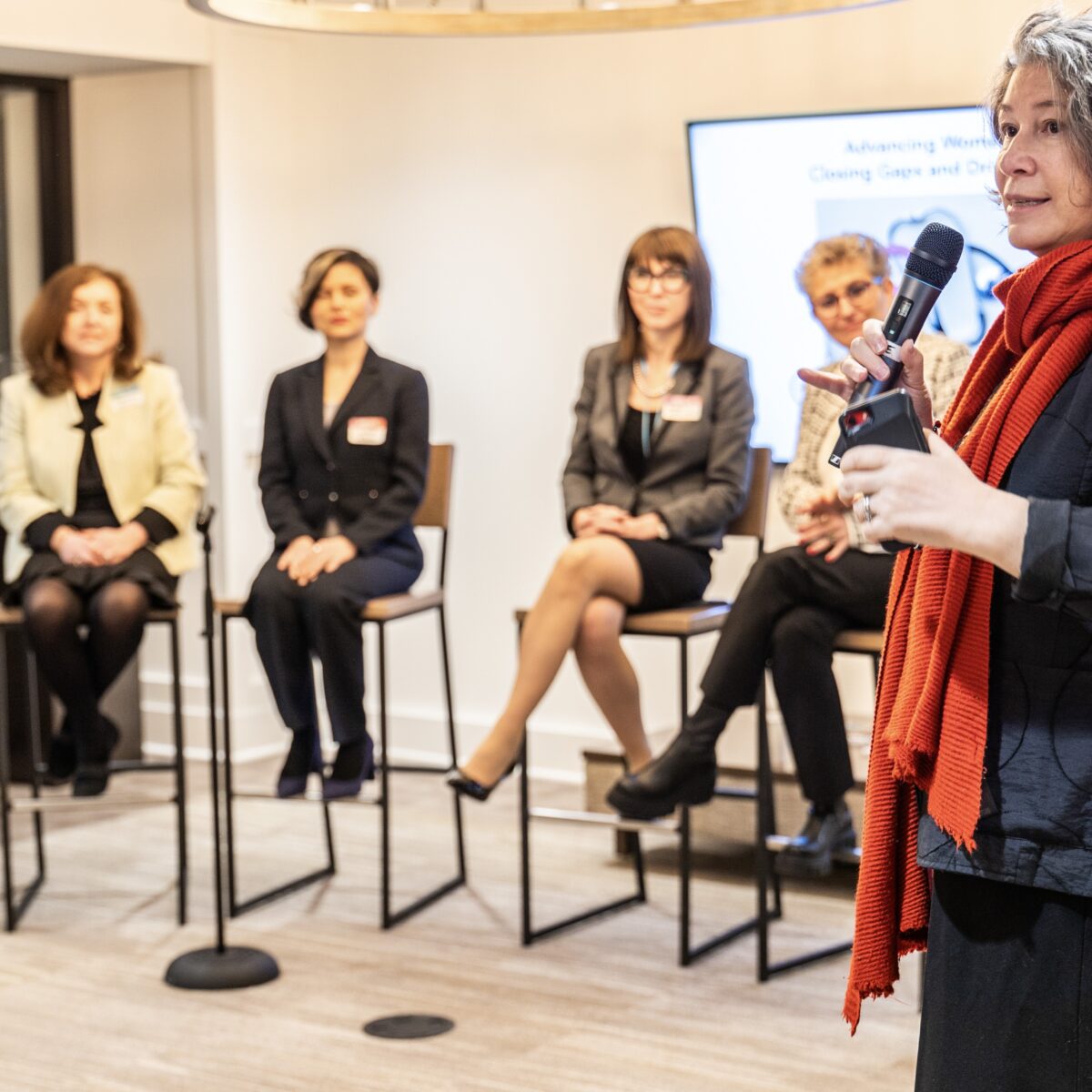
The project is curated by creative strategist Brian Adoff, who is also behind Join Philly, which helps locals find clubs, and Fishtown Choir. Cohost of Creative Mornings locally, he was one of our RealLIST Connectors this year too.
Adoff, 46, grew up in South Jersey and has lived in the city for decades. He knowingly acknowledges that distinction, saying he’s “still considered one of the ‘new’ Fishtowners as I’ve only lived here for about 20 years.”
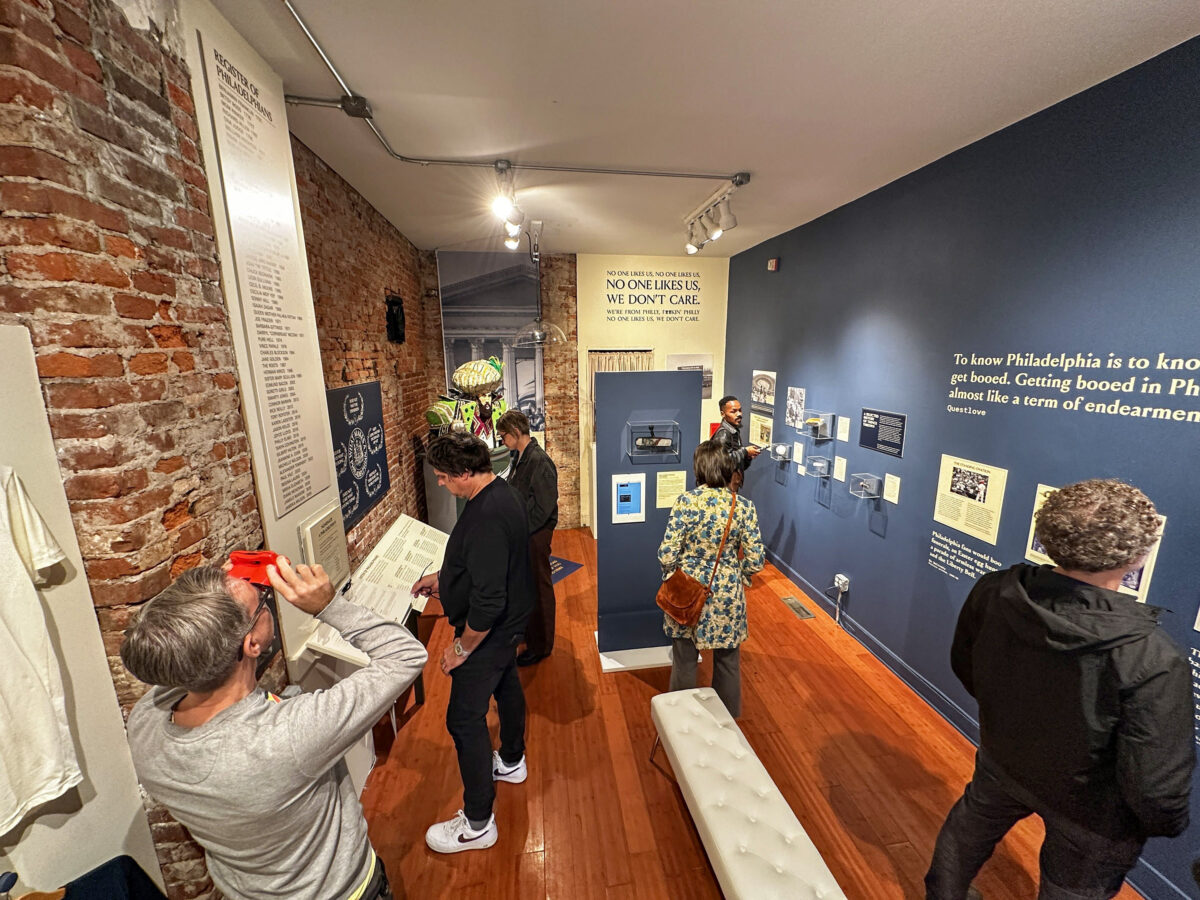
Inside just 300 square feet, I walked in a small U-shape past tastefully and intentionally displayed objects and placards conjuring the image of a passionate and boorish people, beset by their sports tribalism and quirky determination. The death of Hitchbot and the JD Drew battery-throwing incident — which I remember even as a kid who did not grow up in Philadelphia — are evoked. Sound, feel and interactivity are all deployed in the spirit of today’s museum curatorial standards. Yes, there is considerable attention paid to booing, though with admirable historical context.
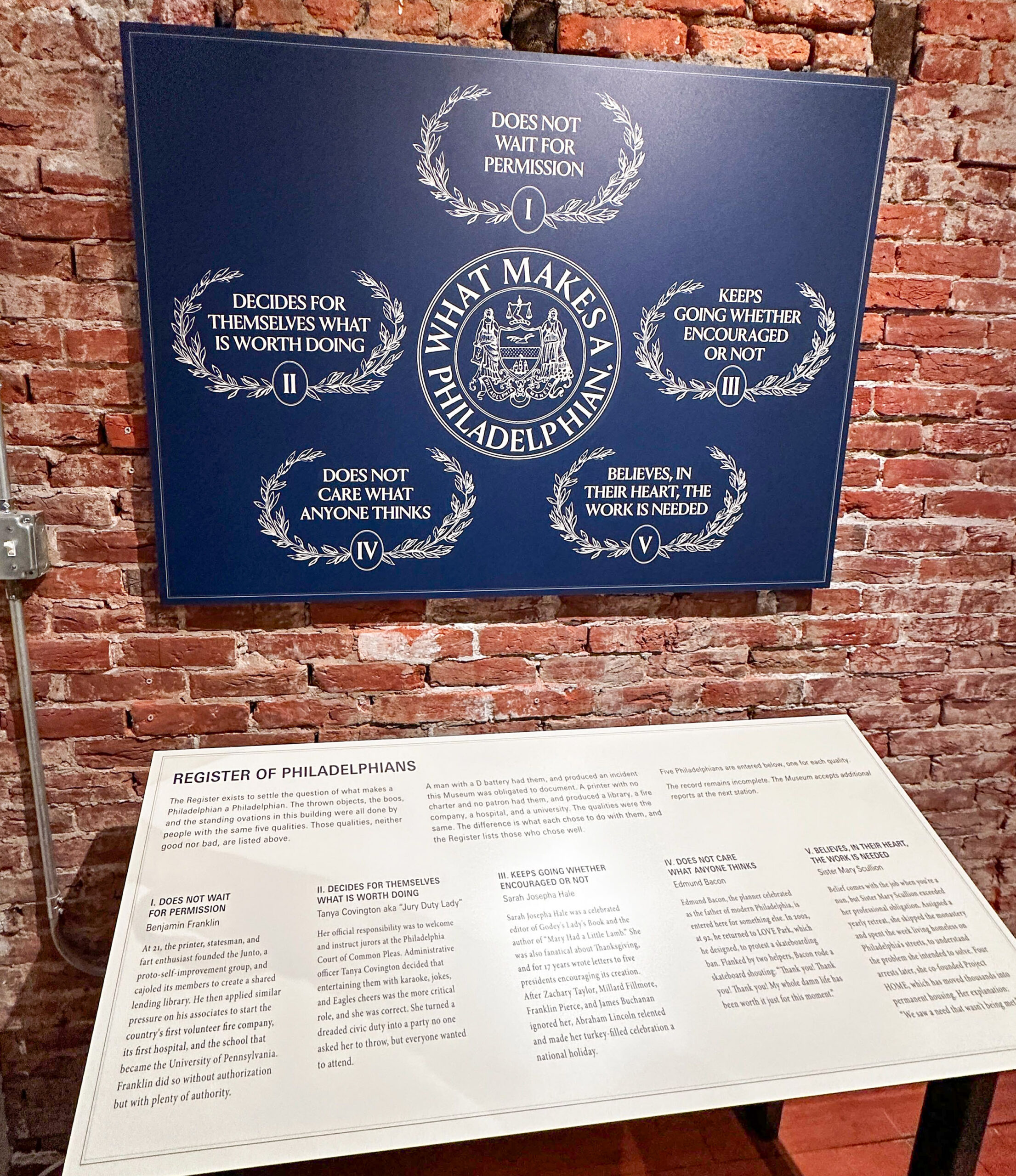
The finale is a “Register of Philadelphians” — an intentionally eclectic listing of those whom Adoff identifies as exemplifying five key characteristics of a Philadelphian:
- Does not wait for permission
- Decides for themselves what is worth doing
- Keeps going whether encouraged or not
- Does not care what anyone thinks
- Believes in their heart the work is needed
Benjamin Franklin and Betsy Ross are on it, but also Joe Frazier, Queen Mother Falaka Fattah and, yes, Alexander Tominsky, who became locally famous for — uh — eating 40 rotisserie chickens in 40 days on a pier to dazzled onlookers in a fit of post-pandemic 2022 madness. As I walked through the space, Tominsky was being interviewed by Philadelphia Inquirer columnist Stephanie Farr. This is our culture. Attendees are encouraged to recommend others for the list, from everyday heroes to local celebrities.
A popular city, of people who disdain popularity
Micromuseums have been popping up around the world. The much-loved Baltimore Tattoo Museum opened in 1999, and in 2017, a network of vending machine-sized science displays were deployed as “tiny museums.”
I’ve been obsessed with the concept since 2019 when in Peru I visited Lima’s Pisco Museum, and nearby ones on the history of chocolate and indigenous culture. Walking a city with small storefronts to stop and explore was refreshingly different from visiting a single large museum building. Researchers have begun to categorize their various forms.
A few are high-minded, many are quirky fronts for something else — Lima’s Pisco Museum is mostly just a bar. All contribute to a form of decentralized, highly accessible public education and cultural preservation.
Adoff’s Museum of the Philadelphian fits the mold. It’s open for six weeks through Nov. 1, when he’s unsure if it will move to a new location or close for now. The lease, which he had used for his agency, is up, and this is mix of pilot and demonstration on the way out. Entry is free, with reservations required, and has a modest merchandise display of T-shirts, stickers and, ahem, batteries.
So what could Danya and I possibly disagree about on such a homespun creative endeavor? Before we ever worked together, Danya and I were friends, and we have a longstanding debate about whether culture can ever really be captured — or whether the moment it’s packaged, it ceases to exist.
This identity we collectively describe as “Philadelphian” is a distinct fusing of immigrant and global cultures that developed under permissive Quaker leadership. Limited transience and declining economic opportunity fused it all together into an angry stew that thoughtful creatives have developed into rich narratives. Among the strongest of those themes is that “no one likes us,” the defiant lyrics of a song that is also emblazoned on the museum’s walls.
In contrast, annual polling this year showed Philadelphia’s popularity has continued to rise. It’s now among the 15 most-liked cities in the country. The scorecard for its grand 2026 events — the MLB All-Star Game, US Semiquincentennial celebrations, FIFA World Cup matches — has been overwhelmingly positive.
So Danya teases that the city is glorifying the idea that no one likes it at the exact moment it sells tickets, merchandise and a story that ever-more people are willing to buy.
Fair enough. My push is that, by nature, stories are always about what has already passed. And stories of our past help us interpret our future.