

The writer, journalist and public speaker lives with Usher syndrome, a rare genetic disease that affects both sight and hearing. Prior to becoming fully deafblind in 2000, Livingstone seized the opportunity to explore everything she could, from filmmaking to music composition.
“I wanted to make use of what I had, when I had it,” she said. “I didn’t want to become or let it consume my head that I was a person with deafness or blindness. I was a person before anything else.”
Since then, Livingstone has built her career over a lifetime of trial and error, with a fierce drive to achieve her goals come hell or high water.
Livingstone is one of nearly 130,000 Massachusetts residents — and 1.5 to 1.6% of Bostonians — living with low vision or blindness, and one of five people Technical.ly spoke to for a Boston installment of our yearlong storytelling project, Thriving.
While “thriving” can represent a range of experiences, blind or low-vision Bay Staters face specific challenges — and opportunities. As of 2019, nearly half were unemployed and 23.3% were living below the poverty line. However, 3.9% represents the lowest rate of uninsured visually disabled people in the United States.
Boston offers resources including the Massachusetts Commission for the Blind, the Carroll Center for the Blind, the Perkins School for the Blind, and the Massachusetts Association for the Blind and Visually Impaired. Combined with accessible public transportation, walkability of the city, and a growing accessibility industry, blind or low-vision Bostonians have found more opportunities than ever to thrive.
Here, meet five of them. This story pairs with a story on Philadelphia-based individuals in this group.
Nina Livingstone — ‘I want to make a career in being myself’
Livingstone fully lost her sight and hearing in 2000 and received a cochlear implant in one ear the following year. From that point on, she pledged to never waste a moment of her life.
When she isn’t working on her memoir, “Are You There?” Livingstone is doing research, conducting interviews, or preparing for speaking engagements. She has interviewed and written about the likes of actress Marlee Matlin, writer Fran Lebowitz, and Boston’s 2021 mayoral candidates. She says she loves what she does, but her success has been hard-won throughout the years.
“I never, ever thought I was going to lose the rest of my hearing let alone my sight,” she said. “When I was totally deaf for a year and a half without a cochlear implant, I felt completely claustrophobic.”
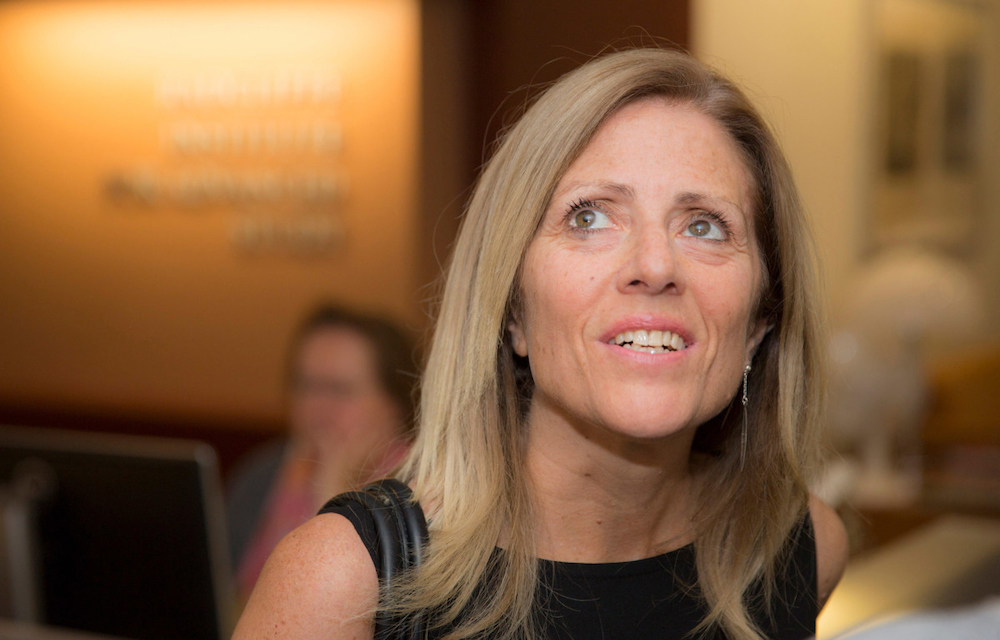
Livingstone now works with a team of sighted volunteers to manage her website and social media with the goal of building up a larger audience. Prior to her current career, she was living alone and received disability income from Social Security. She was driven to pursue her goals, no matter the setbacks.
“It’s a challenge trying to get past that and establish more of a financial stability,” she said. “[But] having a passion to do something whatever your financial bracket is, it almost becomes insignificant because you love what you’re doing without the expectation of financial reward.”
And she certainly has plenty to keep her busy. New ventures are always top of mind for Livingstone, who wants to try everything from acting to writing comedy skits — “I want to make a career in being myself.”
Livingstone has found resources to help her thrive, including volunteers through the Massachusetts Association for the Blind and Visually Impaired, a braille display and audio assistance for reading and writing, and specialized medical care at Massachusetts Eye and Ear.
“Most of it comes from putting yourself out there and finding out what’s there to begin with,” she said. “I love being in this area because there’s the best hospitals and resources. … There’s more out there than ever.”
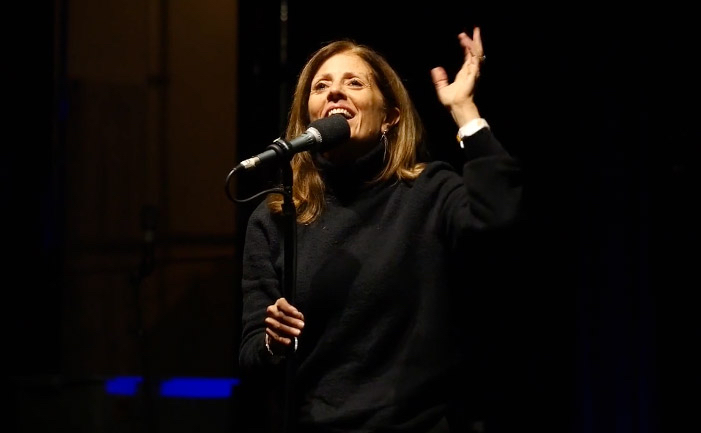
Livingstone believes thriving is not just about material comforts, but also about one’s mindset. When she fully lost her vision, she could no longer lip read or discern people’s facial expressions. Then, when she lost her hearing, she felt like she was cut off from experiencing the world to the fullest. After receiving her cochlear implant, the world opened back up.
“To hear a car and hear people laughing and hear the rain fall … I don’t take my hearing for granted, ever,” Livingstone said. “There’s so much to be grateful for.”
Livingstone describes herself as “chronically happy” and partly credits connecting with her community, reaching out for help, and giving back what she’s gained.
“[Thriving is] having a goal, having a mission, striving toward something you want to accomplish,” she said. “It’s sharing with others that brings me to that next level. I’m always thriving, that’s just inevitable.”
Carl Richardson — ‘Thriving and being complacent are two different things’
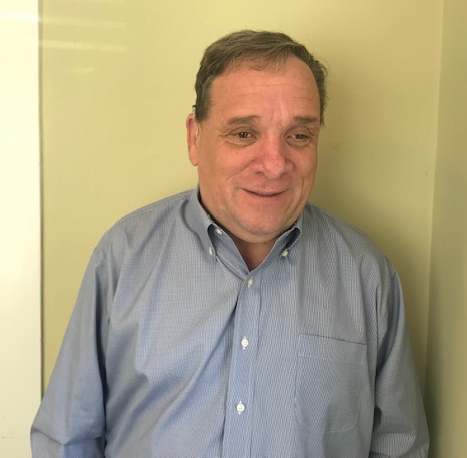
Carl Richardson knows he’s in a unique position. As ADA coordinator for the Massachusetts State House, the 55-year-old has the perspective of both a legally blind Boston resident and a policy maker for others like him.
Richardson’s typical day involves taking the MBTA to get to work with his guide dog, Merrick, an 11-year-old black labrador. He meets with members of the state legislature to ensure that all planned programs and activities are accessible to all, regardless of ability.
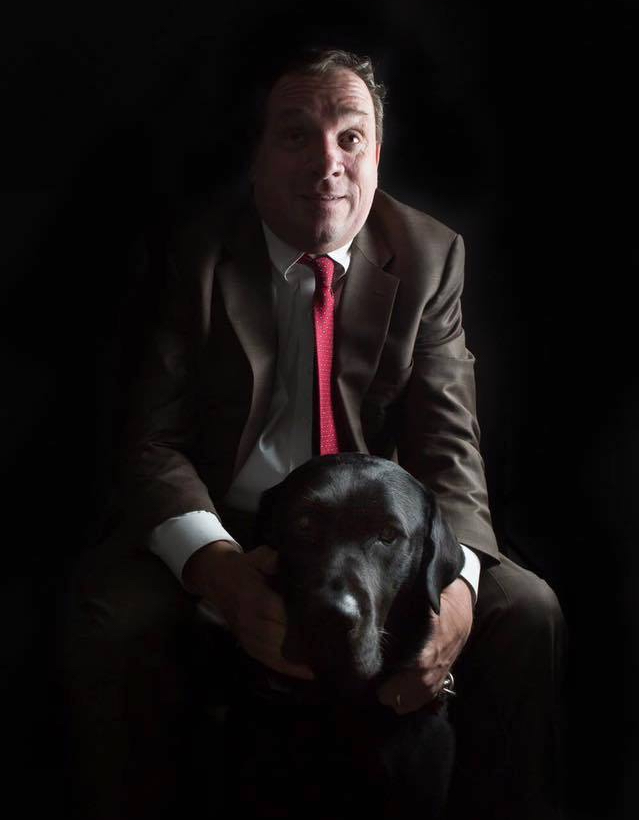
While Richardson finds his work meaningful, there are sometimes frustrations that come with trying to affect change. He has been in his job for 15 years, serving through hundreds of House and Senate members and two governors. Because of this, his work changes every few years as new legislators cycle through: “I have to reinvent myself and reintroduce myself every two years,” he said. “Governors will have different views of what access is. I’m hoping to expand the role; it has expanded at times and decreased at times based on the political winds.”
While Richardson doesn’t consider his disability status a hindrance in his job, its effects have shifted over time. Though he once had 20/20 vision, he went legally blind in his 30s, and his accessibility needs have changed as his vision and hearing have worsened over time. In addition to being a guide dog user of 25 years, Richardson also wears two hearing aids.
He feels fortunate that his financial situation permits him to make accommodations with relative ease. He and his wife both have successful white collar careers and do not have any children.
Recently, Richardson needed two new hearing aids, which cost him $6,000. He said that most people have to pay for their own hearing aids and insurance often does not cover vision devices, such as magnifiers. Luckily, he is in a position to cover his accessibility needs.
Living in Boston is also a great benefit to his lifestyle. Public transportation and the walkability of the city make navigation easy for Richardson.
“When I lived in the suburbs, I hated it because I had to ask everybody for a ride every time I had to accomplish something,” he said. “Now I can walk to the convenience store, the barbershop, the dry cleaners.”
The close proximity to services like the Massachusetts Commission for the Blind, vocational rehabilitation centers, and the Carroll Center for the Blind provides easy access.
Richardson also enjoys the arts, culture, museums, libraries, and food Boston provides. He said all these advantages help put him on equal footing with non-disabled residents.
Richardson contrasts his idea of “thriving” with that of “flourishing.”
“Thriving and being complacent are two different things. I don’t feel like I’ve done enough in the world,” he said. “I do think I’ve achieved a certain level of success, but I don’t know if I’m ever going to be at a point where I can rest. I talk about retirement with my wife, but even if I retire I’m going to continue to be an advocate.”
Lindsay Yazzolino — ‘Getting in my own way is one of things that can hold me back’
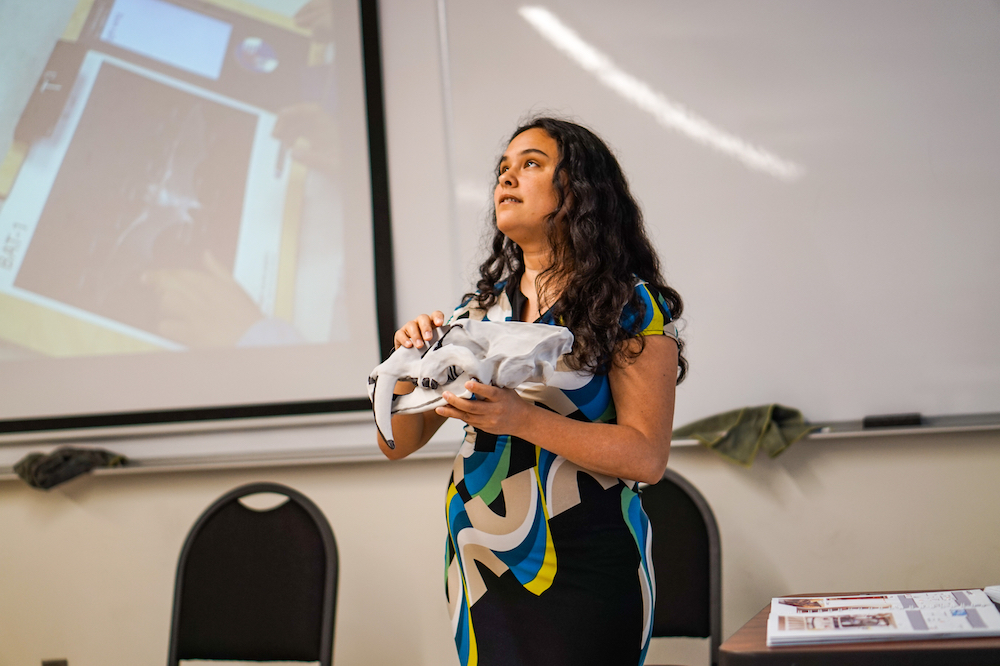
Lindsay Yazzolino has been working in accessibility spaces for the majority of her career, but she’s looking forward to broadening her horizons. The 33-year-old lives in Boston’s South End and works as a nonvisual accessibility designer for CVS Health, ensuring that the website and mobile apps are user friendly for people of all abilities. On the side, Yazzolino lends her expertise as a tactile user experience specialist to clients on a contract basis. Her most recent project is working with the Museum of Science to develop “hand catching” exhibits.
Yazzolino originally decided to take the job at CVS in spring 2020 because it was a financially stable position and “came at the right time,” she said. She has been primarily working from home since the pandemic began.
“It’s hard to not have a ton of money and live in Boston because it’s expensive. I realized that not having money can be super stressful,” she added. “I went from being in debt to making six figures. I was like, ‘Wow, this is me? I’m making this kind of money?’”
She’s also beginning to think about her next steps.
“It’s really easy being blind to find yourself in the accessibility field,” she said. “It can really feel like being pigeonholed. On one hand, I’ve been really blessed to have so many opportunities come to me, but sometimes I feel like if I just take what’s in reach, it makes me get a little bit lazy.”
Figuring out how to pursue both fulfilling work and look after herself financially is still a work in progress.
“[Money is] a means of being able to have some of the things that I want in life,” she said. “Money on its own can make me comfortable, but it’s not a replacement for being stuff that excites me and makes my soul happy.”
Boston has been an invaluable place for Yazzolino to explore her passions. She enjoys the accessibility of the public transportation system, the opportunities to meet new people, and the abundance of intellectual curiosity and innovation. She has also built community through the National Federation of the Blind.
Yazzolino also loves to travel and has been seeking experiences that make her feel “really alive.” In 2021, she headed down to Austin to visit the largest urban bat colony in the world with preeminent bat expert Merlin Tuttle. (Tuttle was also celebrating his 80th birthday party and guests were invited to dress up; Yazzolino was the only one who showed up decked out in a bat suit.)
She recently participated in a zero-gravity flight hosted by Mission: Astro Access with a group of other people with disabilities, researching how to help people orient themselves during space travel.
She is looking forward to continuing to find similar opportunities, whether in the air or with her feet planted firmly on the ground.
“Getting in my own way is one of things that can hold me back,” she said. “I’m learning to see myself as somebody that can make things happen in my life as opposed to someone who is passively enjoying my own life.”
JoAnn Becker — ‘I’m not stagnant’
JoAnn Becker has circled the globe multiple times and is always looking forward to the next adventure.
Becker works as assistive technology support and training and testing specialist at Perkins Access, teaching deafblind users how to use assistive technology through a Federal Communications Commission program.
Previously, Becker worked for several technology manufacturing companies, which fostered her love of traveling. While she enjoyed being on the road, her current role allows her to put down roots while still providing the variety she needs.
“For a lot of people with the FCC program, it’s a range with deafblindness; to be able to teach them to become more independent, that’s all so exciting,” she said. “All of that is meaningful to me because it can be very isolating and anything I can do to lessen people’s isolation matters.”
When she isn’t working, Becker is planning her next travel destination. She’s been to India, Egypt, Malaysia, and all over Europe. She seeks places that are dramatically different to what she’s used to in the United States and enjoys learning about new cultures and people. Visiting South America, Africa and China are on her to-do list.
One major restriction to exploring her passion is the ableism Becker faces.
When she was in Malaysia, Becker needed to take somebody’s arm to navigate the streets, which a few people in her group magnified as an issue. In Egypt, the travel agency tried to send her home.
“I spent four hours on the phone to the office saying, ‘No, I’m not leaving,’” she said. “It was just awful. Those obstacles were really painful and difficult because it prevented me from experiencing things that I like.”
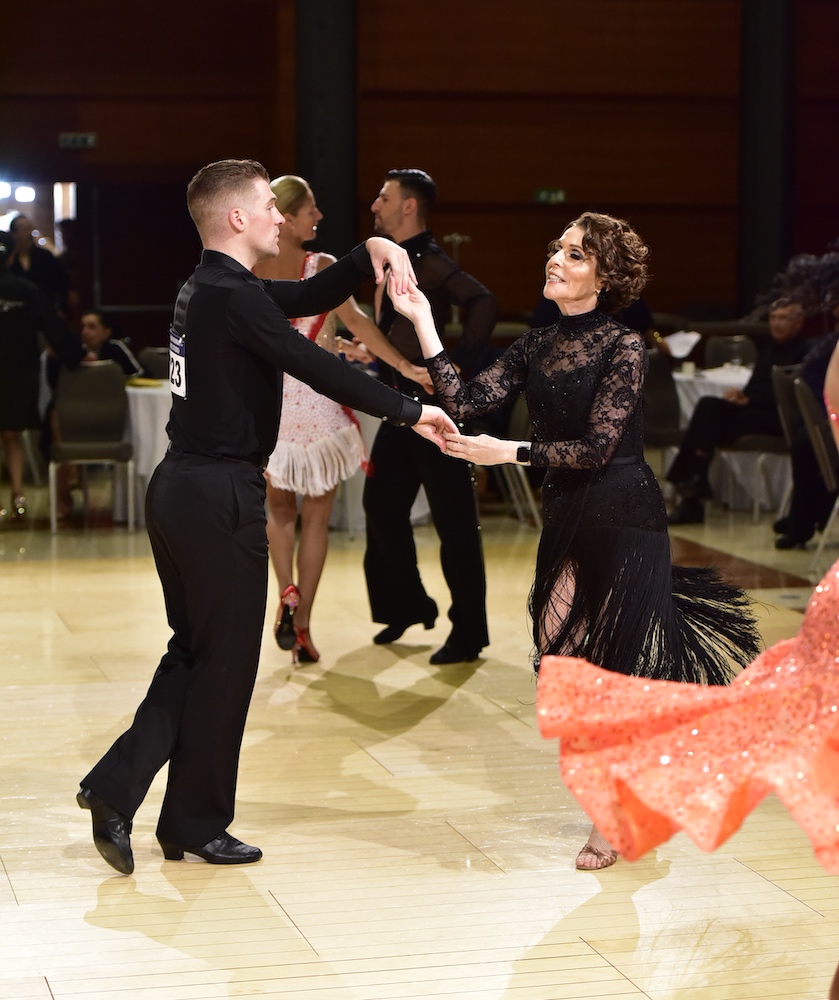
But Becker doesn’t let the ignorance of others stop her from enjoying herself. She also regularly takes private pilates lessons and loves ballroom dancing. Becker said the ability to pay for these activities, as well as for her traveling, supports her in doing things that bring her joy. (However, she said she doesn’t like turning on the heat in her home if she can help it: “I have money to spend on whatever I want, that’s what makes it even weirder that I don’t turn on heat,” she joked.)
Living in Boston provides further access to living a full and engaging life. The MBTA offers a program for paratransit service The RIDE customers, which offers subsidized rideshare trips for people with disabilities. She also enjoys walking and appreciates that Boston is a walkable city.
As someone who prefers to stay active, Becker thrives when she is going outside her comfort zone, acquiring new skills, and striving for new experiences. She wants to become more adept at the broad array of adaptive technologies, from learning more about operating Mac computers to becoming familiar with new software and hardware as it’s developed so she can teach effectively to others.
“I’m not stagnant, I’m moving in directions that interest me,” she said. “I’m making myself do things that aren’t easy, but I’m doing them anyway.”
Jerry Berrier — ‘I want to be of service to the world in some small way’
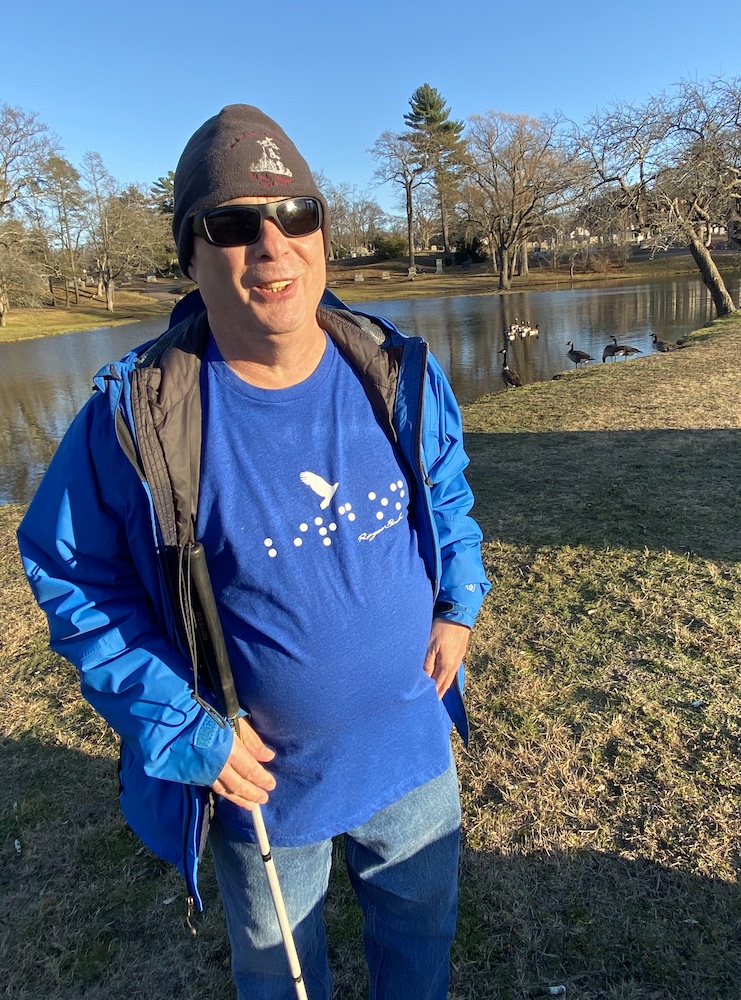
Jerry Berrier, 70, may be retired, but his days remain busy as ever.
Throughout the week, Berrier juggles his responsibilities as chair of the trustees of his local church, trains clients in assistive technology, and facilitates Twelve Step work. In his spare time, Berrier enjoys birding and playing the guitar and the flute.
Berrier began his career as recreation director for an association for the blind in his home state of Pennsylvania. During his four years in the position, he organized activities such as bowling and fishing.
“It was probably one of the funnest jobs I’ve ever had in my life,” he said. “But it was also the lowest-paying job I ever had in my life.”
In the pursuit of better financial stability, Berrier joined Verizon, where he spent the next 24 years. He rose from an entry-level position to assistant management at the company’s center for customers with disabilities. In the early 2000s, Verizon went through a series of cutbacks — and Berrier was on the list.
After eight years with the Massachusetts Commission for the Blind, Berrier joined the Perkins School for the Blind. He became director for access technology in 2019 and retired in 2021.
The father of two — and grandfather of five — said his career path has enabled him to live his life to the fullest, but he never takes his success for granted.
“I got lucky,” he said. “Had it not been for that, I have no idea what would have happened to me. Maybe I’d still be making the equivalent of what was $9,000 a year back in the ‘70s. I know that that hasn’t happened for a lot of people and why it happened for me, I don’t know. But I recognized it as a break and really took advantage of it.”
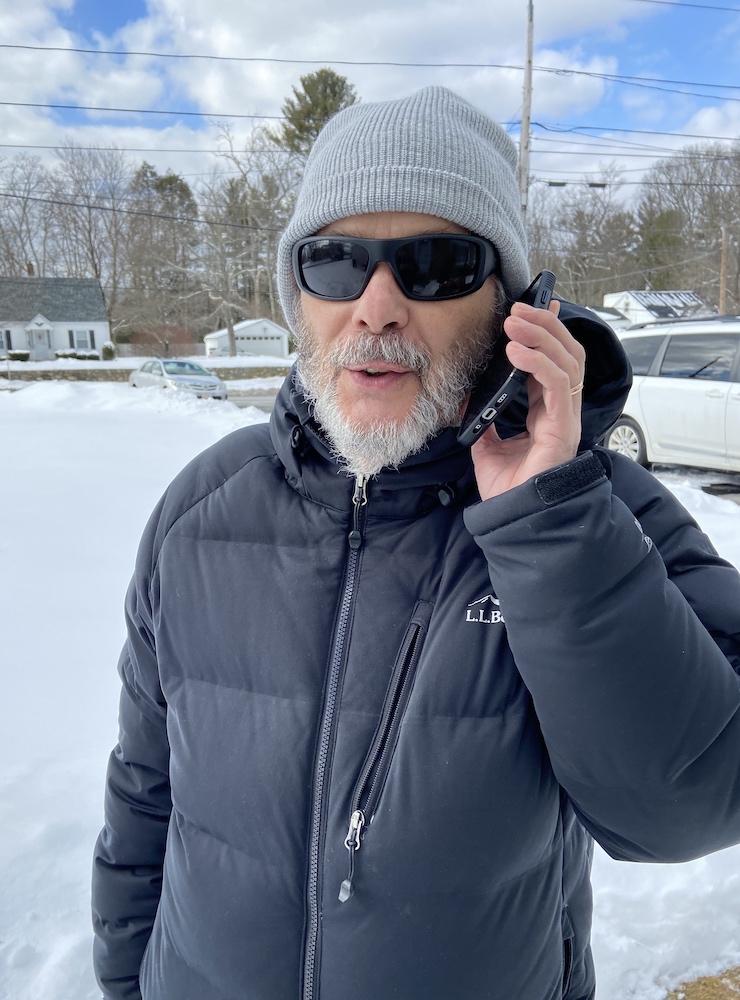
Berrier emphasizes that the high unemployment rate for blind people is due to the challenges of and barriers to finding accessible work in an increasingly complex job market.
“A lot of the jobs that blind people thrived in years ago almost don’t even exist anymore,” he said. “To say that a blind person can do just as well as anybody else, I think that’s sticking my head in the sand. It is challenging for us.”
Boston provides services to disabled residents to combat some of these challenges, many of which Berrier has taken advantage, particularly the MBTA’s RIDE program.
“That’s a huge advantage to me because although my wife drives, she works full time, and it gives me a level of independence that I’ve never had before,” he said.
Berrier says he’s been thriving during his past year of retirement.
“To me, thriving is being able to actually use my abilities to the greatest extent possible and being able to give something back to the world,” he said. “I want to be of service to the world in some small way while I’m enjoying myself, and that’s pretty much happening with me.”