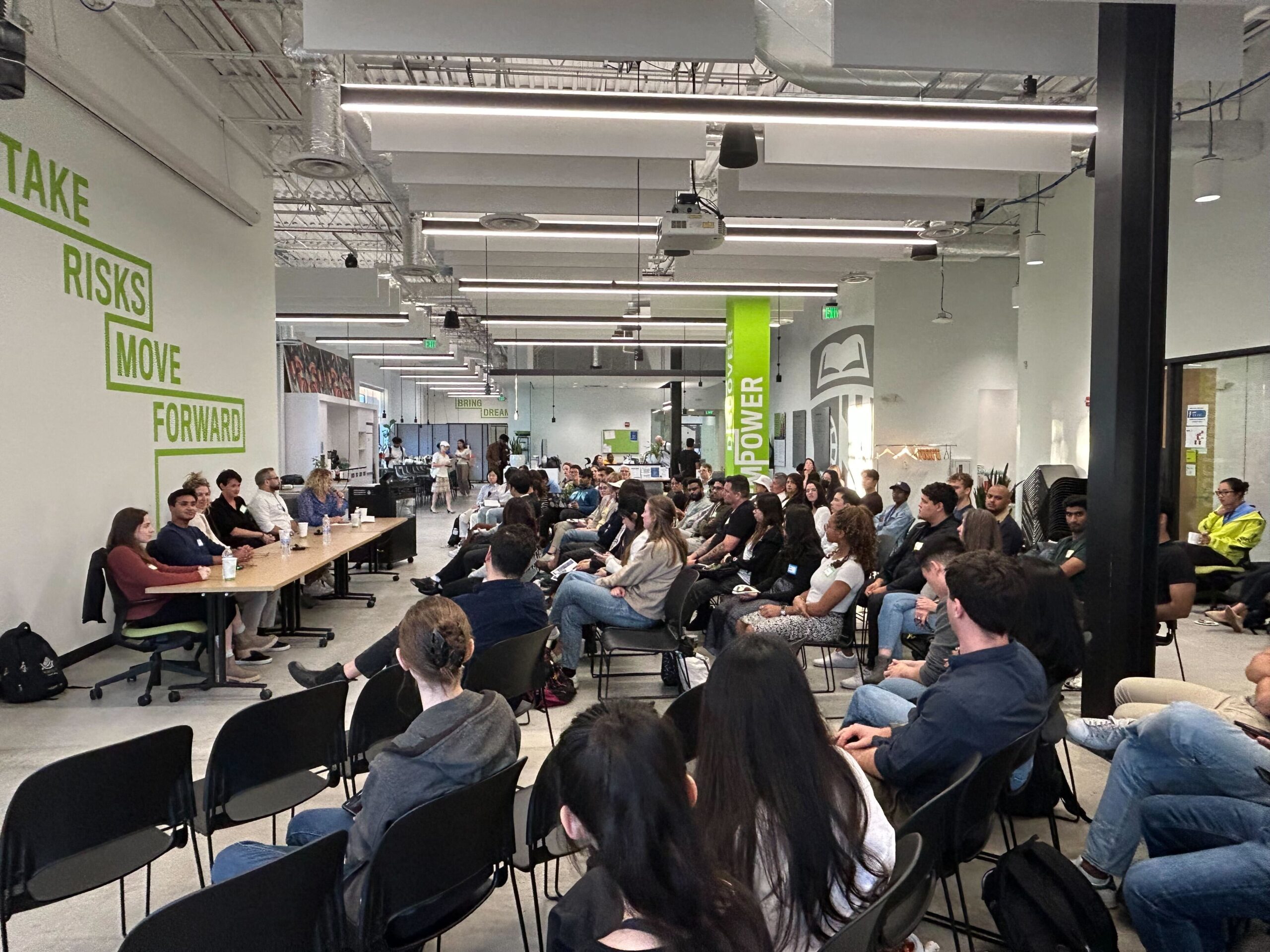
The life of any startup, especially in its earliest stages, moves fast and unexpectedly. Still, the process doesn’t require impulsively surrendering to the whims of unpredictable markets.
From finding the right problem to address to building up something sustainable, some near-universally sound practices can better ensure success, founders and early-stage employees said this week at Johns Hopkins University’s Pava Marie LaPere Center for Entrepreneurship.
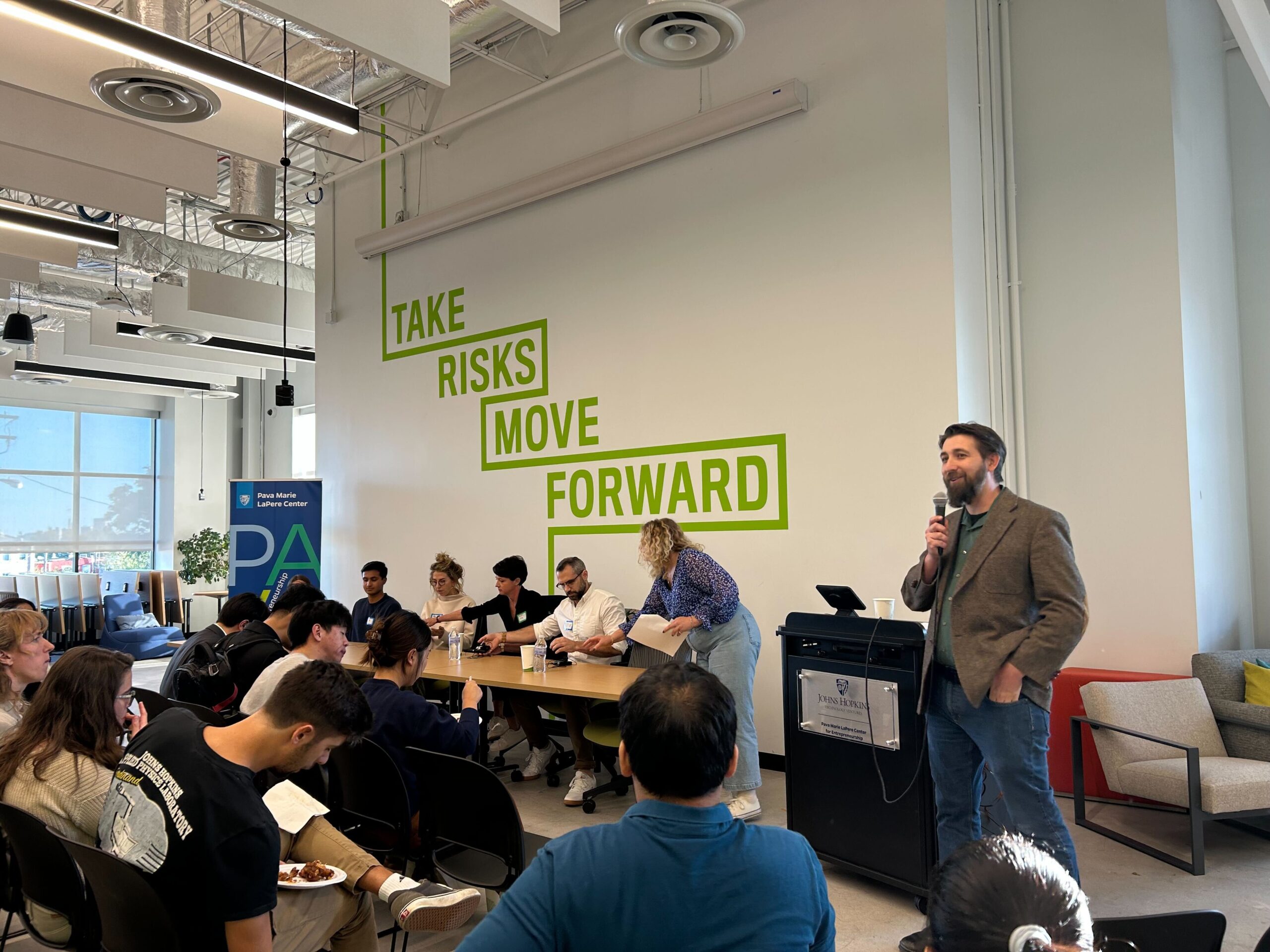
The Remington-based facility, renamed earlier this year to honor the late Johns Hopkins alum who helped create much of the school’s entrepreneurship support infrastructure, hosted the Tuesday evening event as part of its ongoing community programming for local entrepreneurs and university community members.
Events like this aren’t unique to Johns Hopkins — or any Baltimore-area university, really. But the people involved, from the speakers to the audience, are part of a uniquely influential ecosystem: one that revolves around the United States’ first research university, ranked 29th on Fast Company and Inc.’s recent list of the world’s most economically and socially impactful schools. Internal supports like Johns Hopkins Tech Ventures and the Pava Center play a big role in supporting spinouts, especially in biotech, that land millions in funding or are involved in major acquisitions.
Read on for some of the key insights the people in this ecosystem shared.
Success isn’t guaranteed — and that’s okay
Steve Iannelli, who earned bachelor’s and master’s degrees in engineering-related fields from Johns Hopkins, left an admittedly “cushy” job with the US Army’s DEVCOM Chemical Biological Center to join the startup READY Robotics in 2016.
Despite raising $3.5 million early on, the top company among Technical.ly’s 2018 Baltimore RealLIST Startups struggled and ultimately shuttered this year.
Yet Iannelli was adamant that he’d do it again. He also learned a lot about the interpersonal dynamics of new companies that grow fast and have evolving needs. He described conflict with a colleague over how to approach a certain problem, which he realized stemmed in part from his putting a systems engineering lens onto something that ultimately had more to do with that coworker’s expertise.
Working at startups is a “constant balancing act between arrogance and humility,” Iannelli said.
But success can come easier, he and others noted, if you come in knowing your market fit and solution beyond its immediate innovation.
“Good technology is not a product,” he said.
“You’ve got to be so clear on your unique differentiator,” added Amanda Allen. The chief experience officer at biotech company Scene Health said staying connected with the company’s end users — including scheduling weekly chats with patients using the company’s product to help them comply with medication directives — keeps her engaged in the company’s work.
Handle conflict with empathy and flexibility
Several other panelists touched on conflict management and associated employee dynamics.
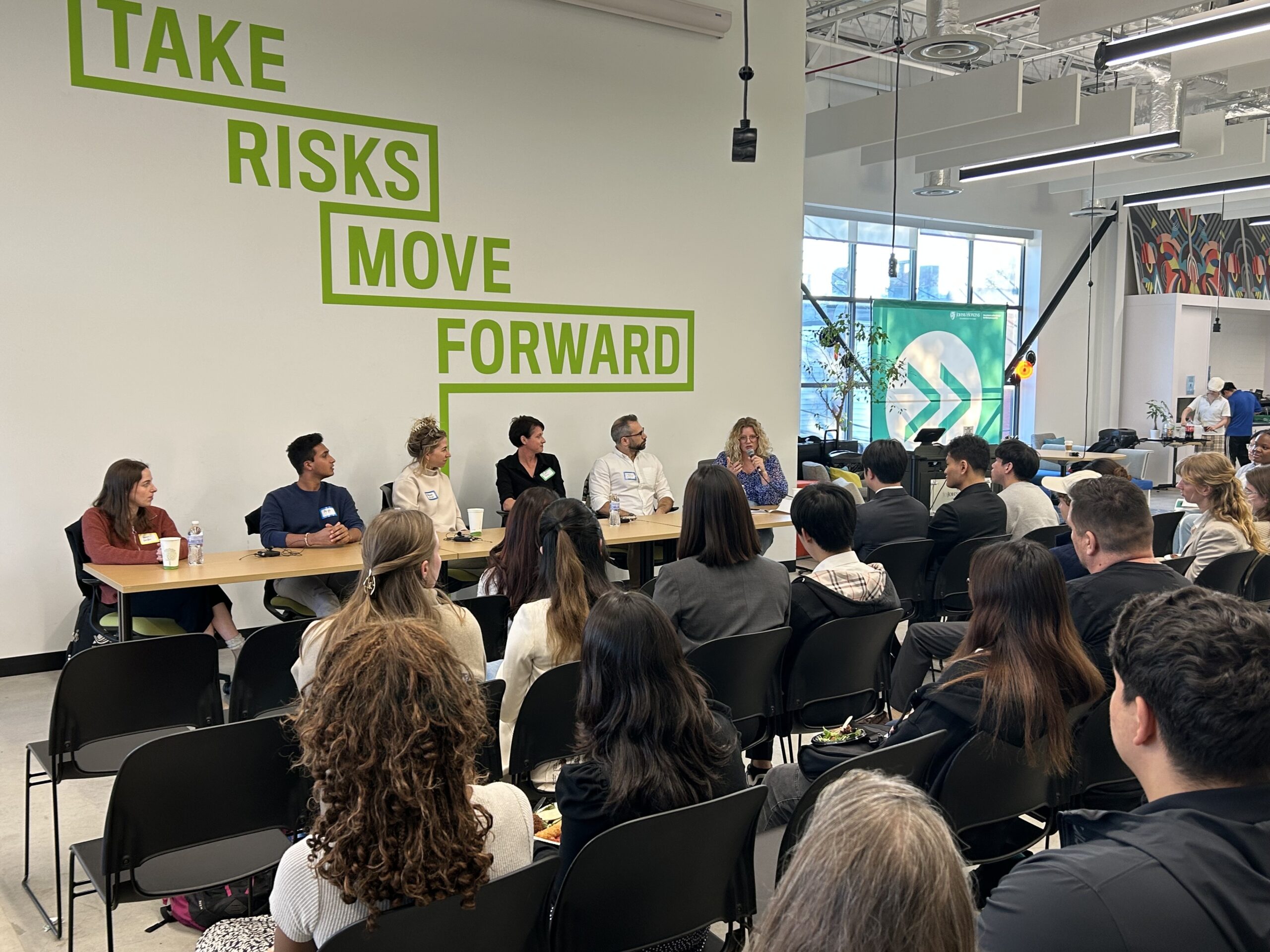
Event moderator Margaret Roth, a former founder and current COO of the cyber- and defense-focused VC firm Squadra Ventures, noted that her team does “SWOT” analyses — charting out strengths, weaknesses, opportunities and threats — that help assess if a potential investment recipient has employees that might not be a good fit or leave the company. She encouraged startups to do this when evaluating themselves, too.
Within the actual company dynamics, current student Arya Satish, who cofounded Moodr Health to provide holistic mental health services via wearable technology, advocated picking your spots on when to make something an issue.
Many times, conflicts arise out of “decisions that don’t need to be made in that moment,” Satish said.
Megan Huey, head of people for biotech firm Priovant Therapeutics, noted that “sometimes, you have to embrace the bureaucracy” of a startup and how it defines its jobs when trying to solve conflicts. And, she added, “people who get you to one point are often on the journey to their next point,” so it’s fine if a foundational employee doesn’t stay through a company’s subsequent stages.
Hire, and get hired, creatively and transparently
Panelists noted they’d gotten the most out of job interviews — whether on the conducting or receiving end — with questions that go beyond work.
Allen, of Scene Health, said she likes to ask candidates, “What are you really good at that you don’t want to do again?”
Iannelli said his favorite recent job interviews after READY Robotics’ shutdown dealt more with hypotheticals than anything he actually put in his portfolio.
For people who want to work at a startup, or are considering leaving a big company for an early-stage one, panelists advised checking whether equity shares are part of the benefits, and assessing if that’ll be enough to take a pay cut, work longer hours or make any other sacrifices startups demand.
“You have to consider all the other benefits, whether it’s equity or anything else,” when making this judgment, said Kubanda Cryotherapy Research and Development Engineer Naomi Gordon, since startup salaries are often limited.
If equity is part of that equation, “you shouldn’t expect to make market rate,” said Allen.
From the investor end, Roth of Squadra Ventures said she expects that every startup role has equity considerations through Series B raises, and encouraged people to do due diligence in researching any venture-backed company at which they might want to work.