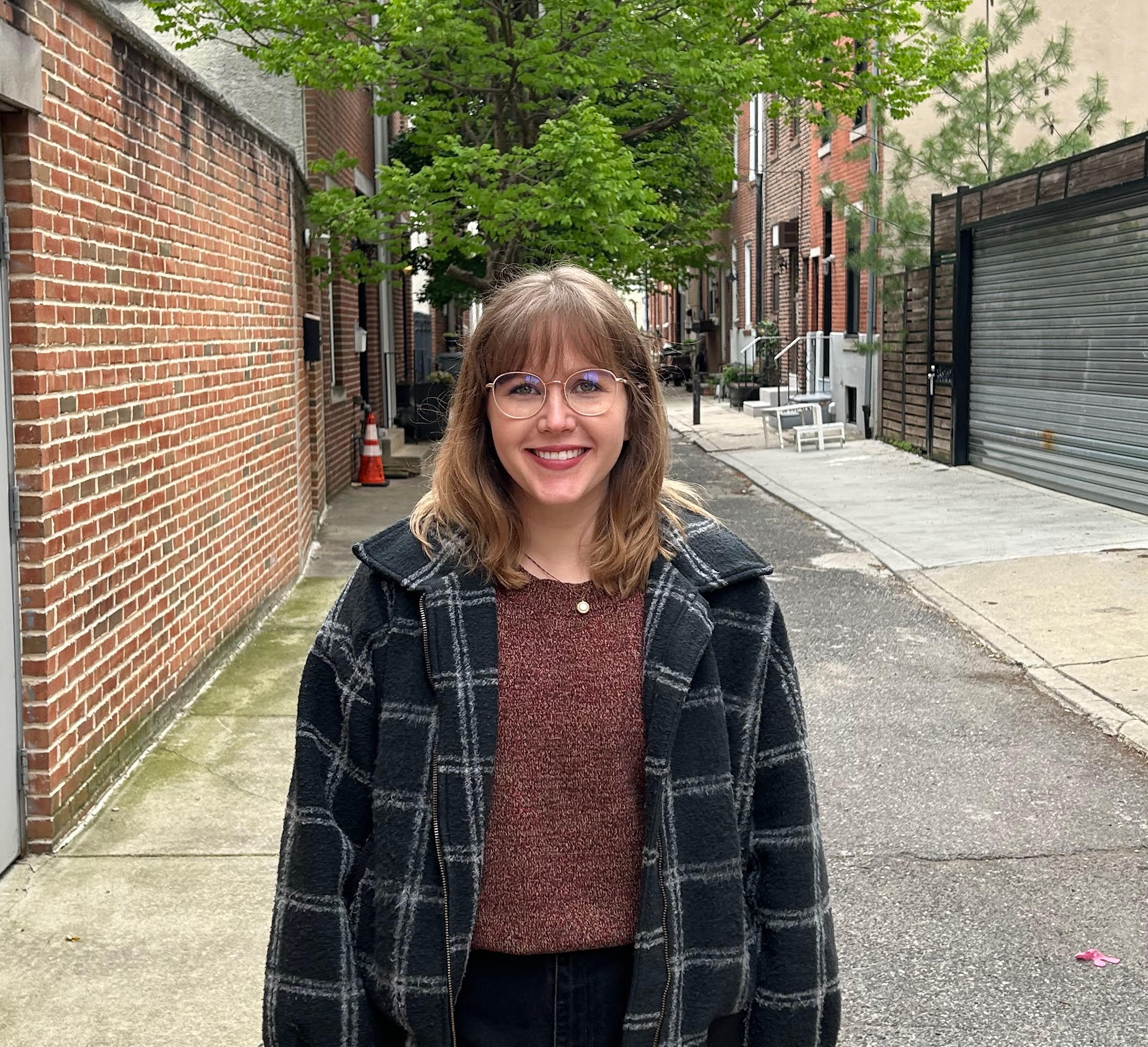


This is How I Got Here, a series where we chart the career journeys of technologists. Want to tell your story? Get in touch.
The lightbulb may have changed the world, but according to Penn Engineering vice dean Vanessa Chan, it was a strong sales pitch, not invention alone, that made that possible.
Contrary to popular belief, Thomas Edison didn’t invent the lightbulb, but he’s known for it because he figured out how to bring it to the mass market. It’s a perfect example of how important it is to teach young engineers and inventors that it’s not just about the innovation, but how they communicate their product’s influence on the world, Chan told Technical.ly.
“If you want to have an impact on the world, you have to understand how the world works,” Chan said.
As the first vice dean of innovation and entrepreneurship at Penn Engineering, the University of Pennsylvania alum teaches students how to turn their ideas into products.
This passion comes from her own experiences searching for ways to make an impact throughout her career. Little random nudges led her to work in a range of sectors, including consulting, entrepreneurship, academia and even government work at the Department of Energy during the Biden-Harris Administration, she said.
In this edition of How I Got Here, Chan shares how each sector she explored informed her next career move and why it’s important to always keep the bigger picture of your work in mind.
This Q&A has been edited for length and clarity
You got your undergrad degree at Penn. What did you study?
I had come in as a chemical engineering major because I really liked chemistry, but then I realized that chemical engineering is all math. If you like chemistry and physical stuff, you really should do materials science and engineering,
I ended up switching to materials science engineering, and just thrived there. As materials scientists, you can be a maker. You can be great at math. There are so many different things that you can do.
How did you find a job you were passionate about after stints in a few different fields?
I went to the Massachusetts Institute of Technology to get my Ph.D., and was very successful in my program. But I looked at my Ph.D., and I was like, I don’t know what this thing can be used for in the real world.
I had a friend who was interviewing for consulting firms, and she asked me to come with her to this McKinsey & Company presentation. They told me to apply, and I ended up getting the job. But I also got an offer to go to Germany for a postdoc funded by the National Science Foundation and an Alexander von Humboldt Fellowship.
I deferred the offer from McKinsey, but after two years in Germany, I had the same issue coming up on my postdoc: What is the point of this? How is it actually making an impact? So, I went to McKinsey.
I learned to understand the market and I found my calling, which is, people invent a bunch of stuff, how do you actually bring it into the real world? I ended up staying at McKinsey for 13 years.
How did you bring your industry experience back to the classroom?
My undergrad advisor told me they were looking to hire a third professor of practice for the engineering entrepreneurship program at Penn.
After I started, I had this big “aha.” I’m at the source of where the issue is; we don’t train engineers how to actually commercialize technologies. They know nothing about the real world.
I threw the curriculum for my material science class out the door, and I was like, “Okay, we’re going to learn how your technologies actually make a difference in the world. You’re going to learn to cold call industry, to do presentations, to communicate and to self-advocate.”
How did you move from the academic world to government work?
I found out I was being considered for chief commercialization officer for the US Department of Energy in 2020, but I had never done any work in energy.
I found out that in 2017, there was a workshop on commercialization and a former client of mine told the person running the workshop, “You need to talk to Vanessa if you’re thinking about commercialization.”
That is what put me on the map for the next four years. It was that partial yes to that workshop many years ago.
What are you hoping to accomplish in your current role?
I’m thinking about how we create Penn Engineering to mint out practical engineers, because there’s nowhere where this kind of commercialization thinking is infused.
Professors need to understand how we think about commercialization. It’s research, development, demonstration, deployment; it’s all four stages. In academia, we focus on research, maybe a little bit of development, but we can’t just be focused on hard technology and science.
What advice do you have for someone just starting their career journey?
You’re never too young or too junior to have an impact somewhere. Sometimes we’re afraid to try to disrupt or do new things, and the only way we’re going to have an impact in the world is if we have more people who are looking for where there are problems, and then figure out how to fix them.
Embrace mistakes, embrace when things aren’t going well. Think of life as like surfing, you’re gonna get knocked off the wave, and those who can get back on the board are those who are going to keep doing well.