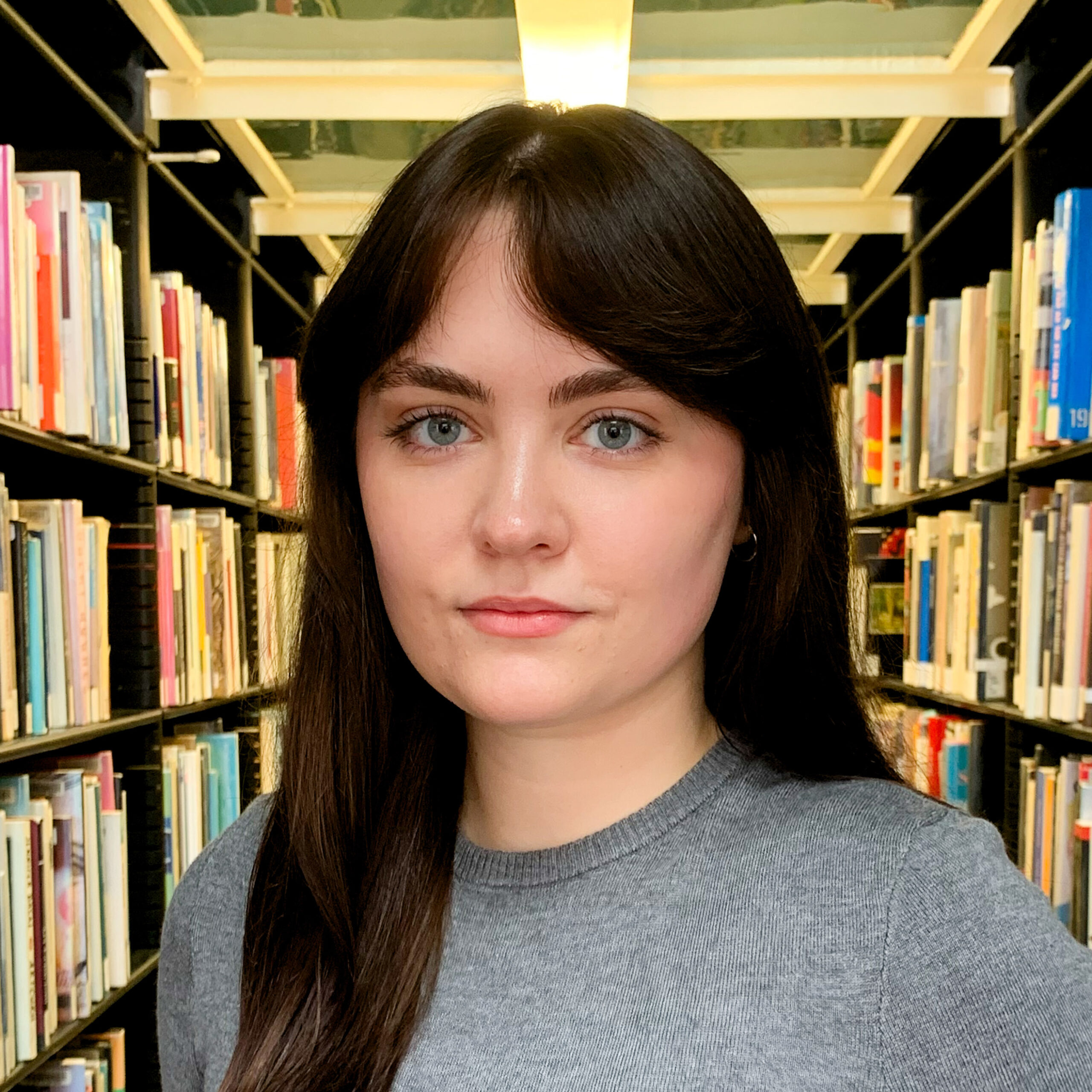
In between solving math equations and writing essays, Leslie Welch spent her 90s high school days learning the early iterations of HTML and helping her mom with her computer repair business.
“My mom was convinced technology was the future,” Welch told Technical.ly. “I had a different plan.”
That plan? To work as a chef. But the technologist, now living in Arlington and working as a principal architect in data and AI at the IT consultancy SHI International for public and private sector clients, was “sucked back in” to the industry. Her passion for helping people understand information — especially through data visualization — got her to where she is today.
“When we visualize information instead of just saying it, people are more likely to act on it and believe it.”
Leslie Welch
The fervor doesn’t stop there. Welch spends her time outside of work organizing data-focused meetups, including mentoring early-career and aspiring technologists. Given the mass federal layoffs and decreasing tech jobs, that work has been especially meaningful for her.
“For a lot of people, just having other people who are either sympathetic or sitting in the same place, just can really make a difference to figuring out what’s next,” she said.
In this edition of How I Got Here, Welch outlined her advice for jobseekers, how she helps clients implement AI in meaningful ways and the importance of data visualization (except for pie charts).
This Q&A has been edited for length and clarity.
What was the beginning of your technology career?
My mom has a computer repair and upgrade business. I was a Navy brat, and we were moving all the time.
When I was in high school, I would do some stuff for the business. After I graduated from high school, I worked for a little bit as a webmaster for a small eBay-based business doing pinball and arcade machine sales [to] save up money for my real career that I was going to have as a chef. My formal education was culinary school.
I did have a career in the culinary world for a bit, and then I had small children, and so things were a bit wandering. I didn’t come back to focus on technology until 2015 where I was running out close to eight years as a conference planner for a trade association. I was learning VBA (Visual Basic for Applications) so you can automate the comparison between hotel guests and registered attendees.
Typically, people were using highlighters for stuff like this.
I realized this is really the only part of my job that I love. So I made a complete shift and started working for a small wellness company as their sole data analyst, and that was when I discovered data visualization.
From there, I was recruited to Excella, and that was really where I started to seriously level up my own expertise.
What draws you to data visualization?
I’ve always been interested in analysis. What does the data say? Do we have some kind of way to show if this is working, not working?
Within data viz, there’s things that we pay attention to before we process language. Things that are pieces of information that we are able to intuitively process and understand information better. It’s why you hear a lot of people in the data viz world getting very heated about pie charts, for example, because they don’t process “area” particularly well.
The science behind how we understand information was just really fascinating to me. There is a pattern and logic to how we present information in a way that makes people remember it. When we visualize information instead of just saying it, people are more likely to act on it and believe it.
What does your day to day look like at your current job?
It can vary a lot. I’m still in the consulting world. Data visualization is definitely still an area that I am pretty deep in. But also data modeling, artificial intelligence — machine learning technologies, gen AI technologies — and then bigger picture governance and literacy.
I do spend a good bit of time talking to customers and potential customers about not what thing they’re trying to implement, but what is the thing that they’re trying to get to. What is it that matters to your organization? As opposed to where a lot of people walk in when they’re looking for support with something: “We need this tool.”
Nobody needs an AI tool. They need a better way to get to XYZ, to be able to make good decisions.
You also do a lot of meetup organizing and mentoring?
I’m one of the two organizers for Power BI DC. We are the official user group for Microsoft’s data visualization platform in the DC area.
We’re just in the throes of planning our third annual Power BI Days DC, which is a free two day conference that is hosted at Microsoft in Arlington. It’s typically a one day event, and typically doesn’t have any content that is fully accessible and tailored for people who are working in government agencies or state and local government.

They have different limitations, and they’re behind the release schedule of the commercial side. It’s on a weekend, so that federal folks had an easier time with getting approval to attend. We sold out two years in a row.
Last year, I joined the board for Data Community DC. We have a really thriving data community here. A lot of places, I think, saw that go away quite a bit after 2020. I know that there are certain technical communities here that saw that too, but it’s come back pretty strong.
It’s been a really positive thing with everything that’s been happening in the past year, because it provides a really important space for people who are affected by layoffs or RIFs to be able to learn things, think about transitioning. We’ve done some events around resume review and interviewing and career changes.
It’s always been an awesome community to be involved in, but I think it’s been a really important one for our area in the last year.
What’s your advice for people looking for a job in tech right now?
There’s some, obviously, additional complexity right now, but some of the advice that I’ve been giving people for a long time, I think still holds true.
Getting involved in the local technical community is one of the absolute best things that you can do. It can make it easier, as somebody who’s a community organizer to help connect people to opportunities. I have found many awesome hires through going to these groups.
To me, that says a lot if you are willing to spend your time outside of your work hours, to learn more. This technology is constantly changing on us. You really have to have that mindset of, I want to keep learning.
Where do you see yourself in 5 or 10 years?
I think I’m skeptical of any data person answering where they see themselves in 10 years, because this is an incredibly rapidly evolving industry, and has been for a long time.
But I’m coming in with a particular aim to really help us grow and scale our consulting practice. It’s really about how we’re growing the team, how we’re continuing to mature and refine what our approach is, so that we are hitting that trust [on the] partner side.


What stands out to you about the data community in DC?
My professional education was in culinary arts. I have learned so much from this community. It has had such a profound impact on me getting to a career that I truly love doing.
I did not enter into this because I thought it was going to help me find new jobs or do something in particular my career. But it’s been incredibly rewarding.
If there are people who are reading this who haven’t really stepped out to connect with the data community, it’s a very welcoming community. There’s a lot of people who are there not because they’re data practitioners, but because they want to better understand.
You got to go see what people are doing. Go talk to them about how they’re spending their time.