

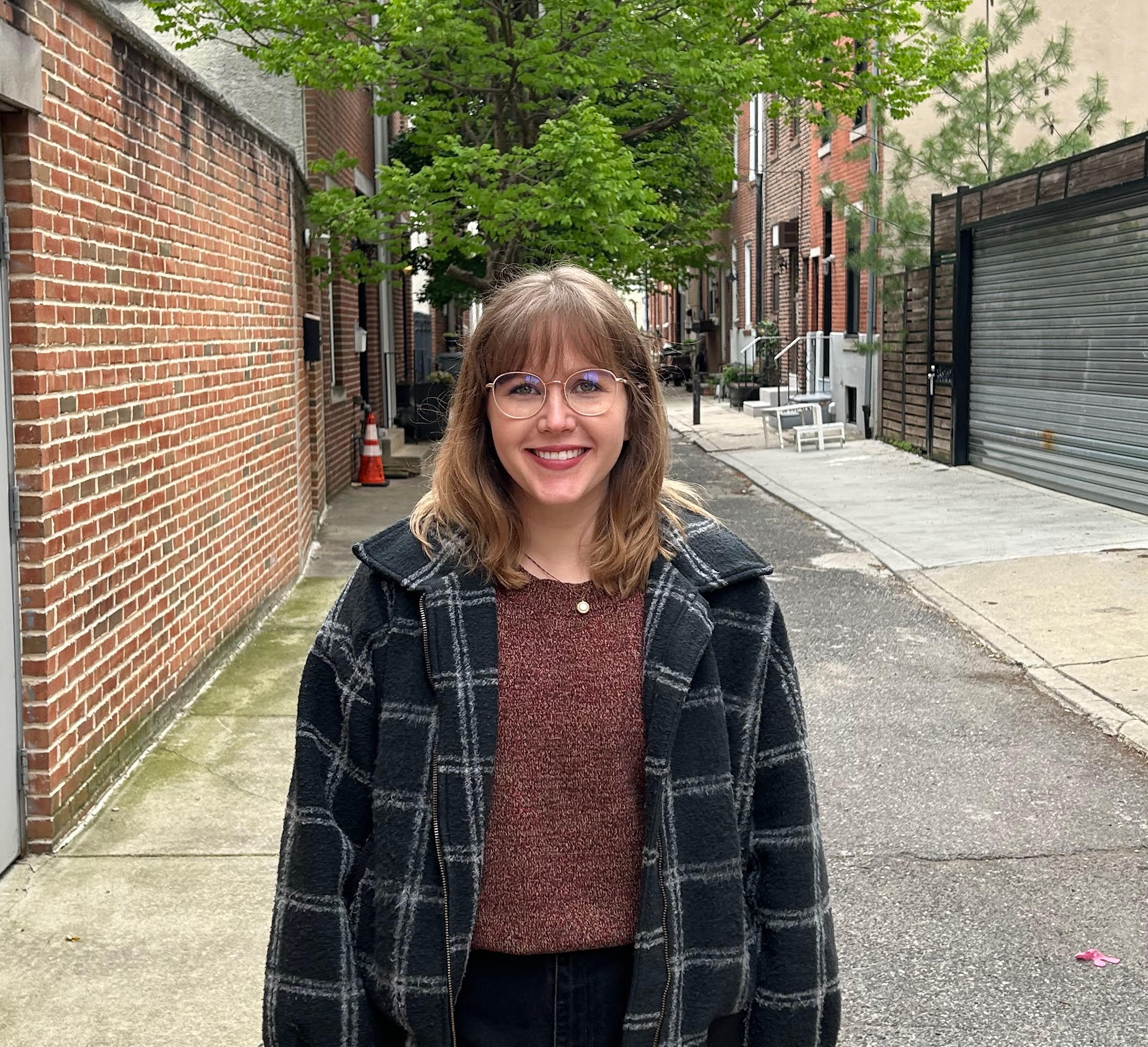

Johns Hopkins University’s Peabody Institute computer music professor CK Barlow isn’t afraid to try AI in music. She’s long leaned into how new tech can help her experiment.
“If it’s such a grind and drudgery that you’d rather use AI to do it, that’s a sign that maybe it’s not the right path for you.”
CK Barlow, Johns Hopkins University’s Peabody Institute computer music professor
Since programming an early RadioShack home computer to play Bach in high school, Barlow is constantly exploring new forms of music creation. Now, she introduces students to the potential of AI tools while advocating for artists’ rights.
“I love learning,” Barlow said. “I want to try this stuff out and see what it’s all capable of.”
But music wasn’t always her full-time pursuit.
Barlow spent years as a scientific technical writer before taking the leap to focus on composing for TV and film. She balances teaching with producing for music libraries and performing live electronic music.
In this edition of How I Got Here, Barlow discusses generative AI music platforms like Suno and shares insights on turning a side hustle into a full-time career.
This Q&A has been edited for length and clarity.
What was your first foray into tech?
My major was in technical writing, so I was working on things like user manuals and technical marketing.
I worked at a national laboratory for a while, doing technology transfer profiles. Basically, that’s when a scientist at a US national lab has discovered something that could turn into a commercial product.
In that role, I worked closely with a lot of scientists and technologists, mostly on the documentation side of things.
What led you to switch from technical writing to music full-time?
I was always doing music. I was making a living in tech.
At some point, I finally had a supervisor who was just like Cruella de Vil-level mean. The way she treated other people was not okay with me, even though she actually treated me okay.
I just couldn’t do it anymore. At that point, I had started teaching music technology classes, and my wife and I did the numbers and found that I could reasonably get by if I quit.
I was teaching one music class at night for the University of New Mexico, and I proposed another class to them.
They accepted the proposal, and it happened right around the same time that things were starting to go downhill with my supervisor at my tech job. So, I turned to teaching for a base income, and I was also composing.
In my first year writing for TV, my royalties were like 19 cents. But you just keep going, and eventually it starts to grow.
How do you feel about using AI tools for composing?
Every publisher I work with says no AI. That includes products like Splice or products like Output Co-Producer, which uses AI to analyze your song and suggest parts to add to it. I’m going to respect that because I respect my publishers enough to not deceive them.
There are still things that AI doesn’t do well enough, like capturing really deep, authentic emotion in lyrics and music. But for something like an underscore for a police procedural, that was one of the first prompts I typed into Suno to test it out. I got something that sounded just like what we have in the library I work for.
The genres that rely predominantly on electronic elements are probably the easiest for AI to handle.
In what ways do you use AI in your work and with your students?
I’ve been pretty proactive about trying out AI and understanding what’s possible.
I gave both Microsoft Copilot and Claude access to the user manuals for all the gear in my studio and started asking them support questions. Copilot kept making things up, but Claude got it right.
I also spoke at a mixing class at Peabody, and the students said they hadn’t tried Suno. So I asked them, ‘Okay, let’s make a K-pop song. What should it be about?’ They suggested, ‘Buying wing nuts at Ace Hardware.’
Thirty seconds after I typed in the prompt, we had three variations of a K-pop song with a female singer, all about being super happy shopping for wing nuts. The students who had never tried it before were completely stunned at how good it was.
What advice would you give someone interested in music technology or composing?
One of the founders of Suno said in an interview that people don’t really like the process of producing music because it’s hard.
If you don’t like producing music, why the hell are you producing? There are so many easier ways to make a great living.
If it’s such a grind and drudgery that you’d rather use AI to do it, that’s a sign that maybe it’s not the right path for you.


