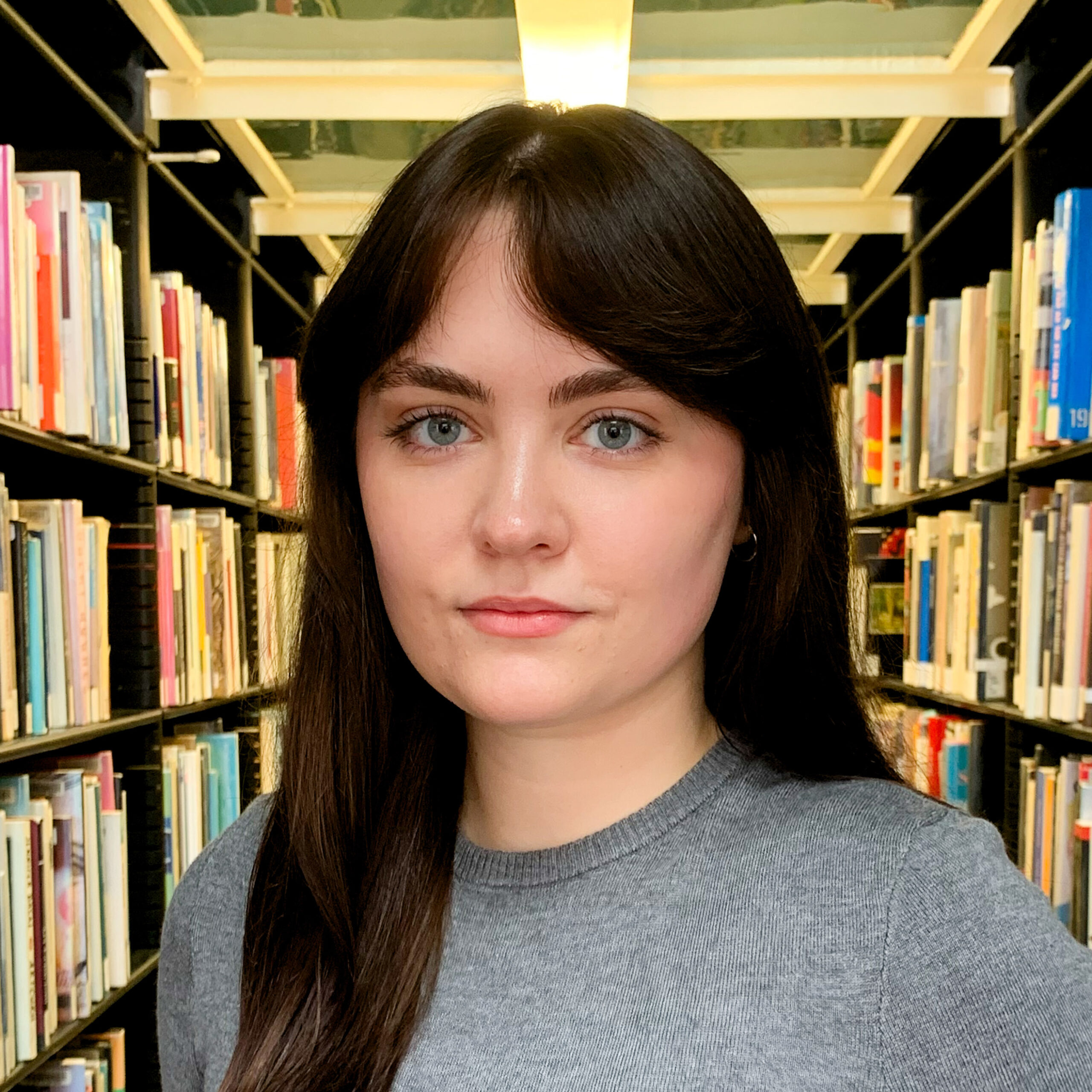
Leah Blue is spending her summer into fall traversing job postings after being forced out of her job as a lead public affairs specialist at the Department of Health and Human Services.
She’s noticing a theme while clicking on those descriptions.
“You don’t need a computer science degree to thrive in tech. You just need to be curious, persistent, and you need a community to help you.”
Suzie Zhang
“I’m seeing more and more job postings where they want you to be comfortable with AI,” Blue said. “I haven’t seen ‘expert,’ but I’ve seen ‘comfortable.’”
While she’s unemployed after the mass layoffs within the federal government, she’s spending two days out of the week at the Martin Luther King Jr. Memorial Library in DC learning about AI and its uses as a solution. Blue is part of the first AI Upskilling Cohort hosted by the library system and the DC strategy firm Levy — a 12-week program of 50 job seekers learning AI skills through projects related to digital health, financial literacy, transit access and other topics.
The idea came from the mass federal layoffs Blue and thousands of others went through, per Chelsea Kirkland, digital inclusion coordinator at DC Public Library. By December, it’s estimated that 300,000 federal workers will have departed through resignations and layoffs across the nation.
In DC, the unemployment rate has continued to climb since President Donald Trump took office, hitting 6% in July.
Kirkland and other librarians saw this influx of highly skilled workers who needed jobs and largely lacked AI experience. Libraries often focus on skilling people for entry-level work, she explained, and this was a different situation.
AI is also not often a part of professional development within government work, she said.
“In the private sector, a lot of these tools are fully integrated into the work that people are doing in a way that in the public sector,” Kirkland told Technical.ly, “and I can speak from my personal experience, they’re not, we’re not really supposed to be using them.”
Locals looking for work resonated with the idea: Kirkland and her fellow program leads received 200 applications for the cohort.
The goal is to eventually replicate this program elsewhere, per Ann Marie Guzzi, cofounder of Levy and organizer of the cohort.
“DC is experiencing this … transition faster because of the catalyst of the federal workforce changing,” Guzzi said. “But other places are going to have the same challenge arise, and there’s going to be a different catalyst for different places.”
Upskilling, not reskilling
Along with a handful of other cohort members, former federal worker Blue just finished the ideation phase for a tool that maps safe and efficient routes for bicyclists and public transit goers, dubbed Ride Flow DC.
The next steps for the project will be designing the projects, then delivering the product in what are called “pods.”
Before losing her job, Blue started to research large language models to get familiar with what the hype was all about. But she had no prompt engineering experience and few coding skills.
“I haven’t done HTML since I was playing Neopets in high school, to date myself, “ she said. “We’re coming with a big learning gap.”

Blue, along with most of the cohort, is highly educated — she has her doctorate in English from Howard University. More than 60% of participants have advanced degrees and professional credentials, as well as an average 15 or more years of professional experience.
That makes this different from other skills programming, Levy cofounder and cohort organizer Brendan Whitaker explained.
“A lot of program workforce programs are ultimately reskilling, where it’s: ‘Let’s delete your entire work history and past history, and recreate you in a new mold,’” Whitaker said. “What we’re trying to do is give that space for them to show what makes them valuable, remarkably valuable, and then multiply that with AI.”
Members of the cohort are also building resource libraries of AI tools for the current group and ones for the future. That’ll help boost peer-to-peer learning, Whitaker hopes.
The cohort has been holding workshops about different programs like Lovable and Airtable, and bringing in local technologists.
There has not been set content from the beginning of the program, per Levy’s Guzzi. But the broad shape of the program has always been one of “active and self-led learning.”
Pivoting to the tech industry or staying in a field
Suzie Zhang was laid off from her contracting job with the Department of Justice in 2024 and is looking to pursue a job in the tech industry.
Before she started this cohort, Zhang was applying for technology jobs, but feels like she’s not taken seriously because of her limited background in the field. That’s a big reason why she decided to join the program.
“I wanted to show that you don’t need a computer science degree to thrive in tech,” Zhang told Technical.ly. “You just need to be curious, persistent, and you need a community to help you.”

She’s working on a financial literacy platform with her group, and referred to it during a recent job interview at a finance firm. Beyond the portfolio boost, the cohort helps her feel less alone in the job search.
“Burnout is real, and it’s great that you have so many more people in the same boat,” she said. “You can share best practices with each other.”
Levy’s Guzzi noted this program does not guarantee a job, though employers will be invited to the group’s final showcase in October.
Blue, the former federal worker, is going to pursue similar work in the private sector, but be able to say she’s comfortable using AI while finding a job that fits her values, she said.
“Trying to keep in mind that data centers are hurting the climate, and people are using it to steal other people’s work,” Blue said, “how AI can be used for evil — and still trying to make sure that I’m familiar with it.”